When is the best time to surf Virginia Beach (First Street)?
Peak Sep–Oct · often good Nov–Mar · can still fire Apr–Aug.
September–October is the prime window, when tropical systems offshore send the cleanest, biggest groundswell of the year — the days that put Virginia Beach on the map. Winter (November–March) is the workhorse season: nor'easters deliver frequent, punchy swell to emptier lineups, with mid-40s°F water demanding a 4/3 or 5/4, boots, gloves and hood. Summer runs small and warm (upper 70s°F July–September) — longboard and learner territory — until an early tropical swell jumps the queue, which is worth being ready for. Year-round, the jetty focuses whatever the Atlantic offers better than anywhere else in town.
What does a surf trip to Virginia Beach (First Street) look like?
A typical trip from our guide. A real alert comes with the forecast for each day and a fare from your airport.
How much does a surf trip to Virginia Beach (First Street) cost?
A five-night trip, per person, before food and rentals.
Rows marked "Google typical" are Google Flights' usual range for October, across all booking lead times, so a last-minute fare often lands above it. Checked Oct 17. Stays use our guide's nightly bands; transfers use the guide's quoted rates. Real alerts price the exact dates.
Where should you stay at Virginia Beach (First Street)?
Close to the wave
Oceanfront vacation rentals & condos $
vacation rental · mid-range · Varies — many in the 1st–20th Street boardwalk corridor, walk to short drive
Airbnb/Vrbo condos and beach houses are plentiful along the resort strip and into Croatan just south of the inlet. Best value for groups or longer stays — pick a 1st–10th Street place for the shortest walk to the jetty and a kitchen for self-catering.
Stays nearbyCheaper
Schooner Inn $
hotel · budget · ~0.1 mi from Rudee Inlet — short walk to the First Street jetty
About the closest budget bed to the break, right at the quiet south end by Rudee Inlet. Simple, well-reviewed and walkable to the jetty — a sensible base for a surf-first trip without paying boardwalk-tower prices.
Check ratesPoints play: Hyatt Place VB Oceanfront; Marriott VB Oceanfront (Hyatt; Marriott), about 12–18k points a night, 5 min from the break.
Browse all stays near the breakEvery place we researched, with its booking link, is under where to stay below.
What is the wave like at Virginia Beach (First Street)?
Break type
Beach/Jetty
Wave direction
Both
Best swell
E (NE–SE window)
Ideal size
2–5 ft
Best tide
Low to mid
Works at every stage
Consistency
Consistent
Peak season
Sep–Oct
Nearest airport
ORF · ~20 mi
Drive from airport
25–35 minutes
Read the calendar the way locals do. The everyday baseline is East Coast beach break — small, longboard-friendly, shaped by tide and wind — and then two windows change everything. Late-summer and fall hurricane swells (the September–October sweet spot) can make Virginia Beach look like it doesn't belong on the mid-Atlantic when a well-placed storm tracks up the seaboard, and winter nor'easters deliver cold, raw power for the crew willing to boot up. The locals who score here aren't lucky — they're watching the map, and the jetty turns whatever arrives into the best wave in town.
What First Street lacks in everyday size it makes up for in convenience and infrastructure. It's a five-minute drive from a real airport (ORF), surrounded by oceanfront hotels, a three-mile boardwalk, surf shops that have been here for 50-plus years, and the East Coast Surfing Championships — the longest continually run surf contest in the world — held at the 1st Street Jetty itself every August. Come for a cheap, easy trip with plenty to do between swells — and be ready to drop everything when a storm lines up.
Who it suits
Intermediate surfers who can handle a punchy, crowded jetty peak and read tide/wind; beginners are better off up the beach away from the rocks. Best for travelers who want an easy, infrastructure-rich US beach trip and can time a hurricane or nor'easter swell rather than chase guaranteed waves.
Where exactly is Virginia Beach (First Street)?
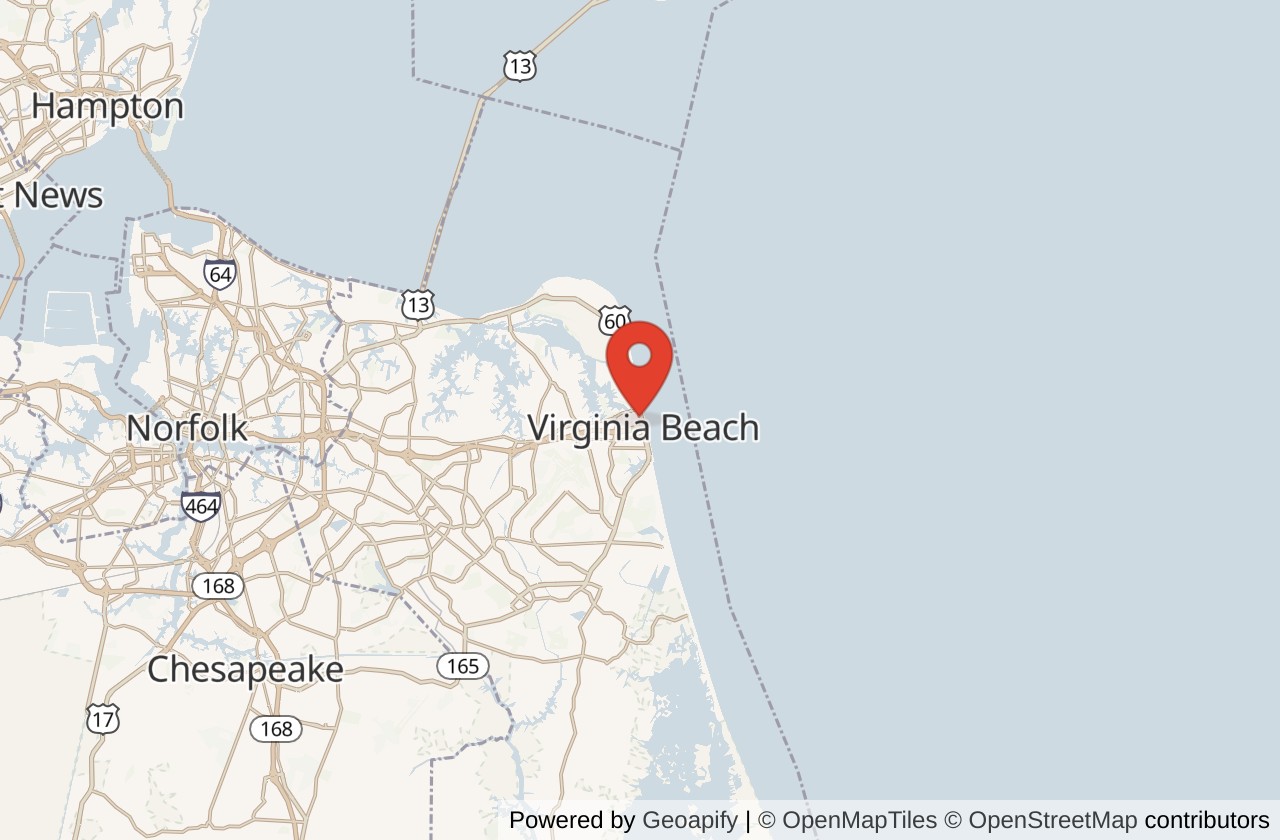
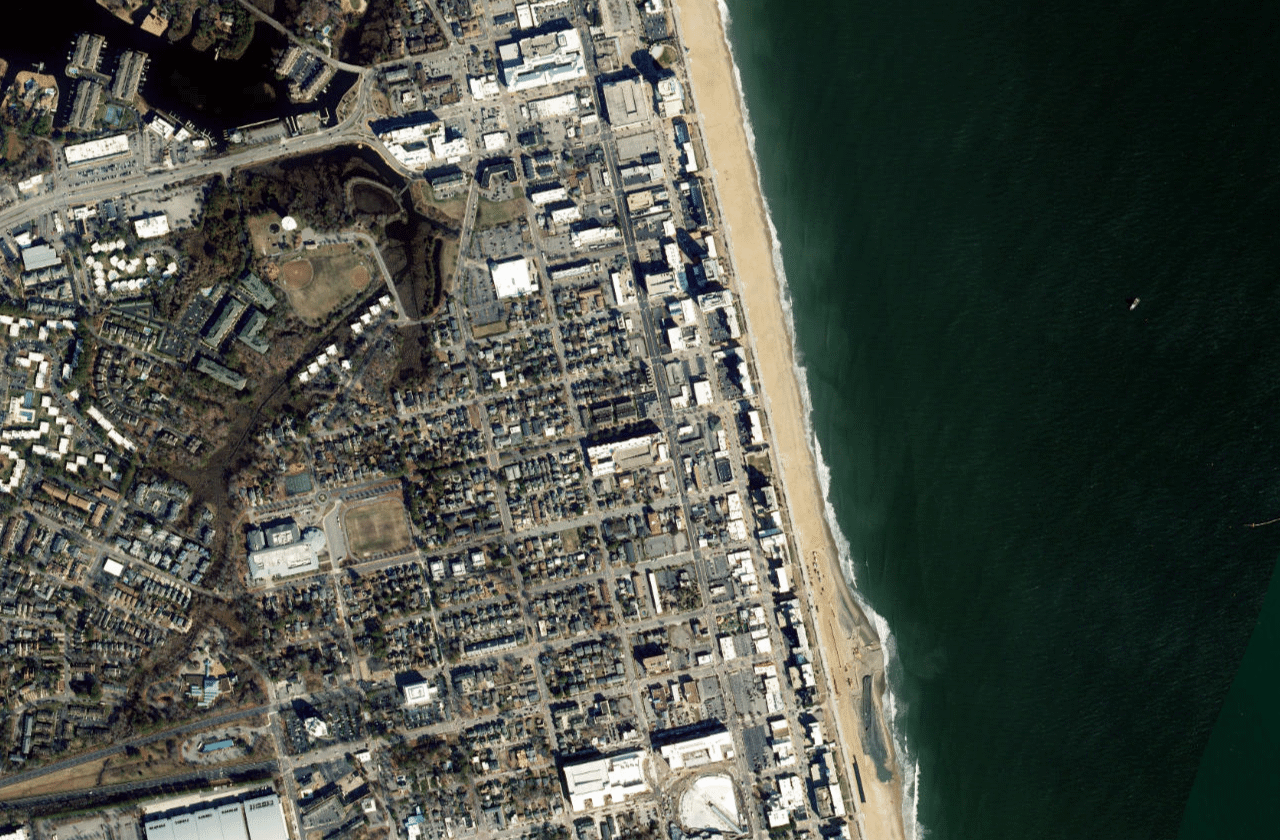
36.8533, -75.9783
What are the lineup and the town like at Virginia Beach (First Street)?
Localism
moderate
Crowd
A dense mix of locals, groms, military surfers, contest hopefuls and longboarders — when it's on, it's crowded, and summer brings beginner-heavy tourist crowds up the beach. Weekday dawn patrols and the colder, raw winter swells thin the pack to the committed. The jetty itself draws the most-experienced crowd; the further you move up the beach from the rocks, the mellower it gets.
First Street is known as a serious, established local peak — the focal point for the whole city's surf scene and host to decades of contests — so the lineup runs on real pecking order, especially on the rare good days. Visitors are expected to read the rotation, not drop in on the obvious set wave off the rocks, and not paddle straight to the prime peak and snake. Quiet competence and waiting your turn earn you waves; entitlement does not. It's an urban beach-break crowd, not a hostile reef tribe, but it is competitive.
In the lineup: The best, most organized peak forms right off the rock jetty on the north side of Rudee Inlet, mostly rights; it works best on SE/E swell with SW/W winds and is often best around high tide. Sit too deep by the rocks and you're in the contest zone and the rip; less-experienced surfers should sit well up the beach away from the jetty. Beware the permanent rip current at the inlet — it runs hard when NE winds and 3–5 ft surf hit the rocks. Enter and exit on the beach, not over the slick jetty boulders. One rule shapes everything here: from May through September, Virginia Beach bans surfing on the main resort beach (1st–41st St) during the day — 10am–4pm weekdays, 10am–6pm weekends — except in the designated year-round surf zones (1st Street Jetty, 5th Street, Croatan and Camp Pendleton). The 1st Street Jetty is one of those zones, which is exactly why the city's whole summer crowd funnels onto it; a leash is required at all times.
The Virginia Beach oceanfront is a classic American resort strip: a three-mile boardwalk, oceanfront hotel towers, mini-golf, t-shirt shops, bars and a summer crush of tourists and convention-goers, with a Navy town's energy behind it. The south end around 1st Street and Rudee Inlet is the quieter, more surf-and-fishing-flavored corner, with the marina, the jetty crew and the Croatan neighborhood just across the inlet. It's not a charming surf village — it's a big, busy beach city — but it's clean, easy, safe and packed with things to do when the ocean's flat.
How do you get to Virginia Beach (First Street)?
Fly into Norfolk International Airport (ORF) — about 20 miles from the break, 25–35 minutes. Newport News/Williamsburg (PHF) is ~40 min away with fewer flights; Richmond (RIC) is ~1h45m and sometimes cheaper for a longer trip. ORF is almost always the right call — it's the closest major airport and a short, simple drive.
- rental car$40–80/day · 25–35 min via I-264 East
The default and easiest option, especially with boards — every major chain has a desk at ORF. I-264 East runs straight to the oceanfront; First Street is at the south end near Rudee Inlet. Request an SUV or wagon if you have anything over 7'0", or bring soft racks for a sedan.
- rideshare$30–55 one way · 25–35 min
Uber and Lyft both run reliably from ORF to the oceanfront. Fine if you're staying on the boardwalk and not planning to drive around, but a board bag may need an XL/SUV request and not every driver will take a longboard — message ahead.
- taxi$45–65 one way · 25–35 min
Metered cabs queue at ORF arrivals. Comparable to rideshare; confirm the driver can fit a board bag before loading.
- shuttle$20–40 per person · 35–50 min with stops
Shared airport shuttle/van services serve the oceanfront hotels; cheapest solo but board bags are hit-or-miss and you'll wait for other drops. Book ahead online.
Do you need a car at Virginia Beach (First Street)?
Do you need a car?
recommended
Walkability
If you stay on the boardwalk near 1st–10th Streets, the jetty, beach, restaurants and a surf shop are all a short walk. The resort strip itself is very walkable and bike-friendly along the three-mile boardwalk. You only need wheels to reach groceries, First Landing State Park, or to chase a better sandbar up the beach.
A rental car ($40–80/day) is the practical pick — it gets you to groceries, the state park, Sandbridge and alternate breaks, and lets you check the jetty before committing. If you base yourself oceanfront, you can manage car-free: Uber/Lyft are reliable, the seasonal VB Wave trolley runs Atlantic Avenue in summer, and beach-cruiser bike rentals are everywhere along the boardwalk. Parking near 1st Street is metered/paid lots in season — factor that in.
Boards: Rental cars are the simplest way to move boards; ask for an SUV or bring soft racks for a sedan. Rideshare/taxi drivers can usually fit a shortboard but request an XL vehicle for longboards and message ahead. If you're walking from boardwalk lodging you can simply carry your board to the jetty — that's how most people do it.
Where can you stay near Virginia Beach (First Street)?
~0.1 mi from Rudee Inlet — short walk to the First Street jetty · About the closest budget bed to the break, right at the quiet south end by Rudee Inlet. Simple, well-reviewed and walkable to the jetty — a sensible base for a surf-first trip without paying boardwalk-tower prices. (Booking.com, direct)
~20th Street oceanfront — ~1.5 mi / short bike or 5-min drive south to the jetty · Well-reviewed oceanfront hotel mid-strip with direct beach access, oceanfront balconies, indoor pool and free breakfast. A solid, reliable middle option on the boardwalk; you'll bike or drive the short stretch south to the First Street jetty. (Booking.com, Expedia, direct)
~31st Street oceanfront — ~1.7 mi / short bike or 5-min drive north of the jetty · Upscale oceanfront tower in the mid-north 31st Street district with a 21st-floor Sky Bar, rooftop pool and the Catch 31 raw bar downstairs. The comfortable splurge; you'll bike or drive the boardwalk south to First Street. (Hilton.com, Booking.com)
~40th–42nd Street — ~2 mi / 5–10 min drive north · The historic landmark resort complex at the north end, anchoring the Marriott and Embassy Suites by Hilton — top-rated on review sites. Worth it if the trip is half surf, half a polished oceanfront stay; you'll drive or bike the boardwalk south to the jetty. (Direct (cavalierresortvb.com), Hilton.com, Marriott.com)
Varies — many in the 1st–20th Street boardwalk corridor, walk to short drive · Airbnb/Vrbo condos and beach houses are plentiful along the resort strip and into Croatan just south of the inlet. Best value for groups or longer stays — pick a 1st–10th Street place for the shortest walk to the jetty and a kitchen for self-catering. (Airbnb, Vrbo)
~7 mi north at Cape Henry — 15–20 min drive · Wooded oceanfront campsites and rental cabins inside the state park at the north end of the city. The cheapest, most outdoorsy base — you'll drive to the jetty, but you trade that for trails, quiet and Chesapeake Bay beach on flat days. (Reserve America (Virginia State Parks))
Where do you eat at Virginia Beach (First Street)?
- Doc Taylor'srestaurant · $ mid-range
Breakfast and brunch — grits, Bloody Marys, beachfront-cottage classics — Local favorite for the post-dawn-patrol breakfast, set in an old beach cottage that once held a doctor's office. A few blocks off the boardwalk; go early on weekends or wait.
- Pocahontas Pancakes & Waffle Houserestaurant · $ budget
Pancakes and waffles — Food Network 'best pancake house' pick — Oceanfront breakfast institution running since the 1970s, family-friendly and cheap. The reliable pre-surf carb-load on Atlantic Avenue.
- Rudee's on the Inlet Restaurant & Cabana Barrestaurant · $ mid-range
Fresh local seafood, crab, and the marina-side Cabana Bar — A 40-plus-year south-end institution right on Rudee Inlet marina, in a replica Coast Guard station — the closest sit-down spot to the jetty. Great post-surf with views over the inlet; busy happy hour.
- Gringo's Taqueriarestaurant · $ budget
Fish tacos with habanero cream, burritos, margaritas — Cheap, locally loved Tex-Mex near the oceanfront — the easy budget refuel after a session. Fast, casual, good margaritas.
- Three Ships Coffeecafe · $ budget
House-roasted coffee and breakfast — Local roastery and coffee bar a few blocks back from the oceanfront — the spot for a real flat white before a dawn check, not the hotel-lobby drip.
- Catch 31 Fish House & Barrestaurant · $$ high-end
Raw bar and fresh fish, oceanfront — Upscale oceanfront seafood at the Hilton near 31st Street, a short bike or drive north of the jetty. The night-out splurge with an oyster bar and ocean views.
- Waterman's Surfside Grillerestaurant · $ mid-range
Famous Orange Crush cocktail and local seafood — Long-running oceanfront bar-restaurant (around 5th Street) known statewide for the Orange Crush. Reliable casual seafood and a deck — a classic VB après-surf hang near the south end.
Cooking for yourself
- Food Lion (Laskin Road / nearby oceanfront)supermarket
Full supermarket a short drive inland from the oceanfront — everything you need for self-catering a condo: produce, meat, dairy, snacks, beer. The practical stock-up if you've rented a place with a kitchen.
- Harris Teetersupermarket
Larger, slightly nicer grocery chain with locations a few minutes' drive from the resort strip — good deli, prepared foods and a broad selection for longer stays. Pair with a quick boardwalk-area convenience store for water and snacks near your room.
- 7-Eleven / oceanfront convenience storesminimart
Multiple convenience stores along Atlantic and Pacific Avenues for water, ice, snacks, sunscreen and beer within walking distance of the boardwalk — handy when you don't want to drive, but pricier than the supermarkets.
Where do you rent or fix a board?
- 17th Street Surf Shopwax · leashes · fins · board sales · apparel · wetsuits
Virginia Beach institution since 1970 (oceanfront location around 16th–17th Street, a short walk or quick drive north of the jetty). Deep board selection from top shapers plus all the hardware, wax, leashes, fins and cold-water wetsuits you'll need — the go-to for last-minute gear. Confirm rental availability by phone in season.
- Wave Riding Vehicles (WRV)board sales · board rental · lessons · wax · leashes · fins · wetsuits · apparel · ~$25–40/day for board rentals (call to confirm)
Iconic Virginia Beach surf brand and shop since 1967, on Cypress Avenue a few minutes from the oceanfront. Their own shaped boards, full retail, rentals and the well-run WRV Surf Camps and lessons (now merged with the Jason Borte school) — the best one-stop for visitors needing a board or coaching.
- Coastal Edgeboard sales · apparel · wax · leashes · fins · wetsuits
Local surf/skate chain and title sponsor of the East Coast Surfing Championships, with an oceanfront store. Strong for apparel, hardware and boards; useful backup if 17th Street or WRV don't have what you need.
What do you do when it's flat?
- Virginia Beach Boardwalknature · free
Three miles of oceanfront promenade from 1st Street north, with a separate bike path, street performers and food. The default flat-day stroll, run or cruiser-bike ride right from the jetty.
- Rudee Tours dolphin-watching boat tripwater · $30–45 per adult
90-minute bottlenose-dolphin watching cruise out of Rudee Inlet (May–Sept), departing steps from the First Street jetty. The easy water activity for flat spells; whale-watching trips run in winter.
- First Landing State Parknature · free–$10 parking
20 miles of trails and the 6-mile Cape Henry Trail through live oak and salt marsh at Cape Henry, ~15 min north. Hike, bike or kayak the Chesapeake Bay side on a flat day; campground on site.
- Cape Henry Lighthouseculture · $5–10
Climb the 1792 original lighthouse (and see the 1881 'new' one) at Fort Story, ~20 min north, for big Atlantic-and-bay views. A quick history stop where the first colonists landed in 1607.
- East Coast Surfing Championships (late August)culture · free to watch
The longest continually run surf contest in the world, held at the 1st Street Jetty itself every August since 1963, with the festival footprint sprawling north to about 10th Street — a week-long beach party drawing 100,000-plus. Time a trip around it if you want the scene at full tilt (expect peak crowds and prices).
- Rudee Inlet watersports (jet ski, parasail, fishing charters)adventure · $ (jet ski ~$80–120/hr; charters vary)
The marina at Rudee Inlet, right by the jetty, is the hub for jet-ski rentals, parasailing and deep-sea fishing charters — the obvious adrenaline/flat-day options without leaving the south end.
What should you know before you go?
Cash & ATMs
Easy — this is a US resort city. ATMs are everywhere: hotel lobbies, convenience stores and bank branches along Atlantic and Pacific Avenues, all within walking distance of the jetty. Cards are accepted essentially everywhere; carry a little cash for parking meters and boardwalk vendors.
Medical
Sentara Virginia Beach General Hospital has a full ER ~10–15 min from the oceanfront, and there are urgent-care clinics and pharmacies (CVS/Walgreens) within minutes of the resort strip. Lifeguards (Virginia Beach Lifesaving Service) patrol the resort beach in season. Standard US care — bring travel insurance, as costs are high for visitors.
Water safety
The defining hazard is the permanent rip current at Rudee Inlet beside the jetty: it runs fast and can turn life-threatening when NE winds blow 15–20 mph with 3–5 ft surf against the rocks — multiple rescues happen here every year. Stay off the slick jetty boulders, don't get pinned against the rocks on a set, and beginners should surf well up the beach. Water is cold most of the year (mid-40s°F in winter, demanding a 4/3–5/4 plus boots/gloves/hood; upper-70s°F by late summer). Lifeguards cover the resort beach (north jetty to 42nd Street) and Croatan in season, but not always at dawn. Periodic shoaling and post-storm runoff can affect the inlet; sharks are present but incidents are very rare. Watch for swimmers and the contest zone in summer crowds.
United States basics: money, entry, phones, water
Currency
US Dollar (USD) — Home currency — 1 USD = 1 USD
Entry (US passport)
Unlimited — domestic travel — No passport needed for travel within the 50 states (including Hawaii) or to Puerto Rico. Since May 7, 2025 you need a REAL ID-compliant driver's license (star marking) or a passport to clear TSA for domestic flights — check your license before booking.
Language
English, Spanish (widely spoken, esp. California, Texas, Florida). Native — English works everywhere, including every surf town.
Plugs
A, B · 120V / 60Hz
Tipping
Expected and culturally significant: 18–22% at sit-down restaurants, $1–2 per drink at bars, 10–15% for taxis/rideshares. Counter-service tip screens are common but optional.
Phone / data
Your existing US plan, T-Mobile / AT&T prepaid, Travel eSIMs (Airalo, Holafly, Nomad). Strong LTE/5G in cities and most coastal towns. Expect dead zones on rural stretches of coast — parts of the Big Sur/Central California coast, the North Shore of Kauai, and remote East Coast barrier beaches. Download offline maps for surf-check drives.
Tap water
Safe to drink nationwide from municipal supplies, including Hawaii and Puerto Rico.
Emergency
911 for police, fire, and ambulance everywhere (including Hawaii and Puerto Rico). International visitors: US healthcare is extremely expensive — an ER visit can run thousands of dollars — so travel insurance with medical coverage is essential.
Other passports: entry rules differ — check the official source before booking.
Alert me when Virginia Beach (First Street) is on
Drop your email and you'll get one message when our forecast shows a trip-worthy window here: the dates, the size, and a place to stay. Free.
Frequently asked questions about Virginia Beach (First Street)
Is Virginia Beach good for surfing?
Virginia Beach is a reliable but modest surf city, not a wave-rich destination. The First Street Jetty at the south end near Rudee Inlet is the most consistent spot in town — when everywhere else is flat, the jetty traps sand and still has a wave — but it's a small, often weak East Coast beach break that fires mainly on hurricane swells (Sept–Oct) and winter nor'easters.
When is the best time to surf the First Street Jetty?
September–October hurricane season is the prime window, when distant tropical systems send the cleanest, biggest groundswell. Winter nor'easters (Nov–Mar) deliver frequent but cold, raw swell. The jetty works best on a SE or E swell with SW/W winds, often around high tide. Summer is mostly small and crowded.
Do you need a wetsuit to surf Virginia Beach?
Yes for most of the year. Winter water drops into the mid-40s°F, requiring a 4/3 or 5/4 wetsuit with boots, gloves and a hood. Spring and fall need a 3/2 or 4/3. Only late summer (July–September, water in the upper 70s°F) is warm enough for boardshorts or a springsuit.
How far is Norfolk Airport from the Virginia Beach oceanfront?
Norfolk International Airport (ORF) is about 20 miles and a 25–35 minute drive from the oceanfront via I-264 East. It's the closest major airport; rental car, Uber/Lyft and taxis are all easy from arrivals.
Can you rent a surfboard in Virginia Beach?
Yes. Wave Riding Vehicles (WRV) offers board rentals (roughly $25–40/day) and lessons a few minutes from the oceanfront, and several shops including 17th Street Surf Shop and Coastal Edge stock boards, wetsuits and gear within walking distance of the jetty. Call ahead in season to confirm rental availability.
Is the First Street Jetty good for beginners?
Not really. The jetty is the city's main competitive local peak with a real pecking order, a strong rip at the inlet and rocks to avoid, so it suits intermediates and up. Beginners should surf well up the beach away from the rocks, or take a lesson with WRV, and stay clear of the jetty crowd.
Is there localism at Virginia Beach's First Street Jetty?
There's moderate localism. As the focal point of the whole city's surf scene and decades of contests, the jetty runs on lineup hierarchy — visitors are expected to wait their turn and not drop in or snake the prime peak. It's competitive and crowded when it's on, but it's an urban beach-break crowd rather than an aggressive reef tribe.
What is the East Coast Surfing Championships?
The ECSC is the longest continually run surf contest in the world, held every August since 1963 at the First Street Jetty itself, with the festival footprint sprawling north to about 10th Street. It's a week-long beach party drawing more than 100,000 people — great to time a trip around if you want the scene at full energy.
Sources for this guide
- surfline.comsecondary source · First Street Jetty wave characteristics, best swell/wind/tide, jetty traps sand, crowd and contest context
- surfline.comeditorial · First Street as the focal point of VB surf for 30+ years, hurricane-swell performance, contest history
- surf-forecast.comsecondary source · Beach/jetty break type, mainly right-hand, high-tide preference, year-round but small/crowded
- wavy.comeditorial · Permanent rip current at Rudee Inlet/jetty, NE wind + 3-5 ft surf danger, rescues, lifeguard chief quote
- vboceanrescue.comofficial · Lifeguard coverage zones (resort beach / Croatan), rip-current and beach-safety guidance
- waveridingvehicles.comofficial · WRV shop since 1967 on Cypress Ave, board sales/rentals, surf camps and lessons (Jason Borte merger)
- 17thst.comofficial · 17th Street Surf Shop since 1970, oceanfront location, board/gear retail
- surfecsc.comofficial · East Coast Surfing Championships — longest continually run contest, since 1963, late August, oceanfront
- en.wikipedia.orgsecondary source · ECSC history (moved to VB 1963), 100,000+ attendance, Coastal Edge title sponsorship
- rudees.comofficial · Rudee's on the Inlet restaurant — 40+ years, Rudee Inlet marina, replica Coast Guard station, seafood/cabana bar
- expedia.comsecondary source · Hotels nearest Rudee Inlet — Schooner Inn (~0.1 mi), Beach Quarters (~0.3 mi) and distances
- cavalierresortvb.comofficial · Cavalier Resort campus (Marriott, Embassy Suites by Hilton) at north end — lodging verification
- visitvirginiabeach.comofficial · Rudee Tours dolphin/whale watching out of Rudee Inlet, May-Sept
- visitvirginiabeach.comofficial · Boardwalk, First Landing State Park trails, Cape Henry Lighthouse activities
- visitvirginiabeach.comofficial · Local food picks — Doc Taylor's, Pocahontas Pancakes, Gringo's Taqueria, Three Ships Coffee
- rome2rio.comsecondary source · ORF to Virginia Beach distance (~19-22 mi), drive time, transfer options (rental, rideshare, shuttle)
Guide researched and verified 2026-06-17. Details change; confirm bookings and entry requirements before travel.