When is the best time to surf Panama City Beach?
often good Nov–Mar · can still fire Jun–Oct.
PCB is event-driven, and the events are reliable enough to plan around. The steadiest window is winter (roughly November–March), when cold fronts sweeping across the Gulf generate short-lived but punchy South-through-Southwest swell — February is the classic month, and the offshore N/NE wind behind each front grooms it clean. Hurricane season (June–November, peaking August–October) delivers the biggest, cleanest groundswell of the year for anyone ready to move fast. Summer between systems runs small and glassy — ideal learning water. Best combo: SE swell, light offshore N/NE wind, early before the sea breeze fills in.
What does a surf trip to Panama City Beach look like?
A typical trip from our guide. A real alert comes with the forecast for each day and a fare from your airport.
How much does a surf trip to Panama City Beach cost?
A five-night trip, per person, before food and rentals.
Checked Oct 17. Stays use our guide's nightly bands; transfers use the guide's quoted rates. Real alerts price the exact dates.
Where should you stay at Panama City Beach?
Nearest base
Wisteria Inn $
boutique · mid-range · West end (20404 Front Beach Rd), ~10 mi by road from the St. Andrews jetties; steps from the beach
Adults-only (16+) boutique inn on the west end of Front Beach Road — small, calm and character-filled, with a pool, hot tub, complimentary poolside mimosas and an evening wine social. The pick if you want personality over a high-rise, but note it's the far end of town from the east-end surf zone, so you'll drive ~15–20 min to the jetties.
Stays nearbyCheaper
Bikini Beach Resort $
hotel · budget · Central beachfront, ~6 mi west of the jetties
Straightforward beachside motel-style resort with direct beach access and an outdoor pool — a budget Gulf-front bed when you mostly care about being on the sand and watching the cam. Central-strip location, so plan to drive to the surf.
Check ratesPoints play: Holiday Inn Resort PCB (beachfront) (IHG), about 35–60k points a night, ~5–10 min from the break.
Browse all stays near the breakEvery place we researched, with its booking link, is under where to stay below.
What is the wave like at Panama City Beach?
Break type
Beach
Wave direction
Both
Best swell
S (SE–SW window)
Ideal size
2–5 ft
Best tide
All tides
Tide doesn't change the wave here
Consistency
Consistent
Nearest airport
ECP · ~20 mi
Drive from airport
25–35 minutes
What makes PCB work as a surf trip is that everything a traveling surfer needs sits in a tight strip along Thomas Drive. A 40-year-old surf shop, an island-style taco shack, a Publix, and the St. Andrews jetties are all within a couple of miles of each other on the quiet, east end of the beach — a world away from the high-rise spring-break sprawl of Front Beach Road. The water is warm spring through fall (boardshorts or a spring suit), and only the coldest winter fronts — the ones that actually bring the surf — call for a 3/2 wetsuit.
Come with a flexible board choice and an eye on the charts and you'll have a good time: cheap, easy flights into a 20-minute-away airport, warm gin-clear water, uncrowded mid-week lineups, and a beach town built for an easy week off the water. The game is simple — know the window is coming, be there when it hits, and enjoy Shell Island and the jetty snorkeling on the days in between.
Who it suits
Beginners and intermediates who can read a forecast and pounce on a swell window; longboarders and warm-water travelers who want cheap flights, an easy beach-town base, and genuinely fun jetty peaks when a front or tropical swell lights the Gulf up.
Where exactly is Panama City Beach?
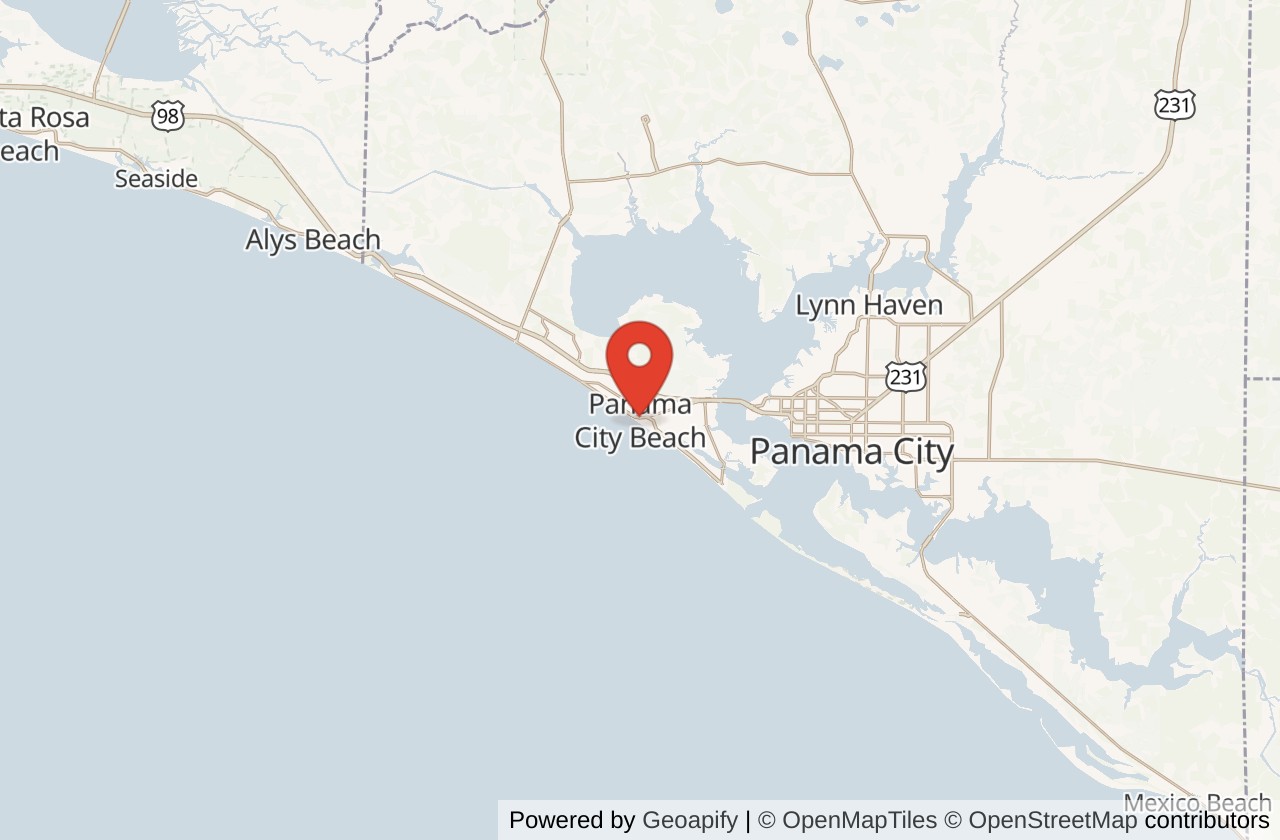
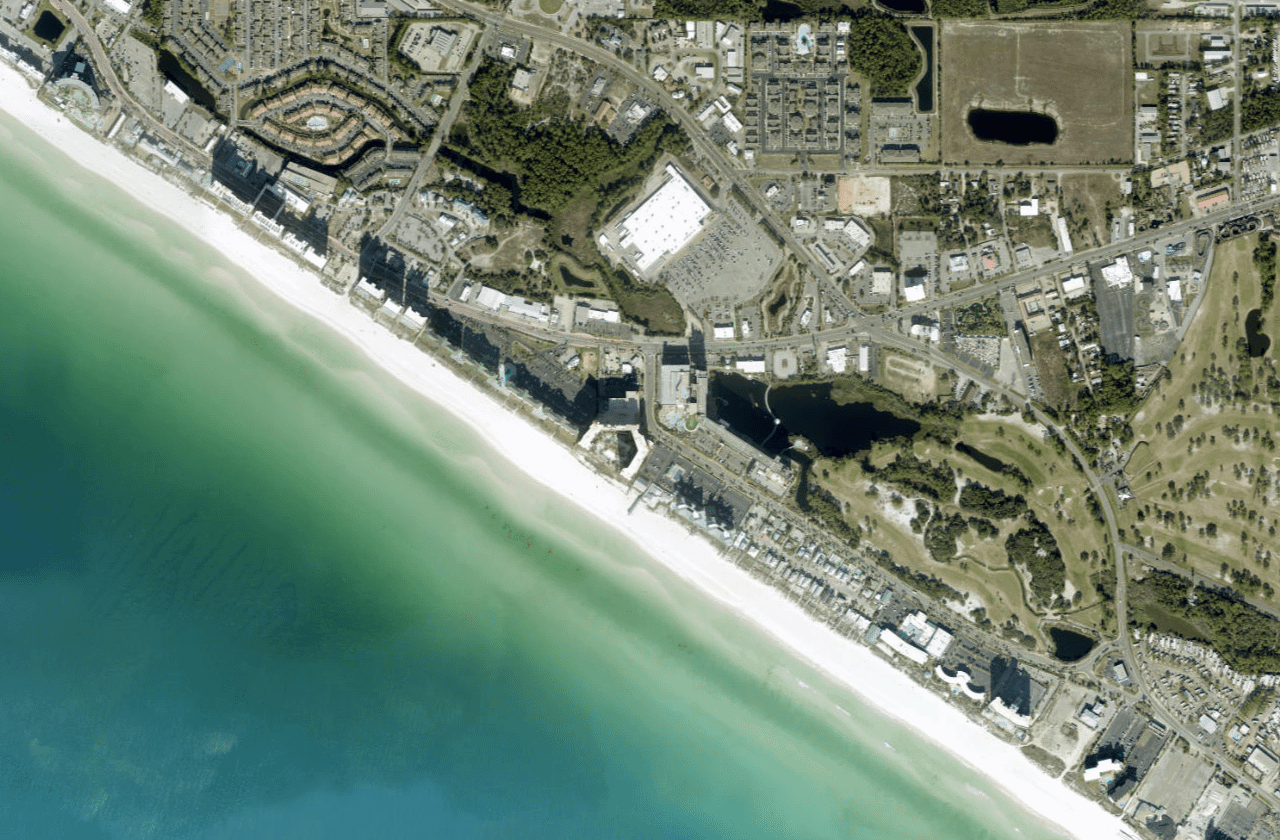
30.1766, -85.8055
What are the lineup and the town like at Panama City Beach?
Localism
mellow
Crowd
A mix of local Panhandle surfers, military families (nearby Tyndall AFB), college kids, and vacationing longboarders and foamie families. Mid-week and early mornings are quiet; the good-swell days, weekends and spring break get crowded fast, both in the water and on the sand. Summer water is full of swimmers and tourists rather than surfers.
Because PCB is flat so often, the lineup is known for getting genuinely crowded and a little frenzied on the rare good swell — everyone who surfs the Panhandle shows up at once. It's not aggressive territorial localism; it's just busy. Standard rules apply: don't drop in, wait your turn, and don't paddle straight to the peak and start hassling. A friendly, share-the-stoke attitude is the local norm, especially since most days everyone's just happy to be getting anything.
In the lineup: The St. Andrews jetties shape the most reliable bank and offer some shelter — but mind the rocks, the strong tidal current ripping through St. Andrews Pass, and posted surf-zone limits. The two piers focus swell into peaks on the up-current side; surfing is restricted within a set distance of each pier, so check the signs and give the structure room. Everywhere it's shifting beach-break sand, so read the banks fresh each session. Watch the colored flag warnings before paddling out.
PCB is two towns in one. The west end (Front Beach Road, Pier Park) is high-rise, neon, spring-break Florida — go-karts, beach clubs and crowds. The east end around Thomas Drive and Grand Lagoon, where the surf and the surf shop live, is older, lower-key and far more pleasant: marinas, condos, taco shacks and the state park. Base east, and PCB feels like a relaxed, warm-water beach town; wander west on a March weekend and it's a party. Either way the draw is the same — astonishingly clear emerald water and miles of white quartz sand.
How do you get to Panama City Beach?
Fly into Northwest Florida Beaches International Airport (ECP) — about 20 miles from the break, 25–35 minutes. Pensacola (PNS) is about 1.5–2 hours west and often has more flight options and lower fares; Destin–Fort Walton Beach (VPS) is a similar drive. Tallahassee (TLH) is roughly 1.5 hours east. ECP is by far the most convenient if the fare is reasonable.
- rental car$45–80/day · 25–35 minutes to the Thomas Drive / east-end surf zone
The default and best option — you'll want wheels to chase the surf between the piers and the St. Andrews jetties and to reach groceries and food. All major agencies are at ECP. Take SR-79 / Back Beach Road (US-98) toward the beach; the east end (Thomas Drive) is the far side of town from the airport, so allow the full 30+ minutes.
- rideshare$30–55 one way · 25–35 minutes
Uber and Lyft both serve ECP and PCB reliably. Fine if you're staying put on Thomas Drive and not chasing surf, but surge pricing spikes in peak summer and on spring-break weekends. Most sedans won't take a longboard — request an XL or message the driver about board bags.
- taxi$40–65 one way · 25–35 minutes
Metered/flat-rate taxis and airport shuttle vans queue at ECP arrivals. Confirm the fare and that a board bag will fit before loading; for anything over 7'0" you may need to ask for a van.
- shuttle$25–45 per person · 30–45 minutes with stops
Pre-booked airport shuttle/van services run between ECP and PCB hotels. Cheapest for solo travelers without boards; tell them in advance you have a board bag, as not all vans will carry one.
Do you need a car at Panama City Beach?
Do you need a car?
recommended
Walkability
If you base on the east end around Thomas Drive, you can walk to the beach, Mr. Surf's, Finn's and a Publix within a mile or so. But PCB sprawls for ~15 miles along the coast — the St. Andrews jetties, the two piers, and Pier Park are all a drive apart, and surf chasing means moving between them.
A rental car ($45–80/day) is the practical choice for a surf trip — the good banks shift between the city pier, county pier and the St. Andrews jetties, and you'll want to drive to whichever is working that swell. The free-to-cheap Bay Town Trolley runs the Front Beach Road tourist corridor but is slow and not built for board-toting surfers. Uber and Lyft are reliable for nights out and airport runs. Beach cruiser bikes are great for the flat east-end strip but useless for crossing town.
Boards: Rentals are mostly sedans and SUVs — request an SUV or bring soft racks and tie-downs if you're hauling a longboard between spots. Most rideshare sedans won't take a big board; order XL. St. Andrews State Park charges a per-vehicle entry fee (around $8) and has paid parking near the jetties; the piers have metered/paid public lots. There's no board-storage service, so plan to keep boards at your lodging.
Where can you stay near Panama City Beach?
West end (20404 Front Beach Rd), ~10 mi by road from the St. Andrews jetties; steps from the beach · Adults-only (16+) boutique inn on the west end of Front Beach Road — small, calm and character-filled, with a pool, hot tub, complimentary poolside mimosas and an evening wine social. The pick if you want personality over a high-rise, but note it's the far end of town from the east-end surf zone, so you'll drive ~15–20 min to the jetties. (Direct (wisteria-inn.com), Tripadvisor, Booking.com)
Central beachfront, ~5–6 mi west of the jetties; near Russell-Fields city pier · Gulf-front rooms with kitchens, fridges and private balconies — handy for self-catering and for being steps from the city pier peaks. Walkable to Pier Park. A solid mid-range beachfront base if you want to surf the pier rather than the jetties. (Direct, Booking.com, Expedia)
East end on Thomas Drive (8743 Thomas Dr), ~1.5 mi from the St. Andrews jetties · Big Gulf-front condo resort right in the east-end surf zone — one-bedroom and studio condos with kitchens, pools and direct beach access, walkable to Mr. Surf's and Finn's. Strong value for the location and the best all-rounder for jetty-focused surf trips. (Resort Collection direct, VRBO, Booking.com)
Central beachfront, ~5 mi west of the jetties · Reliable full-service Gulf-front resort with direct beach access, pools and a kids' club — the no-surprises family pick. Central location means you'll drive to whichever break is working. Good for non-surfing partners and kids on the flat days. (IHG direct, Booking.com, Expedia)
East-end Gulf-front, ~3–4 mi from the jetties · 23-story Gulf-front condo tower with a big lagoon-style pool and tiki bars; individually owned units rent through several managers. Resort-style and amenity-heavy — a strong pick for a group splitting a condo, and reasonably close to the east-end surf zone. (VRBO, Airbnb, third-party managers)
- Thomas Drive vacation rentals (VRBO / Airbnb, Lower Grand Lagoon)vacation rental · $ mid-rangeStays nearby
East end near St. Andrews — many within 1–2 mi of the jetties · The east-end Thomas Drive / Grand Lagoon area has a deep pool of privately owned condos and beach houses with kitchens and parking — the most flexible option for surfers who want to self-cater, store boards, and stay close to the jetties. Book a place with a real parking spot and you can soft-rack boards between spots. (VRBO, Airbnb)
Central beachfront, ~6 mi west of the jetties · Straightforward beachside motel-style resort with direct beach access and an outdoor pool — a budget Gulf-front bed when you mostly care about being on the sand and watching the cam. Central-strip location, so plan to drive to the surf. (Booking.com, Expedia)
Where do you eat at Panama City Beach?
- Finn's Island Style Grubcafe · $ budget
Baja fish tacos, poke bowls and acai smoothies — The surfers' breakfast-and-lunch spot — a low-key, palm-shaded shack at 7210 Thomas Dr, literally next to Mr. Surf's. Island-leaning healthy plates, fresh-pressed coffee and smoothies. Open mornings to mid-afternoon, Tue–Sun. Perfect post-dawn-patrol fuel.
- Thomas Donut & Snack Shopbakery · $ budget
Classic glazed donuts; blackened shrimp tacos with green sauce — A 1971 beach institution on the west end (Front Beach Rd) — no-frills donuts plus a cult-favorite taco-and-snack menu. Open early (6am) Tue–Sun. Worth the drive for the donuts if you're surfing the west-end piers.
- Schoonersbar · $ mid-range
Beach boil (shrimp, potatoes, corn, sausage); fresh Gulf fish — The self-styled 'Last Local Beach Club' — a casual, sand-floor Gulf-front bar-and-grill on the east end with live music, a sunset cannon and proper local atmosphere. The fun post-surf evening spot; reliably busy.
- Captain Anderson's Restaurantrestaurant · $$ high-end
Grouper Imperial (baked, stuffed with crabmeat); fresh-off-the-boat Gulf seafood — PCB's classic waterfront seafood house since 1967, on Grand Lagoon near the marinas (east end). White-tablecloth-ish and touristy but the seafood is genuinely good and fresh. The splurge dinner when you want more than tacos. Typically closed in deep winter — check before you go.
- Saltwater Grillrestaurant · $$ high-end
Gulf seafood, oysters and a big aquarium dining room — A long-running upscale seafood spot on the central beach — reliable for a nicer sit-down dinner with oysters and fresh catch. Good change of pace from the casual beach joints.
- Dat Cajun Place / local oyster & po'boy spots (Grand Lagoon area)restaurant · $ mid-range
Char-grilled oysters, po'boys and gumbo — The Grand Lagoon / east-end marina area has a cluster of casual Cajun and oyster joints — solid, cheap-ish Gulf Coast comfort food close to the Thomas Drive surf zone. Check current hours and reviews; a couple of older spots have rotated names over the years.
Cooking for yourself
- Publix at Magnolia Plaza (Thomas Drive)supermarket
Full-service supermarket at 2419 Thomas Dr — produce, deli, bakery, sushi, pharmacy and an in-store ATM. The obvious stock-up for self-catering condos on the east end, and the closest grocery to the St. Andrews surf zone. Open roughly 7am–10pm daily.
- Walmart Supercenter / Winn-Dixie (Back Beach Road)supermarket
For bigger or cheaper hauls, the Walmart Supercenter and Winn-Dixie stores along Back Beach Road (US-98) carry everything including cheap coolers, beach gear and bulk basics. A few minutes' drive inland from the beach strip.
Where do you rent or fix a board?
- Mr. Surf's Surf Shopwax · leashes · fins · ding repair · board rental · board sales · lessons · wetsuits · apparel · ~$25–40/day for surfboards (SUPs and bikes also available)
The Emerald Coast's anchor surf shop, established 1982, at 7220 Thomas Dr on the quiet east end. Full retail (boards, wetsuits, accessories), board, SUP, skimboard and bike rentals (with delivery to your condo), ding repair, and surf/SUP lessons. The single best resource for visiting surfers here — they'll tell you which bank is working. Confirm current rental rates by phone.
- Mojo Surf Colessons · board rental · board sales · apparel · Call for current rates
Local surf-lesson outfit and shop offering beginner-through-advanced lessons (they'll take you to a working local spot), plus SUP and board rentals and gear. A good second option for lessons, especially for families and first-timers. Book lessons ahead, particularly around swell windows.
What do you do when it's flat?
- St. Andrews State Parknature · ~$8 per vehicle entry
The east-end natural anchor: the jetties (the area's best surf bank and a calm snorkeling lagoon on the protected side), white-sand beaches, nature trails, gators in the ponds and a boat shuttle to Shell Island. The place to be whether it's firing or flat.
- Shell Island shuttle / boat tourwater · ~$18–25 per person shuttle; more for pontoon rentals
Ferry from St. Andrews or the Grand Lagoon across to seven miles of undeveloped barrier-island beach — shelling, snorkeling, and bottlenose dolphins on the crossing. The classic flat-day move. Shuttle runs every 30–60 min seasonally.
- Snorkeling & diving the St. Andrews jetties / artificial reefswater · free (own gear) to $ for charter trips
The jetty rocks and the area's many artificial reefs and wrecks make for genuinely good Gulf snorkeling and diving in the clear emerald water. Snorkel the calm jetty lagoon yourself or book a dive charter for the offshore reefs.
- Russell-Fields City Pier & M.B. Miller County Pieradventure · small walk-on fee (~$3–4); fishing ~$6–7
The two long Gulf piers are both surf checkpoints and fishing/walking attractions. Stroll out for the view and to read the sandbars, or fish off the end. Note surf-zone rules near the piers and posted swimming/surfing restrictions.
- WonderWorks Panama City Beachculture · $ admission
Upside-down 'fun lab' on Front Beach Road (9910 Front Beach Rd) with 100+ interactive science exhibits, a ropes course, laser tag and indoor activities — a solid rainy/flat-day option if you've got kids in tow.
- Pier Parkculture · free to browse
Open-air shopping, dining and entertainment complex on the west end — restaurants, bars, a Ferris wheel and big-box shops. Where the town congregates on flat evenings; touristy but convenient for a non-surf night.
- St. Andrews jetties / Grand Lagoon paddle & SUPwater · $ rentals from local shops
When the Gulf is glassy and flat, the protected Grand Lagoon and St. Andrews lagoon are ideal for SUP and kayak touring — calm, clear water with dolphins and birdlife. Rentals from Mr. Surf's and lagoon-side operators.
What should you know before you go?
Cash & ATMs
No cash worries — this is mainstream Florida. Banks and ATMs are everywhere along Thomas Drive and Front Beach Road; the Publix at 2419 Thomas Dr has an in-store ATM, and cards are accepted essentially everywhere. Bring small bills only for pier fishing fees and parking meters.
Medical
HCA Florida Gulf Coast Hospital (Panama City, ~10–15 min from the east-end beach) is the nearest full ER and acute-care hospital, with a 24/7 emergency department. Multiple walk-in urgent-care clinics and pharmacies (CVS, Walgreens) line Back Beach Road for stitches, ear infections and minor injuries. Standard US healthcare costs apply — travel insurance strongly advised for non-US visitors.
Water safety
Rip currents are the single biggest danger here and the Gulf kills people every year — PCB recorded multiple rip-current drownings in recent summers, often on red-flag days. Always check the colored beach-flag warning system before paddling out: double red means the water is legally closed (a $500 fine for swimming), single red is high hazard, yellow moderate, green calm, purple dangerous marine life. Note for surfers: PCB's ordinance exempts surfers attached to a board by a leash from the double-red ban — but skimboards and bodyboards are not exempt. The tidal current through St. Andrews Pass by the jetties is strong — respect it and the jetty rocks. Sharks are present (this is the Gulf) but bites are rare; more common nuisances are stingrays (shuffle your feet in the shallows) and seasonal jellyfish (purple flag). The water itself is clean and clear; quality is generally good, though it can drop briefly after heavy rain runoff.
United States basics: money, entry, phones, water
Currency
US Dollar (USD) — Home currency — 1 USD = 1 USD
Entry (US passport)
Unlimited — domestic travel — No passport needed for travel within the 50 states (including Hawaii) or to Puerto Rico. Since May 7, 2025 you need a REAL ID-compliant driver's license (star marking) or a passport to clear TSA for domestic flights — check your license before booking.
Language
English, Spanish (widely spoken, esp. California, Texas, Florida). Native — English works everywhere, including every surf town.
Plugs
A, B · 120V / 60Hz
Tipping
Expected and culturally significant: 18–22% at sit-down restaurants, $1–2 per drink at bars, 10–15% for taxis/rideshares. Counter-service tip screens are common but optional.
Phone / data
Your existing US plan, T-Mobile / AT&T prepaid, Travel eSIMs (Airalo, Holafly, Nomad). Strong LTE/5G in cities and most coastal towns. Expect dead zones on rural stretches of coast — parts of the Big Sur/Central California coast, the North Shore of Kauai, and remote East Coast barrier beaches. Download offline maps for surf-check drives.
Tap water
Safe to drink nationwide from municipal supplies, including Hawaii and Puerto Rico.
Emergency
911 for police, fire, and ambulance everywhere (including Hawaii and Puerto Rico). International visitors: US healthcare is extremely expensive — an ER visit can run thousands of dollars — so travel insurance with medical coverage is essential.
Other passports: entry rules differ — check the official source before booking.
Alert me when Panama City Beach is on
Drop your email and you'll get one message when our forecast shows a trip-worthy window here: the dates, the size, and a place to stay. Free.
Frequently asked questions about Panama City Beach
Is Panama City Beach good for surfing?
It's good in short bursts, not consistently. PCB is a Gulf of Mexico beach break that's flat most of the year and only produces real waves when a winter cold front or a Gulf tropical/hurricane swell pushes energy onto the sandbars. On those days the piers and the St. Andrews jetties can be fun, shoulder-high to overhead; the rest of the time it's small longboard/foamie surf.
When is the best time to surf Panama City Beach?
Winter (November–March, with February the classic month) is the most consistent, when cold fronts generate short-lived but punchy swell. Hurricane season (August–October) brings the biggest, cleanest waves but is unpredictable. Summer is mostly flat and glassy — better for learning than for waves. Watch the forecast and pounce on the swell windows.
Where do you surf in Panama City Beach?
The main spots are the St. Andrews State Park jetties on the east end (the most reliable bank, with some shelter), and the two Gulf piers — Russell-Fields (city pier) and M.B. Miller (county pier) — which focus swell into peaks. It's all shifting beach-break sand, so the best bank changes with each swell. Note posted surf restrictions near the piers.
Do I need a wetsuit to surf Panama City Beach?
Most of the year, no — the Gulf is warm spring through fall, so boardshorts or a spring suit are plenty. Only the coldest winter cold fronts (which are also when it's most likely to be surfable) call for a 3/2 wetsuit. Bring a spring suit and a light wetsuit if you're coming in winter.
Where can I rent a surfboard in Panama City Beach?
Mr. Surf's Surf Shop (7220 Thomas Dr, established 1982) is the main shop — board, SUP and skimboard rentals (roughly $25–40/day, with condo delivery), full retail, ding repair and lessons. Mojo Surf Co also offers lessons and rentals. Both are well-established and worth a call to check current rates and conditions.
How far is the airport from Panama City Beach?
Northwest Florida Beaches International Airport (ECP) is about 20 road miles and 25–35 minutes from the Thomas Drive / east-end beach area. Rideshare runs roughly $30–55; a rental car is recommended for chasing surf between the piers and jetties. Pensacola (PNS) and Destin–Fort Walton (VPS) are 1.5–2 hours away if fares are cheaper.
Is it safe to swim and surf at Panama City Beach?
It can be dangerous on the wrong day — rip currents cause multiple drownings most years. Always check the colored beach-flag system: double red means the water is legally closed and swimming brings a $500 fine, red is high hazard, green is calm, purple flags warn of stingrays or jellyfish. Mind the strong tidal current and rocks by the St. Andrews jetties.
What is there to do in Panama City Beach when it's flat?
Plenty — St. Andrews State Park, the Shell Island boat shuttle, snorkeling and diving the jetties and artificial reefs, the two fishing piers, WonderWorks, and SUP/kayak on the calm Grand Lagoon. The clear emerald water and white sand make the flat days easy to fill.
Sources for this guide
- surf-forecast.comsecondary source · Swell window (SSE), offshore N wind optimum, beach-break character, seasonal consistency (winter/February best, hurricane-season biggest), c
- mrsurfs.comofficial · Mr. Surf's Surf Shop — established 1982, location (7220 Thomas Dr), board/SUP/skimboard/bike rentals with delivery, lessons, ding repair, re
- mojosurfco.comofficial · Mojo Surf Co — surf lessons and rentals as a second surf-shop option
- finnsgrub.comofficial · Finn's Island Style Grub — location next to Mr. Surf's (7210 Thomas Dr), island-style tacos/poke/smoothies, hours
- visitpanamacitybeach.comsecondary source · Surf spots — St. Andrews jetties, Russell-Fields city pier, M.B. Miller county pier, pier surf restrictions, beginner/advanced suitability
- pcbeach.orgofficial · Colored beach-flag warning system (double red/red/yellow/green/purple) and meanings
- explore.comeditorial · Double-red-flag $500 swimming fine ordinance; rip-current drowning history
- iflybeaches.comofficial · ECP airport identity and ~20-minute proximity to PCB
- travelmath.comsecondary source · ECP-to-PCB driving distance (~18 mi) and time (~28 min) verification
- yelp.comsecondary source · Publix at 2419 Thomas Dr — live listing, hours, in-store ATM, deli/bakery/pharmacy for self-catering
- captandersons.comofficial · Captain Anderson's Restaurant — since 1967, Grand Lagoon waterfront, Grouper Imperial signature, seasonal closure
- wisteria-inn.comofficial · Wisteria Inn — adults-only east-end boutique lodging, amenities, location near Thomas Drive
- shellislandshuttle.comofficial · Shell Island shuttle — fares (~$18–25), schedule, departure from St. Andrews/Grand Lagoon
- hcafloridahealthcare.comofficial · HCA Florida Gulf Coast Hospital — nearest 24/7 ER for the medical section
- floridastateparks.orgofficial · St. Andrews State Park — jetties, snorkeling lagoon, Shell Island access, per-vehicle entry fee, activities
- wonderworksonline.comofficial · WonderWorks Panama City Beach — live flat-day/rainy-day attraction replacing the closed Gulf World (9910 Front Beach Rd, interactive exhibit
- wjhg.comeditorial · Gulf World Marine Park permanent closure (2025 dolphin death, bankruptcy, no reopening) — basis for removing it from activities
Guide researched and verified 2026-06-17. Details change; confirm bookings and entry requirements before travel.