When is the best time to surf Malibu (First Point)?
Peak Jun–Sep · often good Apr–May, Oct · can still fire Nov–Mar.
Malibu is a summer wave first. It faces south/southwest and switches on with the south and southwest groundswells that run roughly April through October, with the best, longest, glassiest walls landing on long-period southern-hemisphere pulses from June to September. Mornings are prime — the point is often glassy at dawn before the afternoon onshore breeze and the crowd both fill in. Winter mostly misses Malibu's swell angle, but a W swell with enough south in it can still light up First Point a few times a season — smaller crowds, cheaper lodging, and some of the year's most memorable sessions for anyone who catches the window.
What does a surf trip to Malibu (First Point) look like?
A typical trip from our guide. A real alert comes with the forecast for each day and a fare from your airport.
A real alert we sent · Sep 1
We matched a surfer flying from SEA to this window: Sep 6–8, 3 good days with faces up to 11 ft, peaking 9/10. 4 nights, flights from $182 round trip.
This is a prior real trip from our match log, not a forecast. Windows and fares change; your alert carries the current ones.
How much does a surf trip to Malibu (First Point) cost?
A five-night trip, per person, before food and rentals.
Rows marked "based on … alerts" are the middle half of the real round-trip fares we quoted in alerts on that route, priced 3 to 10 days before departure, since June 2026. Checked Oct 17. Stays use our guide's nightly bands; transfers use the guide's quoted rates. Real alerts price the exact dates.
Where should you stay at Malibu (First Point)?
Closest to the wave
The Surfrider Malibu $$
boutique · high-end · Directly across PCH from Surfrider Beach / First Point — walk to the wave
A 20-room reimagined 1950s motel directly opposite the break, with a guests-only rooftop bar overlooking the pier and the point. It even lends complimentary surfboards and SUPs to guests. The single best location in Malibu for surfing First Point — and priced accordingly (luxury rates; cheapest in the off-season).
Check ratesCheaper
Vacation rentals, Malibu & Santa Monica (Airbnb/VRBO) $
vacation rental · mid-range · Varies — Malibu beachfront walkable; Santa Monica/Pacific Palisades = 15–30 min drive
Malibu beachfront rentals exist but run very high; the value play is a Santa Monica or Pacific Palisades flat with a kitchen and parking, split among a group, and a short PCH commute. Book early for summer — the prime First Point season is also peak tourist season. Stick to licensed listings; LA-area short-term-rental rules are enforced.
Stays nearbyPoints play: Le Méridien Delfina Santa Monica (Marriott), about 50–70k points a night, 25–35 min from the break.
Browse all stays near the breakEvery place we researched, with its booking link, is under where to stay below.
What is the wave like at Malibu (First Point)?
Break type
Point
Wave direction
Right
Best swell
SW (SSE–W window)
Ideal size
2–5 ft
Best tide
Low to mid-high
Low: sections, rocks · High: slow, fat
Consistency
Very Consistent
Peak season
Jun–Sep
Nearest airport
LAX · ~25 mi
Drive from airport
45 minutes to 1.5 hours depending on PCH and I-10 traffic
That history is also the problem: Malibu is the most crowded famous wave on earth. First Point works best on a long-period south or southwest swell in summer, when the point lights up under warm offshore-tinged glass — and that's exactly when every longboarder, log-rider, shortboarder, soft-top renter, and bucket-list tourist within driving distance is in the water. The lineup runs deep and the pecking order is real: priority is fiercely contested, drop-ins and the longboard logjam at the top of the point are constant, and First Point in particular is known for an established local hierarchy that doesn't hand out waves to strangers. It is a World Surfing Reserve, a State Beach, and the namesake of the Surfrider Foundation, which was founded by Malibu surfers in 1984 to protect this exact wave — so the culture here is equal parts reverence and territorial intensity.
The upside is that almost nowhere else delivers a wave this long, this clean, and this beginner-friendly in shape — the trick is managing the crowd, the etiquette, and the logistics. Lodging in Malibu itself is eye-wateringly expensive, so many surf travelers base 20 to 30 minutes east in Santa Monica and drive in early, beating both the crowd and the notorious Pacific Coast Highway traffic. Come for the history and the sheer length of the ride; come humble, come early, and come ready to share.
Who it suits
All levels in terms of wave shape — First Point is slow, peeling, and as forgiving as a world-class wave gets, which is why it suits longboarders and progressing intermediates especially. But the crowd and the strong local pecking order make it a hard place to actually get waves, so it rewards patient surfers with good etiquette far more than aggressive ones. True beginners are better off taking a lesson at a quieter beach and treating Malibu as a place to watch.
Where exactly is Malibu (First Point)?
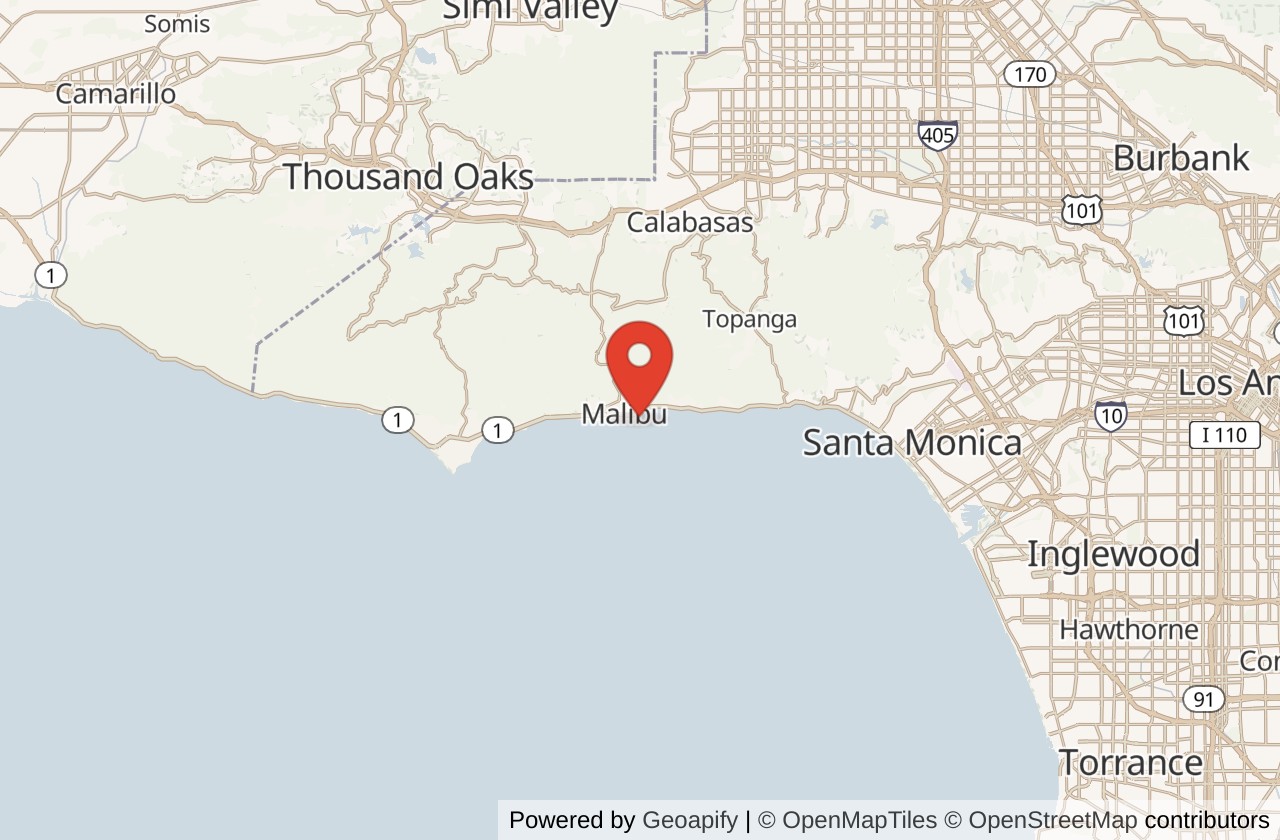
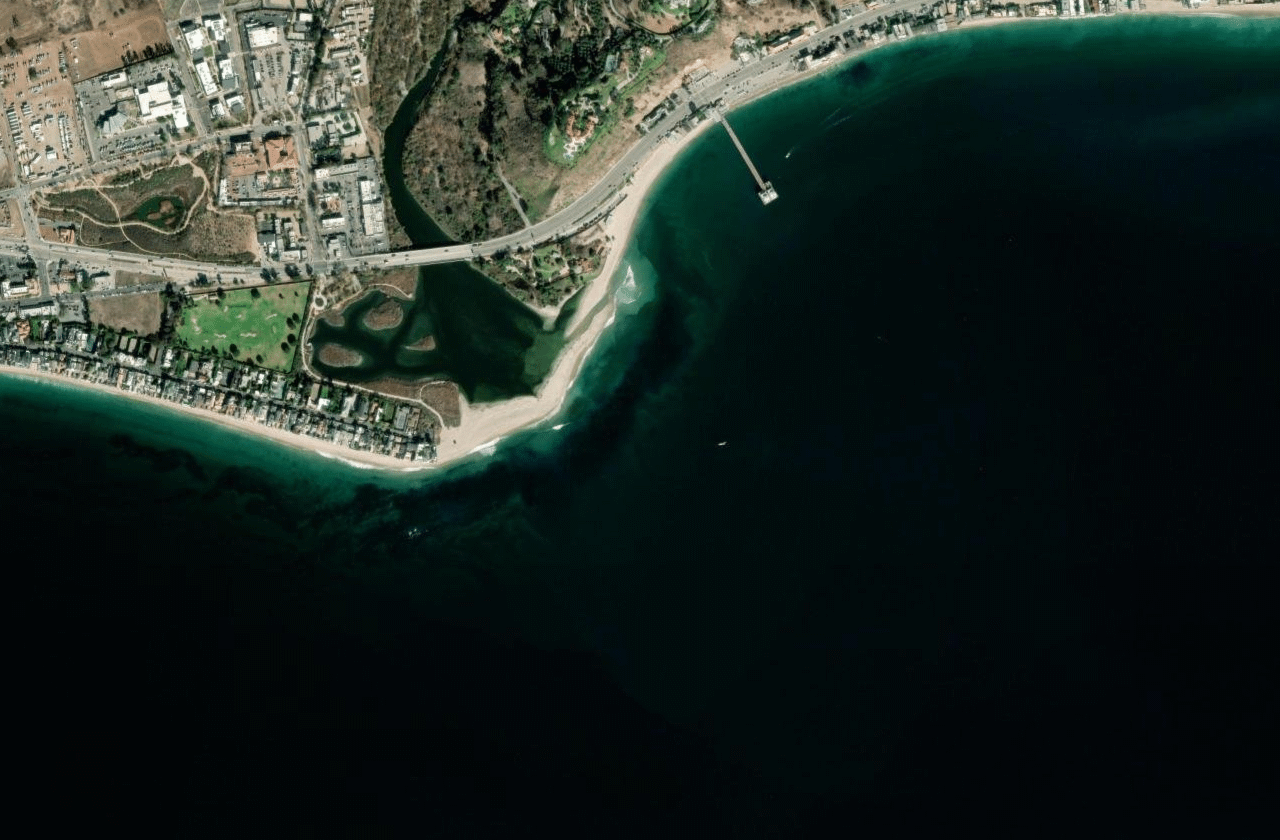
34.0317, -118.6783
What are the lineup and the town like at Malibu (First Point)?
Localism
heavy
Crowd
Famously, relentlessly crowded — arguably the most crowded famous wave on the planet. On any decent summer south swell the point is wall-to-wall: locals, pros, longboard log-riders, shortboarders weaving through, soft-top renters, surf schools, and bucket-list tourists, all stacked from Third Point to the pier. It thins only at dawn, on weekday mornings, in marginal/small conditions, and out of the summer south-swell window. If you want waves and sanity, be in the water before sunrise.
First Point is known for one of the most contested lineups and strongest local pecking orders in California — priority is fiercely defended, and the wave's slow, peeling shape means a long-running logjam of longboarders fighting for the same takeoff at the top of the point. The community expectation is hard one-wave-at-a-time etiquette: don't drop in, don't snake the peak, don't paddle straight to the prime takeoff your first session, and don't sit on the inside hoping to poach. Drop-ins happen constantly because the wave is so long and so crowded — but doing it yourself, especially as a visitor, is the fastest way to draw heat. Earn position by waiting your turn, reading who's deepest, and showing you know the rules.
In the lineup: Three sections: Third Point (top, faster, a bit less mobbed), Second Point (middle), and First Point (the long money wall toward the pier, also the most crowded and most localized). Paddle out via the cobble point and work toward your section rather than sitting on the prime First Point peak immediately. The bottom is cobblestone and sand — generally friendly but slick on the rocks at the point on the way in and out. Watch the pier pilings on a long ride at First Point. The sandbar shifts with the lagoon mouth, so the wave's shape and best takeoff move through the season.
Malibu off the water is an affluent, spread-out, 21-mile coastal community rather than a walkable surf town — gated beach colonies, canyon ranches, celebrity privacy, and a string of PCH plazas (Cross Creek, the Country Mart, Trancas) holding the restaurants and shops. It's beautiful and laid-back by day and quiet by night; there's no real nightlife scene, and most visitors who want evening energy go to Santa Monica. The surf culture is deeply proud and protective: this is a World Surfing Reserve and the birthplace of the Surfrider Foundation, and the reverence for the wave is matched by the territoriality in the water. Come early, be respectful, and you'll feel the magnetism of the place that started it all.
How do you get to Malibu (First Point)?
Fly into Los Angeles International Airport (LAX) — about 25 miles from the break, 45 minutes to 1.5 hours depending on PCH and I-10 traffic. Hollywood Burbank (BUR) is roughly the same distance (~30 mi) over the hills and often cheaper and far less chaotic than LAX, but the drive crosses the San Fernando Valley and the 405/101, which can be brutal at rush hour. LAX has by far the most flights; BUR is the quieter, sometimes cheaper domestic alternative.
- rental car$45–90/day · 45 min – 1.5 hr to Malibu
Effectively essential for a Malibu surf trip. All major agencies operate from LAX's consolidated rental-car facility reached by the free 'LAX-it'/rental shuttle. The locals' route avoids the 405: take Sepulveda/Lincoln north to I-10 West, which dead-ends into Pacific Coast Highway at Santa Monica, then PCH straight up the coast to the pier. Most rentals are sedans/SUVs with no racks — bring soft racks or pick an SUV you can fit boards inside.
- rideshare$50–95 (surge can push higher) · 45 min – 1.5 hr
Uber/Lyft pick up from the LAX-it lot (shuttle from the terminals). Workable for getting to your lodging, but a poor daily plan in Malibu — coverage thins out along PCH and fares add up fast. A standard car takes a shortboard with seats down; request XL for a board bag and confirm the driver is OK with it.
- bus$2–6 per person (multiple transfers) · 2–2.5 hr
The cheap, slow, board-unfriendly option: a Metro bus connection from LAX toward Santa Monica, then Metro Line 134 up PCH, which has stops near Surfrider Beach (Malibu Pier / Cross Creek). Note: as of 2026 Line 134 still runs but, due to ongoing Palisades Fire recovery work, it skips a stretch of PCH between Santa Monica and Malibu, so service can require extra transfers or be disrupted — check Metro for current routing. Fine with a daypack, painful with a board bag, and not realistic as a daily surf shuttle. Only worth it if you're carless and patient.
- private transfer$120–220+ one way · 45 min – 1.5 hr
Pre-booked car services and airport sedans serve Malibu; the only transfer mode that reliably handles board bags without hassle. Book ahead and state board-bag dimensions. Pricey, but some travelers use it for the airport legs and rent a car once in town.
Do you need a car at Malibu (First Point)?
Do you need a car?
essential
Walkability
Surfrider Beach, the Malibu Pier, the Lagoon, Adamson House, and a cluster of restaurants and Zuma Jay's surf shop are all within an easy walk of each other right at First Point — so if you score lodging in that pocket you can park the car and walk to the wave. Beyond that immediate cluster, Malibu is a 21-mile ribbon of coast with everything strung out along PCH; nothing else is walkable and there are no sidewalks for long stretches.
Rent a car — Malibu has effectively no useful public transit beyond the single Metro 134 bus crawling along PCH (and as of 2026 even that line skips part of PCH for Palisades Fire recovery work), and the town sprawls for over 20 miles. A rental ($45–90/day at LAX) is how locals and visitors alike do everything. Parking at First Point is the real daily puzzle: the Malibu Lagoon State Beach lot off PCH charges by the hour/day and fills early on good summer swells, the pier lot is paid, and the free PCH shoulder spots near the point go before dawn on weekends. Get there early both to surf and to park. Rideshare exists but thins out and gets expensive the further up the coast you go.
Boards: Bring soft racks if you rent a sedan — most agency cars have no rack. Boards are easy to move once you're parked near the point; First Point is a short, flat walk from the Lagoon lot and the PCH shoulder across the sand to the cobble point. If you're basing in Santa Monica, a rooftop rack or an SUV makes the daily PCH commute far simpler than wrangling a board bag into rideshares.
Where can you stay near Malibu (First Point)?
Directly across PCH from Surfrider Beach / First Point — walk to the wave · A 20-room reimagined 1950s motel directly opposite the break, with a guests-only rooftop bar overlooking the pier and the point. It even lends complimentary surfboards and SUPs to guests. The single best location in Malibu for surfing First Point — and priced accordingly (luxury rates; cheapest in the off-season). (Direct (thesurfridermalibu.com), Booking.com)
~4 miles west toward Zuma — 8–10 min drive to First Point · A smaller, more old-school Malibu hotel on the bluff with free parking and a relaxed feel — one of the more sane-priced full hotels actually inside Malibu, which is saying something given local rates. A solid mid-Malibu base if you want to be in town rather than commuting from Santa Monica. (Direct (malibucountryinn.com), Expedia)
On Carbon Beach, ~1.5 miles east of First Point — 5 min drive · Luxe oceanfront boutique on 'Billionaire's Beach' with a private beach, spa, and balconies over the water. A splurge base a few minutes from the point — the pick if a non-surfing partner needs convincing or you want comfort steps from the sand. (Direct (malibubeachinn.com), major OTAs)
Up in the hills off Kanan Dume Rd — ~20–25 min drive to First Point · A 250-acre ranch resort in the Malibu hills with a separate beach club for guests. Not a surf base in the strict sense — you'll drive down to the coast — but a memorable, leafy splurge for a mixed trip that isn't purely about dawn patrol. (Direct (calamigosranch.com), major OTAs)
Downtown Santa Monica — ~20–30 min drive up PCH to First Point · The budget surf-traveler answer to Malibu's prices: clean dorms and privates blocks from the Santa Monica sand, a full guest kitchen, and a young international crowd. You'll commute up PCH each morning, but you'll sleep, eat, and go out for a fraction of Malibu money. (Direct (hihostels.com), Hostelworld)
Main St, Santa Monica — ~20–30 min drive up PCH to First Point · A well-rated, no-frills family-run motel on Main Street with free parking — rare and valuable near the Santa Monica beach. A practical mid-budget base for surfing Malibu without paying Malibu rates, with cafes and the beach path at the door. (Direct (seashoremotel.com), Booking.com)
Varies — Malibu beachfront walkable; Santa Monica/Pacific Palisades = 15–30 min drive · Malibu beachfront rentals exist but run very high; the value play is a Santa Monica or Pacific Palisades flat with a kitchen and parking, split among a group, and a short PCH commute. Book early for summer — the prime First Point season is also peak tourist season. Stick to licensed listings; LA-area short-term-rental rules are enforced. (Airbnb, VRBO)
Where do you eat at Malibu (First Point)?
- Malibu Farm Restaurant at the Pierrestaurant · $ mid-range
Swedish pancakes; cauliflower-crust pizza; ricotta toast with ocean views — Farm-driven California food right over the water at the base of the Malibu Pier, steps from First Point — the default post-session breakfast or lunch within a two-minute walk of the wave. Note: as of 2026 the smaller Malibu Farm cafe at the FAR END of the pier is temporarily closed while State Parks completes structural pier repairs; the full restaurant at the front of the pier remains open. Confirm before relying on the end-of-pier cafe.
- Neptune's Netrestaurant · $ mid-range
Beer-battered fish & chips; fried seafood platters; clam chowder — A 1956 biker-and-surfer seafood shack way up at the county line (~12 miles west, past Zuma) — a worthwhile PCH pilgrimage on a flat-spell drive. Order at the counter, eat at picnic tables, watch the Harleys and the surf checks roll by. A genuine California institution.
- Lily's Cafe & Pantry (Point Dume)cafe · $ mid-range
Breakfast burritos; coffee and pastries to go — A friendly Point Dume coffee-and-breakfast spot (~6 miles west) for grab-and-go fuel before or after a session further up the coast. Easy parking and quick service — a useful alternative when the pier is mobbed.
- Malibu Seafood Fresh Fish Market & Patio Caferestaurant · $ mid-range
Fish & chips; grilled fish plates; cold seafood from the market case — A no-frills fish market and ocean-view patio on PCH (~5 miles west toward Pepperdine) that locals rate for fresh, fairly priced seafood. Order at the window, grab a patio table over the water — a classic Malibu post-surf feed without the resort markup.
- John's Garden (Malibu Country Mart)cafe · $ mid-range
Sandwiches, smoothies, and salads — A long-running counter cafe in the Malibu Country Mart at Cross Creek, a couple of minutes' drive from First Point — quick healthy sandwiches and smoothies for a beach lunch. Handy when you want to refuel without sitting down for a full meal.
- SunLife Organics (Cross Creek)cafe · $ mid-range
Acai bowls, smoothies, cold-pressed juice, and coffee to go — A Malibu-staple juice-and-smoothie cafe in the Cross Creek complex (Malibu Country Mart) a couple of minutes from First Point — acai bowls, cold-pressed juice, and coffee for a quick, healthy grab-and-go before or after a session. The local move for fast fuel near the point without a sit-down meal.
Cooking for yourself
- Ralphs (Malibu, Malibu Rd / Malibu Bay Colony)supermarket
The full-service supermarket on Malibu Rd in the Malibu Bay Colony, a few minutes west of First Point — everything for self-catering, plus a pharmacy and deli. The practical, normal-priced grocery stop closest to the wave.
- Vintage Grocers (Trancas Country Market)supermarket
An upmarket hometown market at Trancas (~6 miles west, across from Zuma), open 7am–10pm daily, with fresh produce, seafood, a good deli, and prepared foods. Pricier than Ralphs but excellent for a beach picnic or a self-catered dinner if you're based up the coast.
- Pavilions (Malibu, Point Dume / Heathercliff Rd)supermarket
A full supermarket at the Point Dume shopping center off PCH (~6 miles west of First Point) for groceries, snacks, sunscreen, and beer — a useful backup to Ralphs when you're stocking a rental kitchen, especially if you're based up the coast.
Where do you rent or fix a board?
- Zuma Jay Surfboardsboard sales · board rental · wetsuits · wax · leashes · fins · ding repair · apparel · $25–45/day (boards); wetsuits extra
Malibu's oldest surf shop, across PCH from the Malibu Pier and First Point, run by a true local legend. Custom and stock boards, full wetsuit wall, rentals (boards, wetsuits, even ocean kayaks), repairs, and the most honest in-person read you'll get on whether the point is worth paddling out into today. The default gear stop right at the wave.
- Rider Shack Surf Shop (West LA / Marina-Venice)board sales · board rental · wetsuits · wax · leashes · fins · ding repair · apparel · $30–50/day
A long-running family-owned surf shop on Washington Blvd in west LA (near Marina del Rey/Venice), well stocked with new and used boards, wetsuits, accessories, plus rentals and repairs — a convenient gear stop if you're basing in Santa Monica and driving up PCH, or a backup when Zuma Jay is slammed in peak summer. Confirm current hours and rental stock before driving over.
What do you do when it's flat?
- Malibu Pierculture · free to walk
The 1905 pier right beside First Point — walk out for the best view of the point's three sections peeling toward you, plus dining and fishing. The classic Malibu surf-check and golden-hour stroll, steps from the wave.
- Adamson House & Malibu Lagoon Museumculture · museum free; house tours by reservation
A 1929 Spanish-Colonial landmark famous for its Malibu tile, on the Lagoon just east of the point. The small museum (open Wed–Sat) covers Malibu and surf history; docent house tours run select days. A perfect low-key flat-spell or rest-day visit a short walk from where you surfed.
- Malibu Lagoon State Beach & nature walknature · free (paid parking)
The restored coastal wetland behind First Point — boardwalks, birdlife, and the lagoon-mouth dynamics that literally shape the sandbar that makes the point break. An easy, scenic stroll between surfs; note it's the source of the post-rain water-quality issue at Surfrider.
- Point Dume State Beach & headland hikenature · free (paid parking)
A dramatic bluff-top headland ~6 miles west with tidepools, a short clifftop trail, and seasonal whale and sea-lion watching. The best easy coastal hike in Malibu and a great change of pace from the First Point crowd.
- Zuma Beach swim & beach daywater · free (paid parking)
Malibu's big, wide, lifeguarded sand beach ~5–6 miles west — the place to swim, bodysurf, and decompress when First Point is a zoo. Easier parking and a totally different, family-friendly scene from the point.
- Pacific Coast Highway coastal driveday trip · free (fuel only)
The Malibu stretch of PCH is one of America's iconic coast drives — wind west past Zuma to the county line and Neptune's Net, or east toward Santa Monica, stopping at surf checks, beaches, and ocean-view pullouts. Best in the morning before traffic builds.
- Santa Monica Pier & beach (day trip)day trip · free to walk; rides/arcade extra
20–30 minutes east: the classic pier, beach path, and the buzzier town energy Malibu lacks at night. If you're basing in Santa Monica anyway, it's your evening scene; from Malibu it's an easy rest-day outing.
What should you know before you go?
Cash & ATMs
There's no ATM on the sand at First Point. ATMs and banks are a couple of minutes away in the Cross Creek/Malibu Country Mart and along PCH; the pier and nearby cafes take cards, and effectively everything in Malibu is card-friendly. Bring small cash mainly for the paid parking machines, which is the one place coins/cards matter daily.
Medical
There's no hospital in central Malibu; urgent care and clinics operate along PCH, and the nearest full emergency rooms are in Santa Monica (UCLA Santa Monica / Providence Saint John's), roughly 20–30 minutes east. For anything serious, plan on that drive — Malibu's remoteness along a single highway is a real consideration in an emergency.
Water safety
The headline spot-specific issue at Surfrider is water quality, not waves: Malibu Lagoon drains directly at First Point, and after rain the lagoon and storm runoff push bacteria, debris, and pollutants into the surf zone. LA County routinely issues ocean-water-use warnings for Surfrider/Malibu Lagoon, and health authorities advise avoiding the water for about 72 hours after rain (longer near the lagoon mouth) — check the LA County beach water-quality map/hotline before paddling out. Surfrider itself is a State Beach with seasonal lifeguards and is one of California's more beginner-friendly waves in shape: cobble-and-sand bottom, no urchins or heavy reef, and a slow, forgiving wall. The real hazards are the crowd (collisions, loose boards, the longboard logjam), the pier pilings on a long First Point ride, and slick cobblestones at the point. Sharks are the standard low-probability SoCal background risk.
United States basics: money, entry, phones, water
Currency
US Dollar (USD) — Home currency — 1 USD = 1 USD
Entry (US passport)
Unlimited — domestic travel — No passport needed for travel within the 50 states (including Hawaii) or to Puerto Rico. Since May 7, 2025 you need a REAL ID-compliant driver's license (star marking) or a passport to clear TSA for domestic flights — check your license before booking.
Language
English, Spanish (widely spoken, esp. California, Texas, Florida). Native — English works everywhere, including every surf town.
Plugs
A, B · 120V / 60Hz
Tipping
Expected and culturally significant: 18–22% at sit-down restaurants, $1–2 per drink at bars, 10–15% for taxis/rideshares. Counter-service tip screens are common but optional.
Phone / data
Your existing US plan, T-Mobile / AT&T prepaid, Travel eSIMs (Airalo, Holafly, Nomad). Strong LTE/5G in cities and most coastal towns. Expect dead zones on rural stretches of coast — parts of the Big Sur/Central California coast, the North Shore of Kauai, and remote East Coast barrier beaches. Download offline maps for surf-check drives.
Tap water
Safe to drink nationwide from municipal supplies, including Hawaii and Puerto Rico.
Emergency
911 for police, fire, and ambulance everywhere (including Hawaii and Puerto Rico). International visitors: US healthcare is extremely expensive — an ER visit can run thousands of dollars — so travel insurance with medical coverage is essential.
Other passports: entry rules differ — check the official source before booking.
Malibu (First Point) is on Nov 1–4
Our forecast shows a trip-worthy window, up to 5 ft, best day 8/10. Drop your email and we'll send you this one and the next: the dates, the size, and where to stay. Free.
Frequently asked questions about Malibu (First Point)
Can beginners surf Malibu First Point?
The wave itself is one of the most beginner-friendly in shape in California — slow, long, and peeling — but First Point is also one of the most crowded, localized lineups in the world, which makes it a hard and intimidating place to actually catch waves as a beginner. Take a lesson at a quieter beach first, and treat Malibu as somewhere to progress and observe etiquette, not learn from scratch.
Why is Malibu Surfrider Beach so famous?
First Point at Surfrider Beach is the birthplace of modern longboarding and 1960s surf culture (the Gidget era), the namesake of the Surfrider Foundation, and a designated World Surfing Reserve. Its long, glassy, perfectly peeling right-hand point wave is considered one of the best and most influential waves on earth.
When is the best time to surf Malibu First Point?
Summer, roughly April to October, when south and southwest swells light up the point — the longest, cleanest walls come on long-period southern-hemisphere groundswells from June to September. Surf at dawn for the glassiest conditions and the thinnest crowd; the wave largely goes flat in winter.
How crowded is Malibu First Point?
Extremely — it's arguably the most crowded famous wave in the world. On any good summer south swell the lineup is packed wall-to-wall with locals, pros, longboarders, and tourists from Third Point to the pier. It only thins out at dawn, on weekday mornings, in small conditions, or outside the summer south-swell season.
Is the water at Surfrider Beach safe after it rains?
No — avoid it. Malibu Lagoon drains right at First Point, and after rain LA County regularly issues ocean-water-use warnings for Surfrider due to elevated bacteria from runoff. Health officials advise staying out of the water for about 72 hours after rain; check the LA County beach water-quality map or hotline before surfing.
Where do you park to surf Malibu First Point?
The Malibu Lagoon State Beach lot off PCH and the Malibu Pier lot are the closest paid options, plus limited free PCH-shoulder spots near the point. All fill early on good summer days and weekends, so arrive before sunrise to get both a parking spot and uncrowded waves.
How far is Malibu from LAX airport?
About 30 miles, which is 45 minutes to 1.5 hours by car depending on PCH and I-10 traffic. The local route avoids the 405: I-10 West to Pacific Coast Highway, then up the coast. A rental car is essential — Malibu has almost no useful public transit.
Do I need a car to surf Malibu?
Yes, effectively. Malibu stretches over 20 miles along PCH with only a single slow bus line (Metro 134) and limited rideshare coverage, so a rental car is essential for getting to the break, parking, and moving between spots, lodging, and food.
Sources for this guide
- surfline.comsecondary source · First/Second/Third Point sections, wave character (long peeling right), best swell direction and season, ability level
- savethewaves.orgofficial · Malibu World Surfing Reserve designation and significance
- surfrider.orgofficial · Surfrider Foundation founded 1984 by Malibu surfers to protect this wave; lagoon/point history
- malibutimes.comsecondary source · Malibu Lagoon / Surfrider ocean-water-use warnings and the post-rain bacteria/72-hour advisory
- publichealth.lacounty.govofficial · LA County Public Health guidance: ~3-day post-rain risk, warning extent at Malibu Lagoon, beach hotline
- thesurfridermalibu.comofficial · The Surfrider Malibu hotel: location opposite Surfrider Beach, 20 rooms, rooftop bar, complimentary surfboards/SUPs
- yelp.comsecondary source · Zuma Jay Surfboards: location across from the pier, services, rentals, current (June 2026) listing as open
- malibu-farm.comofficial · Malibu Farm cafe + restaurant on the Malibu Pier, menu/concept
- neptunesnet.comofficial · Neptune's Net: 1956 seafood shack at the county line, menu, location west of Zuma
- yelp.comsecondary source · Vintage Grocers at Trancas Country Market: address, 7am–10pm hours, current open listing
- parks.ca.govofficial · Malibu Lagoon State Beach details, lagoon/wetland and parking context
- adamsonhouse.orgofficial · Adamson House & Malibu Lagoon Museum: location, hours, tours, Malibu tile/history
- rome2rio.comsecondary source · LAX–Malibu distance, drive times, bus (Metro 134) and transfer options
- abc7.comeditorial · Reel Inn destroyed in Palisades Fire and not rebuilt as of 2026 — reason for exclusion
- hihostels.comofficial · HI Los Angeles – Santa Monica Hostel as the budget Santa Monica base, kitchen and location
- ridershack.comofficial · Rider Shack Surf Shop (west LA, Washington Blvd): open 2026, boards, wetsuits, rentals and repairs — replacement for an unverifiable shop li
- yelp.comsecondary source · SunLife Organics (Cross Creek, 3835 Cross Creek Rd): current 2026 open listing/reviews — replacement for the now-closed Malibu Kitchen
- parks.ca.govofficial · Temporary closure of the end of the Malibu Pier (and the end-of-pier Malibu Farm cafe) for structural repairs; front-of-pier restaurant rema
- metro.netofficial · Metro Line 134 status in 2026: running but skipping a PCH fire-recovery work zone between Santa Monica and Malibu
Guide researched and verified 2026-06-13. Details change; confirm bookings and entry requirements before travel.