When is the best time to surf Pigeon Point?
often good May–Jul · can still fire Dec–Mar, Aug–Oct.
Pigeon Point rewards the forecast-watcher. The two best windows: winter (roughly December–March), when North Atlantic groundswells wrap around the point and organize a clean left, and early summer (May–July), which brings the cleanest, most surfable windswell days of the year. Hurricane season (Aug–Oct) adds wildcard pulses. Trades blow most reliably November–June — gold for kiting, and the reason windward Cas-en-Bas keeps you wet between wraps. Water is warm year-round (boardshorts), and every good day here is an uncrowded one.
What does a surf trip to Pigeon Point look like?
A typical trip from our guide. A real alert comes with the forecast for each day and a fare from your airport.
How much does a surf trip to Pigeon Point cost?
A five-night trip, per person, before food and rentals.
Rows marked "Google typical" are Google Flights' usual range for June, across all booking lead times, so a last-minute fare often lands above it. Checked Oct 17. Stays use our guide's nightly bands; transfers use the guide's quoted rates. Real alerts price the exact dates.
Where should you stay at Pigeon Point?
Closest to the wave
Sandals Grande St. Lucian Spa & Beach Resort $$
resort · high-end · On the causeway at Pigeon Point — walking distance to the break
The adults-only all-inclusive sitting directly on the Pigeon Point peninsula between Rodney Bay and Pigeon Island — you're as close to the wave as it's possible to stay. It's a couples/honeymoon resort, not a surf lodge, but if waves are a bonus on a romantic trip it puts you right on the sand.
Stays nearbyCheaper
Coco Palm $
boutique · mid-range · Rodney Bay Village — ~5–10 min drive to Pigeon Point
A well-reviewed boutique hotel a short walk from Reduit Beach, with a Creole restaurant and pool. Mid-priced and central — the sensible pick if you want Rodney Bay's restaurants and supermarkets on foot and don't need to be on the sand.
Check ratesPoints play: Harbor Club St. Lucia, Curio (Hilton), about 50–80k points a night, ~5–8 min from the break.
Browse all stays near the breakEvery place we researched, with its booking link, is under where to stay below.
What is the wave like at Pigeon Point?
Break type
Reef
Wave direction
Both
Best swell
NE (N–E window)
Ideal size
2–5 ft
Best tide
Mid to high
Low: sharp reef, urchins inside
Consistency
Fairly Consistent
Peak season
Dec–Mar
Nearest airport
UVF · ~40 mi
Drive from airport
1.5 hours
The north of the island is also famous for wind. The steady Atlantic trades make this one of the Eastern Caribbean's better kite- and windsurfing zones, and the everyday wave action is a short hop east at Cas-en-Bas, the windward bay over the hill from Gros Islet, which picks up far more swell and is where the island's handful of surf-and-kite operators are based. Treat the two as a system: Cas-en-Bas keeps you in the water week-round, and Pigeon Point is the special-occasion left you paddle the day the wrap arrives.
The upside is the setting and the infrastructure. You're a walk or a short drive from Rodney Bay Village — Reduit Beach, a marina, a real cluster of restaurants and bars, two big supermarkets, ATMs and the famous Gros Islet Friday-night street party — so even a quiet surf week is an easy, comfortable, well-fed one. Come for warm water, reliable trades and rum-soaked island life — and when the swell chart lights up, you're already in position.
Who it suits
Intermediate longboard/mid-length surfers who love scoring an uncrowded wrap-around left when the swell arrives, plus kite- and windsurfers who want reliable trades; pairs a comfortable Rodney Bay base with windward Cas-en-Bas for the everyday waves.
Where exactly is Pigeon Point?
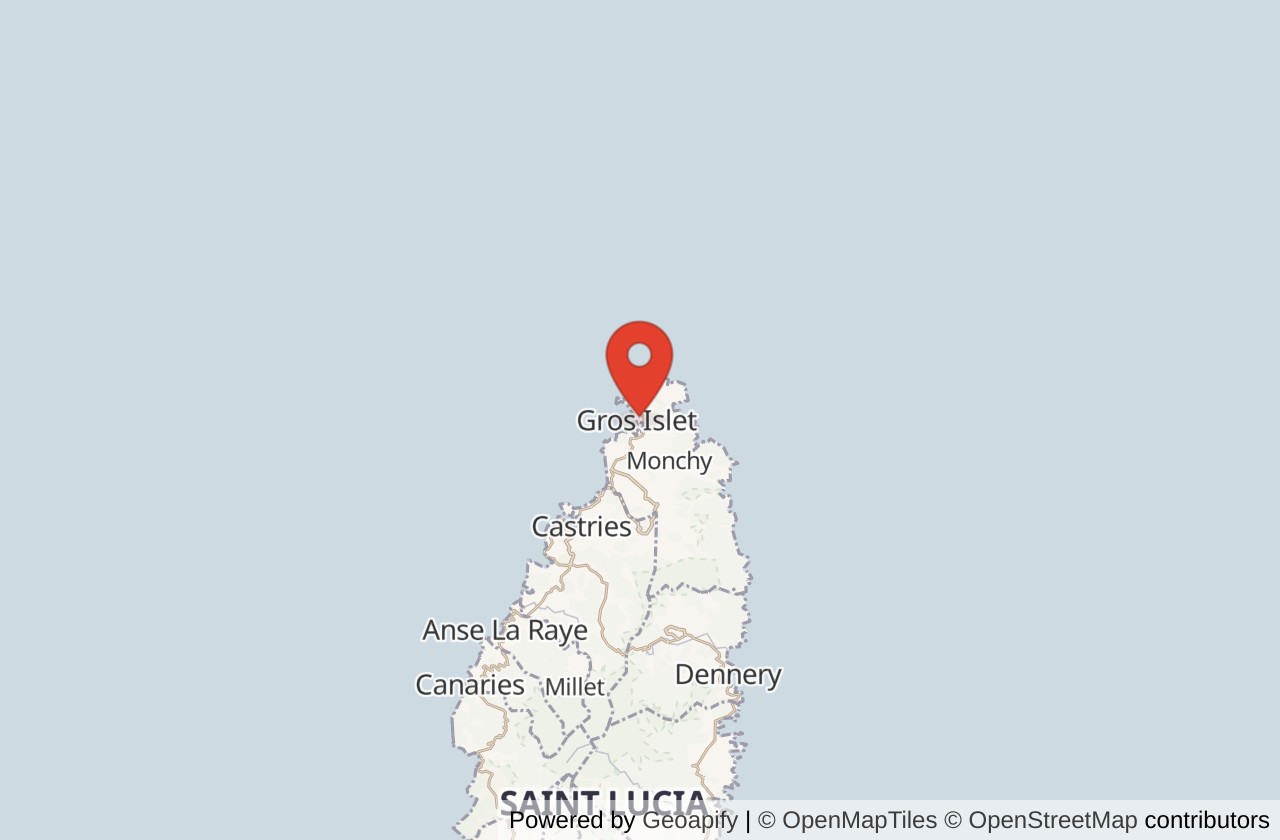
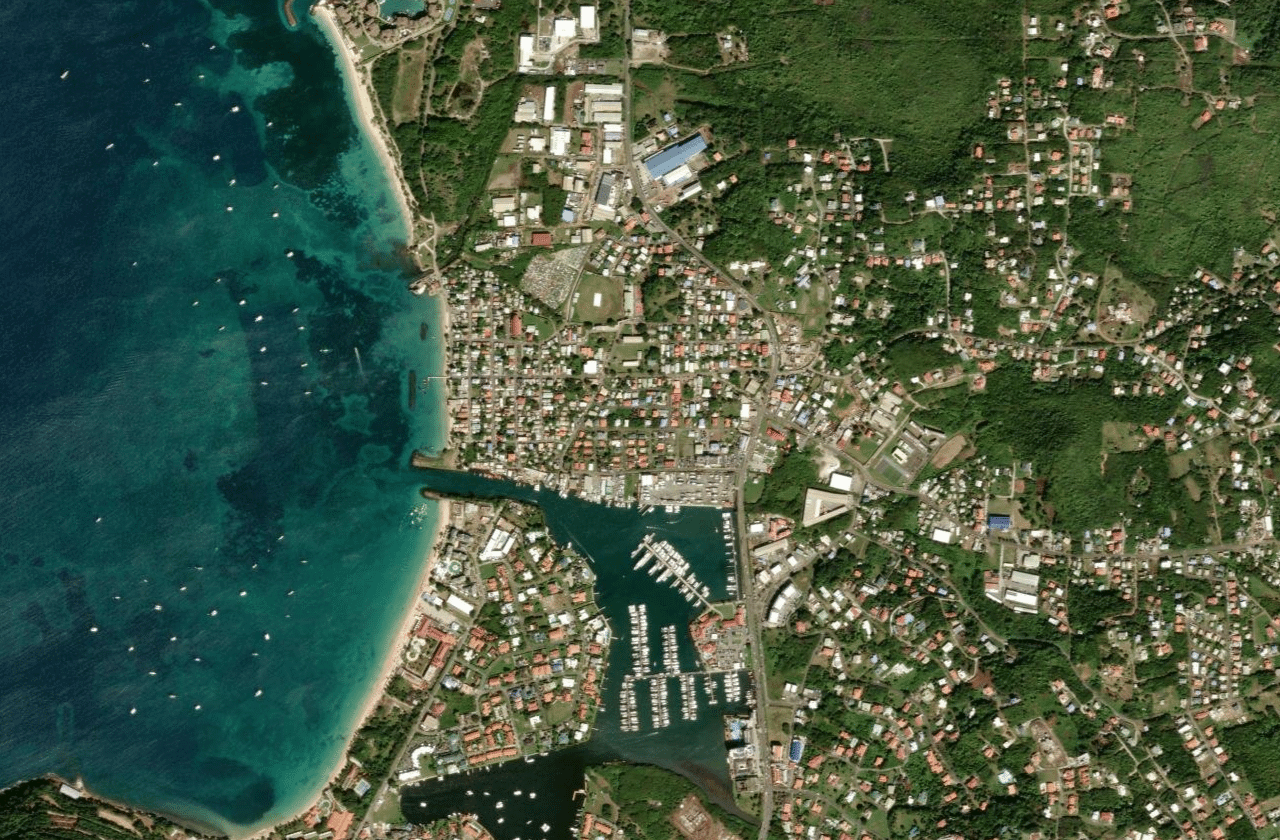
14.0800, -60.9500
What are the lineup and the town like at Pigeon Point?
Localism
mellow
Crowd
Tourists, resort guests, paddleboarders and kiters dominate the water far more than surfers. A 'crowd' in the surf is a few people; most days no one is surfing because there's nothing to surf. Weekends and the Friday street party fill the beaches and bars, not the lineup.
There is no real surf 'scene' or pecking order to navigate at Pigeon Point — on the rare day it breaks you might share it with a small handful of intermediates, kiters and travelers, and the vibe is friendly and uncrowded. Standard courtesy applies: say hello, don't drop in, and give the kiters and windsurfers room since the same water is shared. At Cas-en-Bas the lineup is equally low-key.
In the lineup: When it works, Pigeon Point is a wrap-around left peeling off the point over reef and rock — sit inside the shoulder where the swell organizes, and watch the reef and urchins on the inside and at low tide. Entry/exit is over rock, so booties help. It needs a real north/NE swell or a clean summer windswell to break at all; if it's flat (most days), the swell and the schools are at windward Cas-en-Bas.
Rodney Bay and Gros Islet are the developed, social heart of northern Saint Lucia: a marina, a beach strip of bars and restaurants, a shopping mall, big supermarkets, and an old fishing village (Gros Islet) that comes alive every Friday night. It's comfortable, well-serviced and tourist-friendly — closer to a Caribbean resort town than a gritty surf village. Easy living and easy logistics, with the wilder windward coast and the Pitons a short drive away.
How do you get to Pigeon Point?
Fly into Hewanorra International Airport, Vieux Fort (UVF) — about 40 miles from the break, 1.5 hours. George F. L. Charles Airport (SLU) in Castries is much closer to Rodney Bay — about 20–30 minutes by road — but it only handles small regional Caribbean carriers (LIAT-successors, interCaribbean, Air Antilles and inter-island hops). Almost every international visitor still arrives at UVF down in Vieux Fort and eats the ~1.5-hour transfer north. Only use SLU if you're island-hopping within the Caribbean or connecting via Barbados/San Juan on a regional flight.
- private transferUS$70–95 per vehicle (up to 3) · 1.5 hours
The standard way in: pre-book a licensed driver (St Lucia Airport Shuttle, Island Taxi, or your hotel's transfer desk) for the run up the West Coast / Castries–Gros Islet road. Confirm the vehicle is a van or wagon if you have board bags — most sedans won't take a 7'+ bag comfortably. Agree the fare before you leave the curb.
- shuttleUS$20–25 per person (min 4) · 1.5–2 hours
Shared shuttles to Rodney Bay run roughly US$20–25 per head with a 4-person minimum — cheapest if you're a group or willing to wait for one to fill. Book ahead online (saintluciaairportshuttle.com and similar) rather than relying on a curbside spot.
- taxiUS$80–100 per vehicle · 1.5 hours
Licensed airport taxis quote fixed government zone rates to Rodney Bay/Gros Islet; it's the no-planning option but pricier than a pre-booked transfer. Rates are posted at the airport taxi desk in US$ — confirm before loading boards.
- rental carUS$45–70/day · 1.5 hours self-drive
Worth it if you want to chase swell between Pigeon Point and Cas-en-Bas and explore the island. Drive on the LEFT; a temporary local driving permit (~US$20) is required and is sold at the rental desk. Roads are winding and narrow — don't plan to arrive after dark on day one. Request roof rails or bring soft racks for boards.
Do you need a car at Pigeon Point?
Do you need a car?
recommended
Walkability
If you stay in Rodney Bay Village or out on the Pigeon Island causeway, the beach, restaurants, bars and supermarkets are an easy walk or a few minutes' drive. But Pigeon Point only rarely has surf, and the more reliable wave at Cas-en-Bas is over the hill on the windward side with no walkable connection — you need wheels or a taxi to chase swell.
A small rental car (US$45–70/day) is the practical choice if surf is any part of your plan, because the good days move between the leeward point and windward Cas-en-Bas. Without a car, Rodney Bay itself is very walkable and taxis are plentiful — agree the fare up front (there's no metered Uber-style rideshare island-wide). Cheap minibuses (the 1A route runs the Castries–Gros Islet corridor) cost a few EC dollars but won't go to Cas-en-Bas and won't love board bags.
Boards: Taxis and minibuses are sedans/vans and grudging about long board bags — for anything over 7'0" charter a wagon and bring your own straps. Rental cars are mostly small sedans and compact SUVs; request roof rails ahead or carry soft racks and tie-downs. The Cas-en-Bas access track is rough dirt, better in a small SUV than a low sedan.
Where can you stay near Pigeon Point?
On the causeway at Pigeon Point — walking distance to the break · The adults-only all-inclusive sitting directly on the Pigeon Point peninsula between Rodney Bay and Pigeon Island — you're as close to the wave as it's possible to stay. It's a couples/honeymoon resort, not a surf lodge, but if waves are a bonus on a romantic trip it puts you right on the sand. (Direct (sandals.com), Expedia)
Reduit Beach, Rodney Bay — ~5–10 min drive to Pigeon Point · Family-run flagship of the local Bay Gardens group, right on Reduit Beach in the heart of Rodney Bay Village. Walkable to restaurants and the marina, with watersports on the beach — a comfortable mid-upper base for a mixed surf-and-relax trip. (Direct (baygardensresorts.com), Booking.com)
Rodney Bay Village — ~5–10 min drive to Pigeon Point · A well-reviewed boutique hotel a short walk from Reduit Beach, with a Creole restaurant and pool. Mid-priced and central — the sensible pick if you want Rodney Bay's restaurants and supermarkets on foot and don't need to be on the sand. (Direct (coco-resorts.com), Booking.com, Tripadvisor)
Rodney Bay marina side — ~5–10 min drive to Pigeon Point · Mid-range suites on the Rodney Bay lagoon/marina, a short walk across to Reduit Beach. Studios with kitchenettes make it useful for self-catering from the nearby Massy Stores; good value for a longer stay. (Direct (harmonysuites.com), Booking.com)
Gros Islet town — ~5–10 min drive to Pigeon Point · Long-running budget guesthouse in Gros Islet village with a shared kitchen and a sociable, backpacker-friendly feel — close to the Friday street party and the cheapest realistic base in the area. Basic rooms, fans/AC; book direct or via Booking.com. (Direct, Booking.com)
Rodney Bay/Gros Islet — ~5–10 min drive to Pigeon Point · Rodney Bay and the Cap Estate hills above it have a deep pool of apartments and villas on Airbnb/Vrbo, from studios to whole houses with pools. Best value for groups or families who want a kitchen, a car and the flexibility to chase swell between Pigeon Point and Cas-en-Bas. (Airbnb, Vrbo)
Where do you eat at Pigeon Point?
- Gros Islet Friday Night Street Partystreet food · $ budget
Grilled chicken, fish, BBQ and rum punch off the street grills — The institution: every Friday night Gros Islet's lanes fill with grills, sound systems and cheap local plates. Cash (EC dollars) and small bills; it's the best-value, most local meal in the area and a rite of passage on any north-coast trip.
- Spinnakers Beach Bar & Grillbar · $ mid-range
Fresh fish, burgers and a rum cocktail on Reduit Beach — Beachfront bar-restaurant on Reduit Beach in Rodney Bay, open all day — a reliable, well-reviewed spot for a post-paddle lunch with your feet near the sand. Touristy but consistent.
- Wingz-N-Tingzrestaurant · $ budget
Caribbean-style wings and local plates — Casual, well-liked local spot in the Gros Islet/Rodney Bay area for wings and cheap, tasty Caribbean food — a good break from resort prices.
- Amici's Restaurantrestaurant · $ mid-range
Wood-fired pizza and Italian plates — Long-standing Italian kitchen in Rodney Bay Village with a strong local following — the dependable sit-down dinner when you want something other than Creole or fish.
- Lil' Chefrestaurant · $ mid-range
Seafood and tapas — Well-reviewed Rodney Bay spot doing seafood and small plates — a notch up for a nicer evening out without leaving the village.
- Buzz Seafood & Grillrestaurant · $$ high-end
Local lobster and catch of the day — Rodney Bay's established upscale seafood restaurant, across from Reduit Beach. The splurge dinner — fresh fish and lobster, decent wine list, book ahead in high season.
Cooking for yourself
- Massy Stores (Rodney Bay / Rodney Heights)supermarket
The big modern supermarket chain serving the north — well-stocked with produce, meat, frozen goods, imported items and household basics, open daily (roughly 7am–10pm). Fully covers self-catering for a villa or apartment. There are branches at Rodney Bay and Rodney Heights, both a few minutes from Pigeon Point.
- Super J / Glace supermarkets, Rodney Baysupermarket
Local supermarket alternatives in and around the Rodney Bay/Baywalk area for groceries, drinks and snacks if Massy is busy — plus small minimarts in Gros Islet village for water, beer and basics.
- Gros Islet fish & produce vendorsfish market
Fresh-off-the-boat fish and roadside fruit/veg from Gros Islet's local vendors — cheapest and freshest for cooking your own catch-of-the-day. Cash (EC) only; best in the morning.
Where do you rent or fix a board?
- Kitesurfing St Lucia (Cas-en-Bas)board rental · lessons · rentals from ~US$20/hour; surf lessons ~US$55–100 per 1.5-hour session
There is NO dedicated retail surf shop at Pigeon Point or in Rodney Bay. The nearest operator is over the hill at Cas-en-Bas on the windward side, where Kitesurfing St Lucia runs board rentals and beginner-to-advanced surf lessons alongside its kite program. Quiver is small and oriented to kite/wind, so bring your own board, leash, fins, wax and a ding kit — wax especially is hard to buy locally.
- Aquaholics Kitesurfing (Cas-en-Bas)lessons · board rental · kite/SUP/surf gear rental and day trips (price on request)
The other Cas-en-Bas operator, at the north end of the bay — primarily a kitesurfing school with rentals, lessons and day trips, useful as a backup for gear or local conditions advice. Confirm surfboard (not just kite) availability before counting on it.
What do you do when it's flat?
- Pigeon Island National Landmarkculture · ~US$10 / EC$26 adult entry
The 44-acre headland right at the break: ruins of Fort Rodney, two hike-up peaks with sweeping views to Martinique, two calm beaches and a small museum. The obvious flat-day outing — go early before the heat, wear shoes for the climb.
- Kitesurfing & windsurfing at Cas-en-Baswater · lessons ~US$60–100/hr; rentals from ~US$20/hr
The north's real watersport draw: steady trades and a wide windward bay make Cas-en-Bas one of the better Eastern Caribbean kite spots. Lessons and rentals through the on-beach schools — a far more reliable way to get on the water here than waiting for surf.
- Reduit Beach & Rodney Baynature · free
The long, calm, golden-sand beach fronting Rodney Bay Village — swimming, SUP, beach bars and watersports vendors. Where you'll actually spend the flat days, a short walk or drive from Pigeon Point.
- Gros Islet Friday street partynightlife · free entry; food/drinks cheap
The weekly Friday-night jump-up in Gros Islet village — street grills, rum, soca and dancehall till late. The most fun, most local night out on the north coast; bring small EC cash and stay aware in the crowd.
- Day trip south to Soufrière (Pitons, Sulphur Springs)day trip · tour US$80–150 pp; or self-drive + entry fees
The island's headline sights — the Pitons, the drive-in volcano and mud baths at Sulphur Springs, botanical gardens and waterfalls — are about 1.5 hours south. A full-day trip by car or boat, well worth one of your flat days.
- Catamaran / snorkel cruisewater · US$80–130 pp half/full day
Day cruises down the calm Caribbean coast with snorkel stops leave from Rodney Bay Marina — an easy, scenic way to spend a windless flat day. Plenty of operators at the marina; book a day ahead.
What should you know before you go?
Cash & ATMs
Plenty of ATMs in Rodney Bay Village and at the Baywalk Mall (Bank of Saint Lucia, RBC, CIBC and others), all a few minutes from Pigeon Point. The local currency is the Eastern Caribbean dollar (EC$); cards are widely accepted at resorts and restaurants, but carry EC cash for the Gros Islet street party, minibuses and local vendors.
Medical
Tapion Hospital (private) in Castries is the go-to for travelers, roughly 20–30 minutes south of Rodney Bay, with the public Owen King EU Hospital (OKEU) also near Castries. Pharmacies and clinics are in Rodney Bay/Gros Islet. For anything serious, Castries is your hub; carry reef-cut and first-aid supplies for urchin/reef encounters.
Water safety
The hazard here is the reef, not the surf size. The seabed at Pigeon Point is sharp rock, coral reef and sea urchins — wear booties and watch the inside, especially at low tide. No lifeguards on the surf. On the rare big-swell day there's current around the point; on normal days the bigger risks are sunburn, boat/kite traffic in shared water, and stepping on an urchin. Water quality is generally good on this calm leeward coast, though it can cloud after heavy rain runoff.
Saint Lucia basics: money, entry, phones, water
Currency
East Caribbean dollar (EC$) (XCD) — Pegged at ~2.70 XCD per USD (fixed, mid-2026) — the rate effectively never moves
Entry (US passport)
Up to 6 weeks — Visa-free for tourism; US citizens and green-card holders are admitted for a maximum of six weeks at the immigration officer's discretion. You must show an onward/return ticket, confirmed accommodation, and evidence you can support yourself. Passport must be valid for the duration of stay with a blank page for the stamp.
Language
English (official), Saint Lucian French Creole / Kwéyòl (everyday spoken language). Excellent — English is the official language and is spoken everywhere, including in shops, banks, taxis, and the fishing villages on the east (Atlantic) coast where the surf is. You never need Creole, though a greeting in Kwéyòl goes a long way with locals.
Plugs
G · 240V / 50Hz — UK-style Type G three-rectangular-pin sockets. North American 120V gear needs a plug adapter and (unless dual-voltage, like most phone/laptop chargers) a voltage converter. Some resorts also fit US-style 110V outlets for guests, but don't count on it.
Tipping
Most hotels and restaurants automatically add a 10% service charge (plus a separate VAT, often ~10% on the food/room) — check the bill before adding more. If service charge is included, extra tipping is optional; if it isn't, 10–15% is normal. Tip taxi/excursion drivers ~10–15%, surf instructors and boat captains a few dollars in cash, and housekeeping a couple of EC$ per day. USD or EC$ both fine.
Phone / data
Flow (Cable & Wireless), Digicel, eSIM (Airalo, Holafly, Digicel eSIM, etc.). Digicel and Flow both cover the populated west coast (Castries, Rodney Bay, Soufrière) and the south (Vieux Fort) well. The Atlantic east coast where the surf is — around Micoud, Savannes Bay, and the Maria Islands area — is more rural, so expect weaker signal in pockets and dead zones on the inland and forest-reserve roads. Most hotels and guesthouses have Wi-Fi; download offline maps before driving the cross-island routes.
Tap water
Municipal tap water is chlorinated and treated and is generally considered safe to drink in the main towns and at resorts. That said, many visitors stick to bottled or filtered water to avoid minor stomach upset, and in rural areas or after heavy rain (which can stir up the supply) bottled is the safer bet. Bottled water is cheap and widely sold.
Emergency
911 or 999 both work for police, fire, and ambulance (toll-free, 24/7). The US Embassy serving Saint Lucia is based in Bridgetown, Barbados.
Other passports: entry rules differ — check the official source before booking.
Alert me when Pigeon Point is on
It's quiet right now. Drop your email and you'll get one message when our forecast shows a trip-worthy window here: the dates, the size, and a place to stay. Free.
Frequently asked questions about Pigeon Point
Can you surf at Pigeon Point in St Lucia?
Sometimes. Pigeon Point is an inconsistent reef/point break on Saint Lucia's calm Caribbean (leeward) side that only breaks when a north or northeast Atlantic swell wraps around the headland or a clean summer windswell lines up — most days it's flat. When it works it's a fun wrap-around left for intermediates, but it's a bonus break, not a reliable surf destination.
Is St Lucia good for surfing?
St Lucia is decent but not a top Caribbean surf destination. Waves are inconsistent and mostly suit beginners and intermediates; the windward east coast (Cas-en-Bas) gets more swell than leeward spots like Pigeon Point. There are very few surf shops, so bring your own gear and treat surf as part of a broader island trip.
Where is the best surf in St Lucia?
The most reliable surf is on the windward (Atlantic) side. Near the north, Cas-en-Bas just east of Gros Islet gets the most consistent swell and has on-beach surf/kite schools; in the south, Anse des Sables at Vieux Fort is the other main spot. Pigeon Point on the leeward north only breaks on the occasional wrapping swell.
Which airport should I fly into for Pigeon Point and Rodney Bay?
Almost everyone flies into Hewanorra International (UVF) at Vieux Fort in the south, then transfers about 1.5 hours north to Rodney Bay/Pigeon Point. The smaller George F. L. Charles Airport (SLU) near Castries is far closer (20–30 minutes) but only serves regional Caribbean flights, so it's only an option if you're island-hopping.
How far is Pigeon Point from the airport in St Lucia?
From Hewanorra (UVF) it's about 40 road miles and roughly a 1.5-hour drive up the west coast to the Rodney Bay/Pigeon Point area. A pre-booked private transfer runs about US$70–95 per vehicle; shared shuttles are around US$20–25 per person.
When is the best time to surf St Lucia / Pigeon Point?
There's no guaranteed season, but the best odds are winter (December–March) when North Atlantic groundswells can wrap in, and early summer (May–July) for the cleanest windswell. Trades are strongest November–June, which is prime for kitesurfing. Water is warm year-round.
Can you rent a surfboard near Pigeon Point?
Not at Pigeon Point itself — there's no surf shop in Rodney Bay. The nearest rentals and lessons are over the hill at Cas-en-Bas, where the kite/surf schools (Kitesurfing St Lucia, Aquaholics) have a small quiver. Bring your own board, leash, fins and wax if you can; wax in particular is hard to buy locally.
What else is there to do around Pigeon Point on flat days?
Plenty: hike Pigeon Island National Landmark right at the break, swim or SUP at Reduit Beach, kitesurf at Cas-en-Bas, hit the Gros Islet Friday street party, take a catamaran cruise from Rodney Bay Marina, or day-trip south to the Pitons and Sulphur Springs at Soufrière (about 1.5 hours).
Sources for this guide
- surf-forecast.comsecondary source · Pigeon Point wave type (reef break), best NE swell / SE wind, May/summer windows, urchin-rock-reef hazards, consistency
- thesurfatlas.comeditorial · Pigeon Point as a peeling left point break for intermediates on summer windswell; leeward vs windward coast; honest 'not big barrels, mainly
- travellerselixir.comeditorial · St Lucia surf-spot list (Pigeon Point, Cas-en-Bas, Anse des Sables), skill level, season Nov–May, surf schools and rental/lesson price bands
- rome2rio.comsecondary source · UVF→Rodney Bay road distance (~40 mi) and a drive-time reference point
- saintluciaairportshuttle.comsecondary source · UVF→Rodney Bay private transfer / shuttle price bands and realistic ~1h35 transfer time
- en.wikipedia.orgsecondary source · SLU (George F. L. Charles, Castries) as the closer regional-only airport vs UVF for international arrivals
- tripadvisor.comsecondary source · Sandals Grande St. Lucian location on the Pigeon Point causeway, live listing and reviews
- tripadvisor.comsecondary source · Rodney Bay lodging options and bands (Bay Gardens, Coco Palm, Harmony Suites, Bay Guesthouse, vacation rentals)
- tripadvisor.comsecondary source · Aquaholics Kitesurfing live listing at Cas-en-Bas; nearest gear/lesson operator to Pigeon Point
- evendo.comsecondary source · Massy Stores Rodney Bay/Rodney Heights supermarket existence, hours and stock for groceries/self-catering
- stlucia.orgofficial · Saint Lucia Tourism Authority context on Cas-en-Bas / windward Atlantic surf and the north-coast watersport scene
Guide researched and verified 2026-06-12. Details change; confirm bookings and entry requirements before travel.