When is the best time to surf Inches?
Peak Jun–Sep · often good May, Oct–Nov · can still fire Dec–Apr.
Inches is a warm-season, south-swell wave: the season runs roughly May through November, peaking June through September, when south/southeast groundswell and Caribbean tropical systems push the cleanest, longest lefts down the reef — July is the heart of it. Hurricane season overlaps the peak, so the biggest days arrive on a few days' notice; those are the charts-lit-up sessions worth dropping everything for. October and November keep the door open with late-season souths. In winter, while the west coast pumps, Patillas goes quiet — though a strong trade pulse can still sneak a rideable day through for whoever's watching. Water is warm year-round (low-to-mid 80s°F); boardshorts only, plus booties for the reef.
What does a surf trip to Inches look like?
A typical trip from our guide. A real alert comes with the forecast for each day and a fare from your airport.
How much does a surf trip to Inches cost?
A five-night trip, per person, before food and rentals.
Rows marked "based on … alerts" are the middle half of the real round-trip fares we quoted in alerts on that route, priced 3 to 10 days before departure, since June 2026. Rows marked "Google typical" are Google Flights' usual range for October, across all booking lead times, so a last-minute fare often lands above it. Checked Oct 17. Stays use our guide's nightly bands; transfers use the guide's quoted rates. Real alerts price the exact dates.
Where should you stay at Inches?
Closest to the wave
Surf House @ Inches Beach $
vacation rental · mid-range · At the break — fronting Inches
Three-bedroom house right on the water at Inches with a pool deck beside the Caribbean and surf views from the terrace — the obvious base if you can get the dates, since you roll out of bed to check it. Sleeps 6; strong Airbnb review record.
Stays nearbyCheaper
Bilimbi Studio at Finca Corsica $
vacation rental · budget · Patillas coast — short drive to Inches
Beachfront studio with a kitchenette and Caribbean views, well-reviewed and good value for a couple. Self-catering, quiet, and a practical budget base on this stretch of coast.
Stays nearbyPoints play: Wyndham Palmas Beach & Golf (Humacao) (Wyndham), about 15–30k points a night, ~30–35 min from the break.
Browse all stays near the breakEvery place we researched, with its booking link, is under where to stay below.
What is the wave like at Inches?
Break type
Reef
Wave direction
Both
Best swell
SE (E–SSE window)
Ideal size
3–8 ft
Best tide
Mid-low to mid
Low: alarmingly shallow coral · High: softer
Consistency
Inconsistent
Peak season
Jun–Sep
Nearest airport
SJU · ~46 mi
Drive from airport
1 hour–1 hour 15 min
The break sits off Road 3 at roughly km 14.5, fronting a strip of coast paved not with sand but with worn, rounded 'Chinese rock' — booties-on terrain that doubles as the shoreline. A protective reef shapes the wave and keeps an inside zone calmer for swimming and snorkeling, but that same reef is the catch: it's shallow, sharp in places, studded with sea urchins and fire coral, and Inches takes its name honestly — the better sets break in not much water. This is a wave that rewards a careful read of the tide and a relaxed, low-ego approach to a tiny local lineup.
Go in understanding that Patillas is rural, real Puerto Rico — known locally as the 'Southern Emerald,' a green coastal municipality of fishing kioskos, weekend beach families and almost no surf-tourism infrastructure. There's no surf shop, the lodging is mostly Airbnb plus a parador one town over, and you'll want a rental car and your own boards. What you get in return is warm Caribbean water in boardshorts, a side of the island most visitors never see, and a genuinely uncrowded reef left when the south swell shows up.
Who it suits
Confident intermediates and up comfortable surfing a shallow, sharp reef over coral; travelers who want warm water, empty lineups and rural Puerto Rico over amenities — ideally with the flexibility to move when a south swell shows. Not a learn-to-surf spot.
Where exactly is Inches?
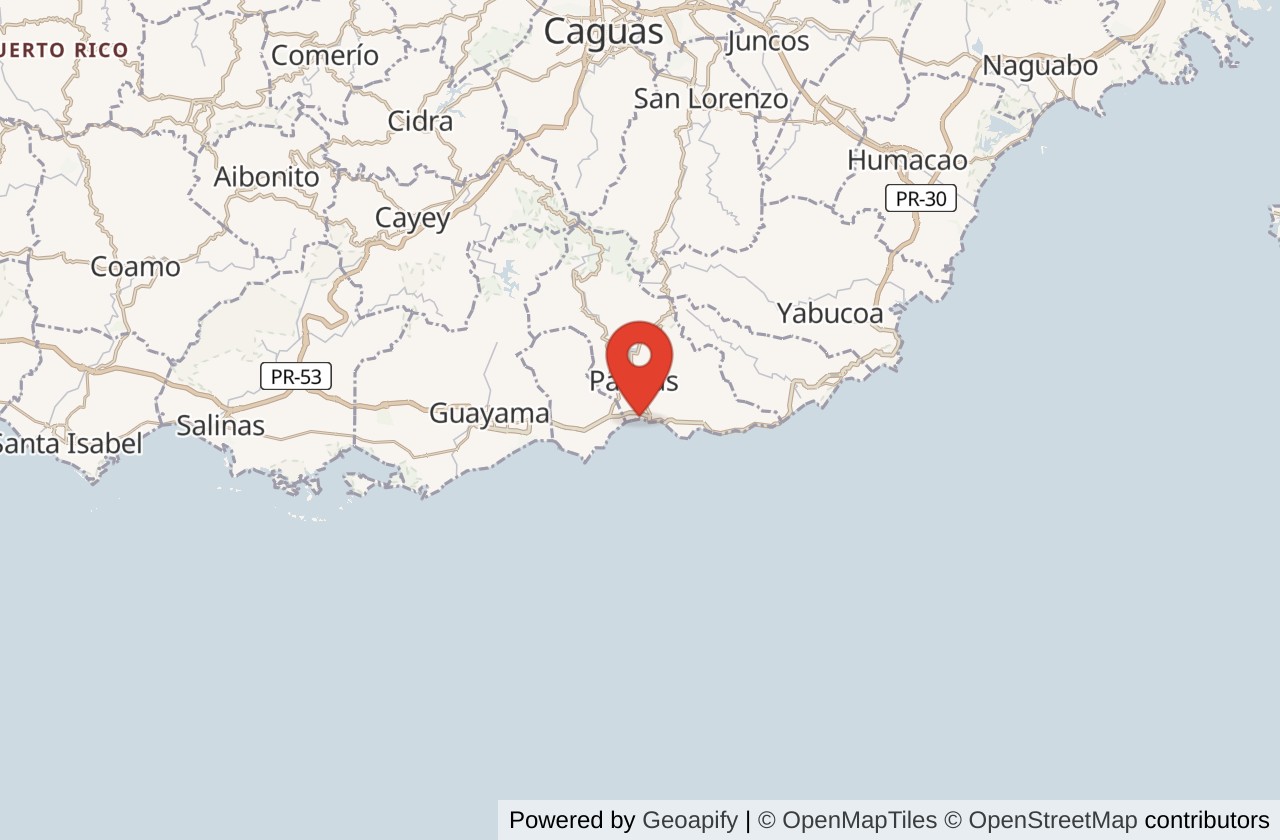
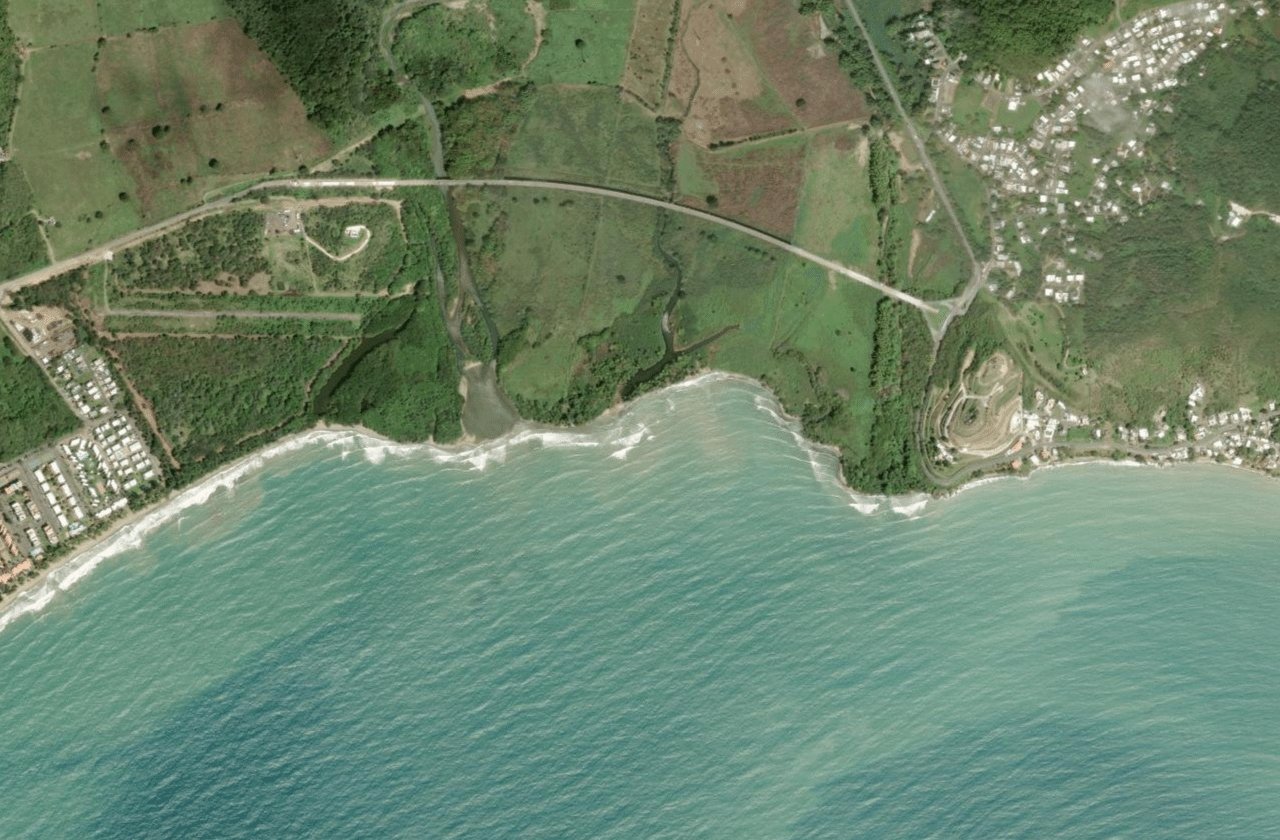
17.9800, -66.0100
What are the lineup and the town like at Inches?
Localism
mellow
Crowd
Light most of the time — on a typical day you might share it with a handful of locals or surf it nearly alone. Weekends and holidays bring beach crowds (families, music, kioskos) more than lineup crowds, and the best summer south swells can draw a few more boards, but 'crowded' at Inches is still a modest number by Rincón standards. Early mornings are quietest and usually cleanest before the wind.
Inches has a tiny, low-key local crew and is known as a relaxed, friendly lineup rather than a territorial one — partly because it's so rarely crowded. The usual courtesies carry weight in a small reef lineup: say hello, don't paddle straight to the peak and start taking everything, respect the surfers who know exactly where the wave breaks over the shallow reef, and don't drop in. A humble traveler gets waves here.
In the lineup: Inches is a left over coral — read the tide carefully, as the best, hollowest sets can break in alarmingly little water (mid tide on a rising tide is the classic call). Wear booties; the bottom is sharp reef with urchins and fire coral, and the shoreline itself is rounded 'Chinese rock,' not sand. Watch for rips/undertow pulling along the reef on bigger swells, and pick your entry and exit over the rocks carefully. ESE offshore wind and an east-to-southeast swell are what you want.
Patillas is rural southeast Puerto Rico — the self-styled 'Southern Emerald,' a green coastal municipality of fishing kioskos, roadside chinchorros, weekend beach families and mountains rising just inland, with almost none of the surf-tourism polish of the west coast. Life runs in Spanish, the pace is slow, and weekends bring music and crowds to the beaches before it empties out again midweek. It feels like a part of the island most visitors drive past — which is exactly the appeal.
How do you get to Inches?
Fly into Luis Muñoz Marín International Airport, San Juan (SJU) — about 46 miles from the break, 1 hour–1 hour 15 min. SJU is the only sensible gateway — it has by far the most flights and the easiest drive (mostly the PR-52 toll highway south, then PR-30/PR-3 east). Ponce (PSE) is closer in straight-line terms on the south coast but has minimal commercial service; don't plan around it.
- rental car$45–90/day · 1 hour–1 hour 15 min
The default and effectively essential here. All major agencies operate at SJU. Take PR-52 (toll, have a few dollars or a rental toll transponder) south toward Caguas, then PR-30/PR-3 east to Patillas. Most fleet cars are sedans/SUVs without racks — bring soft racks and straps for your boards. Drive on the right; US license is fine.
- private transfer$110–180 per vehicle · 1 hour–1 hour 15 min
Pre-booked door-to-door transfers (e.g. via Mozio, GO Puerto Rico Shuttle, or your Airbnb host's recommended driver) handle the run with boards if you confirm a wagon/van and board-bag space when booking. Easiest car-free arrival, but you'll still likely want wheels once you're there.
- rideshare$70–120 one way · 1 hour–1 hour 15 min
Uber works well in metro San Juan, but coverage gets thin once you're out toward Patillas, so it's reliable for the airport-to-spot leg but not for getting back or moving around. Message the driver about board-bag length before requesting; an XL/SUV is safer for anything over a shortboard.
Do you need a car at Inches?
Do you need a car?
essential
Walkability
If you book one of the handful of beachfront rentals right at Inches, the break is a few steps from the door and a couple of food kioskos are within walking distance — but that's the whole walkable footprint. Anything else (groceries, restaurants in town, other beaches, a clinic) means a drive. Patillas is a spread-out rural municipality, not a walkable surf village.
Plan on a rental car ($45–90/day from SJU); it's the only practical way to surf dawn, check other Patillas reefs, run to a supermarket and reach a clinic. There is no Uber/taxi network worth relying on out here and no público (shared van) system that helps a surfer. Scooters aren't an established rental option. Budget for PR-52 tolls on the airport run.
Boards: Bring soft racks and tie-down straps — rental cars rarely have rails, and there's no shop nearby to buy gear. Roads to the southeast are good highway most of the way, then narrower coastal road (PR-3) near the spot. Parking at Inches is free and right at the break, so once you're there the carry to the water is short.
Where can you stay near Inches?
At the break — fronting Inches · Three-bedroom house right on the water at Inches with a pool deck beside the Caribbean and surf views from the terrace — the obvious base if you can get the dates, since you roll out of bed to check it. Sleeps 6; strong Airbnb review record. (Airbnb)
Patillas coast — short drive to Inches · Beachfront studio with a kitchenette and Caribbean views, well-reviewed and good value for a couple. Self-catering, quiet, and a practical budget base on this stretch of coast. (Airbnb)
In Maunabo, the next municipality east — ~15–25 min drive · The area's only real hotel and the safe non-Airbnb pick: a beachfront parador near Playa Punta Tuna with a pool, on-site restaurant and breakfast, consistently top-rated for the region. Furnishings run a touch dated but service and value score high. You'll drive to Inches. (Booking.com, direct, Expedia)
On or near the Patillas/Guardarraya coast — steps to short drive · Beyond the named houses, Patillas' lodging is overwhelmingly individually-listed beach houses and villas, several with pools and private beach access, on Airbnb and Vrbo. This is how most surfers stay here — pick one as close to Inches as the dates allow. (Airbnb, Vrbo)
Guardarraya/Jacaboa, ~5–15 min west of Inches · A cluster of larger waterfront homes along the palm-lined Guardarraya–Jacaboa coast just west of Inches — the pick for a group or family splitting costs, with kitchens that make a supermarket run worthwhile and the chinchorro strip on the doorstep. (Airbnb, Vrbo)
Where do you eat at Inches?
- Inches Beach food kioskosstreet food · $ budget
Alcapurrias, empanadillas and fried fresh fish — The roadside kioskos at the beach are the closest food to the water — fritters, fried fish and cold drinks, busiest and liveliest on weekends and holidays. Cash, casual, and the authentic post-surf bite. Hours track demand, so weekdays can be quiet.
- Guardarraya chinchorro strip (PR-3)street food · $ budget
Chinchorrear — fritters, pinchos, fresh seafood, cold Medalla — The stretch of PR-3 toward Guardarraya beach is lined with rustic chinchorros — the local tradition of hopping between casual fry-shacks to eat, drink and hang. The cheapest, most authentic eating in Patillas; busiest afternoons and weekends.
- Paisajes Curetrestaurant · $ mid-range
Mofongo and fresh seafood with an ocean view — The area's standout sit-down restaurant — Puerto Rican seafood on a perch above the water, well-reviewed (4.4 on Tripadvisor) and the spot for a proper dinner after a session. Worth the short drive.
- Musafa Restaurantrestaurant · $ mid-range
Caribbean plates at sunset over the water — Oceanfront Caribbean/Latin spot with sunset views and a broad menu — solid reviews and a pleasant evening setting on the Patillas coast.
- Agua Salada Bar & Tapasbar · $ mid-range
Tapas and drinks seaside — Small seaside bar-and-tapas spot for a relaxed drink and small plates by the water — a low-key debrief venue when you don't want a full restaurant.
Cooking for yourself
- Supermarkets in Patillas / Guayamasupermarket
Patillas town has small supermarkets and colmados for basics; for a full stock-up (produce, dairy, dry goods, cold drinks) the larger chains — Amigo/Econo-type stores — are in Guayama, ~15–25 min west. Self-catering is very doable from a rental kitchen if you shop in town on the way in.
- Roadside colmados & beach kioskosminimart
Small colmados along PR-3 and the kioskos at the beach cover water, ice, snacks, beer and the odd staple — fine for topping up but not a full shop. Carry cash for these.
Where do you rent or fix a board?
- Inches Beach informal rentals (local water-sports vendors)board rental · negotiable, roughly $20–35/day (anecdotal)
There is no retail surf shop in Patillas or anywhere on Puerto Rico's southeast coast. At the beach you'll find informal umbrella and water-sports equipment rentals (boards, SUPs) from local vendors on busy days, but availability and quality are inconsistent and not guaranteed. Come fully self-sufficient: bring your boards, leashes, spare fins, wax, a ding kit and especially booties for the reef. The nearest proper surf shops and repair are on the opposite side of the island in Rincón/Aguadilla (3+ hours away) or in the San Juan/Luquillo area (~1.5 hours).
What do you do when it's flat?
- Snorkeling the Inches reefwater · free
The same protective coral reef that shapes the wave teems with marine life and offers easy snorkeling in the calmer inside zones on small days. Bring your own gear, wear booties, and steer clear of fire coral and urchins.
- Guardarraya Beach & chinchorro-hoppingfood drink · free beach; food $
Palm-lined Guardarraya beach just west of Inches is calm and family-friendly, with the PR-3 chinchorro strip behind it — the classic flat-day plan of beach time plus fritter-and-Medalla hopping.
- Punta Tuná Lighthouse, Maunaboculture · free
A historic 19th-century lighthouse on the point in neighboring Maunabo (~20 min east), with a boardwalk, beach and turtle-nesting coast — an easy, scenic non-surf outing.
- Charco Azul / Carite forest drivenature · free
The Cordillera and Bosque Estatal de Carite rise behind Patillas, with cool freshwater swimming holes (the famous Charco Azul is in nearby Patillas/Guayama foothills) and mountain roads — a flat-day reset away from the coast.
- Pozo de Jacinto / coastal drivenature · free
The southeast coast road strings together quiet beaches, blowholes and viewpoints between Patillas, Maunabo and Yabucoa — a low-effort explore when the surf is flat, with kioskos along the way.
- Day trip to Old San Juanday trip · free–$
If you're car-based, the colonial old city, forts (El Morro/San Cristóbal) and San Juan food scene are an hour-plus back toward the airport — a worthwhile full-day cultural trip on a no-surf window.
What should you know before you go?
Cash & ATMs
No ATM at the break — the beach kioskos and informal rentals are cash-first. Withdraw in Patillas town or Guayama, where Banco Popular/FirstBank ATMs and supermarkets are. USD is the currency (Puerto Rico is a US territory), and cards work at sit-down restaurants and supermarkets, but carry cash for kioskos, chinchorros and vendors.
Medical
No facilities at the spot. The nearest full hospital is Hospital Menonita Guayama (~15–25 min west); Patillas town has a primary-care/CDT clinic (Centro de Servicios Primarios de Salud, Patillas) and Guayama has clinics and labs. 911 works island-wide. For serious trauma you may be routed to Caguas or San Juan, ~1–1.5 hours away — pack a proper first-aid and reef-cut kit, since coral cuts and urchin spines are the most likely injuries here.
Water safety
This is a shallow, sharp coral reef break and the main hazards are the bottom itself: sea urchins, fire coral, and reef that surfaces in very little water at low tide — booties are strongly recommended and a wipeout can mean cuts. Rips and undertow run along the reef on solid swells; read the entry/exit over the rocks before paddling out. Lifeguards work the beach during peak hours on busy days, but assume you're on your own outside that. Water quality is generally good (Puerto Rico meets US EPA standards), though heavy rain runoff can cloud it briefly. No notable shark concern beyond normal Caribbean awareness.
Puerto Rico basics: money, entry, phones, water
Currency
US Dollar (USD) — US territory — USD is the local currency, 1 USD = 1 USD
Entry (US passport)
Unlimited — domestic travel — Puerto Rico is a US territory: no passport, no customs, no immigration for US citizens flying from the mainland. Since May 7, 2025 you need a REAL ID-compliant driver's license (star marking) or a passport to clear TSA — same as any domestic flight.
Language
Spanish (dominant day-to-day), English (co-official). Both Spanish and English are official. English is widely spoken in San Juan and tourist areas; in the west-coast surf towns (Rincón, Aguadilla, Isabela) you'll get by fine in English at surf businesses and restaurants, but day-to-day life runs in Spanish — basic Spanish helps and is appreciated.
Plugs
A, B · 120V / 60Hz — same as the US mainland
Tipping
US tipping culture applies: 15–20% at sit-down restaurants, $1–2 per drink at bars, 10–15% for taxis. Counter-service tip screens are common.
Phone / data
Your existing US plan, Claro Puerto Rico (prepaid), Travel eSIMs (Airalo, Holafly). Major differentiator vs. other Caribbean surf trips: US phone plans work with zero roaming setup. Mainland carriers (T-Mobile, AT&T, Liberty/Verizon partner) cover the whole island; LTE/5G is solid in Rincón, Aguadilla, and Isabela town centers. Expect weaker signal on remote beach roads and in the mountainous interior — download offline maps for surf-check drives down dirt tracks.
Tap water
Generally safe to drink — PRASA municipal supplies meet US EPA standards. Locals often prefer bottled or filtered for taste, and outages can follow major storms; bottled water is cheap everywhere.
Emergency
911 works island-wide for police, fire, and ambulance — same as the mainland. Healthcare is normal US-style (hospitals in Aguadilla and Mayagüez serve the west coast); US health insurance generally applies, but confirm your plan's coverage. International visitors need travel medical insurance — US healthcare prices apply.
Other passports: entry rules differ — check the official source before booking.
Alert me when Inches is on
It's quiet right now. Drop your email and you'll get one message when our forecast shows a trip-worthy window here: the dates, the size, and a place to stay. Free.
Frequently asked questions about Inches
When is the best time to surf Inches in Puerto Rico?
Summer and early fall — roughly June through November, peaking in July — when south and southeast groundswell and Caribbean tropical systems light up the left. That's the opposite of Puerto Rico's famous west coast, which fires in winter. Winter at Inches is mostly small or flat.
Where is Inches surf spot?
Inches is in Patillas, on Puerto Rico's southeast (Caribbean) coast, off Road 3 around km 14.5. It's about 45–50 road miles and 1 to 1.25 hours south of San Juan airport (SJU) via the PR-52 toll highway and PR-30/PR-3.
Is Inches good for beginners?
Not really — it's a left over shallow, sharp coral with urchins and fire coral, and the best waves break in very little water. It suits confident intermediate-and-up surfers who are comfortable on reef. Beginners are better served by Puerto Rico's sandy beach breaks elsewhere.
Do I need booties to surf Inches?
Yes, strongly recommended. The bottom is sharp coral reef with sea urchins and fire coral, the shoreline is rounded 'Chinese rock' rather than sand, and the wave can break in just inches of water — booties protect your feet on entry, exit and wipeouts.
Is there a surf shop near Inches / Patillas?
No. There's no retail surf shop on Puerto Rico's southeast coast — only informal beach rentals on busy days. Bring your own boards, leash, fins, wax, ding kit and booties. The nearest real shops are in San Juan/Luquillo (~1.5 hours) or Rincón/Aguadilla on the west coast (3+ hours).
Do I need a car to surf Inches?
Yes — a rental car is essential. There's no useful taxi or rideshare network in Patillas, lodging and food are spread out, and you'll want to check the spot at dawn and reach groceries and a clinic. Rent at SJU and bring soft racks for your boards.
Where do you stay to surf Inches?
Patillas lodging is mostly individual Airbnb/Vrbo beach houses, including a house right at Inches; for a hotel, Parador MaunaCaribe in neighboring Maunabo (15–25 min away) is the area's best-rated option. Book as close to the break as the dates allow.
Is it safe to surf in Patillas, Puerto Rico?
Patillas is a calm, rural part of the island and the lineup is mellow and uncrowded. The real risks are the reef (urchins, fire coral, shallow coral) and rips on bigger swells, not crime — though, as anywhere in Puerto Rico, don't leave boards or valuables visible in a parked car at the beach lot.
Sources for this guide
- surf-forecast.comsecondary source · Inches break details: ESE swell/offshore wind, mid/rising tide, reef bottom, urchins/rips/rocks hazards, summer (July) season, moderate skil
- boricuaonline.comsecondary source · Inches location (Road 3 km 14.5), free parking, 'Chinese rock' shoreline, coral/fire-coral hazards, kioskos (alcapurrias/empanadillas/fried
- puertoricodeaventura.comeditorial · Patillas as southeast surf capital ('Southern Emerald'), Inches as long left reef break, hurricane-season (June–Nov) timing, reef/urchin war
- rome2rio.comsecondary source · SJU–Patillas road distance (~45 mi) and drive time (~1h–1h15), transfer/rideshare/shuttle options
- airbnb.comofficial · Surf House @ Inches Beach vacation rental (3BR, pool, on the water at Inches) live listing and reviews
- booking.comofficial · Parador MaunaCaribe (Maunabo) live listing, beachfront/pool/breakfast, top regional rating
- tripadvisor.comsecondary source · Patillas restaurant options and ratings: Paisajes Curet, Musafa, Agua Salada Bar & Tapas
- boricuaonline.comsecondary source · Guardarraya beach + PR-3 chinchorro strip (chinchorrear), family-calm water near Inches
- healthcare4ppl.comsecondary source · Nearest hospital (Hospital Menonita Guayama) and Guayama clinics for the medical section
- westindiestravel.comeditorial · Inches access off Route 1/3, summer/hurricane-swell consistency, light crowds, parking and reef-caution framing
Guide researched and verified 2026-06-12. Details change; confirm bookings and entry requirements before travel.