When is the best time to surf Punta Manzanillo?
Peak Jun–Aug · often good Apr–May, Sep–Oct · can still fire Nov–Mar.
Nicaragua's Pacific runs offshore almost daily thanks to the Lake Nicaragua wind gap, so when swell arrives, Manzanillo is groomed for it. The rainy-season southern-hemisphere groundswells (roughly April–October) are what stand the point up, with June–August the most reliably sizeable stretch — July is the month locals circle. The dry season (December–April) is offshore and beautiful, and while the point needs a bigger, well-angled SW pulse to break then, those days do come — and with almost nobody out, they're exactly the strike days worth boating over for. Water is warm year-round; boardshorts and a rash guard are all you need.
What does a surf trip to Punta Manzanillo look like?
A typical trip from our guide. A real alert comes with the forecast for each day and a fare from your airport.
A real alert we sent · Sep 1
We matched a surfer flying from Miami (MIA) to this window: Sep 10–12, 3 good days with faces up to 6 ft, peaking 9/10. 4 nights, flights from $344 round trip.
This is a prior real trip from our match log, not a forecast. Windows and fares change; your alert carries the current ones.
How much does a surf trip to Punta Manzanillo cost?
A five-night trip, per person, before food and rentals.
Rows marked "based on … alerts" are the middle half of the real round-trip fares we quoted in alerts on that route, priced 3 to 10 days before departure, since June 2026. Checked Oct 24. Stays use our guide's nightly bands; transfers use the guide's quoted rates. Real alerts price the exact dates.
Where should you stay at Punta Manzanillo?
Closest to the wave
Camino del Gigante $
surf camp · mid-range · Playa Gigante beachfront — ~10–15 min panga ride north to Manzanillo
Beachfront surf camp in Playa Gigante with private air-conditioned rooms, budget dorms and camping, plus morning yoga, board and kayak rentals and a social bar-restaurant scene. The most practical mid-range base for striking Manzanillo by boat and surfing the surrounding Tola breaks.
Stays nearbySurf camp
Magnific Rock Surf Resort & Yoga Retreat $
surf camp · mid-range · Popoyo/Guasacate, ~30–40 min north of Manzanillo
Landmark surf-and-yoga lodge perched above the Popoyo break, ~30–40 min up the coast, with a popular restaurant-bar and big ocean views. A comfortable wider-zone base if you want the bigger Popoyo surf-camp scene and are willing to drive plus boat to reach Manzanillo on its day.
Check ratesCheaper
Playa Gigante guesthouses & Airbnbs $
guesthouse · budget · Playa Gigante village — boat to Manzanillo
A cluster of small guesthouses, the beachside Hostel el Camino and vacation rentals around the Gigante bay cover the budget-to-mid range, walkable to the village's restaurants and board rentals. The value pick for self-sufficient surfers who'll book pangas to the point à la carte.
Stays nearbyEvery place we researched, with its booking link, is under where to stay below.
What is the wave like at Punta Manzanillo?
Break type
Point
Wave direction
Left
Best swell
SW (SSW–WSW window)
Ideal size
3–8 ft
Best tide
Mid to mid-high
Low: shallow rocks · High: slower
Consistency
Fairly Consistent
Peak season
Jun–Sep
Nearest airport
MGA · ~74 mi
Drive from airport
2–2.5 hours
The catch is access. The point sits below the private Guacalito de la Isla / Legacy Estate land, with no public road to the lineup, so for most travelers the realistic move is a panga (boat) up the coast from the surf town of Playa Gigante just to the south, or — if you're staying inside the gates at Mukul — straight off the resort's private beach club. There's also a long beach walk in from the fishing village of El Astillero immediately to the north, but it's tide- and access-dependent. Either way this is not a 'park and paddle out' wave for a first-time visitor; line up a captain or guide who knows the spot.
Manzanillo also needs the right swell direction and a decent size to break properly, so it sits flat or soft far more often than the busier reefs and beach breaks up the coast. What you get in return is a genuinely uncrowded point — on its rare good days it often peels nearly empty save for a handful of resort guests and the in-the-know crew who boat over. Treat it as the prize on the right day inside a wider Gigante/Tola trip rather than a destination you build a week around: base in Gigante where the food, rentals and budget rooms actually are, watch the forecast for a SW pulse, and have a panga lined up so you can move the moment it switches on.
Who it suits
Confident intermediates through advanced surfers comfortable with a rocky point, current, and boat-only/remote access; best as one wave inside a wider Gigante/Tola trip rather than a standalone destination. Not a beginner spot.
Where exactly is Punta Manzanillo?
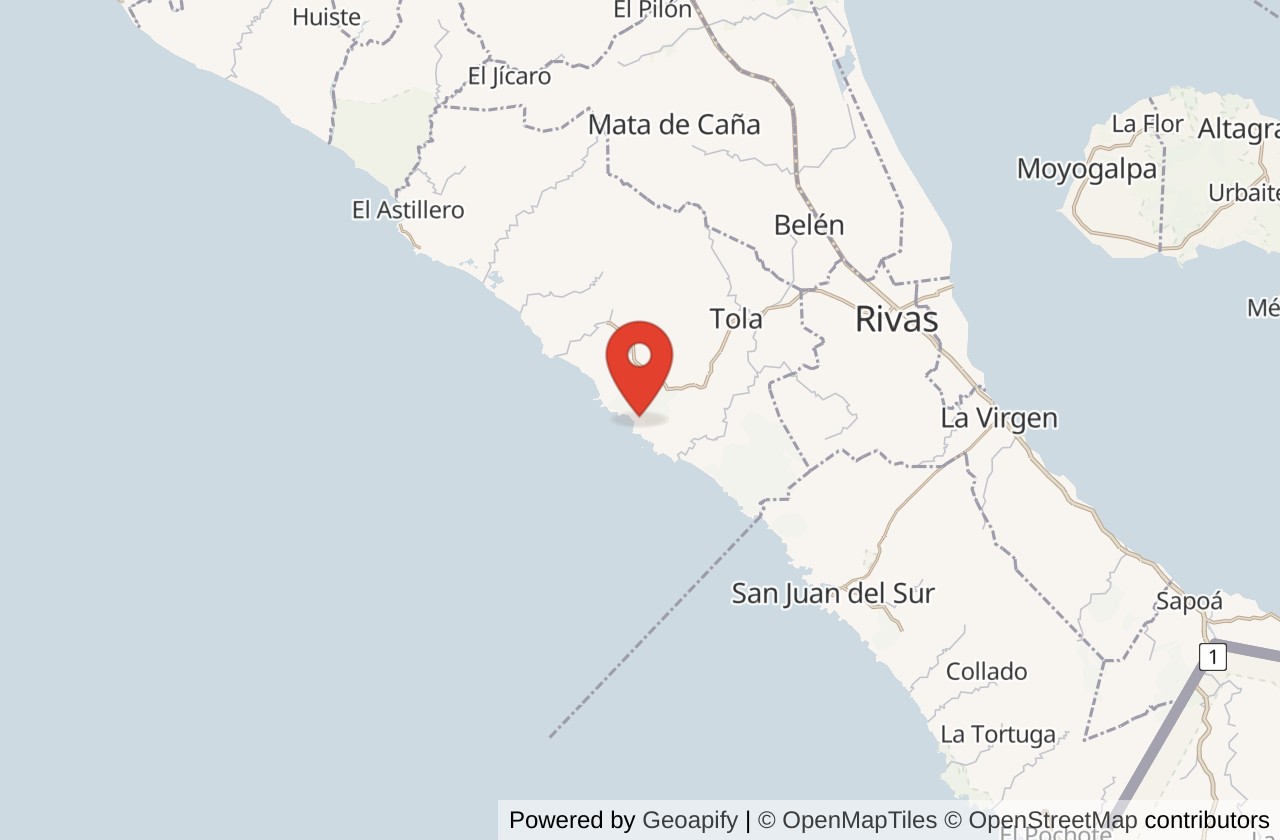
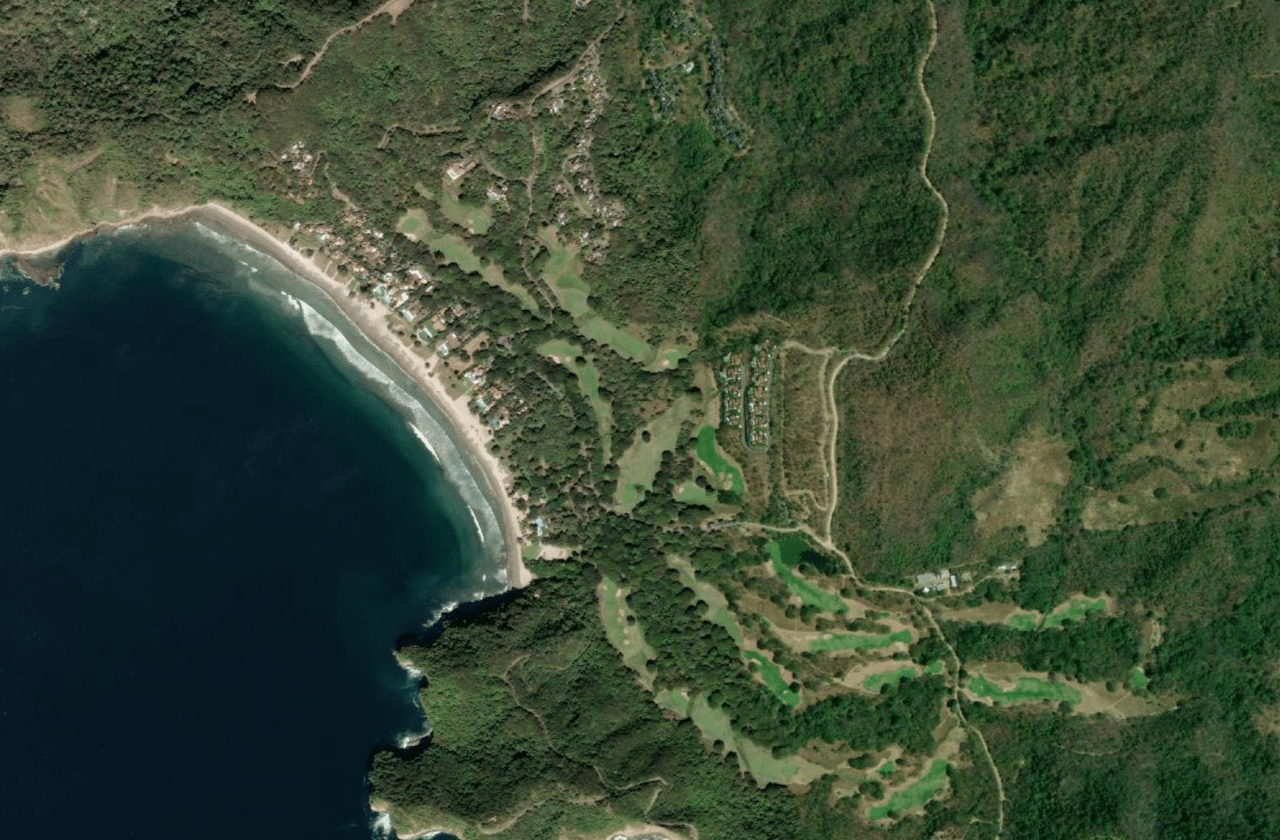
11.3703, -86.0048
What are the lineup and the town like at Punta Manzanillo?
Localism
mellow
Crowd
On its rare good days Manzanillo draws a small mix of Mukul guests, in-the-know guides and a few advanced travelers who boated over from Gigante — 'busy' here is a handful of surfers, not a pack. The wider zone's crowds concentrate on Popoyo reef and Colorado; the point stays quiet precisely because it's gated, boat-access and only works on specific swells.
Manzanillo is rarely crowded, so etiquette is more about respect than jostling: the point is known among the guides and resort crew who run boats out, and visitors who show up with a captain, sit back, watch a few sets and wait their turn are folded in easily. As across the Tola coast, the scene is welcoming to travelers — drop in, snake the peak, or ignore right-of-way and you'll wear out that goodwill fast.
In the lineup: It's a left point over rock with current — line up off the point, watch where the sets bend in and where the boat drops you, and mind the rocks on the inside and the rip that runs along the point when the swell pulses. Time entry and exit with the sets, keep booties handy for the rocky bottom, and don't paddle out solo your first session without local input on access and hazards.
There is no town at Manzanillo — the wave breaks below the gated, manicured Guacalito de la Isla estate (home to the Mukul resort), reached by boat or as a guest. Your real social and logistical base is Playa Gigante just to the south: a small, laid-back fishing-and-surf village of dirt lanes, beach restaurants, budget lodges and a young international crowd. Immediately north is the fishing village of El Astillero, and a couple of bays further up the manicured Hacienda Iguana / Playa Colorado community. The wider Tola coast is rural Nicaragua — cattle country, salt flats, power cuts and patchy signal — where surf tourism sits lightly on top of farming and fishing.
How do you get to Punta Manzanillo?
Fly into Augusto C. Sandino International Airport, Managua (MGA) — about 74 miles from the break, 2–2.5 hours. Costa Esmeralda Airport (ECI), the small domestic strip serving Tola/Guacalito, sits roughly 10 minutes away and is how Mukul guests and some charters fly in (about a 35-minute hop from Managua) — handy if you can find a scheduled or charter flight, though service is limited. Costa Rica's Liberia (LIR) is a possible alternate if you're combining with a Guanacaste trip, but it adds the Peñas Blancas land border and several hours — only worth it for a multi-country itinerary. MGA remains the practical international gateway.
- private transfer$130–190 per vehicle (up to ~4) · 2–2.5 hours
The easiest option with boards. Most Gigante lodges and the Mukul resort arrange an airport pickup; book it with your accommodation in advance and confirm the vehicle takes board bags. Pay in clean USD or córdobas, price agreed before departure.
- rental car$45–90/day (4x4 strongly recommended) · 2–2.5 hours self-drive
Pavement most of the way via Nandaime and the Tola road, then rough dirt for the final stretch into the Gigante/Guacalito area — a high-clearance 4x4 earns its keep, especially in the rainy season. Drive on the right, fuel up in Rivas, download offline maps (dead zones on the dirt), and avoid the final dirt section after dark. Note that a car gets you to Gigante, not to the Manzanillo lineup itself — the wave is boat-access.
- shuttle$45–80 per person (shared) / $180–200 private · 2.5–3.5 hours
Tourist shuttle operators (via San Juan del Sur / Rivas connections) run to Gigante and the Tola coast on demand; cheaper shared seats exist but routing is slower. Confirm board-bag space when booking — small shuttles charge extra or refuse oversized bags.
- taxi$120–170 per vehicle · 2–2.5 hours
Airport taxis will run the route but quote tourist rates; negotiate a flat price to your specific lodge before getting in, and confirm a wagon/SUV that fits boards. For the final dirt road, make sure the driver knows the Gigante/Guacalito turnoff.
Do you need a car at Punta Manzanillo?
Do you need a car?
recommended
Walkability
Low for the wave, moderate in town. Playa Gigante is a small, walkable beach village where you can stroll between the restaurants, lodges and the local beach. But Manzanillo itself sits below the gated Guacalito de la Isla estate with no public road to the lineup — you reach it by panga from Gigante, off the Mukul beach club if you're a guest, or on a tide-dependent beach walk from El Astillero. You are not driving to the point and paddling out.
A 4x4 rental ($45–90/day) is the most flexible way to chase the forecast across the Tola coast and reach Gigante and the Colorado/Iguana breaks to the north; many travelers instead lean on their lodge's surf-shuttles and pangas. Local 'surf taxis' and motorbike-taxis run around Gigante, and lodges will arrange drivers — there is no Uber out here. Motorbike rental is common and cheap for getting around the village but useless for hauling a board bag far on dirt.
Boards: For Manzanillo specifically the realistic move is a panga (boat) from Playa Gigante — a short ride north up the coast — or direct beach access if you're staying at Mukul; arrange the boat through your lodge and load boards on board. To reach the other Tola breaks (Colorado, Panga Drops, Popoyo) most lodges run 4x4 shuttles with board racks. Rental 4x4s rarely come with roof racks, so bring soft racks and tie-downs if self-driving.
Where can you stay near Punta Manzanillo?
Surf camps and guided packages
Playa Gigante beachfront — ~10–15 min panga ride north to Manzanillo · Beachfront surf camp in Playa Gigante with private air-conditioned rooms, budget dorms and camping, plus morning yoga, board and kayak rentals and a social bar-restaurant scene. The most practical mid-range base for striking Manzanillo by boat and surfing the surrounding Tola breaks. (Direct, Booking.com, Hostelworld)
Popoyo/Guasacate, ~30–40 min north of Manzanillo · Landmark surf-and-yoga lodge perched above the Popoyo break, ~30–40 min up the coast, with a popular restaurant-bar and big ocean views. A comfortable wider-zone base if you want the bigger Popoyo surf-camp scene and are willing to drive plus boat to reach Manzanillo on its day. (Direct (magnificrock.com), Booking.com)
Hotels and other places to stay
On Playa Manzanillo — the wave breaks directly in front of the resort · Ultra-luxury beach-golf-spa resort inside the gated Guacalito de la Isla estate, the only base actually on Manzanillo. Guests reach the point straight off the private beach club and can book beginner-to-advanced coaching and guided sessions. Far pricier than anything else on this coast, but unbeatable for direct, uncrowded access. (Direct (mukulresort.com), luxury travel agents)
Playa Gigante village — boat to Manzanillo · A cluster of small guesthouses, the beachside Hostel el Camino and vacation rentals around the Gigante bay cover the budget-to-mid range, walkable to the village's restaurants and board rentals. The value pick for self-sufficient surfers who'll book pangas to the point à la carte. (Airbnb, Hostelworld, Booking.com)
Playa Colorado, a couple of bays (~a few km) north of Manzanillo · The gated community on Playa Colorado and Panga Drops to the north — the larger surf-real-estate hub of the Tola coast. Not the home base for Manzanillo (it's a separate sub-zone up the coast), but a comfortable resort option with its own quality surf and its own panga captains if you'd rather base on the Colorado side and boat down. (Booking.com, vacation-rental managers (Iguana Surf Rentals))
Where do you eat at Punta Manzanillo?
- La Gaviotarestaurant · $ mid-range
Fresh seafood on the sand — Friendly beachfront spot directly on Playa Gigante known for seafood, cold beers and a relaxed vibe — and they rent surfboards too. A reliable sit-down meal in the village after a session.
- Juntosrestaurant · $ mid-range
Tacos, burgers and veggie plates — Beachside Gigante kitchen serving Mexican, salads, burgers, sandwiches and meat or veggie plates; long daily hours make it an easy lunch or dinner. A traveler staple in the village.
- Playa Gigante fish shacks & comedoressoda · $ budget
Grilled fish or chicken with gallo pinto — Family-run comedores and beach fish shacks in the Gigante fishing village serve the cheapest real meals on this coast — typical Nicaraguan plates for a few dollars, cash (córdobas) only. The budget backbone between the tourist-priced spots.
- Mukul resort diningrestaurant · $$ high-end
Fine dining and beach-club fare on Playa Manzanillo — Several restaurants inside the Guacalito de la Isla estate, from beach-club lunches to fine dining — convenient and excellent if you're staying at Mukul, but resort-priced and gated to guests. Not an option for day visitors boating in.
- Restaurants on Playa Colorado / Hacienda Iguanarestaurant · $$ high-end
Beachfront seafood and resort fare — If you base on the Colorado side to the north, the Hacienda Iguana beach club and a handful of Colorado-area restaurants cover sit-down meals with resort prices and limited options inside the gates. Handy between sessions on that side of the coast.
Cooking for yourself
- Playa Gigante pulperíasminimart
Small roadside pulperías in the Gigante village cover water, eggs, fruit, tortillas, beer and basics in córdobas, cash. Enough to self-cater simply if your lodging has a kitchen, but not a full shop.
- Tola / Las Salinas minimartsminimart
Convenience stores along the Tola–Las Salinas road (including Ocean Market branches in the wider zone) carry water, snacks, dry goods, beer and some imported items, with card payment and occasional cashback — useful given ATM scarcity. Fine for topping up between Gigante and the coast road.
- Supermarkets in Rivassupermarket
For a proper grocery run — full supermarket selection, reliable stock and the area's banks/ATMs — Rivas (roughly 45–60 min east) is the place to provision before heading to the coast, since the coastal villages have no real supermarket.
Where do you rent or fix a board?
- Playa Gigante board rentals (La Gaviota & surf schools)board rental · wax · leashes · fins · ~$10–20/day depending on board
Board rentals are easy to arrange in Playa Gigante directly on the beach, through La Gaviota, the surf schools and the lodges (Camino del Gigante rents boards and kayaks). The closest gear source to Manzanillo — there's nothing at the point itself, so sort boards, wax, leashes and fins here before a strike day.
- Popoyo Surf Shop (Guasacate)wax · leashes · fins · ding repair · board rental · board sales · wetsuits · ~500 córdobas (~$13–15)/day, less per day for multi-day
The nearest full-service shop, ~30–40 min north on Calle Guasacate (200 m north of La Bocana) — hard and soft boards 5'3"–10', rentals, gear sales and polyester/epoxy ding repair, with shapers making boards on site. Worth the drive if you need a step-up, a repair or a backup quiver before chasing the point.
What do you do when it's flat?
- Panga (boat) surf trip to Manzanillo Pointwater · $30–60 per person depending on group and distance
The signature add-on: captains run pangas from Playa Gigante up to Manzanillo and other access-limited points. The smart — and for most visitors the only — way to actually surf Manzanillo on its day. Arrange through your lodge and split the boat with others.
- Surf the Tola-coast breaks (Colorado, Panga Drops, Amarillo, Popoyo)water · free (your own gear) / shuttle $10–20
When Manzanillo isn't working, the famous Playa Colorado right, Panga Drops, Amarillo near Gigante and the Popoyo reef up the coast are all a short boat, shuttle or paddle away. The dependable fallback that keeps a Tola trip surfing.
- Boat tours, fishing & wildlife from Gigantewater · $30–80 per person
Gigante's fishing fleet runs sportfishing, snorkeling and coastal wildlife trips (turtles, rays, seabirds) — a good flat-day or rest-day option, and the same captains often know the surf access.
- Golf, spa & beach club at Mukulwellness · $$ (resort guests)
If you're staying inside Guacalito de la Isla, the David McLay Kidd-designed 18-hole course (the 18th finishes onto Playa Manzanillo above the point), the spa and the beach clubs fill non-surf hours. Guests-only.
- Day trip to San Juan del Surday trip · $ (transport varies)
Nicaragua's main surf-and-party town is roughly 1–1.5 hours south of Gigante, with bars, restaurants, ATMs and the Maderas/Remanso beach breaks — an easy resupply-plus-nightlife day or overnight.
- Sunset & turtle watching on the Tola beachesnature · free
The long beaches around Gigante, Manzanillo and Colorado deliver big Pacific sunsets, and sea turtles nest on this coast in season — keep a respectful distance and don't use white lights on nesting beaches at night.
What should you know before you go?
Cash & ATMs
Plan to arrive with cash. There is no reliable ATM in Playa Gigante or at Manzanillo; the nearest dependable machines are toward the Hacienda Iguana gates (Plaza Riviera de Tola, north up the coast) and in Rivas. For a real cash stock-up, withdraw clean USD/córdobas in Rivas before you reach the coast — most boat captains, comedores and rentals are cash-only.
Medical
For minor issues, the Roberto Clemente / Santa Ana health clinic on the Tola–Salinas road runs 24/7 affordable care and operates the area's only emergency SUV. The nearest full hospital is Hospital Departamental Gaspar García Laviana in Rivas (~45–60 min east). For anything serious you're looking at evacuation toward Managua, ~2–2.5 hours away — carry travel insurance with evacuation cover and a stocked first-aid/reef-cut kit.
Water safety
Manzanillo is a rocky point with real hazards: exposed rock on the inside, a current/rip that runs along the point on bigger swells, and no lifeguards anywhere on this coast. The bottom and shoreline are rock, not sand — booties are sensible and a reef-cut kit is a must. The Pacific here is powerful and the wave only shows on size, so it can jump from soft to serious; respect the rocks at entry/exit. Don't surf it alone without local knowledge of access and the line. Because the lineup is boat-access below private land, always agree a pickup time/plan with your captain. Stinging jellyfish and rays are occasional; shuffle your feet in shallows and never leave gear unattended on remote beaches.
Nicaragua basics: money, entry, phones, water
Currency
Nicaraguan córdoba (NIO) — ~36–37 NIO per USD (mid-2026; the córdoba has been pegged near 36.6 since 2024)
Entry (US passport)
Up to 90 days — No visa, but you buy a US$10 tourist card on arrival — exact cash. Passport must be valid 6 months beyond arrival. The 90 days is shared across the CA-4 zone (Guatemala, Honduras, El Salvador, Nicaragua); a 30-day extension is possible at immigration in Managua. Overstays incur daily fines.
Language
Spanish, English (in surf camps and tourist businesses around San Juan del Sur and Popoyo; rare elsewhere). Lower than Costa Rica. Surf camps, hostels, and boat operators in San Juan del Sur, Playa Maderas, and the Popoyo/Hacienda Iguana zone run fine in English, but taxi drivers, comedores, border officials, and anyone outside the surf bubble will expect Spanish — learn the basics or keep a translation app handy.
Plugs
A, B · 120V / 60Hz (same as US/Canada — no adapter needed for North American gear)
Tipping
Restaurants often add a 10% service charge ('propina') to the bill — check before adding more. Where it's not included, ~10% is appreciated but not demanded. Tip boat captains and surf guides a few dollars per session in cash; round up taxis.
Phone / data
Claro, Tigo (ex-Movistar), eSIM (Airalo, Nomad, Holafly, etc.). Claro and Tigo both cover Managua, Rivas, and San Juan del Sur well with 4G. Out at the Popoyo / Playa Colorado / Hacienda Iguana stretch coverage gets patchy — signal often works at the beach but drops in the dips behind it, and many surf camps lean on Starlink or fixed Wi-Fi. Locals often carry both networks; if you're basing at Popoyo for a while, Claro tends to edge out Tigo there but ask your camp which works at their spot. Download offline maps — the dirt roads into Hacienda Iguana have dead zones, and power cuts (which take cell towers down with them) are routine.
Tap water
Don't drink the tap water on the surf coast. Managua's supply is chlorinated but most travelers stick to bottled or filtered everywhere; surf camps almost all provide purified water refills. Ice in tourist establishments is generally made from purified water.
Emergency
Police 118, ambulance 128, fire 115 (no unified 911; English-speaking operators are not guaranteed — your surf camp or hotel is often the fastest route to help).
Other passports: entry rules differ — check the official source before booking.
Punta Manzanillo is on Oct 29 – Nov 4
Our forecast shows a trip-worthy window, up to 7 ft, best day 9/10. Drop your email and we'll send you this one and the next: the dates, the size, and where to stay. Free.
Frequently asked questions about Punta Manzanillo
Where exactly is Punta Manzanillo?
Punta Manzanillo (Manzanillo Point) is a left-hand point break in the Tola district of Rivas, Nicaragua, that peels directly in front of the gated Guacalito de la Isla estate and the Mukul resort, on Playa Manzanillo. Playa Gigante is the surf village just to the south, El Astillero the fishing village immediately north, and the Playa Colorado / Hacienda Iguana zone a couple of bays further north.
How do you get to Punta Manzanillo to surf it?
There's no public road to the lineup. Most surfers reach it by panga (boat) from Playa Gigante, a short ride north up the coast. If you're staying at Mukul you paddle out straight off the resort's private beach club, and there's a tide-dependent beach walk in from El Astillero. Base in Gigante and arrange the boat through your lodge.
Do I have to stay at the Mukul resort to surf Manzanillo?
No. Mukul guests get the easiest, direct access, but you don't have to stay there — captains in Playa Gigante run pangas to the point, so most visitors base in budget-to-mid lodging in Gigante and boat over on the right swell.
Is Punta Manzanillo good for beginners?
No. It's a rocky point with current, boat-only access and a wave that only works on size and the right swell — best for confident intermediates through advanced surfers. Beginners should learn at the sandy beach breaks around Gigante and Popoyo instead.
When does Punta Manzanillo work best?
It needs a southwest groundswell with enough size, so the southern-hemisphere swell season (roughly April–October) is the window, with July most often cited for clean, consistent days. The dry season is offshore and pretty but frequently too small or wrong-angled for the point.
Which airport do you fly into for Punta Manzanillo?
Managua (MGA) is the main gateway — about a 2–2.5 hour drive (≈74 mi / 119 km) to the Gigante/Tola coast, mostly paved with a rough dirt final stretch. The small Costa Esmeralda domestic strip (ECI) is only ~10 minutes from the Guacalito area and is how Mukul guests and some charters arrive, but scheduled service is limited.
Is there a surf shop or board rental near Punta Manzanillo?
Not at the point itself, but board rentals are easy in Playa Gigante (La Gaviota, surf schools and lodges like Camino del Gigante). For a full-service shop with ding repair and a bigger quiver, Popoyo Surf Shop in Guasacate is ~30–40 minutes north. Sort gear before a strike day and carry a backup leash, fins and ding kit.
Is the Tola/Gigante surf area safe to visit?
The surf zone itself is calm and has hosted surf tourism for years; day-to-day risk is petty theft, so don't leave gear unattended. Nationally, the US State Department holds Nicaragua at Level 3, mainly for arbitrary enforcement and limited medical care — stay out of politics, don't photograph officials, and carry evacuation-grade travel insurance.
Sources for this guide
- surf-forecast.comsecondary source · Wave type (left point), rocky bottom, intermediate-advanced level, SW swell + NE offshore, mid tide, July peak, low crowds, rips/rocks warni
- tropicsurf.comsecondary source · Manzanillo Point as a left point wave breaking directly in front of Mukul / Guacalito de la Isla beach club, no public road access, panga-on
- mukulresort.comofficial · Mukul resort on Playa Manzanillo within the Guacalito de la Isla estate, Manzanillo Point in front, surf coaching for guests, golf/spa/beach
- tripadvisor.comsecondary source · Mukul resort located at Playa Manzanillo (not Colorado), gated estate context, price tier
- wavesafari.comofficial · Camino del Gigante surf camp in Playa Gigante — beachfront rooms/dorms/camping, yoga, board and kayak rentals, social bar-restaurant
- takeyourbackpack.comeditorial · Playa Gigante as a laid-back surf-and-fishing village (cheap eats, budget lodging), nearby breaks Amarillo/Colorado/Panga Drops, boat trips,
- tripadvisor.comsecondary source · La Gaviota beachfront restaurant in Playa Gigante serving seafood and renting surfboards
- en.wikipedia.orgsecondary source · Costa Esmeralda Airport (ECI/MNCE) ~10 km from Tola serving the Guacalito area, opened 2015, domestic gateway to the Tola coast
- airmilescalculator.comsecondary source · Managua (MGA) to Tola driving distance ~74 mi / 119 km (~2h+) and ~36-min air hop MGA→ECI
- iguanasurfrentals.comeditorial · Playa Colorado / Hacienda Iguana sub-zone context to the north (Gigante 2 bays south of Iguana), Colorado-area restaurants and beach club
- popoyo.comeditorial · Roberto Clemente/Santa Ana clinic (24/7, emergency SUV) on Tola-Salinas road, Hospital Gaspar García Laviana in Rivas as nearest hospital
- nicaragua.worldplaces.mesecondary source · Popoyo Surf Shop (nearest full-service shop, ~30–40 min north) location, rental rate ~500 córdobas/day, board range 5'3"-10', ding repair, g
Guide researched and verified 2026-06-15. Details change; confirm bookings and entry requirements before travel.