When is the best time to surf Popoyo?
Peak Apr–Sep · often good Mar, Oct–Dec · can still fire Jan–Feb.
Prime time is the southern-hemisphere swell season from roughly March/April through October, when SW swells are biggest and most consistent and the Lake Nicaragua offshore wind keeps faces clean almost daily — April and May land good waves with thinner crowds before the green-season rains build. The dry season (Nov–April) brings reliable wind and sunny, busier conditions; the wet season (May–Oct) brings the biggest swells, fewer people and lower rates, with afternoon rain. Water is warm year-round — boardshorts and a rash guard.
What does a surf trip to Popoyo look like?
A typical trip from our guide. A real alert comes with the forecast for each day and a fare from your airport.
A real alert we sent · Aug 31
We matched a surfer flying from Orlando (MCO) to this window: Sep 4–6, 3 good days with faces up to 7 ft, peaking 9/10. 4 nights, flights from $659 round trip.
This is a prior real trip from our match log, not a forecast. Windows and fares change; your alert carries the current ones.
How much does a surf trip to Popoyo cost?
A five-night trip, per person, before food and rentals.
Rows marked "based on … alerts" are the middle half of the real round-trip fares we quoted in alerts on that route, priced 3 to 10 days before departure, since June 2026. Checked Oct 17. Stays use our guide's nightly bands; transfers use the guide's quoted rates. Real alerts price the exact dates.
Where should you stay at Popoyo?
Closest to the wave
Las Plumerias Lodge & Surf $
surf camp · mid-range · Oceanfront near Playa Santana/Popoyo zone
Oceanfront lodge with spacious cabanas, coaching and guided surf trips — a calmer, more lodge-style option than the party hostels, good for couples and surfers who want structured guiding.
Stays nearbySurf camp or guided package
7-Day Group Surf Guiding with Daily Surf Trips
Hide & Seek Resort · for intermediate+ · from $2,000 · 7 days
Guided surf package — daily trips to the best local breaks.
View packageCheaper
Magnific Rock $
hostel · budget · Clifftop above Playa Popoyo — short walk to the reef
Landmark clifftop spot overlooking the Popoyo reef with dorms and private rooms, a restaurant-bar, pool and yoga deck. The social, view-first base right on top of the wave; books out in season.
Check ratesEvery place we researched, with its booking link and the surf packages, is under where to stay below.
What is the wave like at Popoyo?
Break type
Reef
Wave direction
Both (mainly left)
Best swell
SSW (S–SW window)
Ideal size
4–10 ft
Best tide
Mid to high
Low: rock reef sharp and shallow
Consistency
Very Consistent
Peak season
Jun–Sep
Nearest airport
MGA · ~63 mi
Drive from airport
2–2.5 hours
What makes this stretch special isn't just the swell — it's the wind. Lake Nicaragua (Cocibolca) sits just inland and pumps offshore wind onto this coast for the better part of the year, so morning-to-midday glass and groomed faces are the norm rather than the exception. Combine that with a southern-hemisphere swell window that fires from roughly March through October and you get long stretches of clean, sizable surf, especially when a SW swell lines up with the NE offshore.
You base yourself in one of two villages: Playa Popoyo, the cluster on the bluff and beach right by the reef, or Playa Guasacate, the flatter strip a few minutes north with most of the camps, restaurants and rentals. This is rural, end-of-the-dirt-road Nicaragua — there's no ATM, no real town, patchy cell signal, cash-only everything, and a clinic rather than a hospital. Come self-sufficient with dollars in small bills, sort a moto or a transfer, and you get warm water, world-class wind, and a relaxed surf-camp scene at prices well below Costa Rica.
Who it suits
Everyone from never-evers to advanced surfers: beginners stick to Beginner Bay and Santana with a camp's coaching, while intermediates and experts get the Popoyo reef and the rest of the zone. Best for travelers who want a dedicated surf trip and don't mind a remote, cash-only setup.
Where exactly is Popoyo?
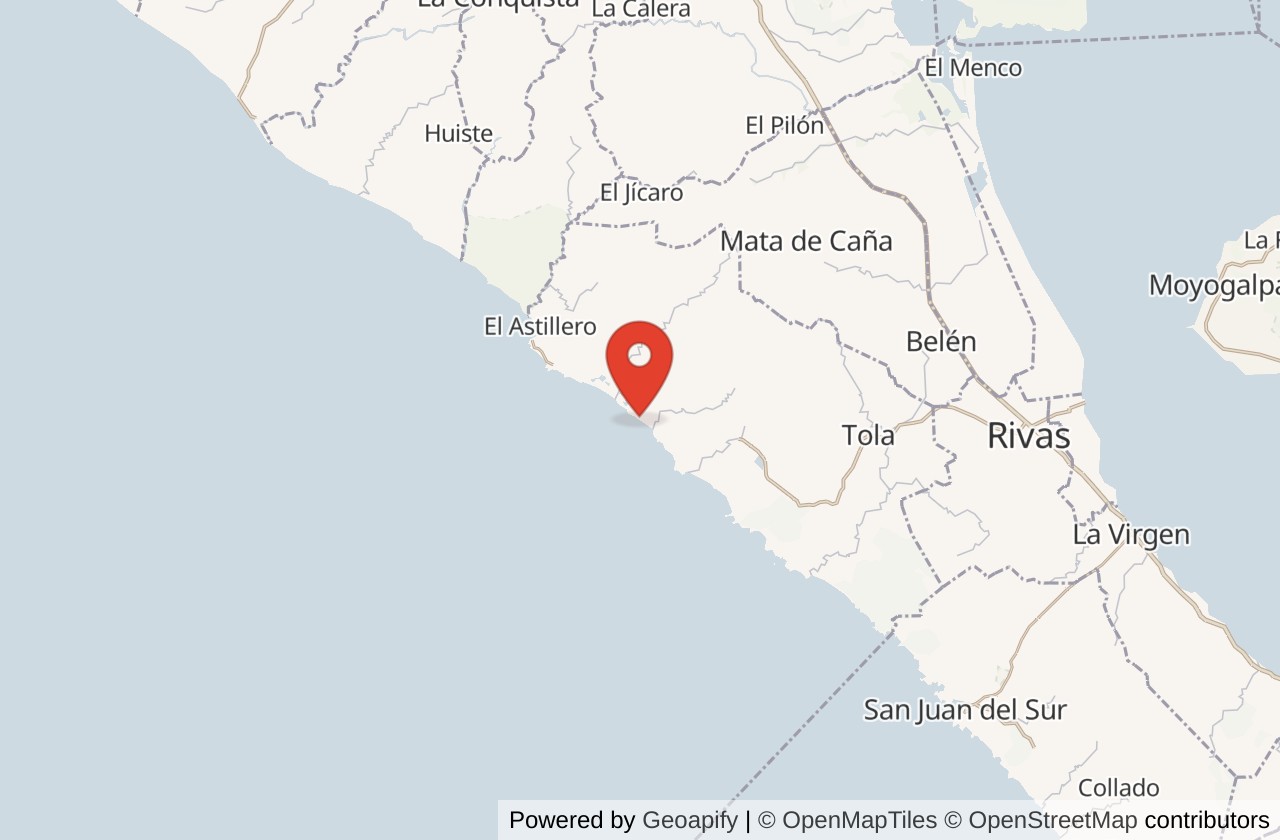
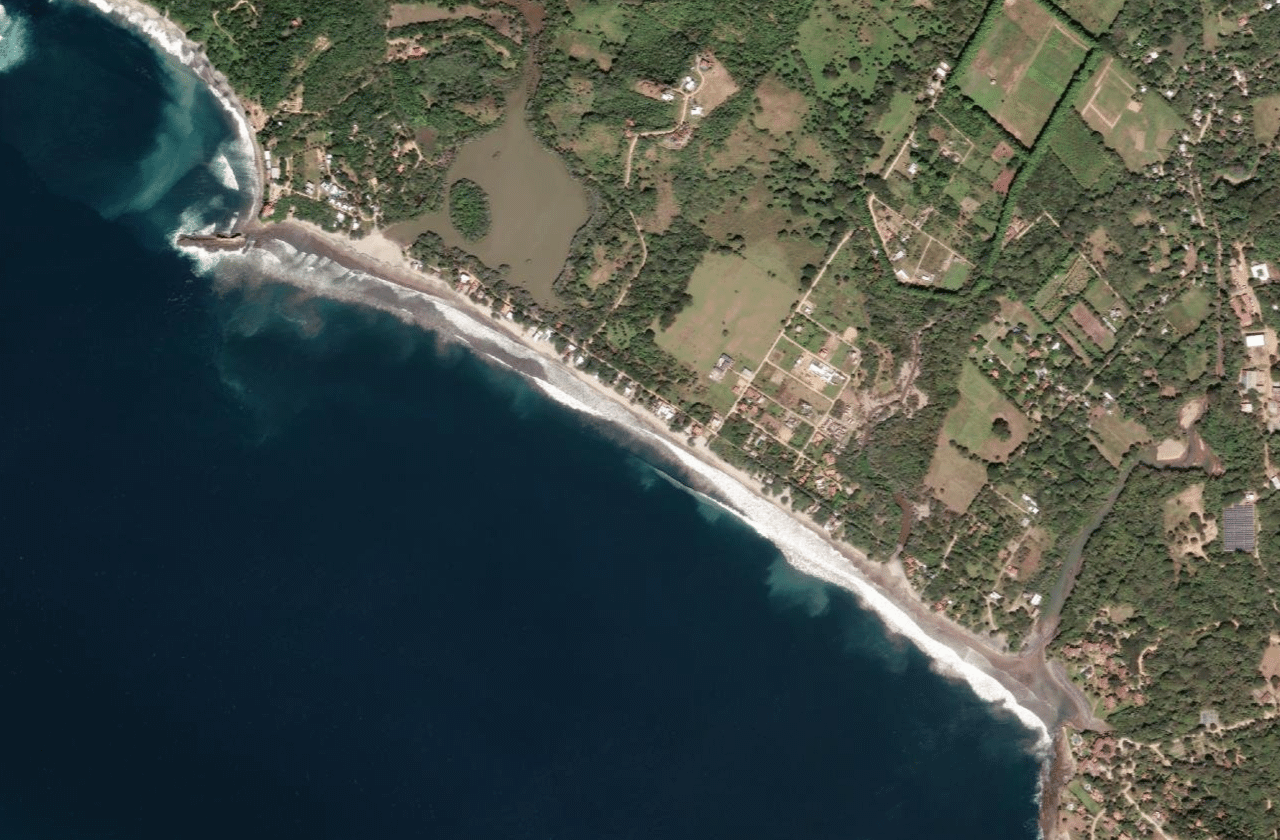
11.4487, -86.0955
What are the lineup and the town like at Popoyo?
Localism
mellow
Crowd
Mostly traveling surfers, surf-camp groups and instructors, plus a smaller local crew. The Popoyo reef gets genuinely crowded in season and on good swells; Beginner Bay fills with lessons. Crowds thin on the spread-out beach breaks and early in the morning, and the zone is quietest in the green-season shoulders.
The Popoyo reef is the busiest wave in Nicaragua and works off a single shifty peak, so the friction is crowd management more than territorial localism: it's known as a spot where a packed lineup of visiting surfers and camp groups jostle for one main peak. Wait your turn, don't drop in, don't paddle straight to the inside, and the vibe stays friendly. Camps and guides spread people across the zone's other breaks to ease the squeeze.
In the lineup: The Popoyo reef is an A-frame over rock with lefts and rights off one main peak — sit patiently and pick your set rather than fighting for every wave. It's not for beginners; learners belong at Beginner Bay (sheltered behind Mag Rock) or the Santana sandbars. The Outer Reef is a half-mile-out big-wave left for experts only. Watch the rock bottom at low tide and current around the reef on bigger days; booties are worth having.
There's no real town — Popoyo is two small beach villages (Playa Popoyo on the bluff by the reef, flatter Playa Guasacate just north) at the end of dirt roads in the dry Tola hills. Life is surf-camp casual: hammocks, yoga, beach bars, dirt streets, roaming livestock, frequent power blips and patchy signal. It's remote and self-contained — bring cash and patience and lean into the slow pace. The scene is international and friendly, the pricing well under Costa Rica outside the upscale lodges.
How do you get to Popoyo?
Fly into Augusto C. Sandino International Airport, Managua (MGA) — about 63 miles from the break, 2–2.5 hours. MGA is the only practical international gateway for Popoyo; Nicaragua has no closer commercial airport. Some travelers fly into Liberia, Costa Rica (LIR) and cross the Peñas Blancas land border, which can be cheaper on fares but adds a multi-hour border crossing plus the drive up from Rivas — only worth it for a combined Costa Rica–Nicaragua trip.
- private transferUS$80–130 per vehicle (1–4 people) · 2–2.5 hours
The standard way in with boards. Most surf camps arrange a door-to-door driver from MGA, or book an operator like Daytrip or a Nicaragua shuttle company in advance. Confirm the vehicle fits board bags and agree the price before departure; pay in clean USD cash.
- shuttleUS$45–90 per person · 2.5–3.5 hours
Shared shuttles run between Managua/Granada/San Juan del Sur and the Popoyo zone on set days (e.g. Bigfoot, Central America Shuttles). Cheaper solo but slower with stops; reserve ahead and flag board bags, as space is limited.
- rental carUS$45–90/day (4x4 recommended) · 2–2.5 hours self-drive
Pick up at MGA. The Pan-American Highway is good to the Tola/Las Salinas turnoff; the last stretch into Guasacate/Popoyo is dirt and rutted, worse in the wet season — a 4x4 with clearance is strongly advised. Avoid the rural roads after dark (animals, no lighting). Request roof rails or bring soft racks for boards.
- taxiUS$90–140 per vehicle · 2–2.5 hours
Airport taxis will run it but quote tourist rates and may not be set up for big board bags — negotiate hard and confirm a wagon/SUV. A pre-booked private transfer is usually the same money and less hassle.
Do you need a car at Popoyo?
Do you need a car?
recommended
Walkability
If you stay in Playa Popoyo right by the reef, or in Playa Guasacate near the camps, you can walk to the nearest break, a few restaurants and your camp. But the two villages are a few minutes apart by road, the better surf is spread across the zone, and there's no town center — so getting between beaches and to the various breaks on foot gets old fast.
You don't strictly need a car if your camp includes surf transport and meals, but mobility helps a lot. The local move is a moto/scooter rental (roughly US$30/day or ~US$150/week from outfits like Nicawaves on Playa Popoyo and Popoyo Moto Rentals on Guasacate); quads are also around. Local taxis hop between the beaches for about US$10, and camps keep trusted drivers' numbers (there's no Uber). A 4x4 rental gives you full freedom for the dirt roads and day trips but is the priciest option.
Boards: Plenty of surfers move boards by moto here — fine for a shortboard, awkward for anything bigger. Camps run surf taxis/boats to spread breaks and to Playa Colorado, and will strap your boards for transfers. If you rent a car, request roof rails ahead or bring soft racks and tie-downs; many local taxis are sedans, so confirm a board fits before you commit.
Where can you stay near Popoyo?
Surf camps and guided packages
Popoyo’s camps split by what you want from the week. Hide & Seek Resort, five suites and a pool steps from Popoyo beach, runs a guided package for surfers who want a local picking the break each morning, and a beginner surf-and-wellness week; both start at US$2,000 for seven days with meals. Popoyo Surfcamp and Las Plumerias are the surf-first mid-range lodges, Two Brothers and Malibu Popoyo the all-inclusive high end, and Wild Waves the budget beginner camp from US$659. Lessons around the zone run US$30–45.
Hide & Seek Resort — Guided surf package — daily trips to the best local breaks
Hide & Seek Resort — All-inclusive surf camp — stay, boards & coaching bundled
Wild Waves — All-inclusive surf camp — stay, boards & coaching bundled
Rural setting near the Popoyo breaks — camp runs surf transport · Long-running, well-reviewed surf camp built for the trip: surf trips and boat sessions, lessons, pool, hammocks and communal hangs (ping pong, mini-ramp, outdoor cinema). Strong all-rounder for the standard package experience. (Direct (popoyosurfcamp.com), Booking.com)
Oceanfront near Playa Santana/Popoyo zone · Oceanfront lodge with spacious cabanas, coaching and guided surf trips — a calmer, more lodge-style option than the party hostels, good for couples and surfers who want structured guiding. (Direct (lasplumerias.com), Booking.com)
Hilltop estate above the Popoyo coast — surf transport provided · Established 20-plus-year surf resort on a private hilltop estate with big Pacific views, pool and all-in surf packages. The polished, guided end of the local scene. (Direct (twobrotherssurf.com))
Packages bundle the stay and the surfing; check each listing for what its transfers include.
Hotels and other places to stay
Clifftop above Playa Popoyo — short walk to the reef · Landmark clifftop spot overlooking the Popoyo reef with dorms and private rooms, a restaurant-bar, pool and yoga deck. The social, view-first base right on top of the wave; books out in season. (Direct, Booking.com, Hostelworld)
Playa Guasacate — a few minutes' drive/walk to the beach breaks · Budget pick on the Guasacate strip with dorms, private rooms, AC and a shared kitchen — handy for self-caterers who want to be near camps, rentals and restaurants. (Booking.com, Hostelworld)
Beachfront in the Popoyo zone — easy break access · All-inclusive boutique hotel with AC rooms, daily meals, yoga and surf guiding included. The treat-yourself option for surfers who want comfort and food handled while they chase waves. (Direct (malibupopoyo.com), Booking.com)
Playa Guasacate — short walk/drive to the beach · Eco-style casitas on Guasacate with breakfast included — a quieter, self-contained base for couples or small groups who want a room of their own near the rentals and restaurants. (Booking.com, Airbnb)
Beach access at Playa Popoyo · Design-forward beach lodge with pool, restaurant (wood-fired pizza) and yoga — the stylish midweek-retreat option, more boutique hotel than surf camp. (Direct, Booking.com)
Where do you eat at Popoyo?
- La Perla de Guasacaterestaurant · $ mid-range
Fresh local ceviche and filet with green peppercorn sauce — Widely rated as the best sit-down food in the zone — traditional Nicaraguan plates, fresh seafood, steaks and burgers on Playa Guasacate. Call ahead so they can source the day's best catch.
- Magnific Rock Caférestaurant · $ mid-range
Seafood and American-style plates with a reef view — Clifftop restaurant-bar at the Magnific Rock hostel overlooking the Popoyo reef — the obvious sunset spot, doubles as a social hub for the beach.
- Mahalo Restaurant & Cafécafe · $ mid-range
Breakfast bowls and coffee — All-day café on Calle Guasacate (across from the salinera) doing breakfast, lunch and dinner — a reliable, central pick on the Guasacate strip.
- Dutchy's Delicafe · $ mid-range
Sandwiches, baked goods and breakfast — Popular deli-café for breakfast, lunch and sweets — the go-to for a quick post-surf bite and a proper coffee.
- Red Pepper Popoyorestaurant · $ mid-range
Themed nights — curry and Indonesian-style noodles — Las Salinas spot known for set themed dinners on specific nights (e.g. curry Mondays, Indonesian noodles midweek). Reservations required — check the current schedule, as days rotate.
- Popoyo Republicbar · $ mid-range
Pulled-pork sandwiches and cold beers with live music — Casual food-and-music hangout at Playa Popoyo with pulled pork, vegan options and event nights — where the beach crowd ends up after dark.
- Local comedores & sodas (Guasacate/Las Salinas)soda · $ budget
Gallo pinto, grilled chicken or fish with rice and beans — Small family comedores along the road do the cheap, filling local plates (often US$3–6) — the budget backbone of any longer stay. Cash and Spanish help; hours are informal.
Cooking for yourself
- Ocean Market (Guasacate)minimart
The main convenience stop on the Guasacate strip for water, snacks, basics and cold drinks; some locations offer limited cashback for a fee. Fine for topping up, not a full supermarket shop.
- Roadside pulperías (Las Salinas/Guasacate)minimart
Small family shops scattered along the roads for water, beer, snacks and a few staples. Self-catering is workable but limited — for a real grocery run hit a supermarket in Rivas (~1–1.5 hrs) on the way in.
- Rivas supermarkets (Palí / Maxi Pali)supermarket
The nearest proper supermarkets are in Rivas, roughly 1–1.5 hours away. Stock up there on the drive in if you plan to cook — local options near the beach won't cover a full week's shop.
Where do you rent or fix a board?
- Popoyo Surf Shop (Odile & Christobal)board rental · ding repair · wax · leashes · fins · board sales · ~US$10–15/day (short/long)
Shaper-run shop on Calle Guasacate, ~200 m north of La Bocana. Good range of rental shapes for all levels, accessories (wax, leashes, fins, sunscreen) and ding repair for both polyester and epoxy boards — the most complete shop in the zone.
- Popoyo Surfboard Rentals & Ding Repairboard rental · ding repair · wax · fins · leashes · wetsuits · ~500 córdobas (~US$14)/24 hrs
Hard-top and soft-top boards from 5'3" to 10', plus rash guards and wetsuits for rent and wax/fins/leashes/sunscreen for sale. Solid for a quick rental or a session-saving repair.
- Nicawaves (Playa Popoyo)board rental · ~US$10–15/day boards; motos ~US$30/day
Hotel-based rentals on Playa Popoyo handy if you're staying on that side — also a go-to for moto rentals to get around the zone. Most camps also rent boards in-house.
What do you do when it's flat?
- Termales de Nahualapa (hot springs)wellness · ~US$1–2 entry
Natural thermal springs near Las Salinas — a cheap, easy flat-day soak a short drive from Guasacate. Good for surfed-out shoulders.
- Chacocente Wildlife Reserve (turtle nesting)nature · ~US$3 entry (foreigners); guided tours cost more
Protected dry forest and beach where olive ridley and other sea turtles arrive in mass nesting events (peak roughly July–December). One of the region's best wildlife experiences; go with a guide and respect the rules.
- El Astillero fishing villageculture · free (meals/fish extra)
Working fishing village down the coast — wander the beach, watch the pangas come in, and eat fresh seafood straight off the boats. A genuine slice of local life away from the surf bubble.
- Yoga (camps & lodges)wellness · ~US$10–15/class
Drop-in yoga runs at several spots (Magnific Rock, 99 Surf Lodge and others) — the standard recovery option between sessions; many camps include it in packages.
- Tide pools (Guasacate & Mag Rock)nature · free
Rocky tide pools form at low tide near Playa Guasacate and below Magnific Rock — easy, free exploring, especially good for kids or a between-surf wander. Watch footing on slick rock.
- Boat surf trips to Playa Colorado / Panga Dropswater · US$20–50 per person (camp-dependent)
Many camps run boat or 4x4 surf trips to nearby gems like Playa Colorado (inside private Hacienda Iguana) and the consistent Panga Drops. The easiest way to surf the zone's harder-to-reach breaks.
- Sport fishing chartersadventure · US$300–600+ per boat
Local pangas and charters run offshore for roosterfish, dorado and more out of the Popoyo/Astillero area. Arrange through your camp; price varies with boat and hours.
What should you know before you go?
Cash & ATMs
There is no ATM in Popoyo or Guasacate — it's a cash-only zone. The nearest reliable machines are at Plaza Riviera de Tola (about a 20-minute taxi each way) or, more dependably, in Rivas and San Juan del Sur; some Ocean Market locations offer limited cashback for a fee. Bring more clean USD in small bills than you think you'll need, and stock up before you head up the coast — machines also run dry on weekends.
Medical
Nearest care is the Roberto Clemente / NicaClinic walk-in health clinic on the main road between Hacienda Iguana and Rancho Santana entrances (nurses and doctors on call), plus Farmacia Iguana (doctor consults, first aid, ultrasound) at Hacienda Iguana and a pharmacy in Las Salinas. There's no hospital nearby — Rivas (~1–1.5 hrs) handles more, and for anything serious you're heading to Managua (Hospital Vivian Pellas, ~2.5 hrs). Carry travel insurance with evacuation cover and a reef-cut kit.
Water safety
Popoyo is a rock-reef wave — the bottom is rock, sharp and shallow at low tide, so reef cuts, scrapes and the odd urchin are the real hazards; booties and a ding/first-aid kit are smart. There are no lifeguards anywhere in the zone, and the beach breaks pack punch and produce rip currents, so beginners should only surf with a camp/instructor and stay in Beginner Bay or the Santana sandbars. The Outer Reef is genuine big-wave terrain. Water is warm year-round; don't drink the tap water (camps provide purified refills), and watch for stronger currents around the reef on bigger swells.
Nicaragua basics: money, entry, phones, water
Currency
Nicaraguan córdoba (NIO) — ~36–37 NIO per USD (mid-2026; the córdoba has been pegged near 36.6 since 2024)
Entry (US passport)
Up to 90 days — No visa, but you buy a US$10 tourist card on arrival — exact cash. Passport must be valid 6 months beyond arrival. The 90 days is shared across the CA-4 zone (Guatemala, Honduras, El Salvador, Nicaragua); a 30-day extension is possible at immigration in Managua. Overstays incur daily fines.
Language
Spanish, English (in surf camps and tourist businesses around San Juan del Sur and Popoyo; rare elsewhere). Lower than Costa Rica. Surf camps, hostels, and boat operators in San Juan del Sur, Playa Maderas, and the Popoyo/Hacienda Iguana zone run fine in English, but taxi drivers, comedores, border officials, and anyone outside the surf bubble will expect Spanish — learn the basics or keep a translation app handy.
Plugs
A, B · 120V / 60Hz (same as US/Canada — no adapter needed for North American gear)
Tipping
Restaurants often add a 10% service charge ('propina') to the bill — check before adding more. Where it's not included, ~10% is appreciated but not demanded. Tip boat captains and surf guides a few dollars per session in cash; round up taxis.
Phone / data
Claro, Tigo (ex-Movistar), eSIM (Airalo, Nomad, Holafly, etc.). Claro and Tigo both cover Managua, Rivas, and San Juan del Sur well with 4G. Out at the Popoyo / Playa Colorado / Hacienda Iguana stretch coverage gets patchy — signal often works at the beach but drops in the dips behind it, and many surf camps lean on Starlink or fixed Wi-Fi. Locals often carry both networks; if you're basing at Popoyo for a while, Claro tends to edge out Tigo there but ask your camp which works at their spot. Download offline maps — the dirt roads into Hacienda Iguana have dead zones, and power cuts (which take cell towers down with them) are routine.
Tap water
Don't drink the tap water on the surf coast. Managua's supply is chlorinated but most travelers stick to bottled or filtered everywhere; surf camps almost all provide purified water refills. Ice in tourist establishments is generally made from purified water.
Emergency
Police 118, ambulance 128, fire 115 (no unified 911; English-speaking operators are not guaranteed — your surf camp or hotel is often the fastest route to help).
Other passports: entry rules differ — check the official source before booking.
Popoyo is on through Oct 24
Our forecast shows a trip-worthy window, up to 6 ft, best day 9/10. Drop your email and we'll send you this one and the next: the dates, the size, and where to stay. Free.
Frequently asked questions about Popoyo
Is Popoyo good for beginners?
The Popoyo reef itself is a powerful rock-reef wave that is not for beginners, but the zone is beginner-friendly overall: Beginner Bay (sheltered behind Mag Rock) and the Playa Santana sandbars offer mellow waves, and the area's many surf camps run lessons for around US$30–45. Learn there, not on the main reef.
Which surf camp should you book at Popoyo?
For intermediate and advanced surfers who want guiding, Hide & Seek Resort’s seven-day package (from US$2,000, meals included, steps from the beach). For a first week on a board, Hide & Seek’s beginner surf-and-wellness week (from US$2,000) or Wild Waves (from US$659). Popoyo Surfcamp and Las Plumerias are the mid-range surf lodges; Two Brothers and Malibu Popoyo the all-inclusive top end.
When is the best time to surf Popoyo?
Roughly March/April through October, the southern-hemisphere swell season, brings the most consistent and biggest surf, while Lake Nicaragua's offshore wind keeps faces clean almost every day year-round. April–May offers good waves with thinner crowds; the green season (May–Oct) has the biggest swells and lowest prices but afternoon rain.
Why is Popoyo always offshore?
Lake Nicaragua (Cocibolca) sits just inland and channels offshore wind onto this Pacific coast almost year-round — locals say it's offshore close to 360 days a year. That's why mornings are typically glassy and groomed, and a big reason Popoyo is so highly rated.
How do you get to Popoyo from Managua airport?
Fly into Managua (MGA), then it's about a 2–2.5 hour drive (roughly 63 miles). Most surf camps arrange a private transfer (US$80–130 per vehicle), shared shuttles run for less per person, and self-driving works with a 4x4 since the last stretch into Guasacate/Popoyo is rough dirt road.
Is there an ATM in Popoyo?
No — Popoyo and Guasacate are cash-only with no ATM. The nearest machines are at Plaza Riviera de Tola (~20 min away) or more reliably in Rivas and San Juan del Sur, so bring plenty of clean USD in small bills before heading up the coast.
Do I need a car in Popoyo?
Not strictly, especially if your camp includes meals and surf transport, but mobility helps. Most travelers rent a moto (~US$30/day) to move between Playa Popoyo and Guasacate and the various breaks; local taxis hop between beaches for about US$10, and a 4x4 gives full freedom for the dirt roads and day trips.
Where should I stay in Popoyo — Playa Popoyo or Guasacate?
Playa Popoyo (the bluff by the reef) puts you closest to the main wave and spots like Magnific Rock; Playa Guasacate, a few minutes north, is flatter and has more of the camps, restaurants, rentals and surf shops. Either works — Guasacate is more convenient for amenities, Popoyo for waking up on the reef.
Is Popoyo safe to visit?
The Tola/Popoyo surf zone is calm, low-key and has hosted surf tourism for years; day-to-day risk is petty theft, so don't leave gear unattended. Nationally, the US State Department holds Nicaragua at Level 3 — the practical rule is to stay completely out of local politics. Use registered drivers and avoid rural roads at night.
Sources for this guide
- costaoestenica.comsecondary source · Popoyo reef (A-frame rock reef, lefts/rights, not for beginners, crowds), Outer Reef big-wave left, Playa Santana beach break, Beginner Bay
- lasplumerias.comofficial · Season window (March/April–Oct southern swell), Lake Nicaragua offshore wind ~360 days/yr, dry vs green season tradeoffs
- nomapsorfoottracks.comeditorial · Lodging (Magnific Rock, Barrel Hostel, Casitas Pacific, 99 Surf Lodge), food (Popoyo Republic, Red Pepper, Dutchy's, Mahalo), moto/taxi pric
- tripadvisor.comsecondary source · Popoyo Surfcamp live listing, rating and amenities (pool, hammocks, surf/boat trips, lessons)
- tripadvisor.comsecondary source · La Perla de Guasacate live listing, signature dishes (ceviche, peppercorn filet), seafood/steaks
- popoyo.comsecondary source · Roberto Clemente / NicaClinic walk-in clinic location, Farmacia Iguana, Las Salinas pharmacy, Hospital Vivian Pellas Managua for serious cas
- rome2rio.comsecondary source · MGA–Popoyo driving distance (~63 mi) and ~2–2.5 hr drive time; transfer/shuttle modes and bands
- costaoestenica.comsecondary source · Zone breaks context — Playa Colorado (inside Hacienda Iguana), Panga Drops consistency, multi-break nature of the Popoyo zone
- popoyosurfcamp.comofficial · Board rental availability and equipment context; camp-based rentals
- nicawaves.comsecondary source · Nicawaves board and moto rental on Playa Popoyo, price context
Guide researched and verified 2026-06-12. Details change; confirm bookings and entry requirements before travel.