When is the best time to surf Anse Couleuvre?
can still fire Nov–Mar.
Any real surf here rides the winter window — roughly November through March, when North Atlantic NE-to-NW swells wrap onto this corner of the island and the trades back off, with December–March the cleanest stretch. Even then the wave is selective: it needs a solid pulse to stand up, which is exactly why it rewards a watched forecast — when the right swell lands, the slabby right over black rock is one of Martinique's most memorable rides, and the surfers who score it are the ones who got the call. The rest of the year the cove reverts to what it does best: swimming, snorkeling and hiking in warm (27–29°C) water. Boardshorts or a shorty, whenever you go.
What does a surf trip to Anse Couleuvre look like?
A typical trip from our guide. A real alert comes with the forecast for each day and a fare from your airport.
How much does a surf trip to Anse Couleuvre cost?
A five-night trip, per person, before food and rentals.
Rows marked "based on … alerts" are the middle half of the real round-trip fares we quoted in alerts on that route, priced 3 to 10 days before departure, since June 2026. Rows marked "Google typical" are Google Flights' usual range for August, across all booking lead times, so a last-minute fare often lands above it. Checked Oct 17. Stays use our guide's nightly bands; transfers use the guide's quoted rates. Real alerts price the exact dates.
Where should you stay at Anse Couleuvre?
Nearest base
L'Hacienda $
hotel · mid-range · Saint-Pierre — ~30 min drive to the trailhead
Hillside hotel above Saint-Pierre with sea views, an indoor saltwater pool, garden and bar — a comfortable mid-range base on the Caribbean coast with easy access north to the beach and south to Le Carbet.
Check ratesCheaper
Le Kapokier $
guesthouse · budget · Saint-Pierre — ~30 min drive to the trailhead
Small guesthouse in Saint-Pierre with a garden, shared lounge and terrace and free parking — a budget-friendly walkable base in town near the seafront, good for travelers who'll spend most days mobile by car.
Stays nearbyEvery place we researched, with its booking link, is under where to stay below.
What is the wave like at Anse Couleuvre?
Break type
Reef
Wave direction
Right
Best swell
NNW (NW–NE window)
Ideal size
3–8 ft
Best tide
Mid to mid-high
Low: reef shallow
Consistency
Inconsistent
Peak season
Dec–Mar
Nearest airport
FDF · ~32 mi
Drive from airport
1 hour to 1 hr 15 min to the trailhead
That ride has a real reputation among the few who chase it. Surf-guide write-ups describe a fast, slabby right that throws barrels over a very shallow black-rock reef when winter NE-to-NW swell wraps onto this corner of the island — an advanced, take-it-seriously wave whose rarity is precisely the appeal: score it once and you've ridden something most visiting surfers never will. The bigger Atlantic surf lives on the other side of Martinique, around Tartane on the Caravelle peninsula, which is where the island's surf shops, schools and consistent beach breaks are — so the smart play is to base within reach on the Caribbean coast and pounce when a strong forecast lines up, rather than camping on the sand waiting.
Know what you're signing up for. There is no town, no lifeguard, no surf shop and effectively no surf infrastructure here — just a snack trailer at the trailhead and the cliffs. The access road past Anse Céron is narrow, steep and winding, parking is a dozen-odd spaces that fill by mid-morning, and the currents off the beach are genuinely dangerous in any wind or swell. Come fully self-sufficient, base yourself in Saint-Pierre or Le Carbet 20–40 minutes south — and when the alert-day swell arrives, you'll have one of the island's most beautiful corners nearly to yourself.
Who it suits
Advanced surfers on Martinique ready to drop everything when a strong winter swell lines up the slabby right — and travelers who'll love the wild black-sand beach, forest hike and snorkeling on every other day. Not a beginner spot; the reward here is being there on the rare day it turns on.
Where exactly is Anse Couleuvre?
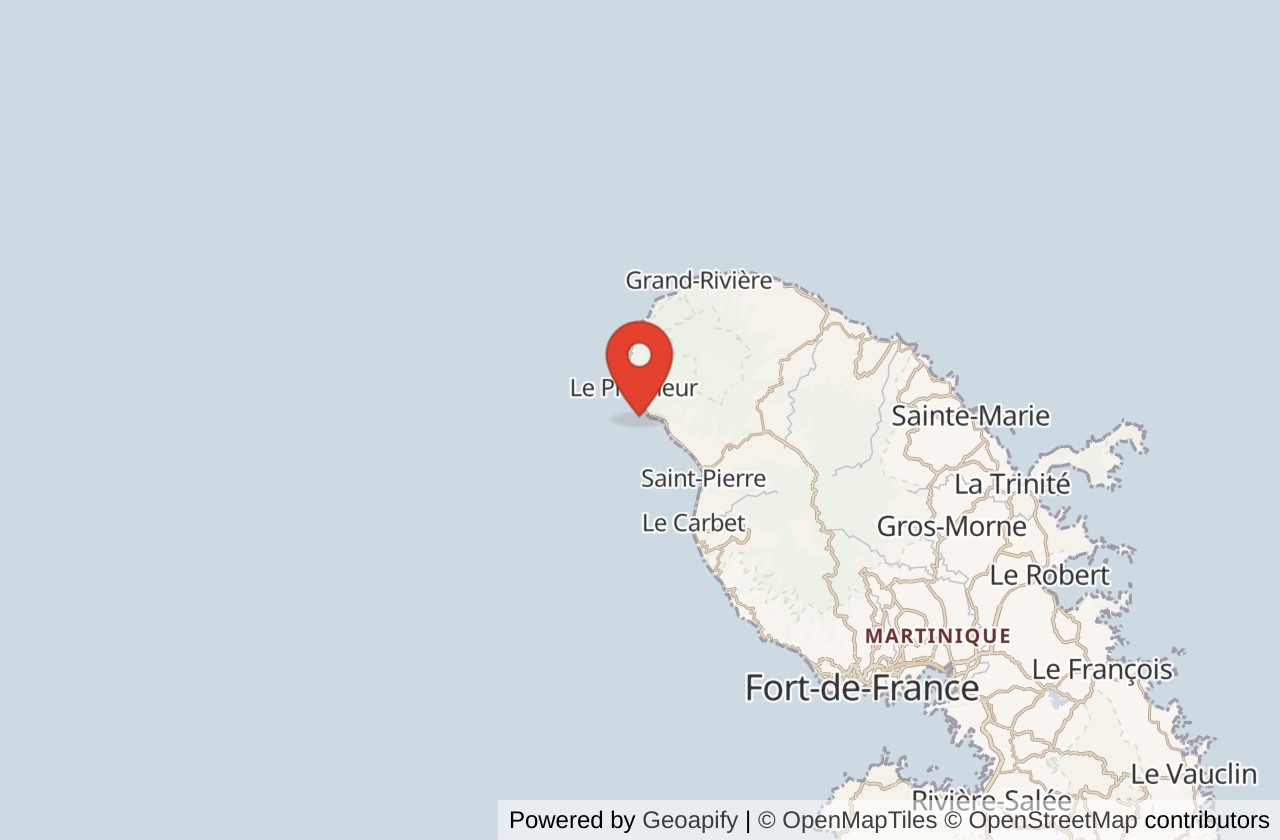
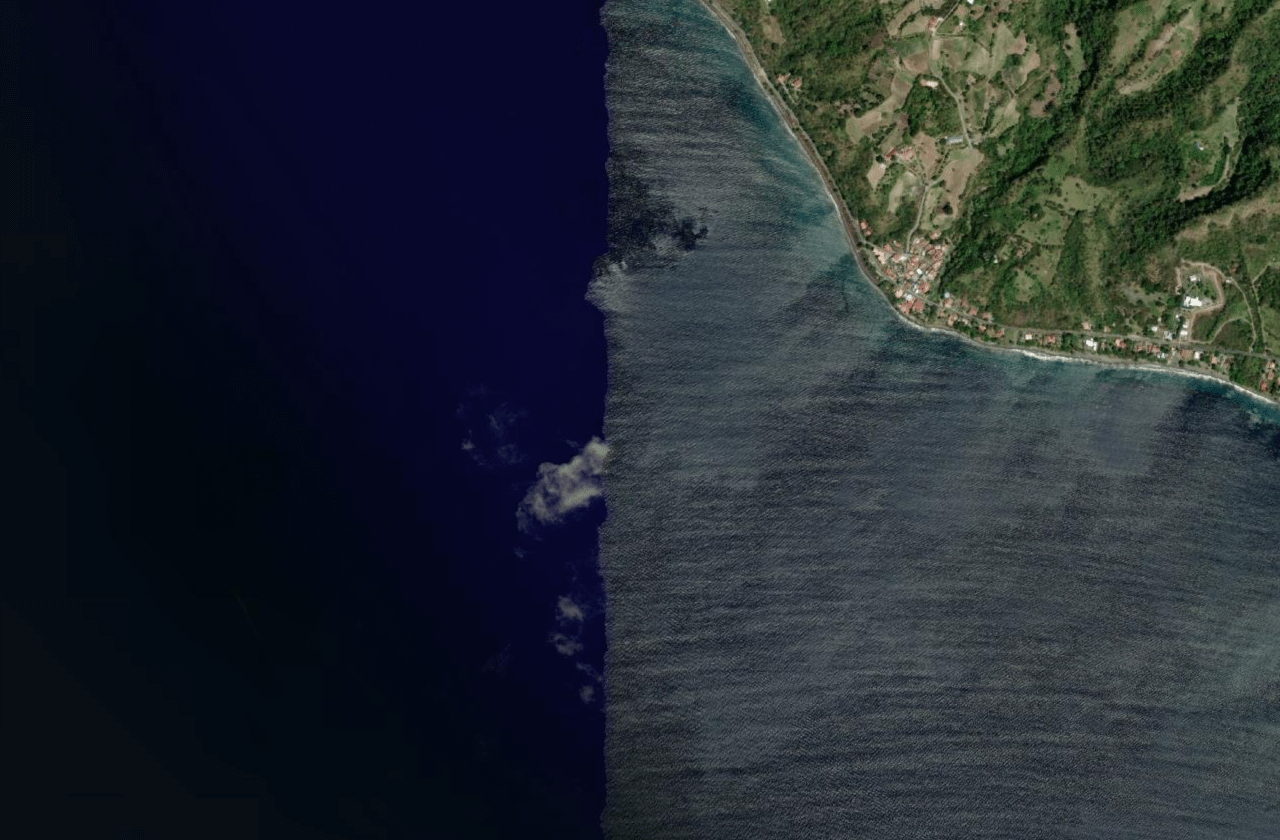
14.7800, -61.2200
What are the lineup and the town like at Anse Couleuvre?
Localism
mellow
Crowd
In the water as a surf spot: nearly empty, because it so rarely works and there's no nearby surf scene. On the beach: busy with day-trippers, families and hikers on weekends and holidays — go on a weekday or arrive by 8–9am for solitude (and a parking space).
On the rare days it breaks, this is a small, advanced wave on a sharp reef and the crew is a handful of local surfers who know exactly where the takeoff is — read the lineup, don't drop in, and don't expect a beginner-friendly welcome on a heavy day. The beach itself is known as a quiet nature reserve where most people are hikers, swimmers and snorkelers, so keep it low-key and pack out everything you bring in.
In the lineup: The surf is a fast right barreling over a very shallow black-rock reef that needs size and the right NE/NW swell angle to turn on — there's beefy rock overhanging the takeoff and little margin for error. Treat it as advanced-only and study it from the sand first. For everyone else, the safest water is the snorkeling near the points; the open bay holds strong currents and rollers in any wind.
There is no town here at all — Anse Couleuvre is the literal end of the road, a roadless cove inside a marine reserve under the cliffs of Montagne Pelée, with only a snack trailer and a forest trail. The nearest community, Le Prêcheur, is a sleepy fishing village; the real base towns of Saint-Pierre and Le Carbet are creole, French and unhurried, heavy on history and rhum rather than nightlife. This is the wild, authentic, slightly melancholic north of Martinique, a world away from the resort beaches of the south.
How do you get to Anse Couleuvre?
Fly into Martinique Aimé Césaire International Airport, Le Lamentin (Fort-de-France) (FDF) — about 32 miles from the break, 1 hour to 1 hr 15 min to the trailhead. FDF is Martinique's only commercial airport, so there's no real alternative — it handles all flights from mainland France, North America connections and inter-island hops.
- rental car€35–60/day (often less for week-plus hires) · About 1 hour to Saint-Pierre, plus 25–35 min on to the beach
The only sensible way to reach Anse Couleuvre. Pick up at FDF, take the A1/N2 up the Caribbean coast through Saint-Pierre, then the D10 through Le Prêcheur. The final stretch past Anse Céron is narrow, steep and winding — a small car is fine but go slow; large vehicles struggle. Drive on the right; book ahead in high season (Dec–Apr) when fleets sell out.
- taxi€90–140 to Saint-Pierre, more to the trailhead · About 1 hr 15 min to the beach
Metered island taxis are expensive and there's no easy way to get picked up at a roadless beach for the return, so a taxi only makes sense as an airport-to-lodging transfer. Agree the fare before departing; surcharges apply evenings and Sundays.
- private transfer€80–130 per vehicle to Saint-Pierre / Le Carbet · About 1 hour to lodging
Pre-booked transfers (your hotel or a local VTC) are the simplest board-friendly option airport-to-lodging; from there you still need a car for the beach itself. Confirm a roof rack or that a board bag fits when you book.
- bus€2–8 per person · 1.5–2.5 hours, with changes; no service to the beach
Martinique's collective TCSP/regional buses run as far as Saint-Pierre and, infrequently, Le Prêcheur village — but nothing reaches the Anse Couleuvre trailhead, and a board bag on a crowded local bus is impractical. Realistically a non-option for surfers; rent a car.
Do you need a car at Anse Couleuvre?
Do you need a car?
essential
Walkability
There is nothing to walk to at the beach itself — it's roadless, reached only by a ~300 m / 10-minute forest trail from the parking area. The nearest village, Le Prêcheur, is a few kilometres back down the D10; Saint-Pierre (shops, ATMs, restaurants) is about 25–35 minutes south. You cannot base yourself within walking distance of the break.
A rental car is non-negotiable: €35–60/day from FDF, cheaper for longer hires. It gets you to the trailhead and to everything else on this coast — Saint-Pierre, the distilleries, Le Carbet's beaches, the Montagne Pelée trails. There is no Uber on Martinique and taxis are pricey and scarce up here. Parking at the beach is the real constraint: roughly 12–15 spaces that fill by mid-morning, with overflow on the narrow roadside; arrive early (before 9am) on weekends and holidays or you may not get in at all.
Boards: Bring everything with you in the car — there is no board rental, sales or repair anywhere on this coast (the island's surf shops are in Tartane, an hour-plus away on the Atlantic side). Most island rental cars are small hatchbacks; request a roof rack or pack soft racks and straps if you're carrying boards, and a board-sock to handle the forest trail and black sand. Boards get carried in on foot the last 10 minutes.
Where can you stay near Anse Couleuvre?
Closest base — in Le Prêcheur, a few minutes' drive from the trailhead · A restored 1660 plantation estate and the last habitation before the beach: eight rooms split between a creole manor house (adults-only) and family bungalows with private plunge pools, plus a semi-gastronomic restaurant and a rooftop rum bar. The one genuinely upscale stay near the spot — book the room or just stop for lunch on a surf-check day. (Direct (martinique-tour.com booking))
Saint-Pierre — ~30 min drive to the trailhead · Hillside hotel above Saint-Pierre with sea views, an indoor saltwater pool, garden and bar — a comfortable mid-range base on the Caribbean coast with easy access north to the beach and south to Le Carbet. (Booking.com, direct)
Above Saint-Pierre — ~30 min drive to the trailhead · Long-running hillside hotel-restaurant overlooking Saint-Pierre and the bay where Mont Pelée's 1902 eruption sank the fleet — panoramic views, simple rooms and a well-known terrace restaurant. Reliable, central-to-the-north-coast value. (Booking.com, direct)
Saint-Pierre — ~30 min drive to the trailhead · Small guesthouse in Saint-Pierre with a garden, shared lounge and terrace and free parking — a budget-friendly walkable base in town near the seafront, good for travelers who'll spend most days mobile by car. (Booking.com)
Saint-Pierre / Le Carbet — 25–40 min drive to the trailhead · The widest choice on this coast is self-catering apartments and bungalows around Saint-Pierre and Le Carbet, many with kitchens and parking from roughly €60/night. Best pick for a few days based on the Caribbean coast with a car, letting you cook and surf-check on your own schedule. (Airbnb, Booking.com)
Le Carbet — ~35–40 min drive to the trailhead · Le Carbet's black-sand seafront has a cluster of bungalows, guesthouses and small hotels with a livelier beach-town feel (bars, the famous Petibonum) than quiet Saint-Pierre — a touch further from the break but a better evening scene. (Booking.com, Airbnb)
Where do you eat at Anse Couleuvre?
- Anse Couleuvre trailhead snack truckfood truck · $ budget
Cold drinks, sandwiches and a quick bokit before the hike — A small trailer at the parking lot sells sandwiches, water and sodas — the only food at the beach itself. Bring a picnic for the day; there is nothing on the sand and no other option for kilometres.
- Restaurant Habitation Anse Couleuvrerestaurant · $$ high-end
Creative creole cuisine with local produce; sunset rums on the rooftop — The semi-gastronomic kitchen at the plantation hotel in Le Prêcheur, open to non-guests for lunch and dinner, plus a rooftop tapas-and-rum bar. The standout sit-down meal closest to the beach — reserve ahead.
- Habitation Céronrestaurant · $$ high-end
Farm-to-table creole tasting around the estate's own crayfish, cacao and produce — A 17th-century estate turned agro-tourism restaurant in the rainforest near Anse Céron, on the way to the beach. Sustainable, hyper-local cooking and a boutique of 100%-Martinique groceries and chocolate. Reviews are a touch mixed on value, but the setting is unique — book ahead, lunch-focused.
- Le Petibonumrestaurant · $ mid-range
Grilled fish and modern creole plates, feet in the black sand — Chef Guy Ferdinand's famous beach restaurant on the black sand at Le Carbet — one of the best-known tables on the island, casual but serious cooking right on the water. The go-to dinner if you're based at Le Carbet.
- Saint-Pierre seafront restaurantsrestaurant · $ mid-range
Court-bouillon, accras, grilled catch of the day, ti-punch — Saint-Pierre's waterfront has a row of creole restaurants and bars serving grilled fish, accras and boudin with sea views over the bay. The practical everyday option for dinner when you're based in town.
- Le Carbet & Saint-Pierre bakeries (boulangeries)bakery · $ budget
Baguettes, pain au chocolat, coco tablets and a quick espresso — French-style boulangeries in both towns are the cheap, fast pre-surf breakfast and the place to load up on bread and pastries for the beach picnic. Open early, cash or card.
Cooking for yourself
- Supermarkets in Saint-Pierresupermarket
Saint-Pierre has the nearest full supermarkets (French chains stocking everything from fresh fish and produce to wine, water and sunscreen). Stock up here — it's your last proper shop before the long dead-end road north, as Le Prêcheur has only small village shops and the beach has nothing. Fully viable for self-catering.
- Le Carbet supermarkets & mini-marketssupermarket
If you're based at Le Carbet, its supermarkets and convenience stores cover groceries, drinks and beach supplies. Combine with a boulangerie for bread and the Saint-Pierre fish stalls for fresh catch.
- Le Prêcheur village shopsminimart
Le Prêcheur, the last village before the beach, has only small épiceries for water, snacks and basics — handy for a last-minute top-up but not a real shop. Buy everything substantial in Saint-Pierre first.
Where do you rent or fix a board?
- No surf shop on the north-Caribbean coastboard rental · board sales · ding repair · lessons · wax
There is no surf shop, rental, repair, school or even wax anywhere near Anse Couleuvre — the north-Caribbean coast has zero surf retail. Martinique's surf shops and schools are all on the Atlantic side at Tartane / Anse Bonneville on the Caravelle peninsula (Surf Up, Bliss), more than an hour away. If you intend to surf here you must arrive completely self-sufficient: your own board, leash, spare fins, wax and a ding kit. Rent or buy at Tartane before you come.
What do you do when it's flat?
- Cascade Couleuvrenature · free
A 120-metre waterfall up the valley behind the beach, reached by a roughly 2-hour round-trip forest hike from the same trailhead — the area's signature non-surf outing and a stunner on a flat day.
- Snorkeling at Anse Couleuvrewater · free (bring your own gear)
The reef off the rocky points holds fish, coral and frequent sea turtles, and the water is clear despite the black sand — the beach's biggest draw. Bring a mask and fins; stay near the rocks and out of the current, and skip the water entirely on windy or swelly days.
- Montagne Pelée hikesadventure · free
The volcano that destroyed Saint-Pierre in 1902 looms over the whole coast; its summit and flank trails (a UNESCO-listed landscape) are world-class day hikes starting a short drive away. Go early before the cloud closes in.
- Distillerie Neisson & Distillerie Depazfood drink · free–€15 for tastings/tours
Two of Martinique's best rhum agricole distilleries sit just south near Le Carbet and Saint-Pierre — Neisson for its grassy white rum, Depaz for its Mount-Pelée estate setting. Tastings and tours; the classic flat-day stop on this coast.
- Saint-Pierre — the 'Pompeii of the Caribbean'culture · free–€10 (museum)
Wander the ruins of the town wiped out by Pelée's 1902 eruption — the old theatre, the prison cell that saved the lone survivor, and the volcano museum. The most powerful bit of history on the island and a 25–35 min drive from the beach.
- Habitation Céron estate visitculture · €8–15 estate visit
Beyond the restaurant, the 17th-century estate near Anse Céron offers self-guided grounds with an immense ancient zamana tree, cacao plantation, crayfish pools and a chocolate workshop — easily paired with a beach day.
- îlet la Perle dive/snorkel boat tripswater · €40–70 per person
The offshore rock pyramid visible from the beach is one of Martinique's top dive sites, run as boat trips from operators down the coast. For confident swimmers it's a far safer way to get in the water here than fighting the beach current.
What should you know before you go?
Cash & ATMs
No ATM or card payment at the beach — the trailhead snack truck is cash-only (euros). The nearest reliable ATMs and banks are in Saint-Pierre, 25–35 minutes south; Le Prêcheur village has very limited services. Carry euro cash for parking-area food, picnic supplies and tips. Martinique uses the euro and most towns take cards, but bring cash for this dead-end coast.
Medical
There is no clinic at the beach and you're at the end of a long winding road, so cuts on the shallow reef are a real concern — bring a proper first-aid and reef-cut kit. The nearest medical care is in Saint-Pierre (pharmacy and clinic); the main hospital (CHU) is in Fort-de-France, about an hour away. For emergencies in France's overseas departments dial 15 (SAMU) or 112.
Water safety
This is the headline hazard: Anse Couleuvre is unsupervised, has no lifeguard, and is repeatedly flagged by local beach guides as dangerous — strong currents and rollers form off the beach in any wind or swell, and drownings have occurred on this stretch of the north-Caribbean coast. The surf, when it runs, breaks over a very shallow black volcanic-rock reef. Snorkel only in calm conditions and near the rocky points, never venture out in chop, and keep non-confident swimmers in close. There can be jellyfish; reef shoes help on the rock. The bay sits inside a protected marine reserve, so water quality is good, but river runoff can cloud it after heavy rain.
Martinique basics: money, entry, phones, water
Currency
Euro (EUR) — ~0.92 EUR per USD (mid-2026) — i.e. roughly $1.08 buys €1
Entry (US passport)
Up to 90 days — Visa-exempt for tourism. IMPORTANT: Martinique is a French overseas department and is NOT in the Schengen area, so this 90-day allowance is separate from (and does not count against) Schengen days spent in mainland Europe. A short-stay Schengen visa does NOT cover Martinique. EES and ETIAS apply only to the Schengen zone, not to overseas departments.
Language
French, Martinican Creole (Kréyòl). Limited outside hotels and the main tourist/cruise areas. Martinique is far less Anglophone than the wider Caribbean — staff at resorts, dive/surf operators, and car-rental desks usually speak some English, but at local bakeries, markets, snack vans, and rural surf spots (Tartane, the Caravelle peninsula) French goes a long way and a few words of Creole earn smiles. Download an offline translator.
Plugs
C, D, E · 230V / 50Hz (European standard — North American 120V-only gear needs a converter, not just a plug adapter; most laptop and phone chargers are dual-voltage and only need a Type C/E adapter)
Tipping
Service is included by law ('service compris') — a service charge is built into restaurant and café prices, so tipping is not expected. Locals leave nothing or just round up the coins; for genuinely great service you might add a euro or two. Tip a surf instructor or boat skipper a few euros if they went above and beyond, but there's no obligation.
Phone / data
Orange Caraïbe, SFR Caraïbe, Digicel / La Poste Caraïbe Mobile, EU SIM (roaming) or travel eSIM (Airalo, Holafly, Orange Travel). Coverage is strong by Caribbean standards — roughly 90% of the island has 4G including most beaches and the rainforest interior, with 5G in the main towns. SFR and Orange are the safe picks for getting out to Atlantic-coast surf around the Caravelle peninsula and Tartane. Expect occasional weak spots in the deep interior and on remote headlands; most accommodations have Wi-Fi. EU SIM holders get all this at no extra charge via free EU roaming.
Tap water
Tap water is treated to French/EU standards and safe to drink across the island, though many locals prefer bottled out of habit and taste. After heavy tropical rain or in remote areas, bottled is cheap insurance if your stomach is sensitive.
Emergency
112 is the universal EU emergency number (works for any emergency, English often available). You can also dial 15 for medical/SAMU, 17 for police, and 18 for fire.
Other passports: entry rules differ — check the official source before booking.
Alert me when Anse Couleuvre is on
Drop your email and you'll get one message when our forecast shows a trip-worthy window here: the dates, the size, and a place to stay. Free.
Frequently asked questions about Anse Couleuvre
Can you surf at Anse Couleuvre in Martinique?
Occasionally, but it's not a reliable surf spot. On the right winter swell (roughly Nov–Mar, NE-to-NW direction) it can produce a fast, hollow right that barrels over a very shallow black-rock reef — an advanced, take-it-seriously wave. Most of the year it's flat or marginal and visited for its black-sand beach, hiking and snorkeling rather than surf.
Where are the main surf spots in Martinique?
The island's consistent surf and all its surf shops, schools and rentals are on the Atlantic-facing east side, around Tartane and Anse Bonneville on the Caravelle peninsula — over an hour from Anse Couleuvre. The Caribbean north coast, where Anse Couleuvre sits, only picks up on stronger winter swells.
How do you get to Anse Couleuvre beach?
Drive: it's about an hour from Fort-de-France airport (FDF) up the Caribbean coast through Saint-Pierre, then the winding D10 through Le Prêcheur past Anse Céron to the end of the road. From the small, quick-to-fill parking lot it's a roughly 300-metre, 10-minute forest trail down to the black-sand beach. A rental car is essential.
Is it safe to swim at Anse Couleuvre?
Only in calm conditions, and with caution. The beach is unsupervised with no lifeguard, and strong currents and rollers form off the shore in any wind or swell — it's officially flagged as dangerous, and drownings have happened on this coast. Snorkel near the rocky points when it's flat and stay out of the water on choppy days.
Is there a surf shop or board rental near Anse Couleuvre?
No. There is no surf shop, rental, repair or even wax anywhere on the north-Caribbean coast. If you plan to surf here you must come fully self-sufficient; the nearest surf shops and rentals are at Tartane on the Caravelle peninsula, more than an hour away on the other side of the island.
When is the best time to surf Martinique's north coast?
Winter — roughly December to March — when North Atlantic NE-to-NW swells reach the island and the trade winds ease. That's the only window Anse Couleuvre is likely to break at all. Water stays warm year-round (about 27–29°C), so boardshorts or a shorty are all you need.
Why is the sand black at Anse Couleuvre?
It's volcanic. The sand is eroded basalt and ash from Montagne Pelée, the volcano that destroyed nearby Saint-Pierre in 1902, making Anse Couleuvre the darkest-sand beach on Martinique — coal-grey to near-black, in contrast to the white-sand beaches of the south.
Where should I stay to visit Anse Couleuvre?
Base yourself in Saint-Pierre or Le Carbet, 25–40 minutes south, where the hotels, vacation rentals, supermarkets and restaurants are. The plantation hotel Habitation Anse Couleuvre in Le Prêcheur is the closest and most upscale option right by the beach.
Sources for this guide
- fr.wikipedia.orgsecondary source · Location/commune (Le Prêcheur), black sand, Couleuvre river splitting the beach, îlet la Perle, marine reserve, dangerous currents, parking
- thesurfatlas.comeditorial · Anse Couleuvre surf character (slabby barreling right over shallow black-rock reef, advanced), Martinique winter NE-swell season, Tartane/An
- jumbocar-martinique.comsecondary source · Driving access from Saint-Pierre via D10, winding/steep road, 10-min forest trail, no restaurant on the beach, currents, snorkeling, weekday
- tripadvisor.comsecondary source · Visitor experience (4.5/645 reviews), black sand, ~15 parking spaces, narrow road, arrive-early advice, trailhead snack trailer, snorkeling/
- martinique-tour.comofficial · Hôtel Habitation Anse Couleuvre verification — 8 rooms, restaurant, rooftop bar, location at end of road in Le Prêcheur, bookable
- tripadvisor.comsecondary source · Habitation Céron restaurant/estate near Anse Céron — live listing, farm-to-table concept, mixed value reviews
- martinique.orgofficial · Le Petibonum beach restaurant at Le Carbet (Guy Ferdinand) verification
- booking.comsecondary source · Saint-Pierre lodging (L'Hacienda, Le Fromager, Le Kapokier) live listings and price level; vacation-rental availability
- surf-martinique.comofficial · Confirming Martinique surf shops/rentals are at Tartane/Anse Bonneville on the Atlantic coast, not the north-Caribbean coast
- guidemartinique.comsecondary source · Beach unsupervised, currents dangerous, swimming caution, proximity to Anse Céron
- rome2rio.comsecondary source · FDF airport to Saint-Pierre distance/route and transfer options (bus/taxi/car)
Guide researched and verified 2026-06-12. Details change; confirm bookings and entry requirements before travel.