When is the best time to surf Monterrico?
Peak Jun–Sep · often good May, Oct–Nov · can still fire Dec–Apr.
Monterrico's biggest, most powerful surf runs through the May–October green (rainy) season, when south and southwest groundswells from the Southern Hemisphere reach the beach most often — the peak window for swell. The November–April dry season is cleaner and calmer, with morning offshore N–NE winds grooming smaller waves (November is a standout for conditions). Sea-turtle nesting and the hatchery releases peak roughly July through December, so a green-season trip can pair good surf with turtle releases. Water is warm year-round — boardshorts only.
What does a surf trip to Monterrico look like?
A typical trip from our guide. A real alert comes with the forecast for each day and a fare from your airport.
A real alert we sent · Aug 28
We matched a surfer flying from DAB to this window: Sep 4–7, 4 good days with faces up to 8 ft, peaking 8/10. 5 nights, flights from $998 round trip.
This is a prior real trip from our match log, not a forecast. Windows and fares change; your alert carries the current ones.
How much does a surf trip to Monterrico cost?
A five-night trip, per person, before food and rentals.
Rows marked "based on … alerts" are the middle half of the real round-trip fares we quoted in alerts on that route, priced 3 to 10 days before departure, since June 2026. Rows marked "Google typical" are Google Flights' usual range for September, across all booking lead times, so a last-minute fare often lands above it. Checked Oct 17. Stays use our guide's nightly bands; transfers use the guide's quoted rates. Real alerts price the exact dates.
Where should you stay at Monterrico?
Closest to the wave
Hotel Pez de Oro $
hotel · mid-range · Beachfront
A quieter, more characterful beachfront option with colorful Mexican-style bungalows around a pool and a good restaurant. The calmer alternative to Johnny's Place for surfers who want to actually sleep.
Check ratesCheaper
Johnny's Place $
hostel · budget · Beachfront — steps from the sand
The long-running backpacker/party hub right on the beach, with dorms, bungalows, little private plunge pools and a busy bar-restaurant. Social and central; rooms are dated and it can be loud on weekends, so it's the pick for atmosphere and budget over peace and quiet.
Check ratesEvery place we researched, with its booking link, is under where to stay below.
What is the wave like at Monterrico?
Break type
Beach
Wave direction
Both
Best swell
SSW (SSE–WSW window)
Ideal size
2–5 ft
Best tide
Mid to mid-high
Low: closeouts · High: heavy shore-dump
Consistency
Fairly Consistent
Peak season
Jun–Sep
Nearest airport
GUA · ~79 mi
Drive from airport
2.5–3 hours
What Monterrico does have is atmosphere. The sand is jet black and volcano-hot underfoot, the town is a low-key grid of dirt streets, hammock hotels and seafood comedores a couple of hours from Guatemala City and Antigua, and the surrounding Biotopo Monterrico-Hawaii mangrove reserve is a genuine highlight — this is one of Central America's most important olive ridley and leatherback nesting beaches, and the CECON turtle hatchery runs baby-turtle releases at sunrise and sunset in season. Expect to surf in the morning, ride the canal through the mangroves by lancha in the afternoon, and eat very well for very little.
Most serious surf travelers in Guatemala base in El Paredón, about 30 km west, which has the more user-friendly wave plus actual surf hostels, board rental and lessons. Monterrico makes more sense as a culture-and-beach trip with surf on the side, or as a side-stop on a coastal loop. Come self-sufficient with your own board and a healthy respect for the rips, and it's a memorable, uncrowded stretch of Pacific.
Who it suits
Intermediate-to-advanced surfers comfortable with heavy beach break and strong rips, traveling for the black-sand-and-turtles experience as much as the wave. Not a beginner spot — first-timers should base in El Paredón instead.
Where exactly is Monterrico?
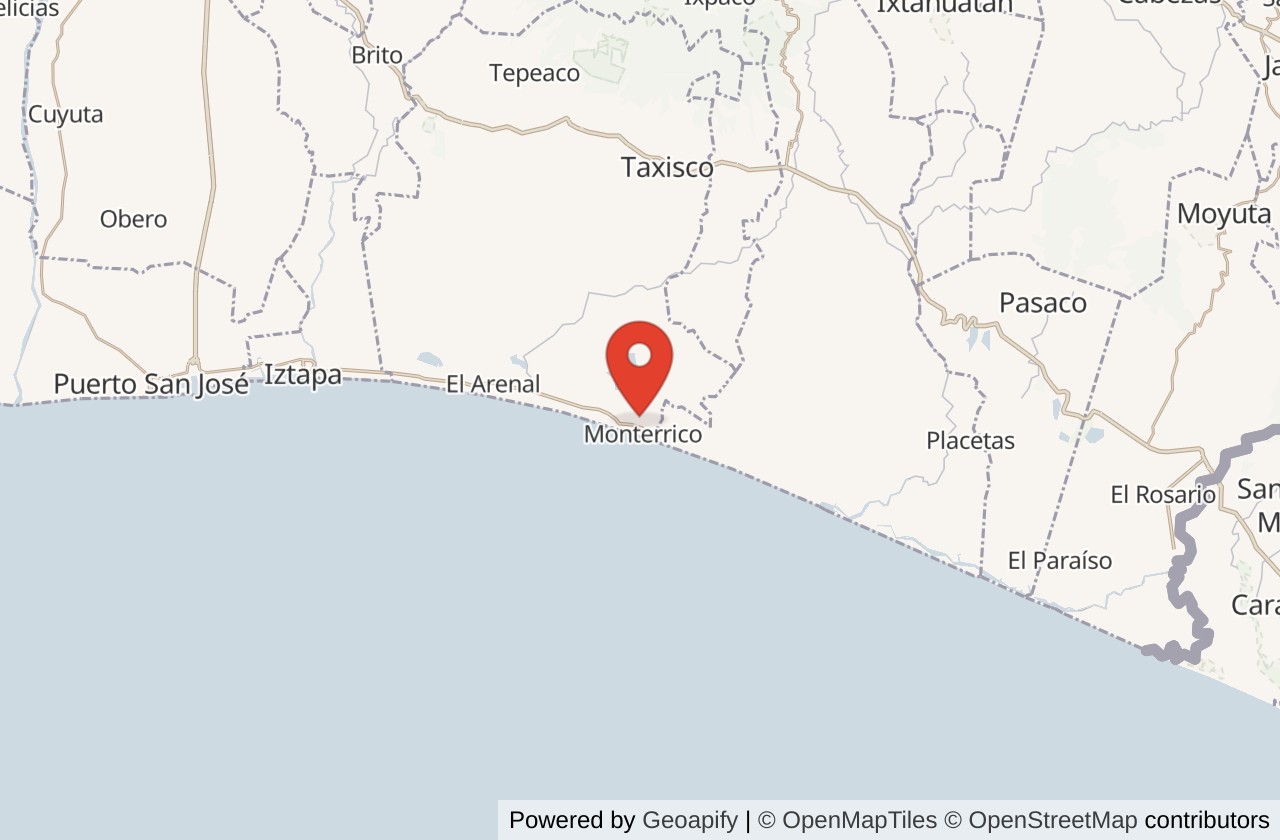
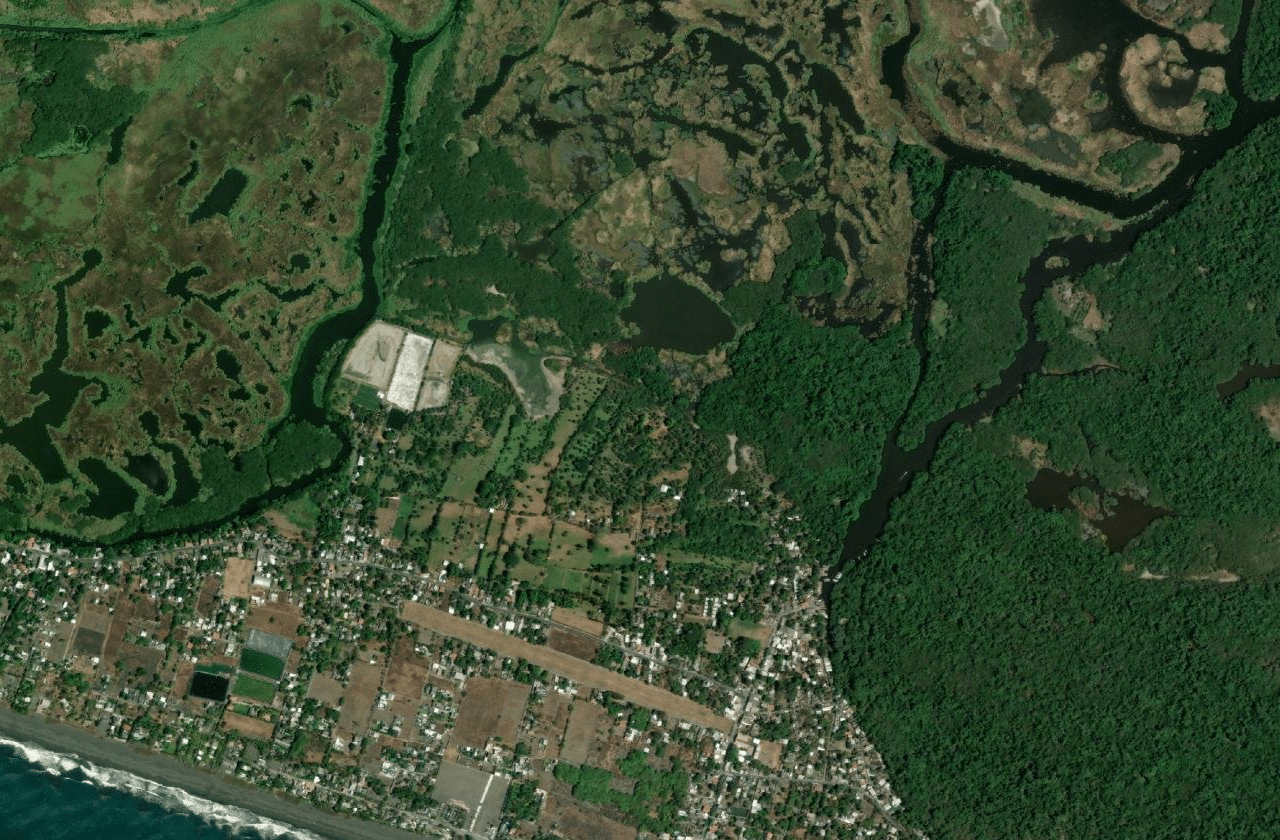
13.8881, -90.4818
What are the lineup and the town like at Monterrico?
Localism
mellow
Crowd
Lightly surfed. You'll often have peaks to yourself or share with a handful of visiting surfers; the crowds in Monterrico are beachgoers and weekend tourists from Guatemala City and Antigua, not surfers. Weekends and Guatemalan holidays (especially Semana Santa) pack the beach and bars; midweek is quiet.
There's no organized local lineup to speak of — Monterrico is a beach break with shifting peaks and few surfers in the water, so localism isn't really a factor. Standard beach-break courtesy applies: spread out, don't drop in, and give space on the rare crowded weekend. The bigger 'etiquette' here is respecting the conservation reserve — follow hatchery rules and don't disturb nesting turtles or take eggs.
In the lineup: Read the sandbanks before you paddle out — the wave shifts and closes out, and the rips that make it dangerous to swim can also help you get out the back if you read them. Watch where the water is pulling, time your entry between sets, and never paddle out further than you're confident swimming in given the strong undertow. On bigger swells the shorebreak lands hard on the steep shelf; pick your exit carefully.
Monterrico is a small, laid-back black-sand beach town built around tourism and sea-turtle conservation, not surfing. Dirt-and-sand streets, hammock hostels, seafood comedores, the turtle hatchery and the mangrove reserve give it a sleepy, slightly ramshackle Pacific-coast feel that flips to a busy party scene on weekends and holidays when capitalinos flood in. Midweek and out of season it's quiet and cheap, with a strong eco/turtle-tourism identity that's as much a reason to come as the surf.
How do you get to Monterrico?
Fly into La Aurora International Airport, Guatemala City (GUA) — about 79 miles from the break, 2.5–3 hours. GUA is effectively the only international gateway for this coast. Antigua (no airport of its own, ~1.5 hr from GUA) is the more common staging town for tourist shuttles to Monterrico, so many travelers fly into GUA, overnight in Antigua, and shuttle down from there.
- shuttleUS$25–35 per person from Antigua · 3–4 hours from Antigua (incl. stops)
Shared tourist shuttles run daily Antigua–Monterrico (typically depart Antigua ~9am, return from Monterrico ~3pm) hotel-to-hotel; book through any Antigua agency, Marvelus Travel or similar 48 hours ahead. From GUA itself you can also arrange a direct shuttle/transfer. Confirm a board bag is OK and may cost extra — many vans are full and tight on space.
- private transferUS$120–180 per vehicle from GUA · 2.5–3 hours
The easiest option with boards. Pre-arrange through your hotel or a Guatemala City/Antigua transport operator and confirm a vehicle that can take a board bag (request a van or roof rack). Agree the price and route up front.
- rental carUS$40–70/day · 2.5–3 hours self-drive
Pick up at GUA. Drive the CA-9 to Escuintla, then choose: the newer all-road route via Puerto Quetzal and Iztapa, crossing the Iztapa–Pueblo Viejo bridge (small ~Q15 toll) then ~26 km of paved road east to Monterrico, OR the classic Taxisco–La Avellana route where you load the car onto a car ferry across the Chiquimulilla Canal (~Q85, 20–25 min). The bridge route avoids the ferry; the ferry route is the traditional one. Avoid arriving after dark your first time.
- busUS$5–12 per person (chicken buses + lancha) · 4–5+ hours with connections
Budget overland: chicken bus from Guatemala City (CENMA / Centra Sur) toward Taxisco, change to a bus or pickup to La Avellana, then a passenger lancha across the canal to Monterrico (~Q5–10). Doable on a shoestring but slow and awkward with a board bag; the shuttle is far easier for surfers.
Do you need a car at Monterrico?
Do you need a car?
optional
Walkability
Very walkable. Monterrico is a small grid of sandy streets between the highway/canal landing and the beach; most hotels are a 5–15 minute walk from the surf, and you can reach the whole town, the turtle hatchery and the comedores on foot.
You don't need a car once you're in town — most travelers arrive by shuttle and walk everywhere. There are no Ubers or formal taxi fleets; getting around between beaches is done on foot, by tuk-tuk for short hops, or by lancha through the canal. A rental car only makes sense if you're touring the coast (e.g. day-tripping to El Paredón ~30 km west) or want total flexibility; otherwise it's an expense you'll leave parked. Bring enough cash for your stay (see ATM note).
Boards: Arrive with your board — there's no reliable rental in town. On shuttles, confirm board-bag space when booking and expect it may cost a little extra or get strapped to the back; vans are often full. Within town everything is walkable, so moving boards is just a short carry down sandy lanes from your hotel to the beach.
Where can you stay near Monterrico?
Beachfront — steps from the sand · The long-running backpacker/party hub right on the beach, with dorms, bungalows, little private plunge pools and a busy bar-restaurant. Social and central; rooms are dated and it can be loud on weekends, so it's the pick for atmosphere and budget over peace and quiet. (Booking.com, Hostelworld, direct)
Beachfront · A quieter, more characterful beachfront option with colorful Mexican-style bungalows around a pool and a good restaurant. The calmer alternative to Johnny's Place for surfers who want to actually sleep. (Booking.com, direct)
~1 block from beach (~150 ft) · The highest-rated stay in town — tidy grounds, multiple pools and reliable service just off the beach. The comfortable mid-range base for a surf-and-relax trip; book ahead on holiday weekends. (Booking.com, direct)
Beachfront, west end of the beach · Beachfront rooms and a restaurant on the quieter western stretch; staff arrange boat trips on the canal and fishing. A relaxed, well-reviewed mid-range choice a short walk from the main beach scene. (Booking.com, direct)
Beachfront · The most polished property in Monterrico — Italian-run, manicured gardens, a good pool and an on-site restaurant. The splurge pick for couples or anyone wanting resort comfort on the black sand. (Booking.com, direct)
Beachfront · A simple, cheap beachfront standby with basic rooms, hammocks and a sociable bar — another budget option in the Johnny's Place mold for travelers who just want a bed near the surf. (Booking.com, Hostelworld, direct)
Where do you eat at Monterrico?
- Taberna El Pelicanorestaurant · $ mid-range
Fresh seafood and the famous burger with potato wedges; Swiss-Guatemalan fusion — Widely regarded as the best meal in town — a thatched-roof place a couple of blocks east of the main street, Swiss-Guatemalan owned, with the widest and most interesting menu in Monterrico. Worth the short walk off the beach.
- Tacos El Padrinostreet food · $ budget
Made-to-order carne asada and veggie (squash/mushroom) tacos, fresh juices — Popular cheap local-style taquería near the Crucecita entrance; tacos to order plus plates of carne asada, rice and fried chicken, with vegetarian options and fresh-squeezed juices. The go-to budget feed.
- Johnny's Place restaurantrestaurant · $ mid-range
Seafood, burgers and cold beers beachside — The kitchen at Johnny's Place is reliably one of the better beachfront eats in town for flavor and value — convenient for a post-surf meal and a beer without leaving the sand.
- Beachfront seafood comedoressoda · $ budget
Whole fried fish (pescado frito), ceviche, shrimp and tostadas — A string of simple family-run beach comedores serve fresh-caught fish and shrimp at local prices — the cheapest, most authentic way to eat in Monterrico. Point at the catch of the day and pay in quetzales.
- Hotel Pez de Oro restaurantrestaurant · $ mid-range
Seafood and Mexican-leaning plates — A consistent sit-down option attached to Pez de Oro, with a calmer setting than the party-hostel kitchens and dependable food. Good for a quieter dinner.
Cooking for yourself
- Monterrico town tiendas & minimarketsminimart
Monterrico has only small tiendas and a couple of minimarkets for water, snacks, beer, basic dry goods and sunscreen — enough to top up but not to seriously self-cater. There's no proper supermarket in town.
- Beach fish vendors & local market stallsfish market
Fresh fish and shrimp are sold informally by local fishermen and at small market stalls — the best way to source seafood if your hotel has a kitchen. For a real grocery run, stock up in Taxisco or Escuintla on the way in.
Where do you rent or fix a board?
- No dedicated surf shop in Monterricoboard rental · lessons · n/a in town — bring your own gear
Monterrico has no proper surf shop, and reliable board rental or lessons are not an established business here — fitting for a heavy, rip-prone beach break that isn't a learner's wave. Bring your own board, leash, spare fins, wax and a ding kit. The nearest real surf infrastructure is in El Paredón, ~30 km west, where hostels like The Driftwood Surfer and Cocori Lodge rent boards (around Q150/day) and run lessons (~Q200/hour) — base or day-trip there if you need gear or coaching.
What do you do when it's flat?
- Tortugario Monterrico (CECON turtle hatchery)nature · small entry ~Q15–20; turtle-release donation varies
The University of San Carlos CECON hatchery protects olive ridley and leatherback nests and releases baby turtles at sunrise/sunset, roughly September–January (peak season). Visitors can take part in releases and walk the interpretive trail past iguanas, caimans and freshwater turtles. The signature Monterrico experience.
- Biotopo Monterrico-Hawaii mangrove canal tournature · Q75–150 per boat (negotiable)
A dawn lancha tour through the Chiquimulilla Canal and protected mangroves — herons, kingfishers, iguanas and big skies. Best at sunrise; arrange through your hotel or with boatmen at the canal landing. Go early before the wind comes up.
- Night turtle-nesting walksnature · guided, donation/small fee
In nesting season (roughly Aug–Dec) the hatchery and local guides run night walks to spot nesting females and collect eggs for the hatchery. A conservation-minded after-dark alternative to the beach bars.
- Sunset on the black sandnature · free
The wide, jet-black beach delivers dramatic Pacific sunsets and is the heart of the town's social scene. Just respect the water — strong shorebreak and rips make this a beach for watching the sun go down more than for casual swimming.
- Day trip to El Paredónadventure · transport ~US$15–30 each way
~30 km west, El Paredón is Guatemala's de facto surf town with a friendlier wave, surf hostels, board rental and a livelier surf scene. Worth a day (or a base swap) if Monterrico's beach break shuts down or you want easier waves.
- Beach horseback ridingadventure · US$15–25 per hour
Local outfits offer horseback rides along the black-sand beach, popular at sunrise and sunset. Arrange informally through your hotel; confirm price and duration first.
What should you know before you go?
Cash & ATMs
Cash situation is unreliable — there's effectively one ATM in town (in a convenience store/minimarket) that frequently runs out of cash or goes offline for days. Bring enough quetzales in cash for your whole stay; withdraw in Antigua, Guatemala City or Escuintla before you arrive. Many small places are cash-only.
Medical
There's no hospital in Monterrico — only basic local care. For anything beyond minor first aid you're heading to clinics/hospitals in Taxisco or Escuintla (roughly 1–1.5 hours), and for serious emergencies to Guatemala City (2.5–3 hours), which has the country's best hospitals. Pack a proper first-aid kit, reef/cut supplies and any meds you need; travel insurance is strongly advised.
Water safety
This is the headline: Monterrico is known for powerful, unpredictable rip currents and a heavy shorebreak that lands on a steep volcanic-sand shelf, and drownings happen here. There are no consistent lifeguards. The same currents that endanger swimmers make this an advanced surf environment — never surf or swim alone, never push past your limits, and keep weak swimmers and kids in the shallows only. There's no reef or urchin hazard (it's all sand), but the black sand gets blisteringly hot midday — wear sandals. Water quality is generally fine; rainy-season runoff can muddy it.
Guatemala basics: money, entry, phones, water
Currency
Guatemalan quetzal (GTQ) — ~7.7–7.8 GTQ per USD (mid-2026)
Entry (US passport)
Up to 90 days — Visa-exempt. The 90 days is a CA-4 regional allowance, not a per-country one (see entryFees/onwardTicket notes). Passport must be valid on entry with one blank page; an electronic immigration form must be completed online before you arrive and before you leave. An extension of up to 90 more days (180-day annual cap) can be requested from immigration (Guatemala City) before the 90 days expire; overstays incur a fine of ~15 GTQ (~US$2) per day.
Language
Spanish, Mayan languages (K'iche', Q'eqchi', Kaqchikel and ~20 others — mostly in the highlands, not the surf coast). Lower than Costa Rica. English is decent in Antigua, Lake Atitlán, and at surf camps/hostels in El Paredón that cater to travelers, but thin everywhere else. A little Spanish goes a long way at comedores, markets, and on chicken-bus / shuttle logistics — learn numbers and directions.
Plugs
A, B · 120V / 60Hz (same as US/Canada — no adapter needed for North American gear; bring a surge protector, as rural power can be unstable)
Tipping
No mandatory service charge like Costa Rica's. A 10% tip at restaurants is standard and appreciated (check it isn't already on the bill as 'propina/servicio' before adding). Round up for tuk-tuks and taxis; tip surf instructors/guides ~Q40–80 ($5–10) per session and shuttle/boat drivers a little in cash. At a comedor (the cheap local eatery) nothing extra is expected.
Phone / data
Tigo, Claro, eSIM (Airalo, Holafly, Roafly, etc.). Tigo and Claro both cover the Pacific surf coast and main towns fine for maps and messaging; Tigo edges Claro in the rural highlands. El Paredón and the Sipacate/Iztapa stretch get usable 4G in town but signal thins on the back roads and around the mangrove channels — download offline maps before driving the coast. Surf-camp Wi-Fi is common but often slow; don't rely on it for work without a backup SIM.
Tap water
Do NOT drink the tap water anywhere in Guatemala, including cities. Stick to bottled or filtered 'agua pura' (cheap and everywhere), use it for brushing teeth in rural areas, skip ice from unknown sources, and be cautious with raw/unpeeled produce. Many hostels and surf camps have a refill garrafón to cut plastic.
Emergency
PROATUR / ASISTUR tourist assistance is the number to save: 1500 (or +502 2290-2810; WhatsApp +502 5188-1819) — staffed for tourists, often English-speaking, and the fastest route to help. General police 110 or 120; ambulance/fire 122 or 123.
Other passports: entry rules differ — check the official source before booking.
Alert me when Monterrico is on
It's quiet right now. Drop your email and you'll get one message when our forecast shows a trip-worthy window here: the dates, the size, and a place to stay. Free.
Frequently asked questions about Monterrico
Is Monterrico good for surfing?
It can be, for experienced surfers. Monterrico is a powerful black-sand beach break that produces punchy lefts and rights on a clean S–SW swell with offshore wind, but it closes out often and has strong rip currents. It's an intermediate-to-advanced wave, not a beginner spot — newer surfers are better off in El Paredón, about 30 km west.
Is it safe to swim at Monterrico beach?
Swim with great caution. Monterrico is famous for unpredictable, powerful rip currents and a heavy shorebreak on a steep shelf, there are no reliable lifeguards, and drownings have occurred. Stay in shallow water, never swim alone, and keep children and weak swimmers out of the surf.
How do you get to Monterrico from Guatemala City or Antigua?
Most travelers take a shared tourist shuttle from Antigua (around US$25–35, 3–4 hours, usually departing ~9am). Driving from Guatemala City (GUA) takes about 2.5–3 hours via Escuintla, then either the Iztapa bridge road or the La Avellana car ferry across the canal. Budget travelers can chain chicken buses to Taxisco/La Avellana and take a lancha across.
Do you have to take a ferry to get to Monterrico?
Not anymore — you can drive the all-road route via Iztapa, crossing the Iztapa–Pueblo Viejo bridge (small toll) then ~26 km of paved road to Monterrico. The traditional route via La Avellana still uses a short car ferry across the Chiquimulilla Canal (~Q85, 20–25 minutes), which is a fun part of the trip.
When is the best time to surf Monterrico?
The May–October green (rainy) season has the biggest, most consistent swell, when S–SW Southern-Hemisphere groundswells reach the beach most often. The November–April dry season is cleaner and calmer with offshore morning winds, but the surf runs smaller (November is a standout for conditions). Afternoon storms are common in the green season.
Can you rent a surfboard in Monterrico?
Not reliably — Monterrico has no proper surf shop and board rental isn't an established business, fitting for a heavy beach break that isn't a learner's wave. Bring your own gear, or base/day-trip in El Paredón (~30 km west), where surf hostels rent boards (around Q150/day) and offer lessons.
What is there to do in Monterrico besides surf?
The big draws are the CECON turtle hatchery (baby-turtle releases at sunrise/sunset, roughly Sept–Jan) and dawn lancha tours through the Biotopo Monterrico-Hawaii mangroves. Add black-sand sunsets, horseback rides on the beach, and night turtle-nesting walks in season.
Is Monterrico or El Paredón better for surfing?
El Paredón is the better choice for most surfers — it has a more reliable, user-friendly wave plus surf hostels, board rental and lessons. Monterrico suits experienced surfers who want a heavier beach break combined with a turtle-and-black-sand culture trip; many travelers do both.
How much does a surf trip to Monterrico cost?
Monterrico is a cheap trip by surf-travel standards — you can eat very well for very little at the beachfront seafood comedores and taco spots, and beachfront hostels like Johnny's Place and El Delfin anchor the budget end, with $ hotels in the middle and the $$ Dos Mundos resort as the splurge. The shared shuttle from Antigua runs about US$25–35 per person; in Guatemala overall, shoestring travelers get by on roughly $25–40/day and mid-range on $50–90. Bring enough quetzales in cash for your whole stay — the town's single ATM is unreliable.
How crowded is Monterrico for surfing?
The lineup is lightly surfed — you'll often have peaks to yourself or share with a handful of visiting surfers, since Monterrico's crowds are beachgoers and weekend tourists from Guatemala City and Antigua, not surfers. Weekends and Guatemalan holidays (especially Semana Santa) pack the beach and bars, while midweek is quiet.
Sources for this guide
- surf-forecast.comsecondary source · Wave type (beach break), best S-SW swell / N-NE offshore wind, best month November, intermediate-advanced skill level, dangerous rips hazard
- goworldtravel.comeditorial · Black-sand beach character, steep shelf shorebreak and rip-current danger, town overview and food/seafood scene
- frommers.comsecondary source · Iztapa bridge all-road route vs La Avellana ferry route, ~26 km paved road from Pueblo Viejo, toll, distance from Guatemala City
- rome2rio.comsecondary source · GUA-Monterrico driving distance (~79 mi / 127 km) and route options
- tripadvisor.comsecondary source · Lodging existence and ratings: Johnny's Place, Pez de Oro, Atelie del Mar, Cafe del Sol, Dos Mundos, El Delfin
- lonelyplanet.comeditorial · Taberna El Pelicano as top restaurant, Swiss-Guatemalan ownership, location off main street
- anywhere.comsecondary source · CECON Tortugario turtle hatchery, baby-turtle releases at sunrise/sunset, interpretive trail, lagoon tours, night nesting walks, season
- en.wikivoyage.orgsecondary source · Single unreliable ATM in town, walkability, lancha access via La Avellana, town layout and grocery/tienda situation
- guatemala.comsecondary source · La Avellana car-ferry across Chiquimulilla Canal: ~20-25 min crossing, vehicle pricing (~Q85)
- tripadvisor.comsecondary source · Antigua-Monterrico shared shuttle price (US$25-35), ~9am departure / ~3pm return, ~3 hour duration
- thedriftwoodsurfer.netofficial · El Paredon (~30 km west) surf infrastructure: board rental ~Q150/day, lessons ~Q200/hour, as nearest real surf base
- roughguides.comeditorial · Biotopo Monterrico-Hawaii mangrove reserve, turtle nesting significance, town and activity context
Guide researched and verified 2026-06-12. Details change; confirm bookings and entry requirements before travel.