When is the best time to surf El Paredon?
Peak Nov–Mar · often good Apr–Oct.
There's swell almost year-round here (roughly 80% consistency). The dry season, October through April, brings smaller, cleaner, more manageable waves the exposed beach break handles best — the prime window for learning and for reliable mornings before the onshore fills in. The main Central American surf season (May–September) pushes bigger, more powerful swells that can overwhelm and 'wash out' the bank, but also serves the best days for stronger surfers; it overlaps the rainy season (afternoon storms) and the September–December turtle-nesting window. Water is warm and boardshorts-only all year.
What does a surf trip to El Paredon look like?
A typical trip from our guide. A real alert comes with the forecast for each day and a fare from your airport.
A real alert we sent · Aug 28
We matched a surfer flying from ATL to this window: Sep 4–7, 4 good days with faces up to 8 ft, peaking 8/10. 5 nights, flights from $871 round trip.
This is a prior real trip from our match log, not a forecast. Windows and fares change; your alert carries the current ones.
How much does a surf trip to El Paredon cost?
A five-night trip, per person, before food and rentals.
Rows marked "based on … alerts" are the middle half of the real round-trip fares we quoted in alerts on that route, priced 3 to 10 days before departure, since June 2026. Rows marked "Google typical" are Google Flights' usual range for October, across all booking lead times, so a last-minute fare often lands above it. Checked Oct 24. Stays use our guide's nightly bands; transfers use the guide's quoted rates. Real alerts price the exact dates.
Where should you stay at El Paredon?
Closest to the wave
Cocori Lodge $
hotel · mid-range · ~5 min walk to the beach
Modern mid-range lodge with a beachfront pool and a good on-site restaurant; rooms with AC, which matters in the coastal heat. A step up in comfort while still walkable to everything, and known for a fun pool/party scene.
Check ratesSurf camp
Paredon Surf House $
surf camp · mid-range · ~5 min walk to the beach
Long-running surf camp and guesthouse with its own surf school, beachfront bungalows on stilts and a range of dorm-to-private rooms (sleeps ~30). A dedicated, surf-first base if you want structured lessons and a quieter setup than the party hostels.
Check ratesCheaper
Mellow Surf Hostel $
hostel · budget · ~5 min walk to the beach
Stylish, pool-centered backpacker hostel with a relaxed-but-social vibe, dorms and privates, plus surf lessons and rentals on site. The default pick for solo travelers and the under-30 crowd who want to meet people.
Stays nearbyEvery place we researched, with its booking link, is under where to stay below.
What is the wave like at El Paredon?
Break type
Beach
Wave direction
Both
Best swell
SSW (SSE–WSW window)
Ideal size
2–5 ft
Best tide
High
Low: dumpy closeouts on steep black sand
Consistency
Consistent
Peak season
Jun–Sep
Nearest airport
GUA · ~88 mi
Drive from airport
2.5–3 hours
The town itself is the draw as much as the surf. A dirt-road village of palapa-roofed hostels, surf camps, food trucks and beach bars, El Paredón runs on a mellow, social, sand-between-your-toes backpacker energy — yoga at sunrise, surf at dawn and dusk, hammocks and Gallo beers in between, and a turtle hatchery releasing baby Olive Ridleys at first light in nesting season. It pairs naturally with Antigua and Lake Atitlán; most travelers arrive on a shared shuttle as part of a wider Guatemala loop.
Come prepared for the realities. The black sand turns scorching by mid-morning, the rip currents are no joke (no lifeguards, and locals take drownings seriously), and cash is king — there's a single unreliable ATM in town, so you bring quetzales for your whole stay. There's no proper surf retail shop, so pack your own wax, leash and ding kit. Settle in for a few slow days, respect the ocean, and El Paredón delivers warm water, uncrowded peaks and the most laid-back surf-town hang in Guatemala.
Who it suits
Beginners through intermediates who want warm water, cheap living and a social backpacker scene; surfers happy to read shifting sandbanks and treat strong rips with respect. Not a destination for those who need a polished surf-shop town or guaranteed clean point waves.
Where exactly is El Paredon?
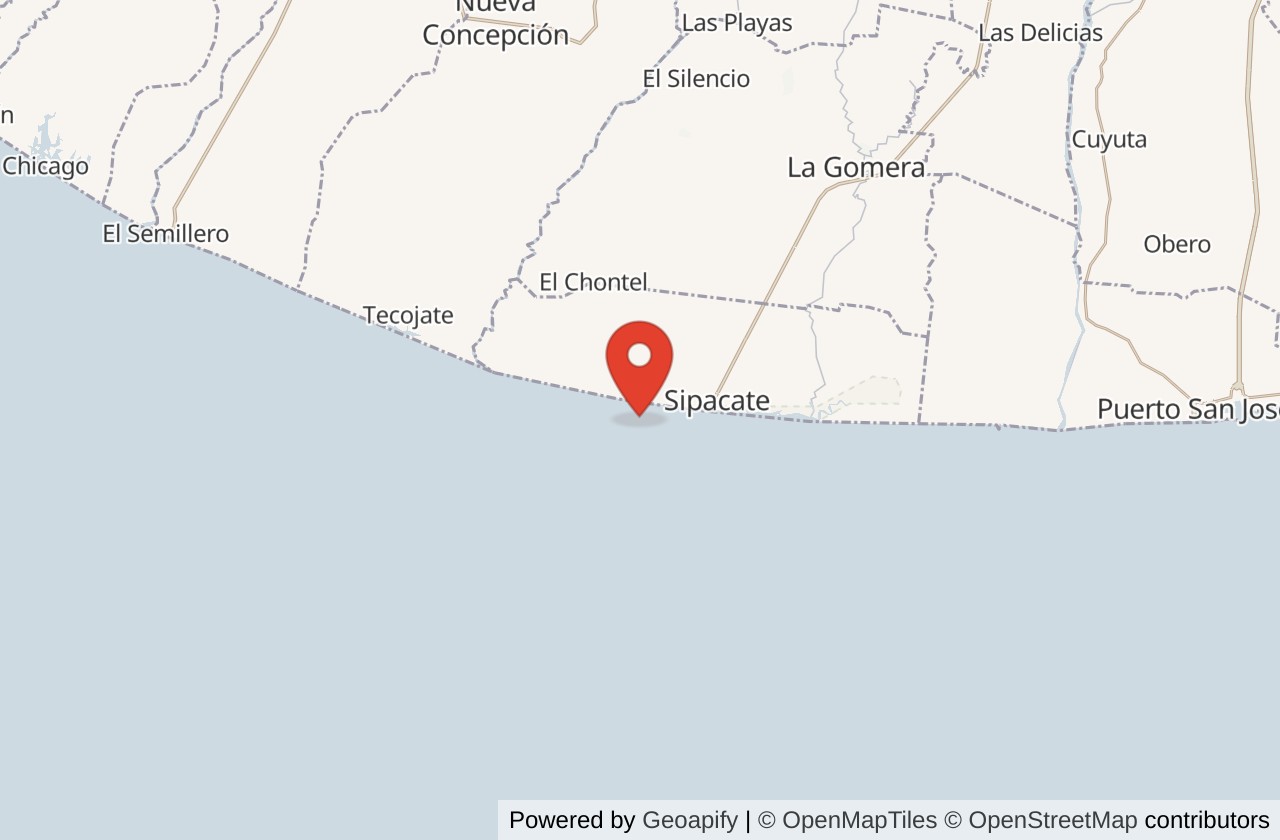

13.9145, -91.0862
What are the lineup and the town like at El Paredon?
Localism
mellow
Crowd
Mostly backpackers, surf-camp guests and learners, plus a handful of locals — a 'busy' lineup here is still uncrowded by most standards, and on smaller days you may surf nearly alone. Weekends and Guatemalan holidays (especially Semana Santa and Christmas) bring domestic beach crowds and tripled prices; midweek and dry-season mornings are quietest.
The lineup is known for being relaxed and friendly — beginners and travelers are the norm, not the exception, and there's little territorial energy in the water. With a long, shifting beach break and low crowds you can usually find your own peak, so the etiquette is mostly common-sense: don't drop in, give the local fishermen and instructors space, and don't paddle out beyond your ability on a big day when the rips are firing.
In the lineup: It's an exposed, rip-bowl beach break: waves break out the back and reform on the inside, and the banks move constantly, so scout the sand each session and follow where the locals paddle out. Use the rips to get out the back, but know exactly which one you're in. Sit where the peak is currently forming rather than a fixed spot. No reef, but the shorebreak can be punchy and the current strong.
El Paredón feels like a fishing village that backpackers moved into: sandy dirt roads, palapa roofs, food trucks, beach bars and a turtle hatchery, all running on island time with patchy power and unlit streets at night. The energy is young, social and mellow — yoga, surf, hammocks, sunset cocktails — but it's changing fast, with new hostels and bars opening constantly and an open debate about losing its local character to weekender tourism. Stray dogs roam the streets (some can be pushy), the heat is serious, and everything moves slowly. Lean into the pace and it's one of the most easygoing surf hangs in Central America.
How do you get to El Paredon?
Fly into La Aurora International Airport, Guatemala City (GUA) — about 88 miles from the break, 2.5–3 hours (5+ on a bad weekend). GUA is effectively the only practical gateway — there is no closer airport with international service. Some travelers fly into Guatemala, base in Antigua first, then shuttle down; from Antigua it's about a 2–2.5 hour drive.
- shuttleQ145–250 per person (~US$20–35) · 2.5–3 hours from GUA/Guatemala City; ~2–2.5 hours from Antigua
The standard way in. Shared tourist shuttles run from Guatemala City and Antigua (most route via Antigua, often departing around 9am and 2pm), booked through your hostel, RoadRunner, Spring Bus or Viator. Door-to-door to your accommodation. Confirm board-bag space when you book — vans are small and surfboards may cost extra or need a roof rack.
- private transferUS$90–150 per vehicle from GUA · 2.5–3 hours
Most surf camps and hotels (Paredon Surf House, Ka'ana, Cocori Lodge) will arrange a private driver door-to-door — the easiest option with boards. Agree the price in advance; a private car beats waiting for the next shared shuttle if you land late.
- rental carUS$35–60/day · 2.5–3 hours self-drive
Possible but only for drivers comfortable with Guatemalan roads and traffic. Take CA-9 South then CA-2 West toward Sipacate; the final stretch to the village is a ~14 km dirt track off the coastal road. There is no Uber or return taxi out of El Paredón, so a car gives flexibility — but most visitors skip it.
- busQ30–60 per person total (~US$4–8) · 4–6 hours with transfers
The shoestring route: chicken bus from Guatemala City or Antigua to Escuintla, change for Sipacate, then a 5Q tuk-tuk to the El Escondite dock and a 5Q lancha (small boat) across the channel into the village. Slow, hot and not board-friendly, but dirt cheap. The lancha crossing is also how the car-ferry from Sipacate works if you self-drive that way.
Do you need a car at El Paredon?
Do you need a car?
unnecessary
Walkability
El Paredón is tiny and entirely walkable — a handful of sandy dirt streets between the village, the beach and the mangrove side. From almost any hostel the lineup is a 2–10 minute walk. You will not need a car once you're in town.
There is no Uber, no taxi rank, and effectively no scooter-rental business in El Paredón — your legs are the transport. Tuk-tuks exist mainly for the Sipacate/dock connection rather than getting around the village. Everything (lodging, food, surf, beach) is within a short walk. For day trips you rely on your accommodation to arrange a driver or boat. Bring closed shoes or sandals for the hot black sand and dusty, unlit streets at night.
Boards: You arrive with your board on the shuttle (book the space) and walk it to the break — distances are tiny, so logistics in town are trivial. If you didn't bring a board, every other hostel and surf camp rents them, so you can travel light and pick up a rental on arrival. For day trips out of town, a private driver arranged by your hostel is the only board-friendly option.
Where can you stay near El Paredon?
Surf camps and guided packages
~5 min walk to the beach · Long-running surf camp and guesthouse with its own surf school, beachfront bungalows on stilts and a range of dorm-to-private rooms (sleeps ~30). A dedicated, surf-first base if you want structured lessons and a quieter setup than the party hostels. (Direct (paredonsurf.com), Booking.com)
Short walk to the beach · Well-reviewed surf camp (9.3 on Booking.com) with a pool, garden, AC rooms, yoga and a fitness space. A comfortable, slightly removed-from-the-noise base with a strong surf focus. (Booking.com, direct)
Hotels and other places to stay
~5 min walk to the beach · Stylish, pool-centered backpacker hostel with a relaxed-but-social vibe, dorms and privates, plus surf lessons and rentals on site. The default pick for solo travelers and the under-30 crowd who want to meet people. (Direct (mellowsurfhostel.com), Hostelworld, Booking.com)
Beachfront — steps to the sand · El Paredón's original surf hostel and longtime party/social hub, right on the beach with a bar-restaurant, surf school and board rentals (Q150/day guests, Q200 non-guests; lessons ~Q200/hr). Lively — great if you want the scene, less so if you want quiet. (Direct (thedriftwoodsurfer.net), Hostelworld, Booking.com)
~5 min walk to the beach · Modern mid-range lodge with a beachfront pool and a good on-site restaurant; rooms with AC, which matters in the coastal heat. A step up in comfort while still walkable to everything, and known for a fun pool/party scene. (Direct, Booking.com, Expedia)
Beachfront · El Paredón's more upmarket boutique surf option — design-forward rooms, pool, restaurant and surf packages, on the beach. The comfort pick for couples or anyone wanting AC, good food and a polished surf-camp experience over backpacker dorms. (Direct, Booking.com)
Short walk to the beach · Palm-thatched bungalows with a yoga-and-wellness lean, surf lessons and a calm, stylish atmosphere. Suits travelers who want the surf-and-yoga lifestyle bundle and are happy to pay above backpacker rates. (Direct, Booking.com)
Short walk to the beach · Small boho guesthouse with a pool and communal kitchen — handy if you want to self-cater. Quieter and more design-led than the big hostels; a good middle-ground for couples or longer stays. (Booking.com, Airbnb)
Where do you eat at El Paredon?
- La Guagua Food Truckfood truck · $ budget
Fresh fish tacos — A converted school bus serving what many travelers rate the best fish tacos in town — casual, cheap and a reliable lunch or dinner. The kind of spot that defines El Paredón's food-truck-and-flip-flops scene.
- Pupusas El Antojostreet food · $ budget
Cheese and bean pupusas — Local stand turning out cheap, filling pupusas — often sells out, so go early. The go-to for a few-quetzales meal between sessions.
- Cafecito Del Marcafe · $ budget
Coffee, smoothie bowls and breakfasts — Popular beachy cafe for morning coffee, healthy bowls and a remote-work-friendly hang. Note the early-closing café culture here — many close around mid-afternoon.
- Soul Food Kitchenrestaurant · $ mid-range
International comfort food and veggie-friendly plates — A reliable sit-down option with a varied, traveler-oriented menu — useful when you want something beyond pupusas and tacos. Hours can be patchy, as everywhere in town.
- Zicatelabar · $ mid-range
Margaritas and cocktails at sunset — Stylishly designed cocktail bar — the spot for a proper sundowner. Named for the Mexican wave, fittingly for a surf town; one of the more polished places to drink.
- Rinconcito Donde Dinasoda · $ budget
Grilled fish and Guatemalan breakfasts — Small local comedor for cheap, authentic Guatemalan plates — grilled fish, eggs and beans, the real-village counterweight to the traveler cafes. Cash, local prices, friendly.
Cooking for yourself
- Super 24 (village minimart)minimart
The main shop in town for water, snacks, beer, basics and cold drinks — and home to El Paredón's single ATM. Limited selection and small-store prices; fine for topping up but not a full grocery run. Stock up on bigger items before you arrive.
- Village tienditas (small shops)minimart
A scatter of tiny family-run shops sell water, eggs, fruit, snacks and household basics. Enough to self-cater simply if your lodging has a kitchen, but for a real supermarket you're looking at Escuintla, roughly an hour inland.
Where do you rent or fix a board?
- The Driftwood Surfer (surf school & rentals)board rental · lessons · ding repair · Q150/day guests, Q200/day non-guests (~US$20–26); lessons ~Q200/hr
The closest thing to a surf hub in town — board rentals, lessons and informal ding help, run out of the beachfront hostel. There is no dedicated retail surf shop in El Paredón: nobody sells new boards, and wax, leashes and fins are hard to find, so bring your own wax, a spare leash and a ding kit. Rentals are widely available since most hostels offer them.
- Hidden Wave Surf Schoolboard rental · lessons · Q100/24hr rental; lessons ~Q150/person/hr
Established local surf school offering lessons and some of the cheaper board rentals in town. Good for beginners wanting structured coaching; some schools won't rent to total beginners on bigger days because of the rips.
- Paredon Surf House / surf campboard rental · lessons · Q150/day or Q750/week; lessons ~Q150–180/hr
Surf-camp school with weekly rental rates that suit longer stays, plus structured lessons and guiding. A solid choice if you want a surf-first base rather than ad-hoc beach rentals.
What do you do when it's flat?
- Mangrove tour (Sipacate-Naranjo wetlands)nature · Q75–200 per person depending on kayak/SUP vs boat
Paddle or boat through the mangrove channels behind town — three mangrove species, birdlife and quiet water, best at sunrise or sunset. Book through Black Sand Kayaks or El Paredón Tours; community operators put part of the fee toward the local school.
- Baby sea-turtle releasenature · by donation (~Q25–50 suggested)
In nesting season (roughly September–December) the local hatchery releases Olive Ridley hatchlings at sunrise — an ethical, conservation-funded experience run via Driftwood and El Paredón Tours. Show up around 5:45am; donations support the project.
- Sunrise / sunset surfwater · free (own board) or Q100–150 rental
The signature daily ritual: dawn and dusk are the cleanest, least-windy windows before onshore flow builds and before the black sand turns scorching. Even non-surfers come down for the light show on the black beach.
- Beach yoga & wellnesswellness · Q50–100 per class
Several hostels and surf camps (Swell, Shanti, others) run drop-in yoga, often at sunrise on the sand — the natural complement to a surf-and-chill stay.
- Village life & beach hangculture · free
Wander the dirt streets of the fishing village, watch the pangas come in, and settle into the slow rhythm. The whole point of El Paredón is doing very little between surfs — beach, hammock, food truck, repeat.
- Day-trip onward to Antigua or Lake Atitlánday trip · Q145–250 per person shuttle
El Paredón slots neatly into a Guatemala loop. Shared shuttles connect directly to Antigua (~2–2.5h) and on to Lake Atitlán (~4h), so most travelers tack it onto the cultural-highlands circuit rather than visiting in isolation.
What should you know before you go?
Cash & ATMs
Cash is essential and the cash situation is the single biggest gotcha. There is just one ATM in town, inside the Super 24 minimart — it charges fees, frequently runs out of cash, and is sometimes out of service entirely. Many businesses are cash-only and card acceptance is patchy. Bring enough quetzales (withdraw in Guatemala City or Antigua, where ATMs are reliable) to cover your whole stay plus a buffer.
Medical
There are no real medical facilities in the village — only basic first aid through your accommodation. A small health post may operate in nearby Sipacate, but for a clinic, pharmacy or hospital you're looking at Escuintla, roughly an hour inland. For anything serious, Guatemala City (2.5–3 hours) has the country's best private hospitals. Carry a proper first-aid kit, reef-cut and sunburn supplies, and travel insurance.
Water safety
Take the ocean seriously here — this is the spot's defining hazard. The exposed beach break generates strong, fast-moving rip currents, conditions can deteriorate quickly, and there are NO lifeguards; warning signs are posted and drownings do happen, so locals and surf schools treat the water with real caution. Some schools won't rent to complete beginners on bigger days. The bottom is sand (no reef or urchins), but the shorebreak can be powerful. The black sand becomes dangerously hot by late morning — surf at dawn or dusk, wear footwear on the beach, and never swim or surf beyond your ability or alone when the swell is up.
Guatemala basics: money, entry, phones, water
Currency
Guatemalan quetzal (GTQ) — ~7.7–7.8 GTQ per USD (mid-2026)
Entry (US passport)
Up to 90 days — Visa-exempt. The 90 days is a CA-4 regional allowance, not a per-country one (see entryFees/onwardTicket notes). Passport must be valid on entry with one blank page; an electronic immigration form must be completed online before you arrive and before you leave. An extension of up to 90 more days (180-day annual cap) can be requested from immigration (Guatemala City) before the 90 days expire; overstays incur a fine of ~15 GTQ (~US$2) per day.
Language
Spanish, Mayan languages (K'iche', Q'eqchi', Kaqchikel and ~20 others — mostly in the highlands, not the surf coast). Lower than Costa Rica. English is decent in Antigua, Lake Atitlán, and at surf camps/hostels in El Paredón that cater to travelers, but thin everywhere else. A little Spanish goes a long way at comedores, markets, and on chicken-bus / shuttle logistics — learn numbers and directions.
Plugs
A, B · 120V / 60Hz (same as US/Canada — no adapter needed for North American gear; bring a surge protector, as rural power can be unstable)
Tipping
No mandatory service charge like Costa Rica's. A 10% tip at restaurants is standard and appreciated (check it isn't already on the bill as 'propina/servicio' before adding). Round up for tuk-tuks and taxis; tip surf instructors/guides ~Q40–80 ($5–10) per session and shuttle/boat drivers a little in cash. At a comedor (the cheap local eatery) nothing extra is expected.
Phone / data
Tigo, Claro, eSIM (Airalo, Holafly, Roafly, etc.). Tigo and Claro both cover the Pacific surf coast and main towns fine for maps and messaging; Tigo edges Claro in the rural highlands. El Paredón and the Sipacate/Iztapa stretch get usable 4G in town but signal thins on the back roads and around the mangrove channels — download offline maps before driving the coast. Surf-camp Wi-Fi is common but often slow; don't rely on it for work without a backup SIM.
Tap water
Do NOT drink the tap water anywhere in Guatemala, including cities. Stick to bottled or filtered 'agua pura' (cheap and everywhere), use it for brushing teeth in rural areas, skip ice from unknown sources, and be cautious with raw/unpeeled produce. Many hostels and surf camps have a refill garrafón to cut plastic.
Emergency
PROATUR / ASISTUR tourist assistance is the number to save: 1500 (or +502 2290-2810; WhatsApp +502 5188-1819) — staffed for tourists, often English-speaking, and the fastest route to help. General police 110 or 120; ambulance/fire 122 or 123.
Other passports: entry rules differ — check the official source before booking.
Alert me when El Paredon is on
It's quiet right now. Drop your email and you'll get one message when our forecast shows a trip-worthy window here: the dates, the size, and a place to stay. Free.
Frequently asked questions about El Paredon
Can you surf in Guatemala?
Yes — El Paredón on the Pacific coast is Guatemala's main surf town and effectively its only established surf destination. It's a long, exposed black-sand beach break with lefts and rights that works almost year-round, best suited to beginners and intermediates, with smaller cleaner waves in the dry season (October–April).
How do you get to El Paredón from Guatemala City?
Fly into La Aurora airport (GUA) in Guatemala City, then take a shared tourist shuttle (about 2.5–3 hours, Q145–250 per person, usually routing via Antigua) or arrange a private transfer through your hostel. There's no Uber out of El Paredón, so book your onward shuttle in advance.
Is there an ATM in El Paredón?
There is one ATM, inside the Super 24 minimart, but it charges fees and regularly runs out of cash or stops working. Most businesses are cash-only, so withdraw enough quetzales in Guatemala City or Antigua to cover your whole stay before you arrive.
Is El Paredón good for beginner surfers?
Yes for learning the fundamentals — it's a sandy beach break with surf schools and rentals at nearly every hostel, and smaller dry-season waves are forgiving. But the rip currents are strong and there are no lifeguards, so take lessons, surf at your level, and respect the conditions.
When is the best time to surf El Paredón?
The dry season, October to April, brings smaller, cleaner, more manageable waves that the exposed beach break handles best — ideal for beginners and reliable mornings. The May–September wet season has bigger, more powerful swells for stronger surfers but afternoon storms. Dawn and dusk are always the cleanest windows.
How do you get to El Paredón from Antigua?
Shared shuttles run from Antigua to El Paredón in about 2–2.5 hours for roughly Q145 per person, typically departing mid-morning and early afternoon. It slots easily into a Guatemala loop with Lake Atitlán (around 4 hours away by shuttle).
Do you need a car in El Paredón?
No — the village is tiny and fully walkable, with no Uber, taxis or scooter rentals. You arrive by shuttle and get everywhere on foot; for day trips your accommodation arranges a driver or boat.
Is El Paredón safe?
The town itself is a low-key backpacker village, but the ocean is the real risk — strong rip currents, no lifeguards, and drownings do occur, so never surf or swim beyond your ability. On land, use normal travel sense, carry small cash, and be aware of roaming stray dogs and unlit streets at night.
Sources for this guide
- realsurftravel.comsecondary source · Wave type (rip-bowl beach break, lefts and rights), consistency, best swell/wind, season split, skill suitability, rips hazard
- thesmoothescape.comsecondary source · Shuttle costs from Guatemala City/Antigua, drive times, single unreliable ATM at Super 24, mangrove/turtle tours, lodging and restaurant nam
- alongdustyroads.comeditorial · Lodging vibes (Mellow, Driftwood, Cocori, Swell, Casa Zala), food (La Guagua, Pupusas El Antojo, Cafecito Del Mar, Zicatela), lethal riptide
- elparedongt.comofficial · Official drive times/routes from Guatemala City, Antigua and Lake Atitlán; GUA airport transfer; CA-9/CA-2 routing
- en.wikipedia.orgsecondary source · Distance from Guatemala City (140 km / 85 mi), 14 km dirt-track access road, lancha/ferry crossing from Sipacate, village/Escuintla departme
- thedriftwoodsurfer.netofficial · Driftwood surf school existence, board-rental and lesson prices (Q150/Q200 rental, ~Q200/hr lessons)
- paredonsurf.comofficial · Paredon Surf House surf camp existence, capacity (~30), beachfront bungalows, surf school, weekly rental rates
- booking.comsecondary source · Shanti Surf Camp live listing, 9.3 rating, pool/AC/yoga/fitness amenities
- mellowsurfhostel.comofficial · Mellow Surf Hostel live booking site, pool, room types, surf in El Paredón
- whereintheworldisnina.comeditorial · Water safety (rips, no lifeguards, warning signs), lesson price (Q120/hr), walkable/no-taxi town, ATM update, restaurant names
- surfhiddenwave.comofficial · Hidden Wave Surf School existence, lesson (Q150/person) and rental (Q100/24hr) pricing
Guide researched and verified 2026-06-12. Details change; confirm bookings and entry requirements before travel.