When is the best time to surf Anse Bertrand?
Peak Dec–Mar · often good Apr–May, Oct–Nov · can still fire Jun–Sep.
Guadeloupe runs on North Atlantic groundswell, so the heart of the season is winter: October through April–May sees NE and N swells light up Grande-Terre's reefs, with the most consistent, powerful days from December through March and real waves either side in October–November and April–May. Summer trades quantity for surprise — June to September stays quiet until a tropical system tracks through the Atlantic, and those pulses can wake La Chapelle up in spectacular fashion, which is exactly when an alert earns its keep. Water stays warm all year (26–28°C) — boardshorts and a rash vest. Watch the sargassum forecast in spring–autumn and beat the afternoon trades with dawn sessions.
What does a surf trip to Anse Bertrand look like?
A typical trip from our guide. A real alert comes with the forecast for each day and a fare from your airport.
How much does a surf trip to Anse Bertrand cost?
A five-night trip, per person, before food and rentals.
Checked Oct 17. Stays use our guide's nightly bands; transfers use the guide's quoted rates. Real alerts price the exact dates.
Where should you stay at Anse Bertrand?
Nearest base
La Villa du Soleil 971 $
vacation rental · mid-range · ~1 km / short drive to Plage de la Chapelle
Sea-view villa rental a kilometre or so from La Chapelle — comfortable self-catering for a couple or small crew who want to be near the wave but with a pool and space.
Stays nearbySurf camp
Le Moule / Saint-François gîtes & surf camps (e.g. Ride In Surf Camp area) $
surf camp · mid-range · ~30–50 min south, on the consistent east-coast reefs
If the surf, not the cliffs, is your priority, base 30–50 minutes south near Le Moule or Saint-François where the breaks are more consistent and the schools, rentals and a surf-camp scene actually exist. Plenty of gîtes and small camps in that corridor; drive north to Anse-Bertrand on the days La Chapelle turns on.
Stays nearbyCheaper
Anse-Bertrand gîtes (Booking.com / Gîtes de France pool) $
vacation rental · budget · Varies — many within a few minutes of La Chapelle / Anse Laborde
The north is dominated by independent gîtes and holiday villas rather than hotels — a large pool of air-conditioned, often pool-equipped self-catering rentals appears on Booking.com, Gîtes de France and Petit Futé. Filter for proximity to Plage de la Chapelle and a kitchen. This is the realistic budget-to-mid option here.
Stays nearbyEvery place we researched, with its booking link, is under where to stay below.
What is the wave like at Anse Bertrand?
Break type
Beach
Wave direction
Left
Best swell
NNW (NW–NE window)
Ideal size
3–8 ft
Best tide
Mid to mid-high
Works at every stage
Consistency
Inconsistent
Peak season
Dec–Mar
Nearest airport
PTP · ~19 mi
Drive from airport
35–45 minutes
What you need to know going in is that this is genuinely thin-infrastructure surf country. There is no surf shop in Anse-Bertrand, the lineup runs on a winter rhythm — switched on roughly October through May, with summer holding its fire for the odd tropical pulse that lights the whole coast up — and the town itself is small and rural, where evening restaurants are unpredictable and self-catering is the smart default. The flip side is that you get an uncrowded, scenic, distinctly wild corner of the Caribbean, a short drive from the airport, where a good day at La Chapelle is the kind of session you remember.
Most traveling surfers don't base their whole trip here. The sensible play is to stay around Anse-Bertrand for the cliffs and the quiet, but treat the surf as one stop on a Grande-Terre circuit — Le Moule (France's first labelled 'Surf City'), the reef at Roba in Saint-François, and the more forgiving beach breaks at Le Helleux near Sainte-Anne are all an easy 30–50 minute drive south and carry the proper schools, rentals and consistency. Come self-sufficient, bring your own boards and wax, rent a car, and you've got the whole northeast coast open to you.
Who it suits
Intermediate-to-advanced surfers comfortable on reef who want a wild, uncrowded corner of Guadeloupe; best as part of a car-based Grande-Terre circuit rather than a single-spot base, with the gentler schools and beach breaks down at Le Helleux and Le Moule as a backup.
Where exactly is Anse Bertrand?
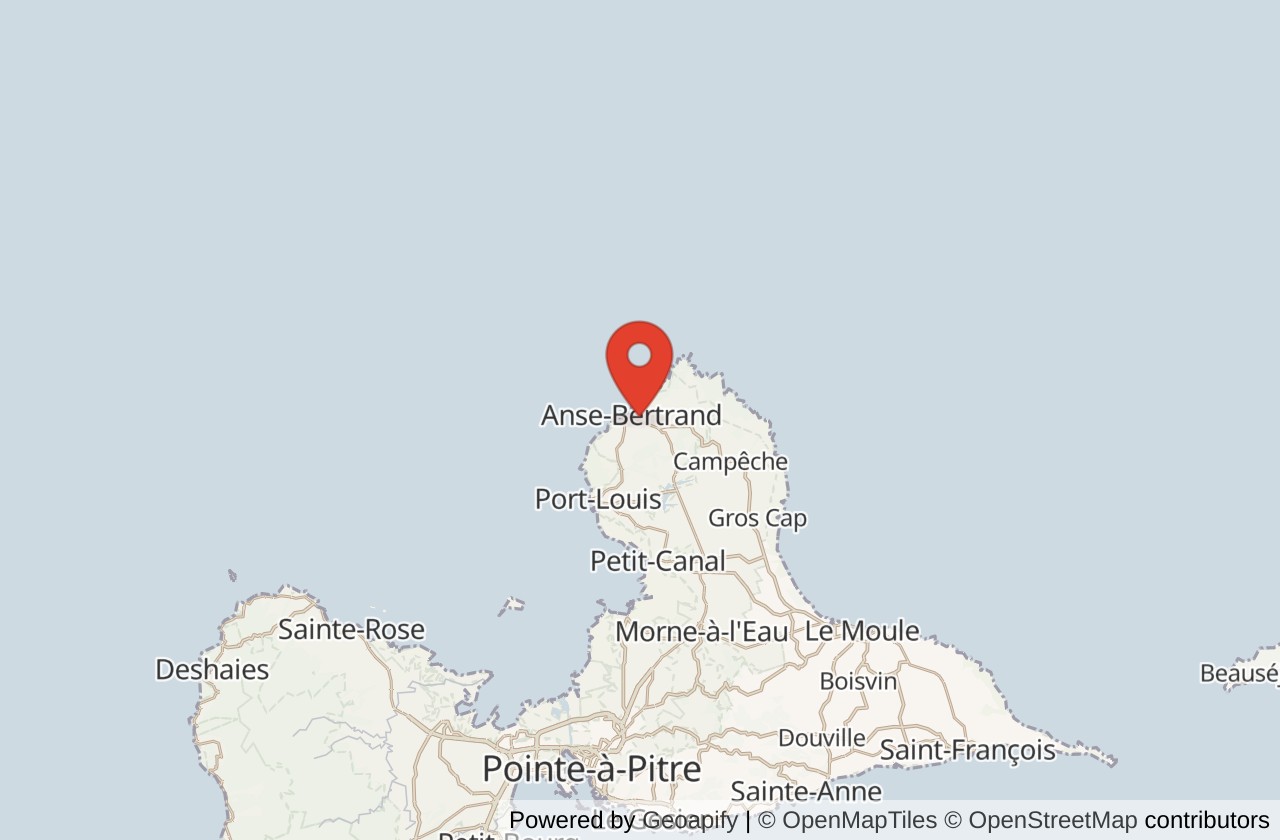
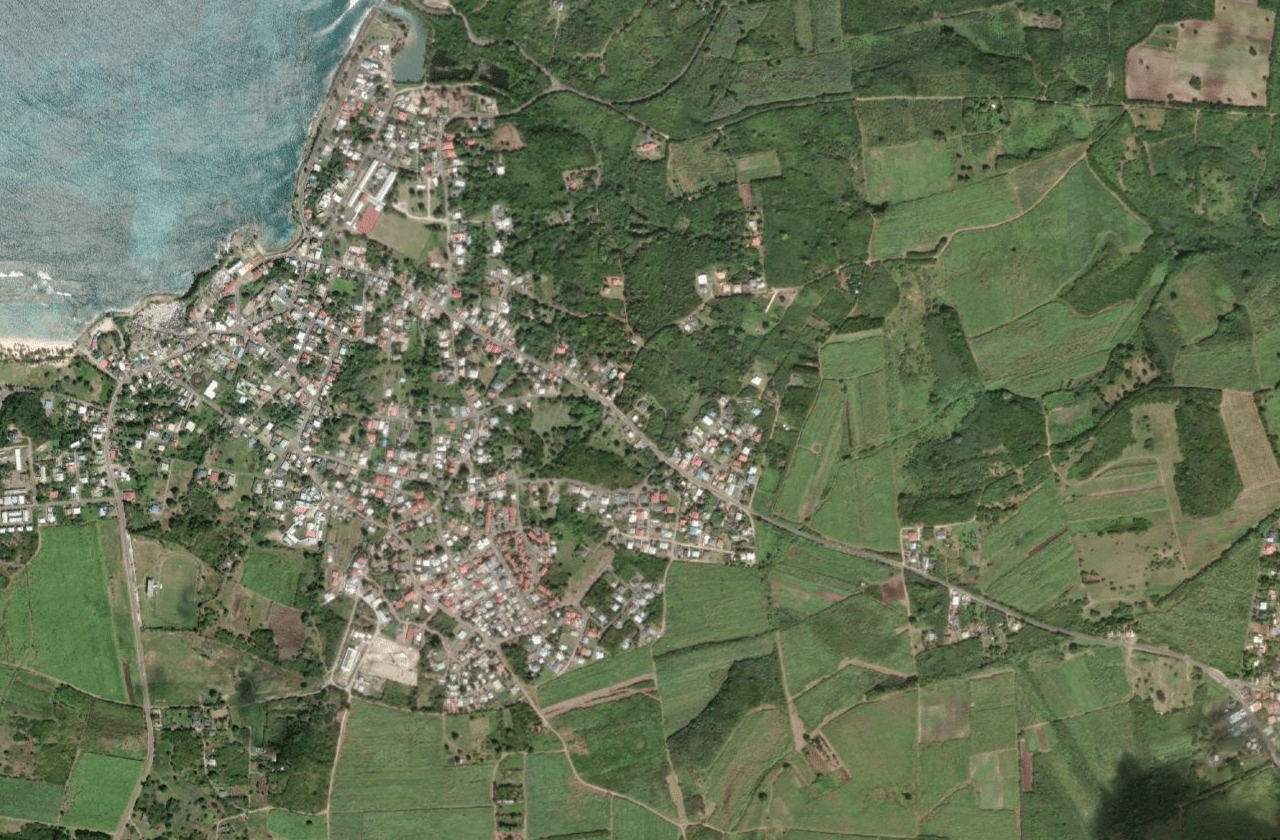
16.4700, -61.5000
What are the lineup and the town like at Anse Bertrand?
Localism
mellow
Crowd
Usually near-empty — a handful of local and visiting surfers on a good swell. surf-forecast notes it can 'get crowded' relative to its own emptiness, but by Caribbean standards La Chapelle is uncrowded. Weekends and holidays bring beachgoers to the sand more than surfers to the lineup. Dawn is quietest and cleanest before the trades fill in.
Guadeloupe is generally relaxed and accessible for visiting surfers, and the north is the quiet end of an already uncrowded island. La Chapelle is a small reef community — what little tension exists in Guadeloupe is reported around the busier, higher-quality reefs further south (Damencourt). Up here the norm is the universal one: say bonjour, don't drop in, give the regulars who know the reef the set waves, and a bit of French goes a long way. Heads-up that this is a French département, so basic French smooths everything.
In the lineup: La Chapelle breaks over rock and reef with rights and lefts depending on swell angle; it favours an east-to-north swell with light southerly offshore and is at its best in winter. Read the reef before you commit — entry/exit is over rock, the bottom is shallow in places, and currents run when the swell pulses, especially near the cliffy headlands. Booties are sensible; sea urchins are the standing hazard here. Note there's some inconsistency in how it's described — tourism sources call La Chapelle a technical reef for intermediate/advanced surfers, while surf-forecast.com's generic 'Anse-Bertrand' beach-break entry rates it beginner-friendly; trust your eyes on the day and treat the reef with respect.
Anse-Bertrand is rural, wind-scoured and refreshingly untouristy — a quiet bourg of Creole cases, a church and a market square, ringed by cliffs, cane country and the open Atlantic. There's none of the resort gloss of the south: dining is hit-or-miss after dark, nightlife is essentially non-existent, and the draw is exactly that emptiness and the wild coastline. It rewards travellers who like self-catering, early mornings and big scenery over convenience and crowds.
How do you get to Anse Bertrand?
Fly into Pointe-à-Pitre — Guadeloupe Pôle Caraïbes (Le Raizet) (PTP) — about 19 miles from the break, 35–45 minutes. PTP is effectively the only airport for the island of Grande-Terre and the gateway for virtually all flights to Guadeloupe (mainland France, North America via connections, and inter-island). There is no closer practical alternative.
- rental car€35–60/day · 35–45 min self-drive
The obvious choice and close to essential for surfing the north. All major agencies (Europcar, Hertz, Sixt, plus local Jumbo Car/Karukera) operate at PTP. Take the N5/N6 north through Morne-à-l'Eau and Petit-Canal to Anse-Bertrand. Drive on the right; roads are paved but the final approaches to the coves are narrow. France/EU licences valid; others bring an IDP.
- taxi€55–90 per vehicle · 35–45 min
Licensed airport taxis will run the trip; Guadeloupe taxis are metered but pricey and apply night/Sunday surcharges. Fine for a one-off arrival, impractical as your only transport once here. Confirm a board bag fits before loading.
- private transfer€60–100 per vehicle · 35–45 min
Pre-booked transfers or a gîte's recommended driver are the easiest option with board bags — arrange through your accommodation in advance. Agree the price up front.
- bus€2–3 per person · 1.5–2.5 hours with changes
Public buses (Karu'lis network) run from Pointe-à-Pitre toward the north, but service is slow, indirect, ends early evening and won't take a board bag comfortably. Realistically not viable for surfers — listed only as the cheap, last-resort option.
Do you need a car at Anse Bertrand?
Do you need a car?
essential
Walkability
If you book a gîte right by Plage de la Chapelle (several sit within a 5–10 minute walk), you can reach that one break on foot. But the bourg, the supermarket, the other beaches and every alternative surf spot are spread out, and Anse-Bertrand as a whole is not a walkable town — plan on driving for almost everything.
A rental car is essentially mandatory. Reckon on €35–60/day, less for week-plus hires, picked up at PTP. That car is also what unlocks the rest of the trip: Le Moule, Saint-François's Roba and the Le Helleux beach breaks are all 30–50 minutes south, and the cliffs of Grande Vigie and Porte d'Enfer are a few minutes from town. There is no Uber/rideshare in this part of Guadeloupe; taxis exist but are expensive and must be phoned. Scooter rental is not an established thing in the rural north.
Boards: Rent a car big enough for your boards — most agency cars are sedans or small SUVs with no rails, so bring soft racks and tie-downs, or request a wagon/SUV when you book. Board bags do not fit comfortably in route buses or most taxis, which is another reason a car is non-negotiable up here. Pack spare fins and leashes; there is no shop nearby to replace a snapped one.
Where can you stay near Anse Bertrand?
Surf camps and guided packages
- Le Moule / Saint-François gîtes & surf camps (e.g. Ride In Surf Camp area)surf camp · $ mid-rangeStays nearby
~30–50 min south, on the consistent east-coast reefs · If the surf, not the cliffs, is your priority, base 30–50 minutes south near Le Moule or Saint-François where the breaks are more consistent and the schools, rentals and a surf-camp scene actually exist. Plenty of gîtes and small camps in that corridor; drive north to Anse-Bertrand on the days La Chapelle turns on. (Booking.com / direct)
Hotels and other places to stay
~5 min from Plage de la Chapelle · Self-catering gîtes with air-conditioned bedrooms, terraces and sea views, minutes from the break — the closest thing to a surf base in Anse-Bertrand. Kitchen makes the Super U run worthwhile given how thin evening dining is. (Petit Futé / direct / Booking.com)
~1 km / short drive to Plage de la Chapelle · Sea-view villa rental a kilometre or so from La Chapelle — comfortable self-catering for a couple or small crew who want to be near the wave but with a pool and space. (Booking.com)
Few minutes' drive to the coast · Creole-style gîte with a pool and table d'hôtes (host-cooked dinners) — well reviewed for welcoming hosts and good home cooking, which solves the 'where do we eat at night' problem in a town with few open restaurants. (Booking.com / direct)
Varies — many within a few minutes of La Chapelle / Anse Laborde · The north is dominated by independent gîtes and holiday villas rather than hotels — a large pool of air-conditioned, often pool-equipped self-catering rentals appears on Booking.com, Gîtes de France and Petit Futé. Filter for proximity to Plage de la Chapelle and a kitchen. This is the realistic budget-to-mid option here. (Booking.com / Gîtes de France / Petit Futé)
~15–20 min south of Anse-Bertrand · The neighbouring west-coast town of Port-Louis has more guesthouses, a calm beach (Le Souffleur) and a few more dining options, while keeping you within easy reach of the north's surf and cliffs — a slightly less remote alternative base. (Booking.com)
Where do you eat at Anse Bertrand?
- Le Zion (Plage de la Chapelle)restaurant · $ mid-range
Grilled lobster, lambi (conch) fricassée, fresh grilled fish — Feet-in-the-sand Creole restaurant right on La Chapelle beach — the obvious post-surf lunch. Family-run, warm, and notable for opening some Friday–Saturday evenings, which is rare this far north. Reserve at weekends.
- Labord'Beachrestaurant · $ mid-range
Modern Antillean plates with an ocean view — Beach restaurant at Anse Laborde with a strong sea view and updated Creole cooking. Limited days — roughly Tue/Thu/Fri/Sun daytime, with later hours Wed and Sat — so check before you drive over.
- L'Abordagerestaurant · $ mid-range
Creole cuisine, ~€15–24 per head — Sit-down Creole spot on Anse Laborde beach, open Tue–Sun lunchtimes with later Fri–Sat service. Reliable mid-range option for a proper meal when you don't want to cook.
- L'Océanerestaurant · $ mid-range
100% homemade Creole cuisine — In the bourg on Rue Victor Schoelcher — a traditional wooden-case restaurant with an ocean terrace, praised for home cooking and hospitality. A good in-town option separate from the beach lolos.
- L'Anthonisrestaurant · $ mid-range
Daily fresh catch, crab cakes, light Creole plates — Small gallery-style restaurant at the Place du Marché in the bourg with a short menu built on the morning's deliveries — relaxed and well-regarded for quality over volume.
- Beach lolos & snacks (Anse Laborde / La Chapelle)street food · $ budget
Grilled chicken, accras, bokit (fried sandwich), fresh juice — The cheap, reliable feed up here is the cluster of lolos and snack shacks at the popular beaches — bokit, accras and grilled plates eaten at picnic tables. Hours track the weather and the crowds; cash is king and many close by late afternoon.
Cooking for yourself
- Super U Anse-Bertrandsupermarket
The town's main supermarket, on Rue Achille René Boisneuf in the bourg (opens around 8:30am). Full French-supermarket range — produce, fresh fish/meat, bread, dairy, water and household basics — which makes self-catering in a gîte genuinely easy. Stock up here on arrival since restaurants are unreliable at night.
- Bourg bakeries & small shops (Anse-Bertrand)minimart
Small boulangeries and convenience shops in the centre cover bread, pastries, water and snacks between supermarket runs. For a bigger weekly shop or anything specialised, the larger hypermarkets are down toward Le Moule / Petit-Canal.
- Roadside fruit & fish stalls (north coast)farmers market
Informal roadside vendors around the north sell local fruit, vegetables and sometimes the day's fish — worth a stop for fresh produce, cash only, hours and presence vary by day.
Where do you rent or fix a board?
- Allamanda Surf (Le Moule)board rental · lessons · €20–25/day (shortboard/longboard), ~€15/day foam
There is NO surf shop in Anse-Bertrand itself — bring your own boards, leashes, fins, wax and a ding kit. The nearest dedicated board rental is Allamanda Surf in Le Moule (Route de Saint-François), ~30–40 min south, renting shortboards/longboards around €20–25/day and foamies cheaper, plus half-day rates. Pick a board up there on the way north.
- Le Helleux Surf School (Sainte-Anne / Saint-François)lessons · board rental · lesson packages vary; rentals by arrangement
Established surf school working the gentler east-coast beach breaks around Le Helleux between Sainte-Anne and Saint-François (~45–50 min south of Anse-Bertrand). The right call if anyone in the crew is learning or wants a guided intro before tackling reef — La Chapelle is not a beginner spot.
- Itinerant Grande-Terre surf schools (Kokoplaj and similar)lessons · board rental · varies by operator
Several mobile/itinerant schools run lessons across Grande-Terre spots (Le Moule's Anse Salabouelle, Saint-François's Vieux Port, Le Souffleur at Port-Louis, Le Helleux). Useful for coached sessions and rentals when you're spotting the whole coast rather than fixed in the north. Book a day or two ahead.
What do you do when it's flat?
- Pointe de la Grande Vigienature · free
Guadeloupe's northernmost point — 80m limestone cliffs with huge Atlantic views and a short clifftop walking trail, minutes from town. Go early: the plateau gets a stiff 15–25 knot wind by mid-morning. The signature non-surf morning up here.
- Porte d'Enfer & La Grande Vigie coastnature · free
Dramatic 'Gate of Hell' sea-arch and a sheltered lagoon where Atlantic swell funnels between cliffs — a calm spot for a dip plus cliff walks toward the Trou de Madame Coco blowhole. Strong currents past the lagoon mouth; swim only inside the protected pool.
- Anse Labordenature · free
The area's most photographed beach and the spot for an easy swim and beach lunch on a flat or onshore surf day — but currents and undertow are real and not always signed, so don't treat it as a pool.
- Le Moule 'Surf City' & east-coast surf circuitadventure · free to surf; lessons €40–60
Day-trip south to Le Moule — France's first labelled 'Surf City' (2023) — and the reefs at Damencourt and Saint-François's Roba. The most consistent surf on the island and where the scene, schools and rentals concentrate.
- Distillerie Damoiseau (Le Moule)food drink · free–€10 tour/tasting
Guadeloupe's biggest rhum agricole distillery, ~30 min south at Le Moule — self-guided visit and tasting of the island's signature white and aged rums. Classic flat-day or post-surf stop.
- Beauport / Port-Louis & Le Souffleur beachculture · free–€10
Just south on the west coast: the Beauport sugar-heritage park (Pays de la Canne) and the calm, palm-lined Plage du Souffleur at Port-Louis — a swimmable, sheltered beach when the Atlantic side is too wild.
- Lagon de la Porte d'Enfer kayak / SUPwater · rental €10–20/hr
The long protected lagoon is a mellow paddle on a flat day — local operators rent kayaks and SUPs seasonally. A calm-water alternative when there's no swell.
What should you know before you go?
Cash & ATMs
There is an ATM in the bourg at La Banque Postale (Rue Gratien Candace), plus the Super U for card payments. It's a single small-town machine, so it can run dry on weekends — draw extra cash in Pointe-à-Pitre or Le Moule before heading north, and carry cash for lolos, beach snacks and roadside vendors, who are often card-free.
Medical
Anse-Bertrand has a pharmacy (Pharmacie d'Anse-Bertrand) and GP-level services in the bourg. The nearest full hospital is the CHU de la Guadeloupe in Les Abymes / Pointe-à-Pitre area, roughly 30–40 minutes south. For reef cuts, urchin spines or a ding to yourself, carry a proper first-aid and reef-cut kit — you're not minutes from a hospital up here. Emergencies: 15 (SAMU) / 112.
Water safety
This is exposed Atlantic reef and cliff coast, not a calm lagoon. At La Chapelle the bottom is rock and coral, shallow in places, with currents that strengthen as the swell builds — sea urchins are the main lineup hazard, so wear booties and watch your hands and feet. The nearby cliff beaches (Anse Laborde, around Porte d'Enfer) have undertow and rip currents that are not always signed and have caught swimmers out; swim only in the protected Porte d'Enfer lagoon and respect any warnings. Sargassum (seaweed) can foul beaches seasonally (spring–autumn) — check forecasts. No regular surf lifeguard presence on the reef; you're self-reliant in the water.
Guadeloupe basics: money, entry, phones, water
Currency
Euro (EUR) — ~1.08–1.10 USD per EUR (mid-2026)
Entry (US passport)
Up to 90 days in any 180-day period — Guadeloupe is a French overseas department (DROM) and part of the EU, but it is NOT in the Schengen area — so a French/Schengen short-stay visa does not cover it, and the EES/ETIAS system does not apply here. Visa-exempt Americans get the standard 90-days-in-180 short stay. Carry proof of return/onward travel and accommodation; these can be checked on arrival.
Language
French, Antillean Creole (Guadeloupean Kreyòl, widely spoken alongside French). Modest. This is France, not a tourist-English Caribbean island — staff at bigger hotels, dive/surf operators and the airport handle English fine, but in village boulangeries, small restaurants, markets and on the beach you'll get much further with basic French. A few phrases and a translation app go a long way; locals are warm when you try.
Plugs
C, E · 230V / 50Hz (European standard — US/Canada 120V gear needs a plug adapter and must be dual-voltage; most phone/laptop chargers are)
Tipping
Service is included by law ('service compris'): restaurant and hotel bills already fold in service, so tipping is not expected. Rounding up or leaving a euro or two for good table service is a nice gesture, not an obligation. Taxi drivers don't expect a tip; round up if they helped with bags. Tip a surf instructor or boat skipper a few euros only if they went out of their way — it's optional here, French-style.
Phone / data
Orange Caraïbe, SFR Caraïbe, Digicel, Travel eSIM (Airalo, Holafly, etc.). Coverage is good across the populated arc — Grande-Terre's south coast (Le Gosier, Sainte-Anne, Saint-François) and around Basse-Terre town — but thins out on the wild, mountainous west (Côte sous le Vent / leeward Basse-Terre), inside the Parc National rainforest, and on the outer islands. If you hold an EU SIM, 'roam like at home' applies and you can use it here at no extra cost — but confirm the French West Indies are in your plan's roaming zone, as a few budget EU operators carve out the overseas departments. Download offline maps before chasing the more remote north-Grande-Terre and leeward-coast breaks.
Tap water
Tap water is treated to French/EU standards and is generally safe to drink across the island. The real-world catch is supply, not contamination: Guadeloupe's aging distribution network suffers frequent water cuts ('tours d'eau') and pressure outages, and quality can dip locally after heavy rain or storms — so many residents and visitors keep bottled water on hand as a backstop. If your stomach is sensitive, bottled is cheap insurance, especially in the outer islands.
Emergency
112 is the EU-wide emergency number and works from any phone. You can also dial the French services directly: 15 for SAMU/medical, 17 for police (gendarmerie), 18 for fire, and 196 for sea/coast-guard rescue.
Other passports: entry rules differ — check the official source before booking.
Alert me when Anse Bertrand is on
Drop your email and you'll get one message when our forecast shows a trip-worthy window here: the dates, the size, and a place to stay. Free.
Frequently asked questions about Anse Bertrand
Can you surf at Anse-Bertrand in Guadeloupe?
Yes — the main break is Plage de la Chapelle on the north tip of Grande-Terre, a reef-fringed wave with rights and lefts that works best on east-to-north Atlantic swell in winter. It's a technical, rocky spot better suited to intermediate and advanced surfers than beginners, and there's no surf shop in town, so bring your own gear.
When is the best time to surf in Guadeloupe?
Roughly October through April–May, with the most consistent and powerful days in deep winter when North Atlantic NE/N groundswell hits Grande-Terre's east-facing reefs. Summer is largely flat. Water is warm year-round (around 26–28°C), so it's boardshorts and a rash vest, no wetsuit.
How far is Anse-Bertrand from Pointe-à-Pitre airport?
About 19 miles (31 km) by road, a 35–45 minute drive north on the N5/N6 through Morne-à-l'Eau and Petit-Canal. PTP (Guadeloupe Pôle Caraïbes) is the island's only airport and the gateway for nearly all flights.
Do I need a car to surf the north of Grande-Terre?
Effectively yes. Public buses are slow, indirect and won't take a board bag, and there's no rideshare in the rural north. A rental car (around €35–60/day from PTP) is essential — it's also how you reach the more consistent surf at Le Moule and Saint-François, 30–50 minutes south.
Is there a surf shop in Anse-Bertrand?
No. There's no surf shop or board rental in Anse-Bertrand itself — bring your own boards, leashes, fins and wax. The nearest rentals are at Allamanda Surf in Le Moule (~30–40 min south), and surf schools operate around Le Helleux and Saint-François for lessons and gear.
Is Plage de la Chapelle good for beginners?
Not really. It's a reef-and-rock break with shallow sections, currents and sea urchins — better for surfers who already read reef. Beginners should take a lesson on the gentler east-coast beach breaks around Le Helleux or Le Moule before heading to La Chapelle.
Where should I eat and stay around Anse-Bertrand?
Self-catering gîtes near Plage de la Chapelle are the standard, paired with the Super U in the bourg, because evening restaurants are limited. For eating out, the beach restaurants Le Zion (La Chapelle), Labord'Beach and L'Abordage (Anse Laborde) and bourg spots like L'Océane are the reliable picks — and several keep limited days, so check ahead.
What else is there to do in Anse-Bertrand besides surf?
It's one of Guadeloupe's most scenic corners: the cliffs of Pointe de la Grande Vigie, the Porte d'Enfer sea-arch and lagoon, and photogenic Anse Laborde are all minutes away. A short drive south adds the Damoiseau rum distillery, Le Moule 'Surf City' and the calm beach at Port-Louis.
Sources for this guide
- helloguadeloupe.freditorial · Town character, cliffs (Grande Vigie, Porte d'Enfer, Anse Laborde), Plage de la Chapelle as technical surf, limited dining, car-essential, s
- helloguadeloupe.freditorial · Restaurants: Le Zion (La Chapelle), L'Océane and L'Anthonis (bourg), limited opening days
- stormrider.surfsecondary source · Grande-Terre surf overview, winter NE/N groundswell season, La Chapelle/Le Moule/Le Helleux spots, reef and urchin hazards, relaxed localism
- surf-forecast.comsecondary source · Anse-Bertrand break entry (swell/wind/season, urchins, summer-flat, crowd note) — and the beach-break vs reef-break data conflict
- thesurfatlas.comeditorial · Best-season framing (winter Atlantic groundswell), reef/urchin hazards, localism concentrated at Damencourt, overall accessible vibe
- allamandasurf.comofficial · Allamanda Surf board rental, Le Moule location and rental price bands (€20–25/day, foam cheaper)
- surfhelleux.comofficial · Le Helleux surf school existence, location between Sainte-Anne and Saint-François, lessons for beginners
- booking.comsecondary source · Anse-Bertrand gîte/vacation-rental inventory (Les Algues de la Chapelle, La Villa du Soleil 971, Ti Kaz Indigo), proximity to Plage de la Ch
- rome2rio.comsecondary source · PTP–Anse-Bertrand road distance (~19 mi / 31 km) and drive time (~35–45 min), transfer modes
- tripadvisor.comsecondary source · Labord'Beach live listing, Anse Laborde location, opening days/hours
- guadeloupe.netsecondary source · L'Abordage live listing, Anse Laborde location, Creole cuisine, ~€15–24 price and opening days
- banque-sans-frais.comsecondary source · ATM at La Banque Postale (Rue Gratien Candace) — cash situation
- ouipharma.frofficial · Pharmacie d'Anse-Bertrand existence and bourg location for the medical section
- lenordguadeloupe.comeditorial · North Grande-Terre tourist board corroboration of Anse-Bertrand restaurant list
Guide researched and verified 2026-06-12. Details change; confirm bookings and entry requirements before travel.