When is the best time to surf Playa Grande?
Peak Dec–Feb · often good Mar, Oct–Nov · can still fire Apr–Sep.
The most reliable window is roughly November through March, when North Atlantic winter storms send the north and northeast swells that wake this coast up; autumn — especially October — delivers some of the cleanest days of the year. Summer runs smaller and friendlier, good learning surf on the sandbars, with occasional strong north pulses that reward anyone watching the chart. The wave wants a north swell meeting an offshore southeast wind — mornings are usually cleanest before the trades fill in. Water is warm year-round; boardshorts or a light rash guard is all you need.
What does a surf trip to Playa Grande look like?
A typical trip from our guide. A real alert comes with the forecast for each day and a fare from your airport.
How much does a surf trip to Playa Grande cost?
A five-night trip, per person, before food and rentals.
Rows marked "Google typical" are Google Flights' usual range for October, across all booking lead times, so a last-minute fare often lands above it. Checked Oct 17. Stays use our guide's nightly bands; transfers use the guide's quoted rates. Real alerts price the exact dates.
Where should you stay at Playa Grande?
Closest to the wave
Playa Grande Beach Club $$
boutique · high-end · On the beach at Playa Grande — walk to the sand
Nine antiques-filled bungalows (Celerie Kemble–designed) on a near-private stretch of the same mile-long beach, shared only with Amanera. Characterful, design-forward and right on the water — the boutique alternative to the Aman for a surf-and-style trip.
Stays nearbyCheaper
Bahia Principe Grand San Juan $
resort · mid-range · In Río San Juan, ~15–20 min drive to Playa Grande
Large all-inclusive 4-star on its own calm beach near Laguna Gri-Gri — the easy, predictable family/group base with food, pools and a beach sorted, then a short drive to the wave. Not a surf hotel, but convenient and well-priced for the area.
Stays nearbyEvery place we researched, with its booking link, is under where to stay below.
What is the wave like at Playa Grande?
Break type
Reef
Wave direction
Right
Best swell
NE (NW–NE window)
Ideal size
3–8 ft
Best tide
All tides
Works at every stage
Consistency
Fairly Consistent
Peak season
Dec–Mar
Nearest airport
POP · ~45 mi
Drive from airport
1 hr 15 min – 1 hr 30 min
The trade-off for that emptiness is that Playa Grande is fundamentally a beach you visit, not a surf town you move into. There's no surf-shop strip, no board-rental hut on every corner, and the nearest real services are in Río San Juan (about 15 minutes west) or up the coast in Cabrera. The wave is selective, too — it wants a north pulse against clean wind — which is precisely what keeps the lineup thin: watch the winter chart, strike when it lines up, and you'll score a reeling reef right that most north-coast travelers never even see breaking.
What you do get is a genuinely beautiful stretch of the DR that most tourists skip: empty beaches like Caletón and Preciosa, the mangrove boat tour through Laguna Gri-Gri, fresh-seafood shacks, and a pair of world-class clifftop properties (Aman's Amanera and the Playa Grande Beach Club) sitting above a wave you can have nearly to yourself. Come self-sufficient — bring your own boards, leash, wax and a ding kit — base in Río San Juan or Cabrera, and let the forecast pick your surf days on one of the Caribbean's prettier, sleepier coasts.
Who it suits
Intermediate and advanced surfers who can handle a punchy reef right, plus beginner-plus travelers who'll surf the softer sandbars on small days; ideal for north-coast road-trippers who watch the chart and strike Playa Grande when the north swell arrives.
Where exactly is Playa Grande?
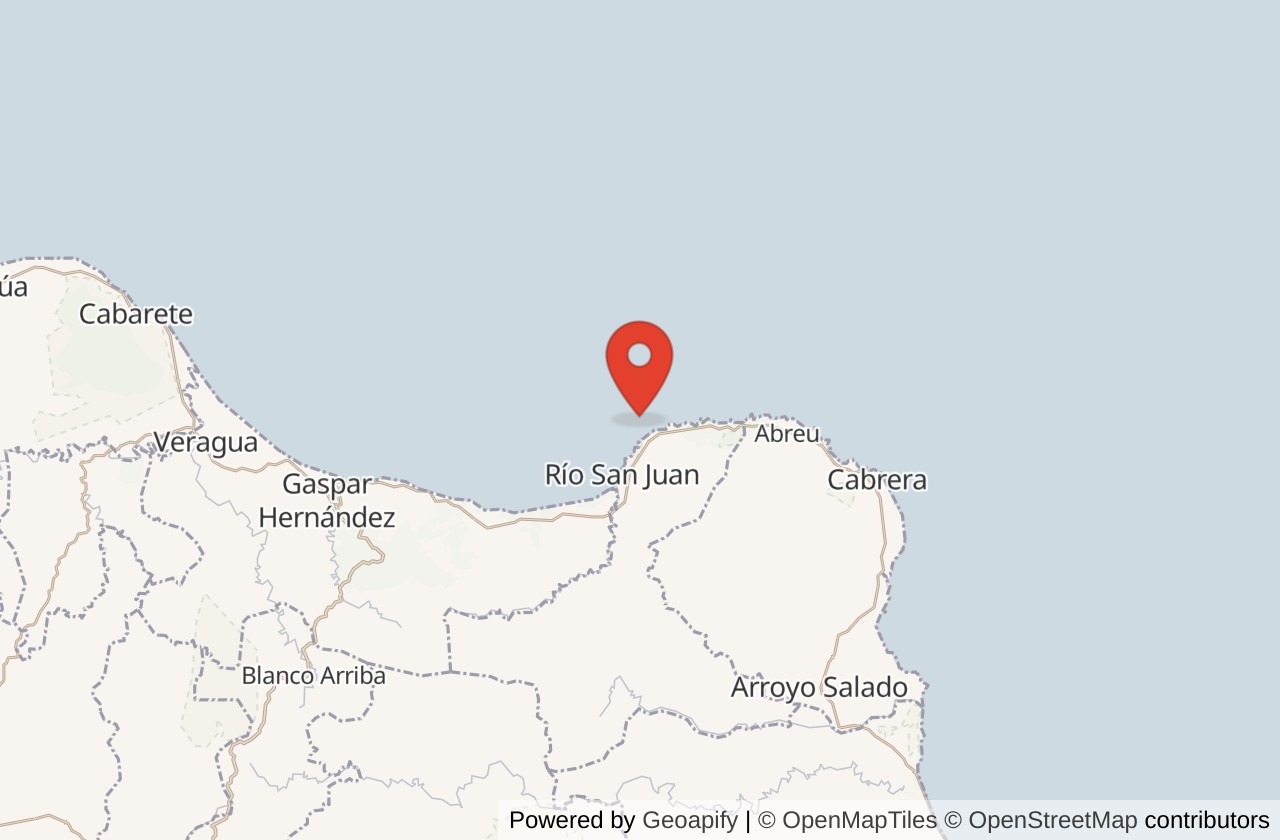
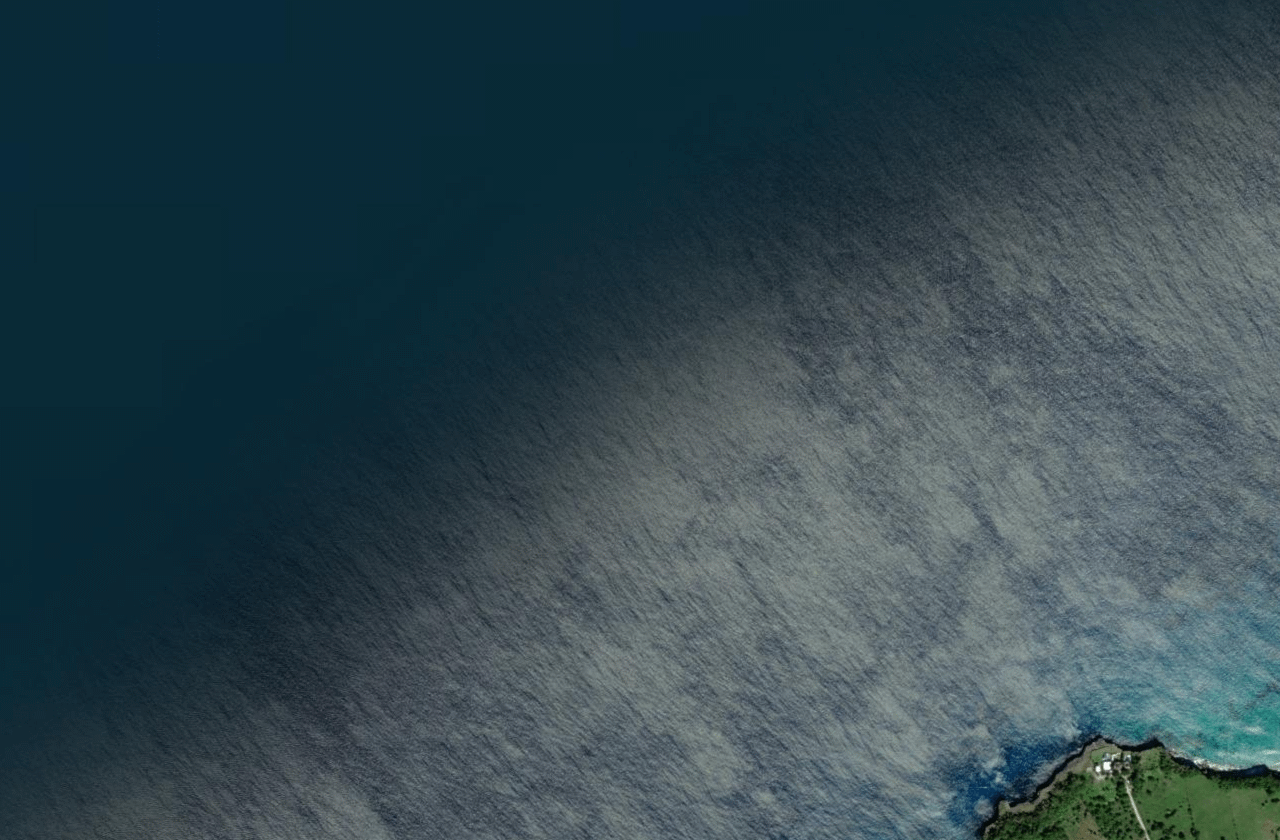
19.6800, -70.0666
What are the lineup and the town like at Playa Grande?
Localism
mellow
Crowd
Thin. Even on a good swell you're often sharing the peak with only a handful of surfers — local riders, the occasional lesson, and a trickle of in-the-know travelers. Weekends and holidays bring Dominican beachgoers for the sand and seafood more than the lineup. Early mornings are emptiest and usually cleanest.
The Playa Grande lineup is known for being quiet and low-key — there's no entrenched crew to manage because crowds are rare, but the same courtesy applies: don't paddle straight to the main right peak and snake the few people on it. A friendly hola, waiting your turn and respecting whoever's already out goes a long way on a coast that sees few traveling surfers.
In the lineup: The headline right breaks over reef in front of the main beach entrance and can run a long way on the right north swell; sandbar peaks either side are softer and better for less-experienced surfers. Watch for reef and rocks at the takeoff, and for current that pulls along the beach and toward the points when the swell is up. Enter and exit off the sand, time sets, and treat the inside reef with respect on bigger days.
Río San Juan is a small, friendly fishing-and-farming town that's only recently appeared on travelers' radars — a working-coast feel of fishing boats, colmados, the Gri-Gri lagoon and a slow Dominican pace, with none of the resort sprawl of Punta Cana or the party energy of Cabarete. Playa Grande itself is essentially undeveloped beach plus two high-end clifftop properties: gorgeous, empty and quiet. Off the water it's swimming, seafood, the lagoon tour and doing very little — that's the appeal.
How do you get to Playa Grande?
Fly into Gregorio Luperón International Airport, Puerto Plata (POP) — about 45 miles from the break, 1 hr 15 min – 1 hr 30 min. Santiago (STI, Cibao International) is about 2–2.5 hours inland and sometimes has better US/Canada fares. Santo Domingo (SDQ) is a ~3.5–4 hour drive across the country — only worth it for a much cheaper fare or a wider itinerary. POP is far and away the natural gateway.
- rental carUS$35–60/day · 1 hr 15 min – 1 hr 30 min self-drive
The sane choice for a fickle wave you'll want to chase: pick up at POP and run the coastal highway east through Cabarete, Sabaneta and Gaspar Hernández to Río San Juan, then the Cabrera road to the beach. Roads are paved and decent; watch for motoconchos, livestock and unlit night driving. Request a wagon or SUV with roof rails if you want racks for boards.
- private transferUS$90–140 per vehicle · 1 hr 15 min – 1 hr 30 min
Easiest with board bags. Pre-book a private car/van through your hotel or a transfer company (MyTransfers and similar operate the POP–Río San Juan run). Confirm a vehicle that fits your longest bag and agree the price before departure.
- taxiUS$75–95 per vehicle · 1 hr 15 min
Airport taxis will do the run at tourist rates; negotiate or pre-arrange. For boards over 7'0" confirm it's a wagon or van, not a sedan.
- busUS$10–15 per person + local transfer · 2.5–4 hours with connections
Doable but slow and board-unfriendly. Take a taxi/guagua from POP into Puerto Plata, then a Caribe Tours or local guagua east along the coast toward Río San Juan/Nagua; from town it's a short motoconcho or taxi to the beach. Fine for backpackers traveling light, painful with a board bag.
Do you need a car at Playa Grande?
Do you need a car?
recommended
Walkability
Playa Grande itself is a beach with two clifftop resorts and a beach club, not a walkable village — there's no surf town built around the lineup. If you stay at the Playa Grande Beach Club or Amanera you walk to the sand; everyone else drives or motoconchos in. Río San Juan town (~15 min) is walkable for groceries, ATMs and food but isn't on the wave.
A rental car (US$35–60/day) is the practical pick — it lets you chase the swell along the coast and reach Caletón, Preciosa, Cabrera's beaches and Cabarete's surf on flat days. Without a car you'll lean on motoconchos (cheap motorbike taxis, a few hundred pesos a hop, not great with a board) and local taxis or guaguas (shared minibuses) running the main highway. There's no Uber out here; your hotel will have a trusted driver's number.
Boards: Motoconchos and guaguas are awkward with board bags — fine for a single shortboard if you're relaxed about it, otherwise charter a taxi or drive yourself. Rental cars are mostly sedans and small SUVs; request roof rails ahead or bring soft racks and tie-downs to move boards between Río San Juan, Playa Grande and other coastal spots.
Where can you stay near Playa Grande?
On the cliff directly above Playa Grande — walk/shuttle to the sand · Aman's clifftop casitas sit on a 60-foot bluff over the beach with the Playa Grande golf course at the door — about as luxe as the Caribbean gets, with ocean adventures and surf access arranged on request. The splurge base if budget is no object and you want to roll out of bed above the wave. (Direct (aman.com))
On the beach at Playa Grande — walk to the sand · Nine antiques-filled bungalows (Celerie Kemble–designed) on a near-private stretch of the same mile-long beach, shared only with Amanera. Characterful, design-forward and right on the water — the boutique alternative to the Aman for a surf-and-style trip. (Direct (playagrandebeachclub.com))
In Río San Juan, ~15–20 min drive to Playa Grande · Large all-inclusive 4-star on its own calm beach near Laguna Gri-Gri — the easy, predictable family/group base with food, pools and a beach sorted, then a short drive to the wave. Not a surf hotel, but convenient and well-priced for the area. (Direct (bahia-principe.com), Booking.com)
Río San Juan area, ~15–20 min drive to the break · Well-reviewed boutique guesthouse/villa option around Río San Juan with a pool and quiet garden setting — a good mid-range pick for couples or small groups who want a base in town near groceries and the lagoon. (Booking.com, Expedia)
Cabrera, ~20–25 min east of Playa Grande · Garden lodge in Cabrera with two pools, a restaurant and both rooms and self-catering condos — a relaxed, good-value base if you want to split time between Playa Grande and Cabrera's own beaches (Diamante, La Entrada). (Booking.com, direct)
Río San Juan, ~15 min drive to Playa Grande · The budget reality: a scattering of small guesthouses, posadas and apartment rentals in and around Río San Juan town (listed from roughly US$25–40/night on Booking and Airbnb). Basic but walkable to ATMs, the supermarket and the lagoon — the value pick for surfers happy to drive to the wave. (Booking.com, Airbnb)
Where do you eat at Playa Grande?
- Terraza Lagunarestaurant · $ mid-range
Fresh fish and seafood over the Gri-Gri lagoon — Open-air restaurant-bar right on Laguna Gri-Gri in Río San Juan, with Caribbean cooking and a view over the mangroves. A reliable sit-down dinner spot after a day on the coast.
- Restaurante y Pizzería Don Peperestaurant · $ mid-range
Seafood, Dominican plates and wood-fired pizza — Long-running spot facing the Gri-Gri lagoon in Río San Juan, well reviewed for value and friendly service — good for a relaxed, varied dinner when you don't want fish twice in a day.
- D'Oscar (Restaurant, Pizzería y Carwash)restaurant · $ budget
Seafood-on-rice special and plantain chips with pico de gallo — A Río San Juan local favorite (yes, also a carwash) repeatedly praised for quality, low prices and a big menu — the everyday casual feed between surf sessions.
- Estrella Bar & Restaurantrestaurant · $ mid-range
French-Dominican menu with strong seafood specials — Listed by Lonely Planet, a dependable Río San Juan kitchen mixing French touches with local seafood. Worth it when you want a slightly more polished meal.
- Playa Grande beach comedoressoda · $ budget
Fried fish, tostones and rice straight off the beach — Simple beachfront shacks and vendors at Playa Grande and nearby Caletón serve whole fried fish, tostones and cold drinks — the cheapest, most authentic lunch, eaten with sand on your feet. Cash only and hours are loose; confirm the price before they cook.
- Le Café de Pariscafe · $ mid-range
French breakfasts, crêpes and coffee — Small French-run café in Río San Juan for a proper coffee, breakfast or pastry — a useful pre-dawn-patrol fuel stop on the days the swell shows.
Cooking for yourself
- Supermercados in Río San Juan (e.g. Super Liz / local colmados)supermarket
Río San Juan has small supermarkets plus a string of colmados (corner shops) for water, beer, fruit, rice, eggs and basics — enough to self-cater a rental, though selection is limited and imports are pricey. Stock up here or in Cabarete on the drive in if you want range.
- Río San Juan fish & produce vendorsfish market
Being a fishing town, Río San Juan is the place to buy fresh-off-the-boat fish, plus roadside fruit and vegetable stands. Cash only; cooking your own catch is very viable if your lodging has a kitchen.
- Cabarete / Sosúa supermarketssupermarket
For a real big-shop (imported goods, wider choice), the larger supermarkets are an hour west in Cabarete and Sosúa — convenient to hit on the way from POP. Plan a single stock-up rather than relying on a big store near the break.
Where do you rent or fix a board?
- La Preciosa Surf School (Río San Juan / Playa Preciosa)lessons · board rental · lessons roughly US$30–50 per session; ask about board rental
The established local operator (running since the early 2000s) for lessons and informal board hire around Playa Preciosa and Playa Grande — book ahead, as there's no walk-up rental hut at the beach. There is no retail surf shop at Playa Grande or in Río San Juan, so bring your own boards, leash, fins, wax and a ding kit; the nearest proper surf shops are an hour west in Cabarete.
- Cabarete surf shops (Encuentro)board rental · board sales · lessons · ding repair · wax · leashes · fins · wetsuits · ~US$20–30/day board rental
About an hour west, Cabarete and Playa Encuentro are the north coast's surf hub with multiple full-service shops (rentals, repairs, hardware, schools). If you need to buy or rent gear, fix a ding or grab wax, this is your stop on the drive to or from Playa Grande.
What do you do when it's flat?
- Laguna Gri-Gri boat tournature · US$15–30 per person (negotiable by boat)
The signature Río San Juan excursion: a guided boat through mangrove channels to a swallow-filled cave (Cueva de las Golondrinas) and the clear 'Piscina Natural' swimming pool. Agree the price and route before you board.
- Playa Caletónnature · free
A small, sheltered horseshoe of golden sand backed by mangroves a few minutes from town — calm, family-friendly swimming and beach comedores. The go-to flat-day beach when Playa Grande is too big or onshore.
- Playa Preciosanature · free
Wilder, less-developed beach just east of Playa Grande, reached by a short track — striking scenery and the surf school's home break. Strong currents at times; better for walking, photos and small-day surf than casual swimming.
- Playa Grande Golf Courseadventure · $$ (green fees ~US$300+; confirm current rates)
Robert Trent Jones Sr.'s last design, a clifftop par-72 with a string of oceanfront holes — the 'Pebble Beach of the Caribbean.' Open to the public by advance reservation; a memorable splurge on a flat spell.
- Cabrera & Playa Diamanteday trip · free–low
Twenty minutes east, the cliff-backed town of Cabrera and the sheltered bay of Playa Diamante make an easy half-day — quiet swimming, viewpoints and seafood, plus an alternate beach if the wind's wrong at Playa Grande.
- Cabarete day tripadventure · varies
An hour west, the kite/windsurf/surf capital of the Caribbean — worth a day for the lineup at Encuentro, the gear shops, beachfront bars and a livelier scene than the sleepy Río San Juan coast.
What should you know before you go?
Cash & ATMs
No ATM at Playa Grande itself — the beach shacks and motoconchos are cash-only (Dominican pesos). Draw cash in Río San Juan town, ~15 minutes west, which has bank ATMs (Banco Popular / BanReservas presence on the main drag) and colmados. ATMs in small DR towns can occasionally be offline or out of cash, so carry a buffer of pesos and don't rely on plastic at the beach.
Medical
Río San Juan has small clinics and pharmacies for minor issues. For anything serious you're heading to the larger hospitals in Cabarete/Sosúa or Puerto Plata (about an hour west), or Santiago (~2 hours inland) for major care. Pack a proper first-aid and reef-cut kit — this is a reef wave with no surf shop and no lifeguard tower at the surf peak.
Water safety
Playa Grande is an open Atlantic beach with a reef break, so respect it: the takeoff is over reef and rock, and rip current can run along the beach and toward the headlands when the swell is up — the beach has a reputation for strong currents and undertow on big days. There are no dedicated surf lifeguards at the break. Water quality is generally good (clean Atlantic, though river/lagoon runoff can cloud it after heavy rain), and there are no notable urchin or shark concerns beyond ordinary reef caution. Booties are worth it for the reef entry; never surf the bigger days alone.
Dominican Republic basics: money, entry, phones, water
Currency
Dominican peso (DOP) — ~58–63 DOP per USD (mid-2026)
Entry (US passport)
Up to 30 days (tourist card) — No visa for tourism. The US$10 tourist-card fee is bundled into your airfare. You MUST complete the free government E-Ticket (eticket.migracion.gob.do) online before BOTH your arrival and departure flights — it generates a QR code checked at the airport. 30 days is the default; extensions are paid via the Migration Department, and an overstay fee is collected at departure on a sliding scale.
Language
Spanish, English (resorts and main tourist zones only). Spanish is essential outside the all-inclusive resorts. Staff at Punta Cana / Cabarete / Las Terrenas tourism businesses and surf camps usually speak workable English, but local colmados, comedores, drivers, and rural north-coast surf villages run on Spanish. A few phrases go a long way; Cabarete and Las Terrenas also have large European expat communities so French/German/Italian turn up too.
Plugs
A, B · 120V / 60Hz (same as US/Canada — no adapter needed for North American gear; bring a surge strip, as power flickers and brownouts are common outside resorts)
Tipping
Restaurants legally add a 10% service charge (propina legal) PLUS 18% ITBIS tax — your bill shows subtotal + 10% + 18%, so the total runs ~28% over menu prices. The 10% goes to staff, so an extra 5–10% in cash is for genuinely good service, not obligatory. Tip hotel housekeeping/bellhops, motoconcho/taxi drivers (round up), and surf instructors/boat captains ~US$5–10 in cash. Resort all-inclusive staff appreciate small USD bills.
Phone / data
Claro, Altice (Orange), eSIM (Airalo, Holafly, Saily, etc. — usually riding Claro/Altice). Claro has the broadest, most consistent national footprint and is the safe surf-trip pick; Altice is strong in cities and resort zones. The north-coast surf belt (Cabarete, Encuentro, Sosúa) and Las Terrenas/Samaná are well covered, but signal thins on rural roads, mountain stretches, and quieter beaches. Most accommodations have Wi-Fi (sometimes flaky during power cuts). Download offline maps before driving the north coast or Samaná.
Tap water
Do not drink the tap water. Tap water in many areas is not considered safe for visitors — stick to bottled or filtered water (cheap and sold everywhere as botellones/garrafones), and ask for drinks 'sin hielo' (no ice) at smaller establishments where ice may be made from tap water. Reputable resorts and restaurants in tourist zones generally use purified ice and water.
Emergency
911 works nationwide for police, ambulance, and fire (coverage can be patchy in some remote areas near the Haitian border). Tourist-area operators often have English speakers.
Other passports: entry rules differ — check the official source before booking.
Alert me when Playa Grande is on
Drop your email and you'll get one message when our forecast shows a trip-worthy window here: the dates, the size, and a place to stay. Free.
Frequently asked questions about Playa Grande
Can you surf at Playa Grande in the Dominican Republic?
Yes — Playa Grande, just east of Río San Juan on the north (Amber) coast, has a right-hand reef break that peels in front of the main beach entrance, plus softer sandbar peaks either side. It works best on a north swell with offshore southeast wind and suits intermediate to advanced surfers, with beginners managing the smaller, mellower days. Note this is the Dominican Republic's Playa Grande, not the Costa Rica break of the same name.
When is the best time to surf Playa Grande?
Roughly November to March is most reliable, when North Atlantic winter swells reach the coast; autumn, especially October, also brings some of the cleanest days. Summer is generally smaller and better for learning. Surf early before the trade winds fill in, and check the forecast — this wave is fickle and needs the right north pulse.
How do you get to Playa Grande from Puerto Plata airport?
Fly into Puerto Plata (POP), then it's about a 1 hour 15 minute to 1.5 hour drive east along the coastal highway through Cabarete to Río San Juan and on to Playa Grande (about 45 road miles). A rental car (US$35–60/day) is the practical choice for chasing the swell; private transfers run US$90–140 and are easiest with board bags.
Is there a surf shop or board rental at Playa Grande?
Not really — there's no retail surf shop at Playa Grande or in Río San Juan, and no walk-up rental hut at the beach. La Preciosa Surf School (running since the early 2000s) offers lessons and informal board hire if you book ahead; otherwise the nearest full-service surf shops are an hour west in Cabarete. Bring your own boards, leash, fins, wax and a ding kit.
Where should I stay to surf Playa Grande?
For walk-to-the-sand luxury, Amanera or the Playa Grande Beach Club sit on the cliffs above the wave. Most surfers base 15 minutes away in Río San Juan (guesthouses and apartments from ~US$25–40, plus the Bahia Principe all-inclusive) or in Cabrera 20 minutes east, and drive to the break.
Is Playa Grande good for beginners?
On small, clean days the sandbar peaks either side of the main reef are forgiving enough for beginners, and La Preciosa Surf School teaches in the area. But the headline wave is a fast reef right with rocks and current, so it's really an intermediate-and-up spot when it's on — beginners should pick their days and consider lessons at gentler Cabarete.
Is Playa Grande safe to swim and surf?
It's a beautiful but open Atlantic beach with a reef break and a reputation for strong currents and undertow on bigger swells, and there are no dedicated surf lifeguards at the peak. Swim and surf with care, wear booties for the reef entry, never paddle out big days alone, and use the sheltered Playa Caletón nearby for calm swimming.
Should I fly into Puerto Plata or Santiago for Playa Grande?
Puerto Plata (POP) is the natural gateway at about 1 hour 15 minutes by road. Santiago (STI) is 2–2.5 hours inland and occasionally has cheaper North American fares, while Santo Domingo (SDQ) is a 3.5–4 hour drive — only worth it for a much cheaper flight or a wider DR itinerary.
Sources for this guide
- surf-forecast.comsecondary source · Wave type (right reef break), ideal north swell + SE offshore wind, low consistency rating, best season (autumn/Oct), warm water, rock hazar
- visitdominicanrepublic.comofficial · Río San Juan town character, nearby beaches (Caletón, Preciosa, Playa Grande two-mile beach), Laguna Gri-Gri tour, distance from Puerto Plat
- aman.comofficial · Amanera resort verification — clifftop casitas above Playa Grande, golf, ocean activities
- playagrandebeachclub.comofficial · Playa Grande Beach Club verification — nine bungalows on near-private mile-long beach shared with Amanera, design pedigree
- bahia-principe.comofficial · Bahia Principe Grand San Juan all-inclusive verification, beachfront location near Gri-Gri
- rome2rio.comsecondary source · POP→Río San Juan road distance (~70 km/44 mi), drive time ~1h, taxi/transfer/bus cost bands and routing
- tripadvisor.comsecondary source · Río San Juan restaurant lineup (Terraza Laguna, Don Pepe, D'Oscar, Estrella) live listings and reviews
- lonelyplanet.comeditorial · Estrella Bar & Restaurant verification (French-Dominican, seafood)
- tripadvisor.comsecondary source · Playa Grande Golf Course (Robert Trent Jones Sr., oceanfront, public play, green-fee range)
- lbcabarete.comeditorial · North coast surf context — Playa Grande long rights, distance from Cabarete/Cabrera, north-swell season, Cabarete as gear hub
- selectcaribbean.comeditorial · Río San Juan & Cabrera area overview, beaches, base options including Cabrera
- tripadvisor.comsecondary source · Cabrera lodging options (Catalina Tropical Lodge) and Playa Diamante for the Cabrera base/day-trip
Guide researched and verified 2026-06-12. Details change; confirm bookings and entry requirements before travel.