When is the best time to surf Tamarindo?
Peak May–Sep · often good Oct–Apr.
Surfable year-round thanks to a double swell window: NW groundswell in the December–April dry season (offshore mornings, blue skies, peak tourist crowds) and bigger, more consistent SW swells through the May–October green season, when afternoon rain cleans out the crowds and the better days arrive. Beginners get the friendliest, smallest waves in the dry-season mornings; the punchiest surf is green-season. Tamarindo is strongly tide-dependent, so check a tide chart and plan sessions around it. Water is ~28–29°C all year — no wetsuit needed.
What does a surf trip to Tamarindo look like?
A typical trip from our guide. A real alert comes with the forecast for each day and a fare from your airport.
A real alert we sent · Aug 31
We matched a surfer flying from Orlando (MCO) to this window: Sep 4–7, 4 good days with faces up to 6 ft, peaking 9/10. 5 nights, flights from $994 round trip.
This is a prior real trip from our match log, not a forecast. Windows and fares change; your alert carries the current ones.
How much does a surf trip to Tamarindo cost?
A five-night trip, per person, before food and rentals.
Rows marked "based on … alerts" are the middle half of the real round-trip fares we quoted in alerts on that route, priced 3 to 10 days before departure, since June 2026. Checked Oct 17. Stays use our guide's nightly bands; transfers use the guide's quoted rates. Real alerts price the exact dates.
Where should you stay at Tamarindo?
Closest to the wave
Witch's Rock Surf Camp $
surf camp · mid-range · Beachfront — steps from the main break
The default full-service surf base in town: beachfront rooms, on-site surf shop with a 300+ board rental fleet, ISA-certified instructors and lesson packages, plus the Eat at Joe's restaurant. Books up as all-inclusive surf weeks but also takes room-only stays.
Stays nearbySurf camp or guided package
8-Day Surf Camp in Tamarindo
La Botella de Leche · for intermediate+ · from $1,012 · 8 days · rated 4.8
All-inclusive surf camp — stay, boards & coaching bundled.
View packageCheaper
La Botella de Leche $
hostel · budget · ~5–8 min walk to the beach
Tamarindo's original hostel (20+ years), Argentine-run, with dorms and privates, a pool and a steady surf-traveler scene. The reliable budget pick walkable to the break.
Check ratesPoints play: Wyndham Tamarindo (in town); JW Marriott Guanacaste (Wyndham), about 15k points a night, 5 / 25 min from the break.
Browse all stays near the breakEvery place we researched, with its booking link and the surf packages, is under where to stay below.
What is the wave like at Tamarindo?
Break type
River/Beach
Wave direction
Both
Best swell
SW (S–W window)
Ideal size
2–5 ft
Best tide
Mid to mid-high
Low: mushy/closeouts, rivermouth rocks show · High: fat at Pico Pequeño
Consistency
Consistent
Peak season
Jun–Sep
Nearest airport
LIR · ~42 mi
Drive from airport
1.5 hours
That consistency comes with a town that has grown up fast and loud around it. Tamarindo ("Tamagringo," as the joke goes) is the most developed surf town in the country: a strip of beachfront bars, taco joints, surf shops, real-estate offices and shuttle desks packed into a few walkable blocks, with the wave breaking right out front. It is the easiest Costa Rica surf trip to pull off — fly into Liberia, a 90-minute van ride gets you to your room, rent a board on the sand, and you're surfing the same afternoon — and it is the least "undiscovered." The lineup is crowded, the beginner peaks are a churn of soft-tops and lessons, and the better surfer escapes to the edges or drives out.
Use it for what it's good at. Tamarindo is a superb learning and intermediate base, warm water year-round (boardshorts and a rash guard, no rubber), and a launch pad for the whole region: Playa Grande across the estuary holds bigger, more organized peaks; Avellanas and Langosta sit 15–25 minutes south; and the boat-only legends Witch's Rock and Ollie's Point run as day trips out of the bay. Come in for the access and the nightlife, sleep in town, and treat the surrounding coast as your real quiver.
Who it suits
Beginners and improving intermediates who want warm water, easy logistics and a board-rental-and-lessons town with nightlife; advanced surfers should use it as a base for Grande, Avellanas and the Witch's Rock/Ollie's Point boat trips rather than the main beach.
Where exactly is Tamarindo?
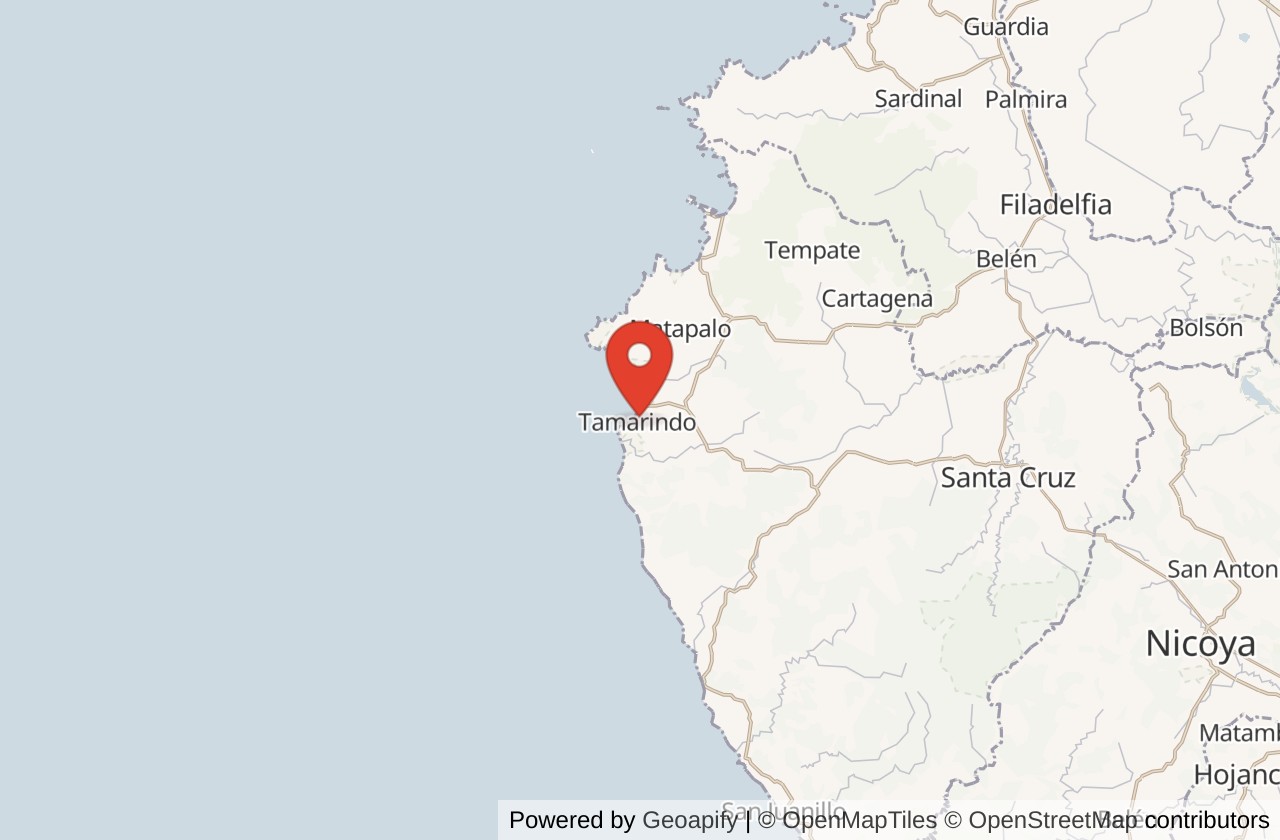
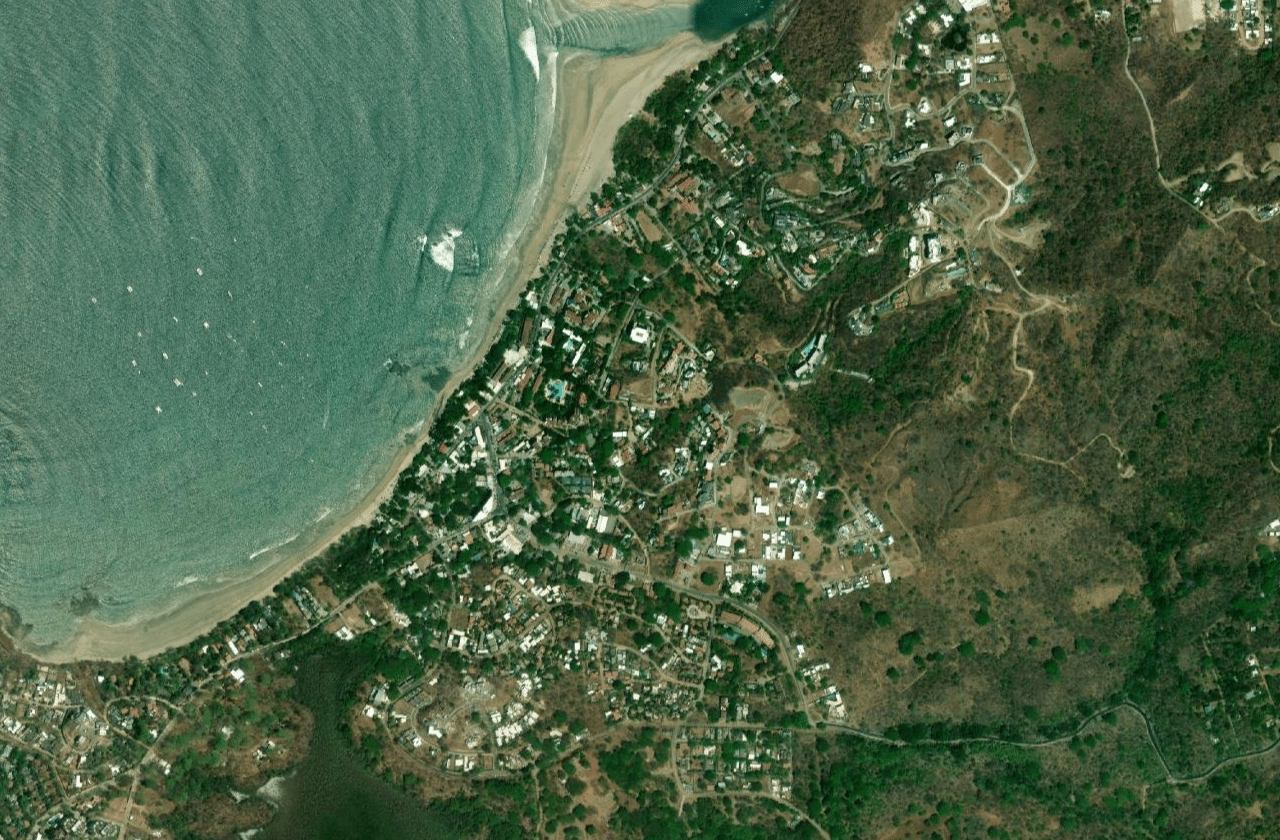
10.2994, -85.8381
What are the lineup and the town like at Tamarindo?
Localism
moderate
Crowd
As crowded as it gets in Costa Rica: a constant churn of beginners, surf schools and travelers on the main beach, heaviest in the dry-season (Dec–Apr) high season and around US holidays. It thins in the green season and always early in the morning before the lessons start. The better surfers spread to the rivermouth, the outside peaks, or drive to Grande/Avellanas.
The main beach is famously busy and full of lessons, so the etiquette issue is congestion, not aggression — the soft-top peaks are chaotic, and the lineup is known to reward surfers who pick a less-crowded peak, don't drop in on the learners, and share. The Estero/Pico Grande end and the better outside peaks have a more committed local and expat crew; show the usual respect, wait your turn, and you'll be fine. Save the ego for Grande or Avellanas where there's room.
In the lineup: The main beach is a long sand-bottom break — pick a peak away from the densest lesson clusters. The Estero (north) rivermouth throws the faster, punchier waves and a wedging peak; it's also where the estuary current and crocodile risk concentrate, so enter from the beach, never wade or paddle into the river channel, and respect the rip that runs out the rivermouth on bigger tides. It's tide-sensitive, so time your paddle-out to the chart.
Tamarindo is the developed, switched-on face of Costa Rican surf — a compact, walkable beachfront strip of bars, taquerias, surf shops, real-estate offices, dive and shuttle desks, and a heavily international (North American, Argentine, European) expat-and-traveler crowd, hence the affectionate 'Tamagringo.' It's the opposite of a sleepy fishing village: easy, social, a little touristy, with everything you need an arm's length away and Pura Vida sunsets over the bay every night. Some come for exactly this energy; purists use it as a base and sleep elsewhere.
How do you get to Tamarindo?
Fly into Daniel Oduber Quirós International Airport, Liberia (LIR) — about 42 miles from the break, 1.5 hours (2+ during Easter week and Christmas–New Year). San José (SJO) is the other international gateway but is roughly 4.5–5.5 hours away by road across the country — only worth it for a much cheaper fare or a multi-region trip. LIR is far and away the right airport for Tamarindo.
- shuttle$25–45 per person (shared) · ~1.5–2 hours
Shared van shuttles (Tropical Tours, Tamarindo Shuttle and others) run scheduled and on-demand runs from LIR to Tamarindo and will take board bags — flag boards when you book so they assign a van with room. Book online in advance; desks also sit just outside arrivals.
- private transfer$95–140 per vehicle (up to ~6 people) · ~1.5 hours
A private van is the easiest option with boards and a group — door-to-door, no waiting, roof or rear space for bags. Pre-book with any Tamarindo shuttle operator or your hotel; confirm the vehicle fits your longest board bag.
- rental car$45–90/day (watch the mandatory liability insurance add-on) · ~1.5 hours self-drive
Best if you want Grande, Avellanas, Langosta and grocery runs on your own clock. Route is paved Hwy 21 then 155 — almost entirely a narrow two-lane road, so allow 2 hours and avoid arriving after dark the first time. Quoted online rates often exclude the obligatory third-party insurance; ask for the all-in price. Request a small SUV with roof rails or bring soft racks.
- bus$8–12 per person · ~2.5 hours with a connection
Cheapest option: local bus from Liberia to Tamarindo, but you'll usually transfer in Liberia town and it's slow and tight with a board bag. Fine for a single shortboard and a budget; painful for a quiver.
Do you need a car at Tamarindo?
Do you need a car?
optional
Walkability
Tamarindo is genuinely walkable — the main break runs right along the beachfront strip, and most lodging, surf shops, restaurants and bars are within a 5–15 minute walk of the sand. You do not need a car to surf the main beach and live in town.
In-town you walk everywhere. A car (or scooter/ATV rental, ~$30–50/day) only earns its keep if you want to chase Grande, Avellanas, Langosta or the supermarket out at Automercado on your own schedule. Taxis are plentiful — official red cabs plus informal drivers — and a hop within town or out to Automercado runs a couple of dollars; longer runs to Avellanas or Langosta are negotiable flat fares. There's no formal Uber coverage you should rely on; use hotel-recommended drivers and agree the price first.
Boards: Easiest surf town in the country for boards: rent on the beach and you carry it 200 meters to the water. If you bring your own, taxis and shuttles are used to board bags but small sedans struggle with longboards — ask for a van/SUV. Surf shops will hold and swap rental boards, so many travelers skip bringing one entirely.
Where can you stay near Tamarindo?
Surf camps and guided packages
La Botella de Leche — All-inclusive surf camp — stay, boards & coaching bundled
- 8-Day Beginner to Advanced Surf Camp in Playa Avellanasfor intermediate+ · from $700 · 8 days · rated 4.8 by 5View package
Dream Surf House (Dreamsea) — All-inclusive surf camp — stay, boards & coaching bundled
Beachfront — steps from the main break · The default full-service surf base in town: beachfront rooms, on-site surf shop with a 300+ board rental fleet, ISA-certified instructors and lesson packages, plus the Eat at Joe's restaurant. Books up as all-inclusive surf weeks but also takes room-only stays. (Direct (witchsrocksurfcamp.com), Booking.com)
Short drive/ride to the beach (just outside the core) · Surf-and-yoga camp built for a complete learning trip — lessons, yoga, communal meals and a sociable backpacker-plus crowd. Good for solo travelers and beginners who want the surf-week structure without the higher-end price. (Direct (dreamsea-surfcamp.com), Booking.com)
Packages bundle the stay and the surfing; check each listing for what its transfers include.
Hotels and other places to stay
~5–8 min walk to the beach · Tamarindo's original hostel (20+ years), Argentine-run, with dorms and privates, a pool and a steady surf-traveler scene. The reliable budget pick walkable to the break. (Hostelworld, Booking.com)
A few minutes' walk to the sand · Cluster of cheap, central backpacker hostels a short walk from the beach with shared kitchens and lounges — easy to walk in or book day-of in shoulder season. Quality varies, so read recent reviews before committing. (Hostelworld, Booking.com)
Beachfront — on the main strip above the break · The long-standing full-service resort in the center of town: big pools, ocean-view rooms and a beachfront position right on the main break. The comfortable, air-conditioned pick for families or non-surfing partners who still want to step onto the sand. (Direct (tamarindodiria.com), Booking.com, Expedia)
South end of the beach toward Langosta — ~10 min walk/short drive to the main peaks · Quieter upscale boutique on the calm southern stretch of Tamarindo beach, gardens and monkeys in the trees, away from the bar noise. For couples who want polish and a mellow beach with the surf a short stroll north. (Direct (hotelcapitansuizo.com), Booking.com)
Between Tamarindo and Langosta — short drive to the break · Garden-set boutique hotel and villas toward Langosta, good for groups taking a multi-bedroom villa with a kitchen. Self-catering villas make the Automercado run worthwhile; you'll want wheels or taxis to the main beach. (Direct (calaluna.com), Booking.com)
Where do you eat at Tamarindo?
- El Mercaditostreet food · $ mid-range
Mix-and-match plates — poke, tacos, arepas, craft beer — Open-air food-hall of independent stalls in the center of town — the easy crowd-pleaser when a group wants different things, with vegetarian and international options alongside Tico plates. Lively in the evenings.
- Nogui's (Bar Nogui)restaurant · $ mid-range
Ceviche and fresh seafood; famous breakfasts and pie — A Tamarindo institution on the beachfront 'circle,' running for decades — the expat breakfast spot and a dependable seafood lunch/dinner with the sand a few steps away. Busy at sunset.
- Green Papaya Taco Barrestaurant · $ mid-range
Tacos and burritos in the swinging seats — Casual, popular taco-and-burrito spot with hanging-chair seating — reliable, fast, good for a post-surf feed and a beer. Long-running town favorite.
- Patagonia del Mar / Argentine grillsrestaurant · $ mid-range
Wood-fired meats and grilled fish — Tamarindo's Argentine community means solid parrilla-style grills around town — a good change of pace from tacos when you want a real dinner. Reservations help in high season.
- Sodas around the strip (e.g. Soda Tica/local sodas)soda · $ budget
Casado — rice, beans, plantain, salad and your choice of protein — The cheap, filling local move: family-run sodas serving the daily casado for a fraction of the tourist-restaurant prices. Ask locals or surf-shop staff which one is good this season — they come and go — and pay cash.
- Pangas Beach Clubrestaurant · $$ high-end
Fresh seafood under the trees by the estuary — Upscale beach-garden dining toward the estuary end of town, French-Costa Rican plates and a romantic setting. The splurge dinner; book ahead.
Cooking for yourself
- Automercadosupermarket
The biggest selection and best quality in the area, in the Tamarindo Heights complex on the road into town (a ~$2 taxi from the beach). The place to stock a villa or self-catering kitchen — imported goods, produce, meat and a deli.
- Super 2001 / Super Comprominimart
Central in-town minimarkets a short walk from the beach for water, snacks, fruit, beer, sunscreen and basics — convenient and walkable, smaller range than Automercado. Fine for daily top-ups.
- Tamarindo Saturday feria (farmers market)farmers market
Weekend farmers/artisan market when running — local produce, eggs and prepared food. Hours and location shift seasonally, so ask locally; cash.
Where do you rent or fix a board?
- Witch's Rock Surf Shopboard rental · board sales · lessons · ding repair · wax · leashes · fins · apparel · ~$20–30/day (cheaper by the week)
Big, professional shop attached to the surf camp with a 300+ board rental fleet — longboards, mid-lengths, shortboards and alt shapes, free swaps on rentals, plus boards shaped on-site. Lessons, retail and repairs all here. The full-service option.
- Iguana Surfboard rental · lessons · wax · leashes · fins · apparel · ~$15–25/day; ~$5–10/hour
Tamarindo's original surf shop (since 1989), beachfront, with 125+ rental boards and a long lesson record. Take a lesson and get a discount on rentals for the rest of your trip. Reliable, well-located, good for first-timers.
- Kelly's Surf Shopboard rental · lessons · wax · apparel · ~$15–25/day
Another long-running beachfront shop offering rentals, lessons and the Witch's Rock/Ollie's Point boat trips. Easy walk-up rentals and instruction on the main beach.
What do you do when it's flat?
- Witch's Rock & Ollie's Point boat tripwater · $200–350+ per person shared from Tamarindo (the longest run — trips out of Playas del Coco / Playa Panama are cheaper); charters higher
The marquee day trip: a panga north past the Santa Rosa coast to two of Costa Rica's best waves — Witch's Rock (Roca Bruja) beach break and Ollie's Point pointbreak. Needs swell and a group to split the boat; book through Witch's Rock, Kelly's or a dedicated charter. Bring your passport (national-park waters).
- Playa Grande / Las Baulas turtle nestingnature · guided tour ~$25–45
Across the estuary, Playa Grande is a protected leatherback-turtle nesting beach (Las Baulas National Park). Guided night tours run roughly Oct–Feb when turtles come ashore — go with an authorized guide, no lights or phones on the beach.
- Tamarindo estuary mangrove tournature · $30–60 per person
Boat or kayak tour up the Tamarindo estuary mangroves — birds, monkeys, and yes, the resident crocodiles, viewed safely from the boat. A good flat-day option and a reminder of why you don't wade across the rivermouth.
- Sunset catamaran / sailing tourwater · $80–120 per person
Afternoon catamaran sails out of Tamarindo bay with snorkeling, drinks and a Pacific sunset — the standard non-surfer crowd-pleaser. Several operators; book a day ahead in high season.
- Tamarindo nightlifenightlife · free cover–$ drinks
Tamarindo has the busiest surf-town nightlife in Costa Rica — beachfront bars, live music and a late scene that ebbs and flows by night of the week. Easy to walk between spots; pace yourself before a dawn patrol.
- Avellanas & Langosta day surfadventure · free (gas/taxi)
Short drives south to Playa Avellanas ('Little Hawaii') and Playa Langosta for less-crowded, higher-quality waves than the main beach — the move once you've outgrown the lesson crowd. Langosta has a rivermouth and rockier bottom; check tides.
What should you know before you go?
Cash & ATMs
Easy — Tamarindo has full bank branches with 24-hour ATMs in town: BAC, Banco Nacional (near the Diria), Banco de Costa Rica and Scotiabank (by Automercado). Most dispense both US dollars and colones; many bars and shops have machines too. Card is widely accepted, but carry colones in cash for sodas, the feria and informal taxis. Watch for skimming and use bank-lobby machines where possible.
Medical
There's a private clinic in town (Pacific Emergencies / walk-in clinics, with 24-hour on-call EMTs) for cuts, infections and minor issues, plus pharmacies on the strip. The nearest public clinic is a few minutes away in Villarreal. For anything serious, head to Liberia (~1 hour): the public Hospital de Liberia and the private CIMA satellite hospital with a 24-hour ER, lab, radiology and pharmacy. Carry travel insurance.
Water safety
The biggest spot-specific hazard is the Tamarindo estuary: it is a known crocodile habitat, there have been crocodile attacks on people crossing or wading the rivermouth between Tamarindo and Playa Grande, and you should never wade or swim across it — pay for a water taxi to reach Grande. The rivermouth also generates a strong outflowing rip on bigger tides; stay out of the channel and enter from the open beach. The main break is otherwise a forgiving sand bottom with no reef, warm water (~28–29°C, no wetsuit) and generally fine water quality, though heavy green-season rain can muddy the estuary end and degrade quality for a day. There are no full-time lifeguards on the main beach — beginners should surf near a school or busy peak and respect rips.
Costa Rica basics: money, entry, phones, water
Currency
Costa Rican colón (CRC) — ~450–460 CRC per USD (mid-2026)
Entry (US passport)
Up to 180 days — Group One visa-exempt. The 180 days is a maximum, not a guarantee — the immigration officer sets the actual period and it is non-extendable. Onward ticket and proof of funds (~US$100/month of stay) can be requested.
Language
Spanish, English (widely spoken in tourist areas; Limón-province creole on the Caribbean coast). Very good by Latin American standards. In Pacific surf towns (Tamarindo, Nosara, Santa Teresa, Jacó, Pavones) and Caribbean ones (Puerto Viejo) you can get by on English alone; basic Spanish helps at local sodas and rural bus stops.
Plugs
A, B · 120V / 60Hz (same as US/Canada — no adapter needed for North American gear)
Tipping
Restaurants add a 10% service charge ('servicio') by law plus 13% IVA tax, so tipping is not expected — round up or add 5–10% only for standout service. At a soda (the cheap local eatery where you'll eat most casados) nobody expects anything extra. Tip surf guides/instructors ~$5–10 per session and boat captains in cash.
Phone / data
Kolbi (state-owned ICE), Claro, Liberty, eSIM (Airalo, Holafly, Jetpac, etc.). Kolbi has the widest rural footprint and is the safe pick for surf trips. Pacific surf towns are well covered, but expect weak or no signal on the Caribbean side outside Puerto Viejo/Cahuita town centers, around Limón's remoter beaches, and in pockets like the Osa Peninsula and the road to Pavones. Most accommodations have decent Wi-Fi; download offline maps before driving — outages happen in heavy rain.
Tap water
Generally safe to drink in cities and most established tourist/surf towns — among the best tap water in Central America. Be more cautious in remote coastal areas, on the rural Caribbean coast, and after heavy storms or in drought-stressed dry-season Guanacaste; bottled or filtered water is cheap insurance if your stomach is sensitive.
Emergency
911 works nationwide for police, ambulance, and fire (operators in tourist areas often speak English).
Other passports: entry rules differ — check the official source before booking.
Alert me when Tamarindo is on
It's quiet right now. Drop your email and you'll get one message when our forecast shows a trip-worthy window here: the dates, the size, and a place to stay. Free.
Frequently asked questions about Tamarindo
Is Tamarindo good for beginner surfers?
Yes — Tamarindo is one of the best places in Costa Rica to learn. The main beach is a long, sand-bottom break with gentle whitewater and rolling inside reforms, warm water year-round and a dozen surf schools renting soft-tops and giving lessons right on the sand. The trade-off is crowds: the beginner peaks get busy, so paddle out early or pick a quieter section.
How do you get from Liberia airport (LIR) to Tamarindo?
It's about a 1.5-hour drive (around 42 road miles). A shared shuttle van runs $25–45 per person, a private transfer $95–140 per vehicle, and rental cars are widely available at the airport. There's also a cheaper but slower local bus (~$8–12) that usually requires a connection in Liberia town.
When is the best time to surf Tamarindo?
Tamarindo works year-round. The December–April dry season brings NW swells, offshore mornings and sunny weather (and the biggest crowds); the May–October green season brings bigger, more consistent SW swells and afternoon rain that thins the lineup. Beginners get the friendliest waves in dry-season mornings; the punchiest surf is green-season.
Are there crocodiles in Tamarindo?
Yes. The Tamarindo estuary at the north end of the beach is a known crocodile habitat, and there have been crocodile attacks on people trying to wade or cross the rivermouth toward Playa Grande. Never swim or wade across the estuary — take a water taxi to reach Grande. The open main surf beach is not where the crocodiles are, but stay out of the river channel.
Do you need a wetsuit to surf Tamarindo?
No. The water in Tamarindo stays around 28–29°C all year, so boardshorts or a bikini and a rash guard for sun protection are all you need. Bring reef-safe sunscreen and a hat for the long, hot sessions instead.
Where can you rent a surfboard in Tamarindo?
Tamarindo has several well-established surf shops on or near the beach — Witch's Rock Surf Shop (300+ board fleet), Iguana Surf (the original, since 1989) and Kelly's, among others. Daily rentals run roughly $15–30 with weekly discounts, and most shops let you swap boards and add lessons.
Should I fly into Liberia or San José for Tamarindo?
Liberia (LIR) — it's only about 1.5 hours from Tamarindo, versus 4.5–5.5 hours by road from San José (SJO). Only choose San José for a much cheaper fare or a trip that combines other regions of Costa Rica.
Is Tamarindo too crowded to surf?
The main beach is the busiest surf spot in Costa Rica, especially in dry-season high season — great for learning, frustrating for experienced surfers. The fix is to surf early, move to the rivermouth or outside peaks, or drive 15–25 minutes to Playa Grande, Langosta or Avellanas for more room and better waves.
Sources for this guide
- thesurfatlas.comeditorial · Wave breakdown (Estero rivermouth, Pico Grande/Pequeño), swell windows (NW dry / SW green), tide dependence, crocodile warning, crowd and ne
- rome2rio.comsecondary source · LIR–Tamarindo road distance (~68 km / ~42 mi), drive time, and transfer modes/cost bands
- witchsrocksurfcamp.comofficial · Witch's Rock surf shop and camp services, 300+ rental fleet, lessons, on-site shaping, beachfront lodging
- iguanasurf.netofficial · Iguana Surf (original 1989 shop, beachfront, 125+ rentals, lesson record) details and rental discount policy
- costarica.comsecondary source · ATMs/banks (BAC, BNCR, BCR, Scotiabank), supermarkets (Automercado, Super 2001, Super Compro), medical clinic and Liberia hospital/CIMA info
- ticotimes.neteditorial · Crocodile presence at Costa Rican surf breaks including the Tamarindo/Grande estuary; water-safety section
- tripadvisor.comsecondary source · Live restaurant listings and standing (Nogui's, Green Papaya, El Mercadito, Pangas, Argentine grills, sodas)
- booking.comsecondary source · Lodging existence/booking channels (La Botella de Leche, Dreamsea, Diria, Capitán Suizo, Cala Luna, central hostels)
- stormrider.surfsecondary source · Regional surf context (North Guanacaste swell windows, Witch's Rock/Ollie's Point, nearby breaks)
- tropicaltourshuttles.comofficial · Shared shuttle operator existence, scheduling and routing for LIR–Tamarindo transfers
Guide researched and verified 2026-06-12. Details change; confirm bookings and entry requirements before travel.