When is the best time to surf Playa Hermosa (Jaco)?
Peak May–Sep · often good Oct–Apr.
Playa Hermosa fires year-round but the engine is the southern-hemisphere swell season, roughly April through October, overlapping the May–November green (rainy) season when the most consistent, biggest energy arrives — mornings are typically offshore and glassy before the afternoon onshore fills in. The December–April dry season brings sunnier, smaller, more manageable surf and cleaner roads. Tide matters: most banks come alive on an incoming mid-to-high tide and go soft at dead high. Water is warm all year — boardshorts or a spring top at most.
What does a surf trip to Playa Hermosa (Jaco) look like?
A typical trip from our guide. A real alert comes with the forecast for each day and a fare from your airport.
A real alert we sent · Aug 31
We matched a surfer flying from Orlando (MCO) to this window: Sep 4–7, 4 good days with faces up to 7 ft, peaking 8/10. 5 nights, flights from $535 round trip.
This is a prior real trip from our match log, not a forecast. Windows and fares change; your alert carries the current ones.
How much does a surf trip to Playa Hermosa (Jaco) cost?
A five-night trip, per person, before food and rentals.
Rows marked "based on … alerts" are the middle half of the real round-trip fares we quoted in alerts on that route, priced 3 to 10 days before departure, since June 2026. Rows marked "Google typical" are Google Flights' usual range for September, across all booking lead times, so a last-minute fare often lands above it. Checked Oct 17. Stays use our guide's nightly bands; transfers use the guide's quoted rates. Real alerts price the exact dates.
Where should you stay at Playa Hermosa (Jaco)?
Closest to the wave
Backyard Hotel $
hotel · mid-range · On the sand — directly in front of the Backyards peak
The default surfer base: a small beachfront hotel ~4 km south of Jacó with clean rooms, balconies over the pool and ocean, and an open-air restaurant-bar that hosts the famous free Saturday-afternoon surf contest in front of the hotel. Right on one of Hermosa's best banks. Note it sits next to a lively bar scene, so light sleepers should ask for a quieter room.
Check ratesSurf camp or guided package
7-Day Intermediate & Advanced Surf Camp
Surf Inn Hermosa · for intermediate+ · from $1,999 · 7 days · rated 5.0
Performance coaching — video analysis & progression focus.
View packageCheaper
Bamboo Surf House $
hostel · budget · Short walk to the beach at Hermosa
Tiny, well-reviewed surf house (caps around 7 guests) doing family-style dinners, breakfast, board rental, lessons and yoga. Intimate and good value; book ahead because it's small.
Check ratesPoints play: Los Sueños Marriott (Herradura) (Marriott), about 45–70k points a night, ~20 min from the break.
Browse all stays near the breakEvery place we researched, with its booking link and the surf packages, is under where to stay below.
What is the wave like at Playa Hermosa (Jaco)?
Break type
Beach
Wave direction
Both
Best swell
SSW (S–WSW window)
Ideal size
3–8 ft
Best tide
Mid to high
Low: heavy closeouts, dumping
Consistency
Very Consistent
Peak season
Jun–Sep
Nearest airport
SJO · ~60 mi
Drive from airport
1.5–2 hours
This is not a beginner wave. The same offshore-canyon exposure that makes it consistent also makes it strong: rip currents run hard, the shorebreak can be heavy, and on bigger pulses faces stack up well overhead with serious paddle-outs. The crew that surfs here is good, and the famous Saturday-afternoon Backyard contest — a free, weekly, cash-prize throwdown that's been running for years — tells you exactly what level the locals operate at. Hermosa rewards intermediate-and-up surfers who can duck-dive, hold position in current, and pick off the good ones; everyone else is better off learning in Jacó and coming here to watch.
The payoff beyond the wave is the setting. Hermosa is the first World Surfing Reserve in Central America (designated 2020, dedicated 2022) and sits inside the Punta Mala–Playa Hermosa wildlife refuge, a protected nesting beach where olive ridley turtles haul out by the dozen from July through December. You base in the strip of small surf hotels and hostels right along the sand, or 8 km north in Jacó where the supermarkets, surf shops, bars and nightlife live. It's a low-key beach village backed by a buzzy, slightly rowdy town — the best of both, fifteen minutes apart.
Who it suits
Intermediate to advanced surfers who can handle power, current and a fast beach break — duck-divers comfortable in overhead surf. Beginners should learn in Jacó and treat Hermosa as a spectator beach.
Where exactly is Playa Hermosa (Jaco)?
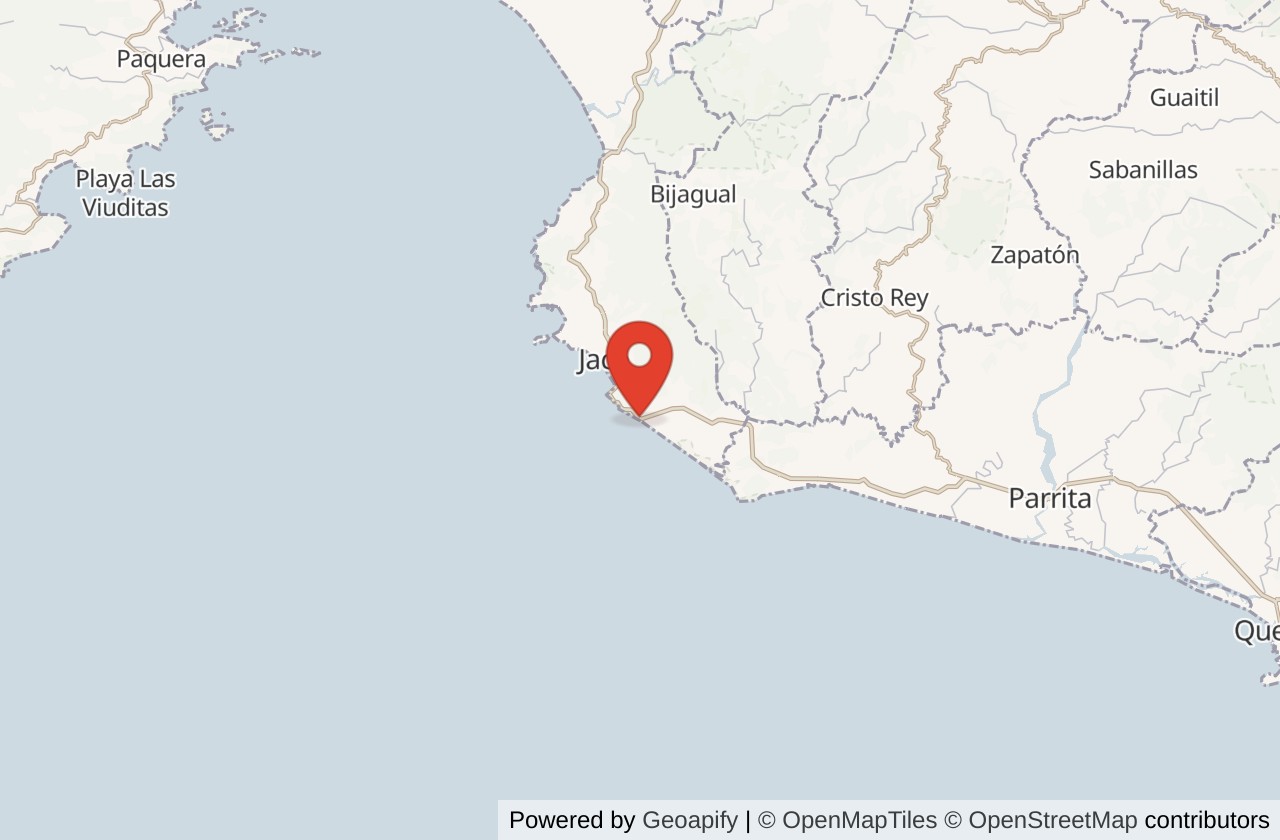
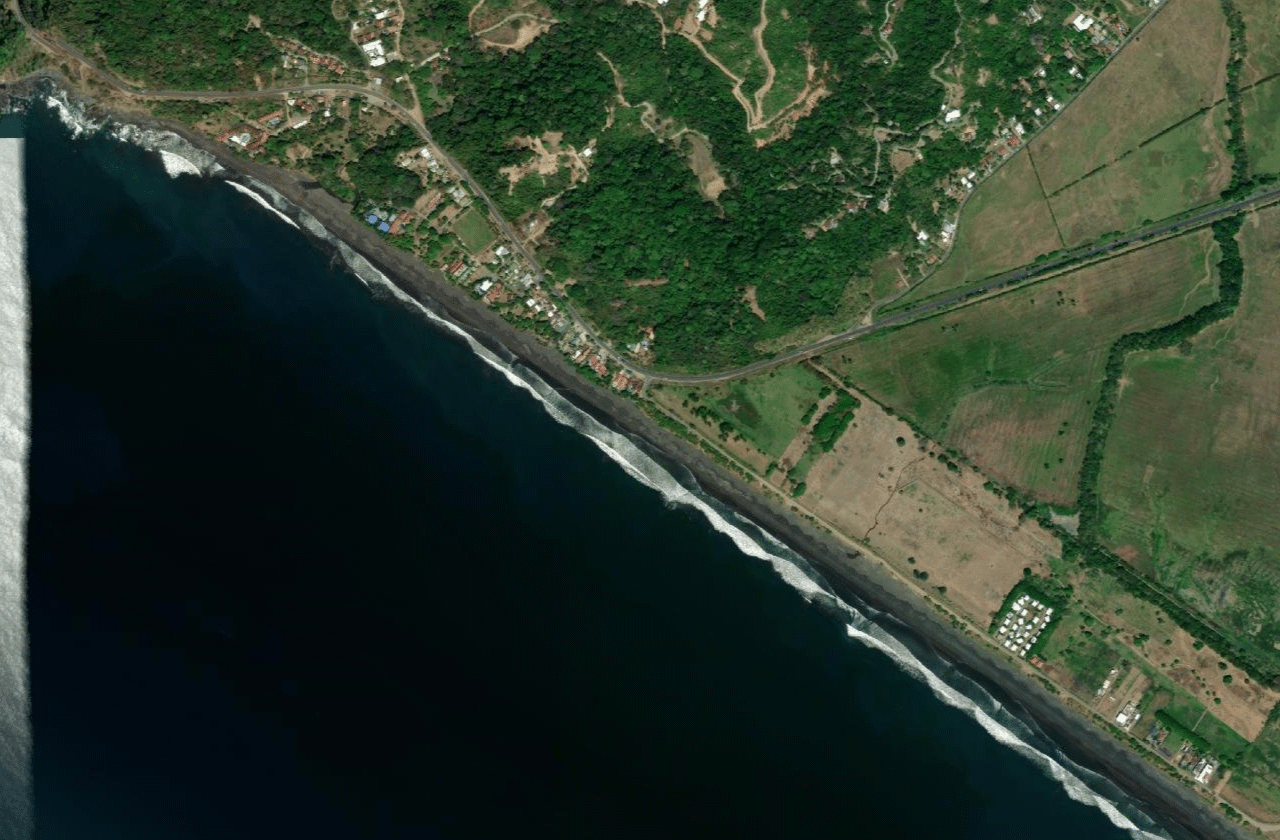
9.5741, -84.6035
What are the lineup and the town like at Playa Hermosa (Jaco)?
Localism
moderate
Crowd
Mostly intermediate-to-advanced shortboarders, with locals, traveling surfers and a steady contest scene. The main banks (especially in front of Backyard) draw a pack; walk up or down the long beach and you can find peaks nearly to yourself. Dawn is the prime window — offshore, glassy and quieter before the wind and afternoon crowd build. Genuinely empty stretches are easy to find on a 7 km beach.
Hermosa is known as a high-performance wave surfed by a skilled local and expat crew, and the vibe in the water is more 'earn your spot' than overtly aggressive. Because peaks shift along sandbars, the etiquette is to spread out, sit on a quieter bank rather than crowding the marquee peak, and not paddle straight to the best section and start dropping in. Respect, patience and obvious competence get you waves; backing off a closeout you can't make is wise here, not weak.
In the lineup: Watch the tide: most banks want an incoming mid-to-high and go soft at dead high. The current runs hard along the beach, so pick a landmark and check it constantly — paddle out where the rip helps you, and expect heavy duck-dives on the way out on a solid day. Faces stack up well overhead on bigger swells; have an honest size limit. Entry and exit are off open sand, but the shorebreak can thump on the inside.
Hermosa itself is a strung-out, low-rise beach village — a handful of surf hotels, sodas and bars backed by black sand, palms and a protected wildlife refuge, quiet and dark at night with turtles nesting on the beach in season. Eight km north, Jacó is the opposite: a busy, slightly gritty surf-and-party town with supermarkets, surf shops, casinos, nightlife and every service you need. The combination is the appeal — sleep and surf at mellow Hermosa, drive up to Jacó for groceries, gear and a night out.
How do you get to Playa Hermosa (Jaco)?
Fly into Juan Santamaría International Airport, San José (Alajuela) (SJO) — about 60 miles from the break, 1.5–2 hours. There is no closer commercial gateway; SJO is the only practical airport. A handful of domestic/charter flights use small strips near Jacó, but international travelers fly into SJO. Liberia (LIR) in Guanacaste is far north and makes no sense for Hermosa.
- rental car$45–80/day plus mandatory insurance · 1.5–2 hours self-drive
The easiest way to surf Hermosa, where peaks are spread along 7 km and you'll want to chase banks and tides. Pick up at SJO, take Route 27 (Autopista del Sol, a toll highway — carry small colones or coins) to the Route 34 / Jacó exit, then continue ~8 km south past Jacó. Roads are well paved; 4WD not required for Hermosa itself.
- shuttle$50–65 per person (shared); $130–180 private van · ~2–2.5 hours with hotel drops
Shared tourist shuttles (Interbus, Easy Ride, Costa Rica Shuttle and similar) run SJO/San José to Jacó daily and will usually continue to Hermosa hotels or drop you in Jacó for a short taxi. Private vans take boards reliably — book ahead and flag your board-bag length and count.
- private transfer$130–180 per van · 1.5–2 hours direct
Door-to-door from SJO straight to your Hermosa hotel — the simplest option with a quiver. Most surf hotels and camps (Backyard, Surf Inn Hermosa, Tropical Camas) will arrange a trusted driver; confirm the price and that the vehicle fits long board bags.
- bus$3–6 per person · ~2.5–3 hours plus a local hop
Public buses run San José (Coca-Cola terminal) to Jacó frequently and cheaply, but they don't stop at Hermosa — you finish with a short Jacó taxi (~$8–12) south to the beach. Cheapest option, awkward with boards; doable for light travelers.
Do you need a car at Playa Hermosa (Jaco)?
Do you need a car?
recommended
Walkability
If you stay in the beachfront strip of Hermosa, you walk straight onto the sand and can reach a handful of hotels, restaurants and a soda or two on foot — but the village is strung out along the highway, peaks are spread over kilometers, and Jacó's shops and nightlife are 8 km north. Most surfers want wheels.
A rental car ($45–80/day plus Costa Rica's required liability insurance) is the move — it unlocks the spread-out Hermosa banks, the supermarkets and surf shops in Jacó, and day trips to Tárcoles and the waterfalls. Without a car you can manage: taxis run between Jacó and Hermosa for roughly $8–12, Uber/DiDi operate in the Jacó area (cheaper than red cabs, though their legal status is gray), and most hotels will call a driver. Scooter and ATV rentals exist in Jacó but the highway run to Hermosa makes a car the sane choice.
Boards: Rental SUVs and many sedans handle a board bag inside or you can request soft racks; ask the agency in advance for racks if you're traveling with multiple boards. Jacó taxis are typically sedans — fins-off shortboards squeeze in, but for a quiver or longboards arrange a van transfer or charter. Several surf hotels lend or fit racks; confirm when you book.
Where can you stay near Playa Hermosa (Jaco)?
Surf camps and guided packages
- 7-Day Intermediate & Advanced Surf Campfor intermediate+ · from $1,999 · 7 days · rated 5.0 by 3View package
Surf Inn Hermosa — Performance coaching — video analysis & progression focus
Damo Surf Camp — All-inclusive surf camp — stay, boards & coaching bundled
Packages bundle the stay and the surfing; check each listing for what its transfers include.
Hotels and other places to stay
On the sand — directly in front of the Backyards peak · The default surfer base: a small beachfront hotel ~4 km south of Jacó with clean rooms, balconies over the pool and ocean, and an open-air restaurant-bar that hosts the famous free Saturday-afternoon surf contest in front of the hotel. Right on one of Hermosa's best banks. Note it sits next to a lively bar scene, so light sleepers should ask for a quieter room. (Direct (backyardhotel.com), Booking.com, Expedia)
Beachfront — ~1 minute walk to the water · Oceanfront studios and two-bed condos with kitchens, steps from one of Hermosa's most consistent peaks. Self-catering and walk-on-walk-off practical for surf trips; offers surf packages and can arrange lessons and rentals. (Direct (surfinnhermosa.com), Booking.com)
Under 50 m to the beach · Locally owned, low-key surf hostel/camp on the Hermosa beachfront with family dinners, breakfast, and surf-lesson/board-rental and yoga arrangements. Small and social — the budget pick for surfers who want to be in the water within minutes. (Hostelworld, direct)
Short walk to the beach at Hermosa · Tiny, well-reviewed surf house (caps around 7 guests) doing family-style dinners, breakfast, board rental, lessons and yoga. Intimate and good value; book ahead because it's small. (Booking.com, Tripadvisor)
Beachfront — steps to the sand · Small dog-friendly beachfront hotel with a pool and restaurant on the Hermosa strip. Comfortable mid-range base; rooms near the restaurant can be noisy, so request one set back. (Booking.com, direct)
On its own beach stretch south of the main strip · Boutique eco-hotel with restaurant/bar on a quieter section of beach, marketing breaks 'for all levels' along its frontage. The upscale, calmer option if you want polish and don't mind driving to the marquee peaks. (Direct (hermosaecolodge.com), Booking.com)
In Jacó — ~8 km / 15 min drive north to Hermosa · Big, social flashpacker hostel on the Jacó beachfront with pool, bar, dorms and private rooms, plus an in-house surf-club operation. Better for nightlife and meeting people than for being on the Hermosa peaks at dawn — base here if you want town energy and will drive to surf. (Rebranded from Selina after the chain's 2024 restructuring; confirm the current name when booking.) (Booking.com, Hostelworld, direct)
Where do you eat at Playa Hermosa (Jaco)?
- The Backyard Restaurant & Barbar · $ mid-range
Cold beer and bar food watching the Saturday surf contest — The social hub of Hermosa — open-air beachfront bar-restaurant at the Backyard Hotel, ground zero for the weekly Saturday-afternoon surf series. Burgers, seafood and a sunset crowd of surfers. Reliable and right on the sand.
- Vida Hermosa Restaurantrestaurant · $ mid-range
Seafood, rice bowls and burgers in an open-air beach-bar setting — Popular open-air spot on the Hermosa strip ~10 minutes south of Jacó, with a broad menu (burgers, sandwiches, pasta, wraps, bowls, fresh seafood) and a relaxed beach vibe. A dependable sit-down dinner on the beach side.
- Soda Hermosasoda · $ budget
Casado — rice, beans, plantains, salad and your choice of protein — The local soda for cheap, honest Tico plates right at Hermosa. Fair prices and friendly service make it the go-to for a filling post-surf meal without driving into Jacó.
- Hotel Las Olas Restaurantrestaurant · $ mid-range
Sushi and seafood — Beachfront hotel restaurant on the Hermosa strip known locally for good sushi — a nice change-up from casados and burgers when you want something fresh by the water.
- Soda Garabitosoda · $ budget
Cafeteria-style casado plate, ~$8 with a drink — Beloved no-frills soda in downtown Jacó where you build a plate cafeteria-style from the day's typical Costa Rican dishes. The cheapest, most authentic feed in the area — worth the short drive north.
- Tsunami Sushirestaurant · $ mid-range
Sushi rolls and sashimi — Long-running, popular sushi spot in the Jacó Walk shopping center in town — a reliable dinner option when you're up in Jacó for groceries or nightlife.
- Marisquería El Recreorestaurant · $ mid-range
Fresh ceviche and whole fish — Jacó seafood standby for ceviche, shrimp and fried fish at honest prices. A good local-leaning seafood pick on a town night.
Cooking for yourself
- Auto Mercado Herradurasupermarket
Costa Rica's upscale chain, ~12 minutes north toward Herradura just off the highway — the best-stocked store in the area for imported goods, produce, meat, wine and beer. The stop for self-catering a condo or stocking up before a Hermosa stay.
- Mega Super / Maxi Pali (Jacó)supermarket
Full-size supermarkets in downtown Jacó, ~8 km north of Hermosa, covering everything for cooking — dry goods, produce, dairy, water, ice and beer — at lower prices than the beach minimarts. The practical weekly shop.
- Hermosa beachfront minimarketsminimart
Small shops along the Hermosa strip carry water, snacks, beer, ice and the basics so you don't have to drive to Jacó for a top-up — but selection is thin and prices higher. Plan a real shop in Jacó or Herradura.
Where do you rent or fix a board?
- Carton Surfboards (Jacó)board rental · board sales · ding repair · lessons · wax · fins · leashes · apparel · ~$15–25/day boards, longer-term discounts
The standout shop in the area, in downtown Jacó (~800 m south of the Catholic church): 20+ years of shaping, custom and used boards, SUPs, rentals, ding repair, sun-cure kits and accessories, plus lessons. The place to grab wax, fix a ding or rent a step-up before paddling out at Hermosa. No full retail surf shop sits in Hermosa itself, so stock up here.
- Tortuga Surf School (Jacó)lessons · board rental · ~$15–20/day
Established Jacó surf school (since 2007) with ISA- and lifeguard-certified instructors running private/group lessons and rentals. Lessons happen on the gentler Jacó beach — the right place to build up before Hermosa's heavier banks rather than learning at Hermosa.
- Hermosa hotel & camp rentals (Backyard, Surf Inn, Tropical Camas)board rental · lessons · ~$20/day boards
Several Hermosa beachfront hotels and camps rent boards and arrange guides/lessons on the spot, which is convenient if you just need a board for a session. Quiver depth is limited; for a specific step-up or repair, head to Carton in Jacó.
What do you do when it's flat?
- Backyard Saturday Surf Contestculture · free to watch
Hermosa's signature scene: a free weekly contest (typically Saturday late afternoon) in front of the Backyard Hotel that draws pros and up-and-comers competing for a cash prize. Even on a flat day, grab a beer and watch how the locals surf this wave.
- Tárcoles River crocodile safarinature · $25–45 per person
Boat tour ~30–40 minutes north on the Tárcoles River, home to one of the highest concentrations of American crocodiles anywhere — some genuinely huge. Easy half-day with hotel pickup; pairs well with Carara National Park birdwatching.
- Carara National Parknature · ~$10–12 entry
Transitional rainforest reserve near Tárcoles, one of the best places in the country to see wild scarlet macaws plus monkeys and reptiles on flat, accessible trails. A great low-effort nature morning ~30 minutes north.
- Olive ridley turtle nesting (Punta Mala–Hermosa refuge)nature · guided tour $20–40; beach free
Hermosa is a protected nesting beach; from roughly July to December olive ridleys come ashore at night, sometimes dozens in an evening. Go with the local refuge/hatchery guides — never disturb nests or use white light. A reason in itself to visit in the green season.
- ATV & waterfall touradventure · $70–110 per person
Half-day ATV runs into the hills behind Jacó to jungle waterfalls and swimming holes — the standard flat-day adrenaline option. Operators in Jacó include hotel pickup.
- Jacó nightlife & town stripnightlife · varies
Jacó, 8 km north, is the Central Pacific's party town — bars, casinos, restaurants and a lively (sometimes rowdy) main strip. The counterpoint to quiet Hermosa; use normal night-out caution and a registered taxi or Uber home.
- Manuel Antonio National Park (day trip)day trip · park entry ~$18; ~1.5 hr drive
Costa Rica's most famous park — rainforest meeting white-sand beaches, monkeys and sloths — is a doable day trip south down the coast for a non-surf day or smaller swell.
What should you know before you go?
Cash & ATMs
No reliable ATM in Hermosa village itself — withdraw and stock cash (Costa Rican colones; USD widely accepted) in Jacó, 8 km north, where multiple bank branches (BAC, Banco Nacional, BCR, Scotiabank) and ATMs cluster on and around the main strip. Many Hermosa sodas and small shops are cash-preferred, so carry colones; cards work at hotels and bigger restaurants.
Medical
Jacó has pharmacies, private clinics and a public clinic (EBAIS/Clínica) ~15 minutes north for routine issues, plus private urgent-care and dental in town. For anything serious you're heading to hospitals in Puntarenas (~1 hr) or San José (~1.5–2 hrs). Pack a ding/reef-cut kit and reef-safe sunscreen; the nearest serious trauma care is not close.
Water safety
This is a powerful, current-heavy beach break with no lifeguards — strong rip currents and a heavy shorebreak make it genuinely unsafe for non-surfers and weak swimmers, and even surfers should respect the pull and have a size limit. Stingrays are common on the sandy bottom (shuffle your feet entering). Critically, crocodiles inhabit the nearby river mouths and estuaries (Tárcoles especially) and are occasionally seen near rivermouth sections of Hermosa and Punta Mala — avoid surfing right at a rivermouth, particularly after heavy rain or at dusk. No urchins/reef to speak of on the main sand banks. Water quality is generally good but river runoff can muddy it after storms.
Costa Rica basics: money, entry, phones, water
Currency
Costa Rican colón (CRC) — ~450–460 CRC per USD (mid-2026)
Entry (US passport)
Up to 180 days — Group One visa-exempt. The 180 days is a maximum, not a guarantee — the immigration officer sets the actual period and it is non-extendable. Onward ticket and proof of funds (~US$100/month of stay) can be requested.
Language
Spanish, English (widely spoken in tourist areas; Limón-province creole on the Caribbean coast). Very good by Latin American standards. In Pacific surf towns (Tamarindo, Nosara, Santa Teresa, Jacó, Pavones) and Caribbean ones (Puerto Viejo) you can get by on English alone; basic Spanish helps at local sodas and rural bus stops.
Plugs
A, B · 120V / 60Hz (same as US/Canada — no adapter needed for North American gear)
Tipping
Restaurants add a 10% service charge ('servicio') by law plus 13% IVA tax, so tipping is not expected — round up or add 5–10% only for standout service. At a soda (the cheap local eatery where you'll eat most casados) nobody expects anything extra. Tip surf guides/instructors ~$5–10 per session and boat captains in cash.
Phone / data
Kolbi (state-owned ICE), Claro, Liberty, eSIM (Airalo, Holafly, Jetpac, etc.). Kolbi has the widest rural footprint and is the safe pick for surf trips. Pacific surf towns are well covered, but expect weak or no signal on the Caribbean side outside Puerto Viejo/Cahuita town centers, around Limón's remoter beaches, and in pockets like the Osa Peninsula and the road to Pavones. Most accommodations have decent Wi-Fi; download offline maps before driving — outages happen in heavy rain.
Tap water
Generally safe to drink in cities and most established tourist/surf towns — among the best tap water in Central America. Be more cautious in remote coastal areas, on the rural Caribbean coast, and after heavy storms or in drought-stressed dry-season Guanacaste; bottled or filtered water is cheap insurance if your stomach is sensitive.
Emergency
911 works nationwide for police, ambulance, and fire (operators in tourist areas often speak English).
Other passports: entry rules differ — check the official source before booking.
Playa Hermosa (Jaco) is on through Oct 25
Our forecast shows a trip-worthy window, up to 6 ft, best day 9/10. Drop your email and we'll send you this one and the next: the dates, the size, and where to stay. Free.
Frequently asked questions about Playa Hermosa (Jaco)
Is Playa Hermosa Jaco good for beginners?
No — this Playa Hermosa (just south of Jacó on the Central Pacific) is a powerful, current-heavy beach break for intermediate and advanced surfers. Beginners should learn on the gentler Jacó beach with a surf school and treat Hermosa as a spot to watch or progress to once they can duck-dive and handle current.
Which Playa Hermosa is the surf one — Jaco or Guanacaste?
The surf stadium is the Central Pacific Playa Hermosa, an exposed black-sand beach break about 8 km south of Jacó in Puntarenas province. The Guanacaste Playa Hermosa in the northwest is a calm swimming bay, not a surf destination — don't book the wrong one.
How far is Playa Hermosa Jaco from San José airport (SJO)?
About 60 miles (roughly 95 km), a 1.5–2 hour drive via Route 27 (a toll highway) and Route 34, passing through Jacó. Shared shuttles, private vans and public buses all run from San José; a rental car is the most convenient way to surf the spread-out peaks.
When is the best time to surf Playa Hermosa Costa Rica?
It's consistent year-round but peaks during the southern-hemisphere swell season, roughly April through October, overlapping the May–November green season when energy is biggest. Mornings are usually offshore and glassy; most banks work best on an incoming mid-to-high tide. The December–April dry season offers smaller, sunnier conditions.
Are there crocodiles at Playa Hermosa Jaco?
Crocodiles live in the nearby river mouths and estuaries — the Tárcoles River just north has one of the densest crocodile populations anywhere — and are occasionally seen near the rivermouth sections of Hermosa and Punta Mala. Avoid surfing right at a rivermouth, especially after heavy rain or at dusk; the main sand banks are away from the estuaries.
Where should I stay to surf Playa Hermosa?
Stay in the beachfront strip at Hermosa — the Backyard Hotel, Surf Inn Hermosa, Tropical Camas or Bamboo Surf House put you steps from the peaks. For nightlife and full services, base in Jacó (8 km north) at a place like Socialtel (formerly Selina) and drive 15 minutes to surf.
Is there a surf shop at Playa Hermosa Jaco?
Not in Hermosa village itself — the best shop is Carton Surfboards in downtown Jacó for rentals, custom/used boards, ding repair and accessories. Several Hermosa hotels and camps rent boards on the beach, but stock up on wax, fins and repairs in Jacó.
What is the Backyard surf contest at Playa Hermosa?
It's a free, long-running weekly surf contest held most Saturday afternoons in front of the Backyard Hotel on Hermosa beach, drawing pro and amateur surfers competing for a cash prize. It's the social centerpiece of the spot and a great show even on a flat day.
Sources for this guide
- savethewaves.orgofficial · World Surfing Reserve designation/dates, Punta Mala wildlife refuge, 15 breaks, turtle/macaw biodiversity, confirming Central Pacific (not G
- mytanfeet.comeditorial · Break character, advanced-only skill level, rip currents/no lifeguards, black sand, distance from Jacó and SJO, lodging and restaurant names
- thesurfatlas.comsecondary source · Hollow A-frame beach break, southwest-swell consistency, double-overhead on big swells, tide and season detail
- backyardhotel.comofficial · Backyard Hotel beachfront location ~4 km south of Jacó, Saturday surf contest, restaurant/bar
- costarica.comeditorial · Backyard Saturday surf series details — free, weekly ~4:30pm, cash prize, pro/amateur field
- surfinnhermosa.comofficial · Surf Inn Hermosa oceanfront condos/studios, surf packages, location on a consistent peak
- hostelworld.comsecondary source · Tropical Camas surf hostel live listing — beachfront <50 m, lessons/rentals
- cartonsurfboards.comofficial · Carton Surfboards Jacó services (rentals, custom/used boards, ding repair, accessories), location and shaping pedigree
- tortugasurfcamp.comofficial · Tortuga Surf School Jacó — lessons since 2007, ISA/lifeguard-certified, rentals
- costa-rica-guide.comsecondary source · Punta Mala–Playa Hermosa refuge, olive ridley nesting Jul–Dec, crocodiles in river mouths/estuaries, stingrays
- rome2rio.comsecondary source · SJO road distance (~60 mi/95 km) and drive time, Route 27 toll route, shuttle/bus options
- auto-mercado-herradura.wheree.comsecondary source · Auto Mercado Herradura supermarket live listing near Jacó/Hermosa
- tripadvisor.comsecondary source · Hermosa restaurant listings (Vida Hermosa, Soda Hermosa, Las Olas) live and reviewed
Guide researched and verified 2026-06-12. Details change; confirm bookings and entry requirements before travel.