When is the best time to surf Ollie's Point (Potrero Grande)?
Peak Jun–Sep · often good Apr–May, Oct · can still fire Nov–Mar.
Ollie's lights up on south and southwest groundswell, so the prime window is the green season from roughly May through October — biggest and most consistent around the southern-hemisphere swell peak (June–September), with mornings often offshore. The dry season (Dec–April) brings reliable sun and strong Papagayo offshores that groom whatever south swell arrives — pulses are less frequent then, which makes a good forecast the trigger to book the boat rather than a reason to skip the trip. Whatever the month, the park and the boats run on daylight, and pairing the swell with a midweek day is how you dodge the crowd.
What does a surf trip to Ollie's Point (Potrero Grande) look like?
A typical trip from our guide. A real alert comes with the forecast for each day and a fare from your airport.
A real alert we sent · Aug 28
We matched a surfer flying from ATL to this window: Sep 4–6, 3 good days with faces up to 9 ft, peaking 8/10. 4 nights, flights from $1,227 round trip.
This is a prior real trip from our match log, not a forecast. Windows and fares change; your alert carries the current ones.
How much does a surf trip to Ollie's Point (Potrero Grande) cost?
A five-night trip, per person, before food and rentals.
Rows marked "based on … alerts" are the middle half of the real round-trip fares we quoted in alerts on that route, priced 3 to 10 days before departure, since June 2026. Checked Oct 17. Stays use our guide's nightly bands; transfers use the guide's quoted rates. Real alerts price the exact dates.
Where should you stay at Ollie's Point (Potrero Grande)?
Closest to the wave
Pueblo Dorado Surf Hotel $
hotel · mid-range · Tamarindo, ~3-min walk to the beach and Witch's Rock Surf Camp
Tidy pool-garden hotel a block off Tamarindo beach with breakfast at Witch's Rock's beachfront restaurant — a more affordable Tamarindo base from which to book the boat trip next door.
Check ratesSurf camp or guided package
8-Day Beginner to Advanced Surf Camp in Playa Avellanas
Dream Surf House (Dreamsea) · for intermediate+ · from $700 · 8 days · rated 4.8
All-inclusive surf camp — stay, boards & coaching bundled.
View packageCheaper
Slumber Party Tamarindo (formerly Selina) $
hostel · budget · Tamarindo, short walk to the beach
Social flashpacker hostel with dorms and private rooms, pool and coworking — the budget-to-mid Tamarindo option for travelers who want company before the dawn boat. Book the Ollie's trip through any town operator. (Rebranded from Selina after the chain's 2024 restructuring; confirm the current name when booking.)
Stays nearbyPoints play: Secrets Papagayo (Hyatt), about 25–33k points a night, ~20 min to Coco boats from the break.
Browse all stays near the breakEvery place we researched, with its booking link and the surf packages, is under where to stay below.
What is the wave like at Ollie's Point (Potrero Grande)?
Break type
Point
Wave direction
Right
Best swell
SW (SSW–WSW window)
Ideal size
4–10 ft
Best tide
Low to mid
High: slow, fat, doesn't connect
Consistency
Consistent
Peak season
Jun–Sep
Nearest airport
LIR · ~17 mi
Drive from airport
30–40 minutes to Playas del Coco
On a clean south or southwest swell at lower tides, Ollie's is one of the most rewarding points in Central America — a well-organized wall that lets you stand and trim for a long, fast right, with the occasional barrel section and morning offshores off the headland. It's not a beginner wave. The rides are long, the paddle-back is real, and when it's firing the small fleet of boats anchored in the bay concentrates everyone onto the same peak, so it surfs best mid-week, early, when the swell is up and the boat count is down.
Because the break sits inside a protected national park, everything human — beds, food, beers, surf shops, ATMs — lives back in the launch towns. Playas del Coco (the closest and most common departure, ~30 min from Liberia airport) and Tamarindo (the bigger surf town, ~1h15 away) are your real bases; this guide treats logistics, lodging and food as a Coco/Tamarindo trip with a boat day bolted on. Come self-sufficient for the water — water, food, sun protection, your own board and a ding kit — because once the boat leaves the dock there is no resupply.
Who it suits
Confident intermediate-to-advanced surfers comfortable on a fast, crowded point and a long paddle. Best as a one- or two-day boat mission bolted onto a Guanacaste surf trip based in Playas del Coco or Tamarindo — not a stand-alone destination and not for beginners.
Where exactly is Ollie's Point (Potrero Grande)?
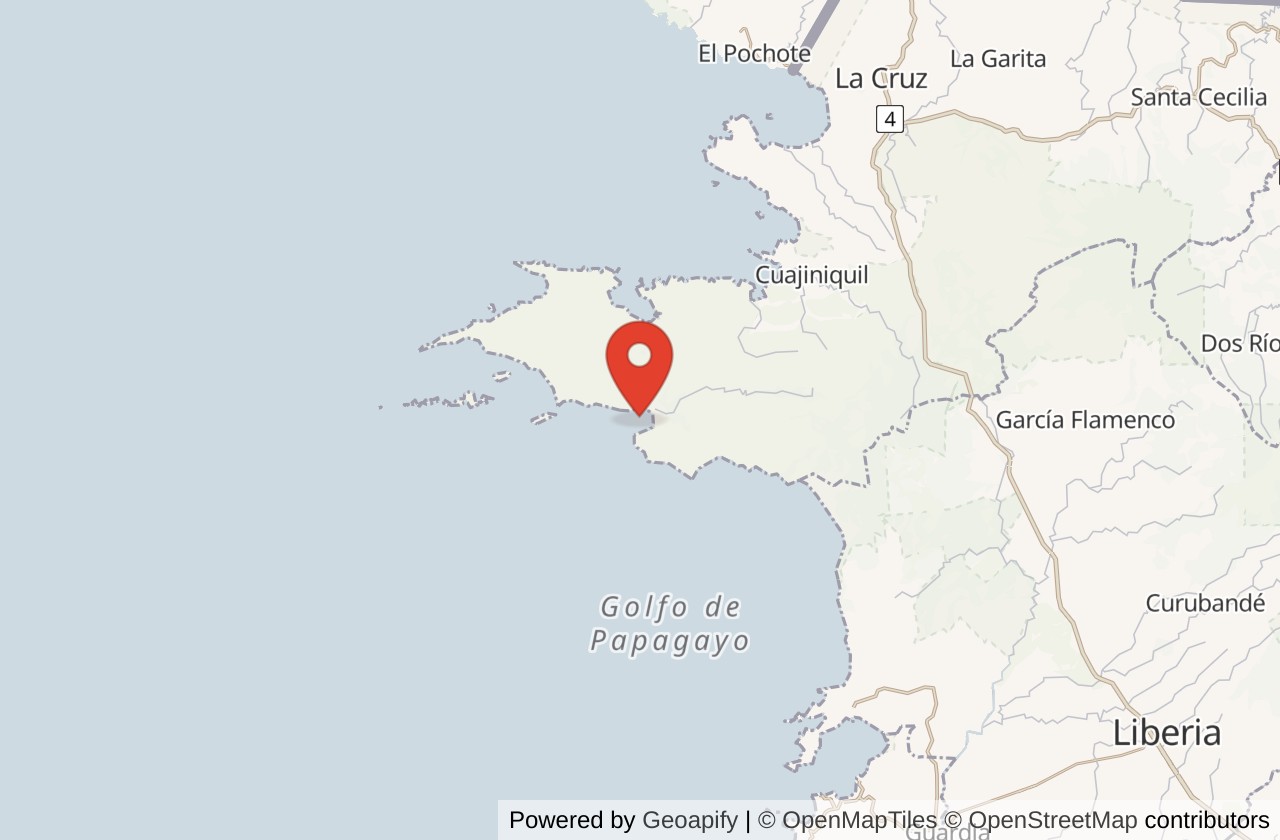
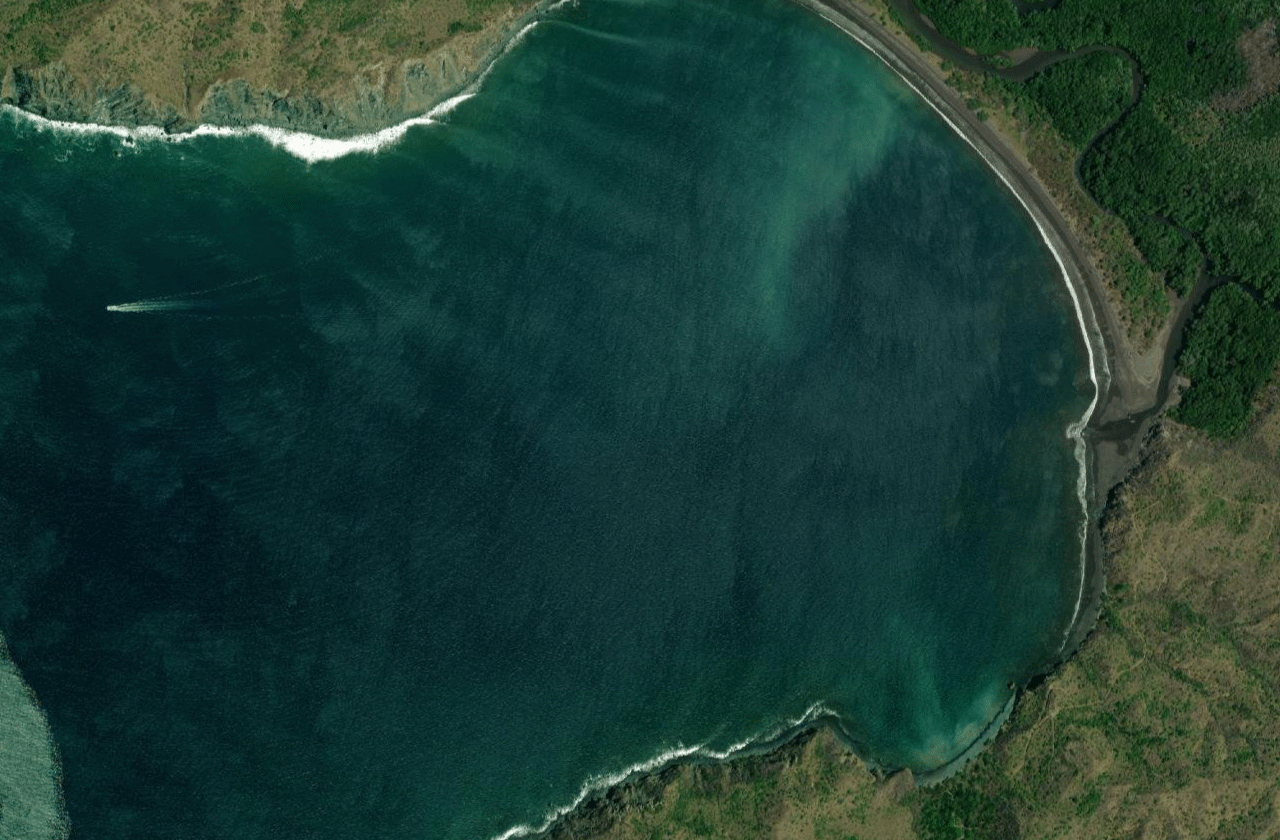
10.8434, -85.7980
What are the lineup and the town like at Ollie's Point (Potrero Grande)?
Localism
moderate
Crowd
Entirely trip-driven: a quiet midweek day might be one or two boats and an open peak; a firing weekend in peak south-swell season can stack five-plus boats and 20–30 surfers on one point. Early starts and midweek are the way to thin it. There are no beginners out here — the crowd skews experienced because operators gate the trip to advanced surfers.
The 'lineup' at Ollie's is defined by boats, not a resident crew — there's no walk-up local pack because the wave sits inside an uninhabited national park. The friction is crowd management: on a good south swell several charter pangas anchor in the bay and funnel everyone onto the same takeoff. It's known as a wave where boat etiquette matters — wait your turn, don't drop in, and read that the guides and regulars expect newcomers not to paddle straight to the peak and hog the set waves. Tip your captain/guide and keep the vibe friendly and it stays mellow.
In the lineup: It's a right-hand point: sit up by the headland on the takeoff and use the rip/channel along the rocks to paddle back out rather than slogging through the lineup. Lower tides are generally better; the wave gets long and fast on size. Watch the rocks on the inside and at the point, mind the strong offshore wind pushing you over the falls on bigger mornings, and remember exit/entry is from the boat, not a beach stroll.
Off the water you're in Playas del Coco or Tamarindo, not at the spot. Coco is a workmanlike Guanacaste beach town — diving, fishing, a lively but slightly rough-edged main strip, easy access to LIR, and more locals-and-expats than backpackers. Tamarindo is the bigger, glossier surf town: a proper scene of surf shops, beach bars, sushi and sunset crowds, busier and pricier but with everything a surfer needs in walking distance. Neither town is the 'Ollie's experience' — the wave is a remote, wild, no-facilities bay you visit by boat and leave the same day.
How do you get to Ollie's Point (Potrero Grande)?
Fly into Daniel Oduber Quirós International Airport, Liberia (LIR) — about 17 miles from the break, 30–40 minutes to Playas del Coco (the usual boat-launch base); ~1h15 to Tamarindo. San José (SJO) is the country's main hub with far more flight options, but it's a 4.5–5 hour drive (or a short domestic hop) to Guanacaste — only worth it if the LIR fare is dramatically worse. For this spot LIR is the obvious choice.
- rental car$40–70/day (plus mandatory CR liability insurance, often another $12–20/day) · 30–40 min to Playas del Coco; ~1h15 to Tamarindo
Easiest way to base yourself and reach the boat dock at dawn. Roads to Coco and Tamarindo are paved and easy. You do NOT drive to the wave — the car just gets you to the launch town. Reserve roof racks ahead if you're bringing boards; most agencies are at or beside LIR.
- private transfer$45–75 per vehicle to Coco; $90–130 to Tamarindo · 30–40 min (Coco); ~1h15 (Tamarindo)
Pre-booked shuttle from LIR — the simplest option with board bags. Plenty of operators (Liberia Airport Shuttle and similar); confirm the vehicle takes boards when you book.
- shuttle$15–25 per person (shared shuttle to Tamarindo); local bus to Coco ~$2–4 · 1–1.5 hours
Shared tourist shuttles run LIR–Tamarindo daily. To Coco, the cheap option is the public bus from Liberia (transfer in Liberia town), but with boards a taxi or transfer is far less hassle.
- taxi$25–40 to Coco; $70–95 to Tamarindo · 30–40 min (Coco); ~1h15 (Tamarindo)
Official orange airport taxis wait at LIR. Agree the fare or confirm the meter first; for longer boards make sure it's a wagon or SUV.
Do you need a car at Ollie's Point (Potrero Grande)?
Do you need a car?
recommended
Walkability
Both base towns are walkable at their cores — in Playas del Coco and Tamarindo you can walk from most lodging to the beach, restaurants, groceries and surf shops. But the spot itself is reached only by boat from a dock, and a car helps for getting to the dock pre-dawn and exploring other Guanacaste breaks on flat days.
A rental car (US$40–70/day plus insurance) is the most flexible base for a Guanacaste surf trip and makes the early boat departure painless, but it isn't essential if you stay walkable in Coco or Tamarindo and book a boat trip that includes hotel pickup — several Tamarindo operators run a van to the Playa Panama/Coco dock as part of the package. Taxis are easy in both towns; there's no formal Uber but local drivers and WhatsApp taxis fill the gap. The boat trip is the 'transport' to the wave — you book a charter, not a bus.
Boards: On the boat trip your boards ride in the panga — operators are used to loaded quivers, but bring a board sock and your own straps if you're particular. For the road legs, request roof racks on a rental or confirm a transfer/taxi is a wagon/SUV. There is no board rental at the break; the camps rent boards (~$20–30/day) to bring along, but a dedicated point wave rewards your own step-up or performance board.
Where can you stay near Ollie's Point (Potrero Grande)?
Surf camps and guided packages
- 8-Day Beginner to Advanced Surf Camp in Playa Avellanasfor intermediate+ · from $700 · 8 days · rated 4.8 by 5View package
Dream Surf House (Dreamsea) — All-inclusive surf camp — stay, boards & coaching bundled
La Botella de Leche — All-inclusive surf camp — stay, boards & coaching bundled
Tamarindo beachfront; the camp's own boat trip runs ~1h drive + 1h boat to Ollie's · The original and most established operator for the Witch's Rock/Ollie's Point boat trip, right on Tamarindo's main break. Beachfront rooms, restaurants and bars, a bakery, and the biggest surf shop in town — the turnkey pick if you want lodging, lessons and the boat mission booked under one roof (the boat day comes bundled with their advanced week packages). (Direct (witchsrocksurfcamp.com), Booking.com, Tripadvisor)
Packages bundle the stay and the surfing; check each listing for what its transfers include.
Hotels and other places to stay
Tamarindo, ~3-min walk to the beach and Witch's Rock Surf Camp · Tidy pool-garden hotel a block off Tamarindo beach with breakfast at Witch's Rock's beachfront restaurant — a more affordable Tamarindo base from which to book the boat trip next door. (Direct (pueblodorado.com), Booking.com)
Tamarindo, short walk to the beach · Social flashpacker hostel with dorms and private rooms, pool and coworking — the budget-to-mid Tamarindo option for travelers who want company before the dawn boat. Book the Ollie's trip through any town operator. (Rebranded from Selina after the chain's 2024 restructuring; confirm the current name when booking.) (Booking.com, Hostelworld)
Playas del Coco, walk to the beach and town; closest base to the Coco/Playa Panama boat docks · Simple, well-located in-town hotel in Playas del Coco — the closest launch town to LIR and to the dock, so you can roll out of bed for a 5:30–6am departure. Practical rather than fancy. (Booking.com, direct)
Playas del Coco, short walk to the beach · Long-running small inn in Coco with clean A/C rooms and a good breakfast, repeatedly well reviewed — a friendly budget base for a Coco-launched boat day. (Tripadvisor, Booking.com)
Above Playas del Coco, ~10 min to town and docks · Adults-only boutique hotel on the hill above Coco with pool, included breakfast and a polished, all-inclusive feel — the splurge base for a Coco trip when the surf is half the agenda. (Direct (villabuenaonda.com), Booking.com)
Where do you eat at Ollie's Point (Potrero Grande)?
- Soda La Teresitasoda · $ budget
Casado with grilled fish or chicken, rice, beans and patacones — Honest local soda in Playas del Coco for the cheap, filling Costa Rican plate — the budget-surfer fuel-up before or after a boat day. Cash-friendly, generous portions.
- Nikkei (formerly Citron)restaurant · $$ high-end
Peruvian-Japanese (Nikkei) small plates and seafood — Coco's upmarket dinner spot in the Pacifico shopping village (recently rebranded from Citron to a Peruvian-Japanese Nikkei concept) — a well-reviewed splurge for the night you're not eating rice and beans. Reservations smart in high season.
- Coconutz Sports Bar & Grillbar · $ mid-range
Burgers, wings and cold beers; sports on the screens — Reliable, sociable bar-grill in central Coco — the easy post-surf burger-and-beer with a crowd, central and open late.
- Eat at Joe's (Witch's Rock Surf Camp)restaurant · $ mid-range
Tico classics, Tex-Mex, sushi and cold beer on the sand — The busiest beachfront kitchen in Tamarindo, attached to the surf camp — wide menu and the natural gathering spot the night before a boat trip. In Tamarindo, not Coco.
- Green Papaya Taco Barstreet food · $ budget
Fish and pork tacos, fresh salsas — Open-air taco bar in Tamarindo — quick, cheap, tasty plates that suit a surfer's budget and appetite. A Tamarindo staple for the casual post-session feed.
Cooking for yourself
- Auto Mercado (Playas del Coco)supermarket
The most complete supermarket in Coco, at the town entrance by the Pacifico village — imported goods, fresh produce, deli and bakery. The place to stock the cooler with water, food and snacks for the boat day, where there is no resupply.
- Luperón Supermarket (Playas del Coco)supermarket
Family-run full-service grocery that's been a Coco landmark for decades — butcher, deli, bakery, produce and dry goods, generally cheaper than Auto Mercado. Fine for boat-trip provisioning.
- Automercado / Super Compro (Tamarindo)supermarket
If you're basing in Tamarindo, the town has full supermarkets for boat-day provisions — load up on water, fruit, sandwiches and electrolytes the night before, since the break has zero facilities.
Where do you rent or fix a board?
- Witch's Rock Surf Shop (Tamarindo)board rental · board sales · wax · leashes · fins · ding repair · lessons · apparel · wetsuits · ~$20–30/day
The biggest, best-stocked surf shop in the region, inside Witch's Rock Surf Camp — boards to rent or buy, wax, fins, leashes, repairs and the camp's own Ollie's/Witch's Rock boat trip. The one-stop shop if you base in Tamarindo. Rent or buy a board to take on the boat; the point rewards a step-up.
- Kelly's Surf Shop (Tamarindo)board rental · lessons · wax · leashes · fins · ~$20–30/day
Established Tamarindo shop and surf operator that also runs the Witch's Rock & Ollie's Point boat trip — rentals, gear and a booking desk for the mission. A solid alternative to Witch's Rock.
- Coco-area surf/dive shops & boat operators (Playas del Coco)board rental · wax · leashes · fins · lessons · ~$20–30/day
Coco is more of a dive-and-fishing town than a surf-retail hub, so the surf 'shops' here are mostly tour operators (e.g. North Pacific Tours, Deep Blue, and similar) that run the Witch's Rock/Ollie's Point boat trips and can sort a rental board and basic gear. Bring your own wax and ding kit to be safe — selection is thinner than Tamarindo.
What do you do when it's flat?
- Witch's Rock (Roca Bruja) surf boat tripwater · Bundled with the Ollie's Point charter (see boat-trip pricing); park fee ~$15–18/person
Almost every Ollie's trip pairs with Witch's Rock, the legendary sand-bottom A-frame beach break a few miles south inside the same park. Often the better call for less-advanced surfers, and the iconic backdrop for the dawn run. Same boat, same day.
- Witch's Rock / Ollie's Point full-day boat charteradventure · $600–750 for a private boat (1–6 surfers, +13% tax); per-person trips ~$95–130; park fee extra
The headline activity itself: a ~5:30–6am departure, ~1h boat each way, and a dawn-to-mid-afternoon session split between the two breaks, with cooler/snacks usually included. Book a day or two ahead through a Tamarindo or Coco operator; advanced surfers only.
- Scuba diving & snorkeling (Catalinas / Bat Islands)water · $80–160 for a two-tank dive; snorkel tours ~$60–90
Coco is one of Costa Rica's best dive bases — the Catalina and Bat Islands deliver rays, sharks and big pelagics. The obvious flat-day or rest-day activity between surf missions.
- Rincón de la Vieja National Parknature · Park entry ~$15; guided tours $60–110
Active volcano with bubbling mud pots, waterfalls, hot springs and ziplines, ~1.5–2 hours inland from Coco/Tamarindo. The classic Guanacaste land adventure for a no-swell day.
- Palo Verde / Tempisque River wildlife boat tournature · ~$50–90 per person incl. transport
Mangrove and river safari for crocodiles, monkeys and waterbirds in the Guanacaste lowlands — a mellow nature day that contrasts the surf charter.
- Sportfishing charter out of Playas del Cocowater · $400–900+ per boat (half/full day)
Coco and the Gulf of Papagayo are a serious sportfishing base (sailfish, marlin, dorado). A natural add-on for non-surfing travel partners or a flat spell.
What should you know before you go?
Cash & ATMs
None at the break — it's inside an uninhabited national park, so carry everything you need before the boat leaves. Get cash in your base town: Playas del Coco and Tamarindo both have multiple bank ATMs (BAC, Banco Nacional, BCR) dispensing colones and often USD. Bring cash for the park fee, tips and any operator that prefers it, and decline the ATM's currency-conversion offer.
Medical
Nothing at the spot, and you're an hour by boat from help — a real consideration for an advanced wave with rocks. The nearest hospitals/clinics are in the base towns and Liberia: CIMA-affiliated and public clinics serve Coco/Tamarindo, and Liberia (Hospital Dr. Enrique Baltodano, plus private clinics) is ~30–45 min from Coco. Carry a basic first-aid/reef-cut kit on the boat and have travel insurance.
Water safety
A remote, boat-access point with real consequences: rocks at the point and on the inside, a long paddle, strong Papagayo offshore winds that can hold you up on the takeoff, and no lifeguards anywhere. The water is warm (boardshorts year-round). Reef cuts, sun and dehydration are the everyday hazards — there's little shade and no fresh water, so bring sun protection, water and food. Crocodiles and bull sharks frequent Guanacaste river mouths and estuaries; the open point is low-risk but stay out of murky estuary water. Surf within your limits because rescue is an hour away by boat.
Costa Rica basics: money, entry, phones, water
Currency
Costa Rican colón (CRC) — ~450–460 CRC per USD (mid-2026)
Entry (US passport)
Up to 180 days — Group One visa-exempt. The 180 days is a maximum, not a guarantee — the immigration officer sets the actual period and it is non-extendable. Onward ticket and proof of funds (~US$100/month of stay) can be requested.
Language
Spanish, English (widely spoken in tourist areas; Limón-province creole on the Caribbean coast). Very good by Latin American standards. In Pacific surf towns (Tamarindo, Nosara, Santa Teresa, Jacó, Pavones) and Caribbean ones (Puerto Viejo) you can get by on English alone; basic Spanish helps at local sodas and rural bus stops.
Plugs
A, B · 120V / 60Hz (same as US/Canada — no adapter needed for North American gear)
Tipping
Restaurants add a 10% service charge ('servicio') by law plus 13% IVA tax, so tipping is not expected — round up or add 5–10% only for standout service. At a soda (the cheap local eatery where you'll eat most casados) nobody expects anything extra. Tip surf guides/instructors ~$5–10 per session and boat captains in cash.
Phone / data
Kolbi (state-owned ICE), Claro, Liberty, eSIM (Airalo, Holafly, Jetpac, etc.). Kolbi has the widest rural footprint and is the safe pick for surf trips. Pacific surf towns are well covered, but expect weak or no signal on the Caribbean side outside Puerto Viejo/Cahuita town centers, around Limón's remoter beaches, and in pockets like the Osa Peninsula and the road to Pavones. Most accommodations have decent Wi-Fi; download offline maps before driving — outages happen in heavy rain.
Tap water
Generally safe to drink in cities and most established tourist/surf towns — among the best tap water in Central America. Be more cautious in remote coastal areas, on the rural Caribbean coast, and after heavy storms or in drought-stressed dry-season Guanacaste; bottled or filtered water is cheap insurance if your stomach is sensitive.
Emergency
911 works nationwide for police, ambulance, and fire (operators in tourist areas often speak English).
Other passports: entry rules differ — check the official source before booking.
Ollie's Point (Potrero Grande) is on Nov 1–3
Our forecast shows a trip-worthy window, up to 6 ft, best day 9/10. Drop your email and we'll send you this one and the next: the dates, the size, and where to stay. Free.
Frequently asked questions about Ollie's Point (Potrero Grande)
How do you get to Ollie's Point in Costa Rica?
Only by boat — Ollie's Point (Potrero Grande) sits inside Santa Rosa National Park with no road access. You take a charter panga, usually departing around 5:30–6am from Playas del Coco / Playa Panama or via a Tamarindo operator, about an hour each way. Trips almost always combine it with nearby Witch's Rock.
How much does a Witch's Rock and Ollie's Point boat trip cost?
A private full-day boat for a small group runs roughly $600–750 (plus 13% tax) through established operators, or about $95–130 per person on a shared trip, plus a Santa Rosa National Park fee of around $15–18 per person. Most trips include round-trip transport, a guide and a cooler with water and snacks.
Is Ollie's Point good for beginners?
No. Ollie's is a long, fast right-hand point break with rocks, a real paddle and a crowd of boats on good days, and operators gate the trip to advanced surfers. Beginners and improvers are better off learning in Tamarindo or surfing Witch's Rock's sand-bottom beach break on the same trip.
When is the best time to surf Ollie's Point?
On south and southwest groundswell, which is most consistent during the green season from about May to October (peaking June–September). Mornings are often offshore and lower tides tend to work best. Aim for a midweek day to avoid the weekend boat crowds.
Where should I stay to surf Ollie's Point?
In one of the launch towns: Playas del Coco (closest to Liberia airport and the boat docks, ~30 min from LIR) or Tamarindo (the bigger surf town, ~1h15 from LIR, with the best-known boat operators). You can't stay at the break — it's an uninhabited national park.
Which airport do you fly into for Ollie's Point?
Liberia (LIR) is the closest international airport — about 30–40 minutes from Playas del Coco and ~1h15 from Tamarindo. San José (SJO) has more flights but is a 4.5–5 hour drive away, so LIR is the practical choice.
Why is it called Ollie's Point?
The break is nicknamed after Colonel Oliver North, whose covert airstrip operated nearby during the 1980s Contra era. Its Spanish name is Potrero Grande, and it shot to fame in the surf film The Endless Summer II.
Do I need my own surfboard for Ollie's Point?
It helps — there's no board rental at the break. You can rent a board (~$20–30/day) from a surf shop in Tamarindo or an operator in Coco to bring on the boat, but the long, fast point rewards your own performance board or step-up. Also bring wax, a ding kit, sun protection, water and food, since there are no facilities at the spot.
Sources for this guide
- costaricawaves.comsecondary source · wave type (right point break), south-swell/low-tide preference, boat-only access from Coco/Naranjo (~1h), no facilities, park location, Endl
- witchsrocksurfcamp.comofficial · boat trip logistics: 5:30am departure, ~1h drive + 1h boat, private-boat pricing ($600 1–4 / $700 5–6 +13% tax), park fee included, cooler/b
- kellyssurfshop.comofficial · alternative Tamarindo operator for the boat trip; Kelly's Surf Shop as surf-shop/operator; departure details and pricing context
- tripadvisor.comsecondary source · Witch's Rock Surf Camp live listing, beachfront location, restaurants/brewery/surf shop, board trip operator
- tripadvisor.comsecondary source · Pato Loco Inn live Playas del Coco listing, A/C rooms, breakfast, reviews
- rome2rio.comsecondary source · LIR to Playas del Coco road distance (~16.6 mi) and drive time (~27–40 min) — basis for corrected airport.distanceMi
- costarican-american-connection.comeditorial · Playas del Coco groceries — Auto Mercado at town entrance, Luperón family-run landmark, store profiles
- sinac.go.crofficial · Santa Rosa National Park (SINAC) official park status, regulated access, no businesses inside park
- northpacifictours.comsecondary source · Playas del Coco–based boat operator; ~7am Coco departure, park fee, board rental ~$20–30, group/charter context
- tripadvisor.comsecondary source · Playas del Coco town character, restaurants/bars, diving-and-fishing base, lodging spread (Villa Buena Onda, Café de Playa)
Guide researched and verified 2026-06-12. Details change; confirm bookings and entry requirements before travel.