When is the best time to surf Rushreef?
Peak Dec–Mar · often good Nov · can still fire Apr, Aug–Oct.
Winter is the engine — roughly November through March, peaking December to March, when North Atlantic groundswells and the cold fronts driving them deliver both swell and the offshore west winds that clean these reefs up. Clean days cluster around fronts rather than filling the calendar, which is exactly why this is a charts-and-alerts wave: when a window opens it's empty, offshore and genuinely good. Hurricane season (August–October) is the wildcard — a well-placed Atlantic storm can light these east-facing reefs with warm-water swell. Early summer is the flat stretch, best spent diving. Water is bath-warm in summer (mid-80s F) and low-to-mid 70s F in winter — a spring suit or boardshorts year-round.
What does a surf trip to Rushreef look like?
A typical trip from our guide. A real alert comes with the forecast for each day and a fare from your airport.
How much does a surf trip to Rushreef cost?
A five-night trip, per person, before food and rentals.
Checked Oct 17. Stays use our guide's nightly bands; transfers use the guide's quoted rates. Real alerts price the exact dates.
Where should you stay at Rushreef?
Nearest base
Cutter's Landing by Living Easy Abaco $
vacation rental · mid-range · Marsh Harbour / Great Abaco Club area, ~3 mi from MHH
Hilltop home next to Abaco Beach Resort with water views and private dockage — a practical, well-reviewed self-catering base for a small crew splitting costs, with a kitchen that makes the Marsh Harbour supermarkets worthwhile. Managed by a responsive local company that can sort airport pickup.
Stays nearbyCheaper
Marsh Harbour-area Airbnb / vacation rentals $
vacation rental · budget · Varies around Marsh Harbour and Central Abaco
Beyond the named managers, Central Abaco has a growing pool of well-rated independent Airbnb apartments and houses (consistently 4.8–4.9 average) as more stock comes back online post-Dorian. Cheapest route for a self-contained surf crew; read recent reviews carefully since rebuilding quality varies property to property.
Stays nearbyEvery place we researched, with its booking link, is under where to stay below.
What is the wave like at Rushreef?
Break type
Reef
Wave direction
Right
Best swell
E (NE–SSE window)
Ideal size
3–10 ft
Best tide
All tides
Low: coral shallow
Consistency
Fairly Consistent
Peak season
Dec–Mar
Nearest airport
MHH · ~4 mi
Drive from airport
10–15 minutes to Marsh Harbour; the windward reef access points are a short drive beyond town
What you won't find is a scene. There is no surf shop, no lineup of locals, no lessons on the beach, no rental quiver waiting. A 'crowd' here is two or three travelers and maybe a curious local. The breaks along this coast — Rushreef, Garbanzo, Sugar Shack, Four Rocks — are surfed by a tiny rotating cast of visiting surfers, Florida and East Coast escapees who watch the charts and fly over when the swell lines up. You come self-contained: your own boards, fins, leash, wax, ding kit, and ideally a rental car or a boat to reach the better banks.
And you come to a place still rebuilding. Marsh Harbour took a direct hit from Hurricane Dorian, a Category 5, in September 2019, and the recovery has been long and uneven. Six years on there's real momentum — hotels and restaurants have reopened, the airport and banks are running, tourism and jobs are back — but you'll still see gutted buildings and lots waiting to be cleared alongside the new construction. Visiting surfers should come with patience, flexibility, and a respect for a community that has worked hard to get back on its feet. The reward is warm water, an empty Atlantic reef, and an Out Island that feels genuinely remote.
Who it suits
Experienced, reef-comfortable surfers on a charts-watching winter strike mission who are self-sufficient with gear and happy to chase fickle swell. Not for beginners, and not for anyone wanting a guaranteed daily wave or a surf-town scene.
Where exactly is Rushreef?
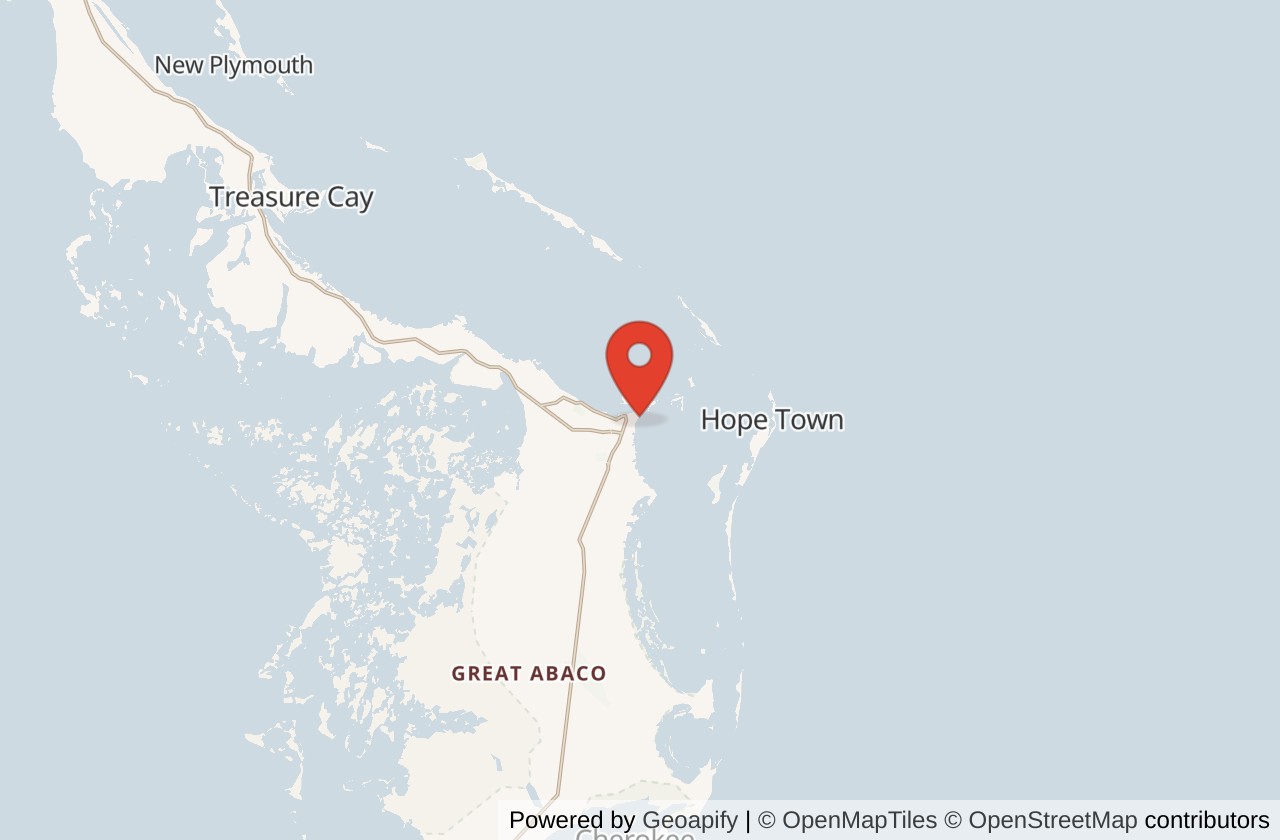
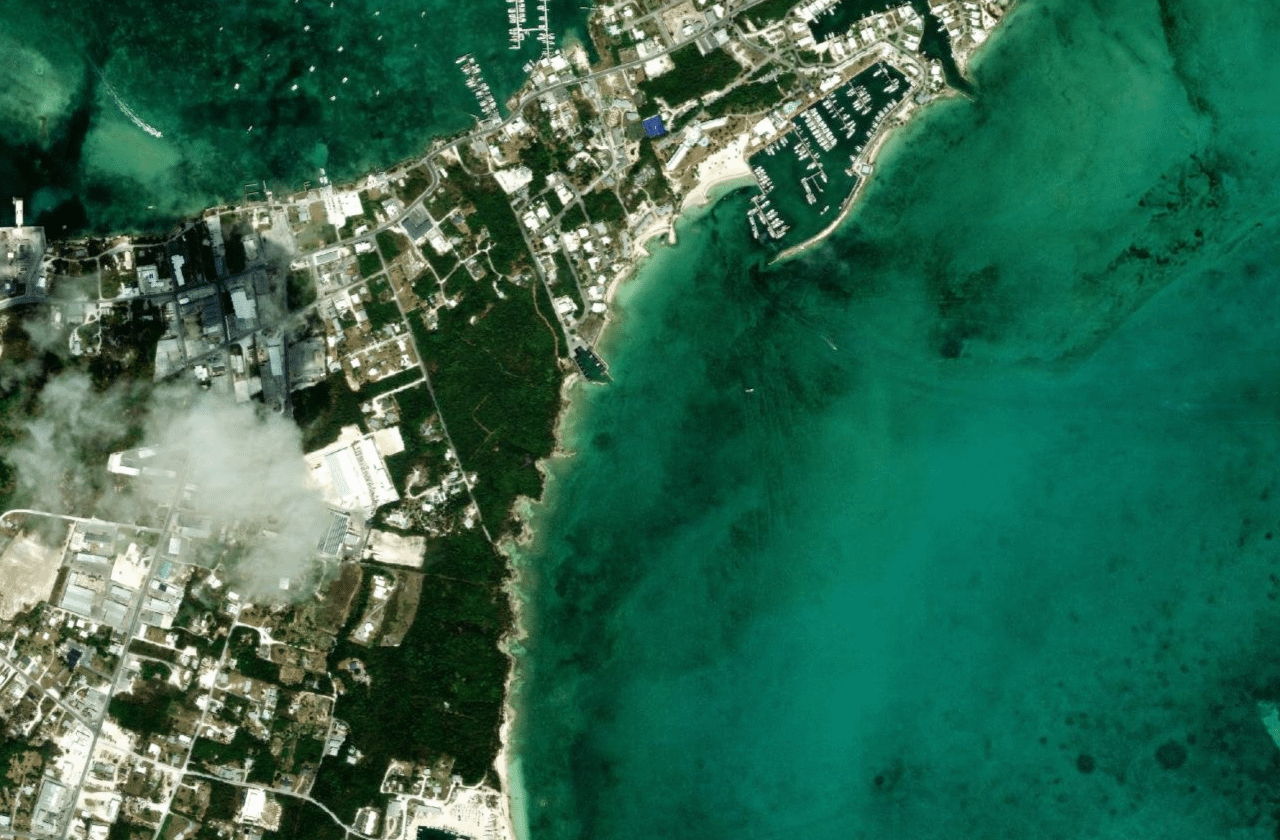
26.5400, -77.0500
What are the lineup and the town like at Rushreef?
Localism
mellow
Crowd
Sparse to nonexistent. A busy day is a handful of visiting surfers; many sessions you'll surf alone or with one or two others. Crowding is never the problem here — finding the swell is.
There's effectively no local surf crew to answer to — these reefs are known for being uncrowded and low-tension, surfed mostly by a thin rotation of visiting surfers. Standard reef respect applies: don't drop in, share the few peaks, and be friendly to the boaters, fishers and residents whose water you're sharing. In a small recovering community, courtesy and low-impact behavior go a long way.
In the lineup: Rushreef breaks as a fast right (with situational lefts) over sharp, shallow coral, working best on a NE swell with W/offshore wind. It needs size — roughly head-high and up — to turn on. Reef booties are smart, watch tide and sets over shallow coral, and know your exit before you paddle out. The better banks along this coast are often easier to reach by boat than by a long paddle, so scout access before committing. Beware urchins and coral; sharks are present but encounters are rare for surfers (more a concern when spearfishing).
Marsh Harbour is Abaco's commercial hub — a working Out Island town of marinas, supermarkets, banks and boatyards rather than a polished resort strip, and one still visibly rebuilding from Hurricane Dorian. Expect new construction next to gutted lots, friendly and resilient locals, and an unhurried pace. Off the water it's a boating-and-fishing culture; the prettier postcard Bahamas lives across the water on the cays. Come with patience and respect for a place that has rebuilt itself, and it's a genuinely warm, low-key base.
How do you get to Rushreef?
Fly into Leonard M. Thompson International Airport (Marsh Harbour) (MHH) — about 4 miles from the break, 10–15 minutes to Marsh Harbour; the windward reef access points are a short drive beyond town. There is no practical alternative for surfing this coast. Treasure Cay (TCB) to the north and the cays (Hope Town/Elbow Cay, Man-O-War, Green Turtle) are reached by ferry from Marsh Harbour, not by a closer airport. Most travelers connect through Nassau (NAS) or fly direct to MHH from Florida (Fort Lauderdale/Miami) on Bahamasair, Western Air, or seasonal US carriers.
- rental car$70–110/day · 10–15 min from MHH to Marsh Harbour
The right call for a surf trip — you need wheels to reach the windward reefs and to chase whichever bank is working. Several local outfits rent cars and SUVs near the airport (A&P Car Rentals, SG Car Rentals, Abaco Car Rentals). Drive on the LEFT. Book ahead in winter; the fleet is small. Request an SUV or wagon if you want boards inside, and bring soft racks and tie-downs.
- taxi$15–25 to Marsh Harbour; ~$125 for an airport-shop-and-wait run · 10–15 min
Plenty of vans wait at MHH and will take board bags. Fine for getting to your lodging, but a taxi-only trip leaves you stuck — you'll want a car or boat to actually reach the breaks. Agree the fare before you load up; Bahamian taxis are unmetered and run fixed/negotiated rates.
- private transfer$20–40 per vehicle to Marsh Harbour · 10–15 min
Most hotels and vacation-rental managers (Abaco Beach Resort, Living Easy Abaco) will arrange an airport pickup that takes boards. Easiest with bags; confirm the vehicle fits your longest board.
- ferry$20–40 per person round-trip to the cays · Albury's Ferry from Marsh Harbour dock: ~20–30 min to Hope Town/Elbow Cay or Man-O-War
Only relevant if you're staying on a cay or boating to outer reefs. Albury's Ferry runs scheduled crossings from the Marsh Harbour ferry dock. Board bags go aboard but it's a passenger ferry — fine for a board or two, awkward for a full quiver.
Do you need a car at Rushreef?
Do you need a car?
essential
Walkability
Marsh Harbour itself is a low, spread-out commercial town you can partly walk, but you cannot walk to surf — the windward reef breaks are out of town and reaching the better banks often means a boat. Treat a vehicle (or a charter) as non-negotiable for surfing here.
Rent a car or SUV from a local outfit ($70–110/day; book ahead, small winter fleets) and drive on the LEFT. Taxis are easy from the airport and around town but aren't a way to chase surf. There is no Uber/Lyft. For the outer reefs and the better setups, surfers either drive to a windward access point and paddle, or charter a small boat — ask your lodging or the marina about a captain for the day. Albury's Ferry connects Marsh Harbour to the cays (Hope Town, Man-O-War, Green Turtle) on a set schedule.
Boards: Bring soft racks and tie-down straps — most local rentals are sedans and small SUVs without roof rails. Airport taxi vans take board bags. If you're boating to a reef, pad your boards well; these are open skiffs over chop, and the reefs themselves are sharp coral, so a good ding kit is part of the standard kit list.
Where can you stay near Rushreef?
In Marsh Harbour, ~3 mi from MHH; short drive/boat to the windward reefs · The main full-service property in Marsh Harbour: beachfront rooms, two pools, restaurants, bars and a large marina — which is the real surf advantage, since it's the natural base for chartering a skiff out to the reefs. Reopened and operating post-Dorian. The comfortable, no-stress option if budget allows. (Direct (abacobeachresort.com), Hotels.com, Expedia)
Marsh Harbour / Great Abaco Club area, ~3 mi from MHH · Hilltop home next to Abaco Beach Resort with water views and private dockage — a practical, well-reviewed self-catering base for a small crew splitting costs, with a kitchen that makes the Marsh Harbour supermarkets worthwhile. Managed by a responsive local company that can sort airport pickup. (Airbnb, Hotels.com, Expedia (Living Easy Abaco))
Marsh Harbour, ~3 mi from MHH · Another Living Easy Abaco managed rental in the Marsh Harbour area, well-reviewed and convenient to town, the airport and the marina. Good for travelers who want a kitchen and a quiet base over a resort. (Airbnb, Hotels.com (Living Easy Abaco))
Downtown Marsh Harbour, ~3 mi from MHH · A quiet downtown rental on a private no-through road, central to groceries, banks and restaurants. Solid value self-catering pick, bookable through the same local manager who can arrange transfers. (Airbnb (Living Easy Abaco))
Varies around Marsh Harbour and Central Abaco · Beyond the named managers, Central Abaco has a growing pool of well-rated independent Airbnb apartments and houses (consistently 4.8–4.9 average) as more stock comes back online post-Dorian. Cheapest route for a self-contained surf crew; read recent reviews carefully since rebuilding quality varies property to property. (Airbnb)
On Elbow Cay across the Sea of Abaco — ferry from Marsh Harbour, then closer to the cay's own Atlantic reefs · If you'd rather base on a cay with its own windward surf, Elbow Cay (Hope Town) has small inns like the long-running Abaco Inn perched between the harbour and the Atlantic side. Charming and walkable/golf-cart territory, but you're committed to that cay's reefs and the ferry schedule rather than the mainland breaks. (Direct (abacoinn.com), Booking.com)
Where do you eat at Rushreef?
- Wally'srestaurant · $ mid-range
Fresh local seafood daily special; conch fritters — A longtime Bay Street favorite in Marsh Harbour known for fresh seafood and a relaxed island-fine-dining feel, indoor or covered patio. Call ahead — Abaco hours shift constantly. Among the spots that came back after Dorian.
- Snappas Bar & Grillbar · $ mid-range
Cracked conch, grilled fish, a cold Kalik on the water — Waterfront bar-and-grill on Bay Street, the social hub for the boating and marina crowd. Typically open Thursday–Monday late morning to evening; the obvious spot for a post-session beer and to ask around about boat charters.
- Jamie'srestaurant · $ budget
Cracked conch or lobster with Bahamian sides; fresh dolphin (mahi) — Diner-style, affordable and well-loved by locals for honest Bahamian plates, with an ice-cream parlor attached. The everyday-value pick when you're not splashing out — a relief in a destination where imported food runs expensive.
- Pete's Pub, Little Harbourbar · $ mid-range
Grilled fish/lobster and the Blaster rum punch — Iconic barefoot beach bar ~45 min south of Marsh Harbour at the artists' colony of Little Harbour, beside the Johnston bronze foundry and gallery. Worth the drive on a flat day for the setting and the punch; check days/hours seasonally.
- Da Best Take Away / local take-out spotsstreet food · $ budget
Cracked conch, fried snapper, peas 'n' rice — Marsh Harbour has a rotating cast of small Bahamian take-away windows and roadside stands serving cheap, filling local plates — the cheapest way to eat well and the most reliable when sit-down restaurants are between seasons or closed. Ask your rental host who's currently open and good.
- Maxwell's deli / hot food countercafe · $ budget
Prepared meals, sandwiches, baked goods — Inside Marsh Harbour's main supermarket — a dependable cheap stop for prepared food, coffee and provisions when restaurant hours are unpredictable, and the practical breakfast option before a dawn check.
Cooking for yourself
- Maxwell's Supermarketsupermarket
Marsh Harbour's largest and best-stocked supermarket — a modern, full-range store with fresh produce, meat, dairy, dry goods and imported items. Self-catering is very viable here and often the smart move given high restaurant prices; stock up on arrival. Prices reflect that almost everything is imported.
- Solomon's / Cost Right (wholesale-style)supermarket
Bulk and warehouse-style stocking in Marsh Harbour, useful for a crew buying water, snacks and case goods for a multi-day stay or a boat day. Hours and stock vary — pair it with Maxwell's for fresh items.
- Local fruit & fish vendors / roadside standsfish market
Fresh-caught fish and conch and small produce stands turn up around Marsh Harbour and the settlements — the best source for fresh seafood to cook yourself. Cash, and availability depends on the day's catch. Ask locally where the boats are landing.
Where do you rent or fix a board?
- No dedicated surf shop on Abaco — come fully self-suppliedding repair
There is no surf shop on Great Abaco: no boards, fins, leashes, wax or wetsuits for sale, and no rentals or lessons. Bring everything — your boards, spare fins, leashes, a full ding/repair kit, and especially wax, none of which you can buy here. Dive and marine shops in Marsh Harbour stock some resin/epoxy and basic marine supplies that work in a pinch for reef-cut repairs, but plan as if nothing surf-specific exists. The nearest real surf retail is back in Florida.
What do you do when it's flat?
- Scuba diving & snorkeling the Sea of Abaco reefswater · $ ($90–160 two-tank dive band)
Abaco's barrier reef, wrecks and Fowl Cays are excellent and a far surer bet than the surf. Marsh Harbour and the cays have dive operators running daily trips; flat surf days are dive days here. Book through your lodging or a Marsh Harbour dive shop.
- Hope Town & Elbow Reef Lighthouseday trip · ferry $20–40 round-trip; lighthouse by donation
Albury's Ferry from Marsh Harbour to Elbow Cay (~20–30 min) lands you at candy-striped Hope Town, home to one of the world's last kerosene-burning manned lighthouses. Climb it for the view, then bike or golf-cart the car-free village and its Atlantic-side beaches. The classic Abaco day trip.
- Bonefishing & deep-sea fishingadventure · $$ (half-day guided flats ~$400–600; offshore higher)
Abaco is a world-class flats fishery for bonefish, and the deep water off the windward side holds marlin, tuna and mahi. Guides and charters work out of Marsh Harbour and the marinas — a strong rainy-or-flat-day option and an easy way to also scout boat access to the reefs.
- Little Harbour & the Johnston foundry/galleryculture · free (gallery); food/drink extra
Drive ~45 min south to the remote artists' settlement founded by sculptor Randolph Johnston in 1951 — a working bronze foundry and art gallery on a quiet cove, with Pete's Pub on the sand. Low-key culture and a great flat-day mission.
- Man-O-War Cay day tripday trip · ferry $20–40 round-trip
A short Albury's Ferry ride to a tidy boatbuilding cay with traditional Abaco craftsmanship, sail-loft canvas work and quiet beaches — dry (largely alcohol-free) and very mellow. Good half-day when there's no swell.
- Windward beaches & beachcombingnature · free
The Atlantic side of Great Abaco and the cays has long, empty windward beaches — ideal for walking, swimming on calm days and reading the reef setups while you wait for swell. Bring water and sun protection; these stretches are remote and unserviced.
What should you know before you go?
Cash & ATMs
Marsh Harbour has the island's banking: Royal Bank of Canada (RBC) reopened at the former Scotiabank site with ATM service, and Commonwealth Bank is on Don Mackay Boulevard; Cash N Go offers currency exchange/cash advances on weekdays. Withdraw cash in town — the reefs, take-aways, stands and many small vendors are cash-first. US dollars and Bahamian dollars are used interchangeably at par. There are no ATMs out at the breaks.
Medical
Marsh Harbour has the main medical care on Great Abaco: Marsh Harbour Community Clinic (the government clinic, ~9am–5pm weekdays) plus private options like Marsh Harbour Medical Centre and Auskell Medical Centre. For anything serious you're looking at air evacuation to Nassau (NAS) or to Florida — a real consideration on a remote reef coast, so carry good travel/medical insurance, a stocked reef-cut and first-aid kit, and don't surf hurt or alone.
Water safety
This is sharp, shallow coral reef — the primary hazard is the bottom itself, so reef booties, a helmet on the shallowest days, and a known exit line all make sense. Reef cuts get infected fast in warm water; clean and treat them immediately. Sea urchins are common on the coral. Sharks inhabit these waters but surfer encounters are rare (the bigger risk is around spearfishing/fishing activity). Watch for currents and rips around reef passes, especially as swell and tide build, and respect that there are NO lifeguards anywhere on these breaks and help is far away. Water quality on the open Atlantic windward side is excellent.
Bahamas basics: money, entry, phones, water
Currency
Bahamian dollar (BSD) — 1 BSD = 1 USD (pegged 1:1, fixed — not a fluctuating market rate)
Entry (US passport)
Up to 8 months — Per the Bahamas Department of Immigration, US citizens enter visa-free as a 'bona fide visitor for a stay not exceeding eight (8) months.' Note the US State Department page frames the visa-free window as 90 days — the immigration department's 8-month figure is the authoritative entry rule, but the period actually granted is at the officer's discretion. No gainful employment permitted.
Language
English. English is the official and everyday language — there's no language barrier anywhere. A Bahamian creole/dialect colors casual speech but everyone speaks standard English with visitors.
Plugs
A, B · 120V / 60Hz (same as US/Canada — North American chargers and gear work with no adapter)
Tipping
Tipping is expected and American-style. Restaurants commonly add a 15% gratuity automatically — check the bill before adding more; if it's not included, 15–20% is standard. Tip housekeeping a few dollars a day, taxi drivers ~15%, and bag/boat handlers a couple of dollars per bag. Tip surf/boat guides and instructors in cash (~$10–20 per session/day for good service).
Phone / data
BTC (Bahamas Telecommunications Company), Aliv, eSIM (Airalo, Saily, Nomad, Ubigi, etc.). Coverage is strong in Nassau (New Providence) and Freeport (Grand Bahama). On the Out Islands — Eleuthera (Surfer's Beach), the Abacos, Andros — signal is good in settlements but can drop to weak or nothing at remote beaches, bush roads, and on the water. BTC generally has the broadest out-island footprint. Most hotels and guesthouses have Wi-Fi (sometimes slow/satellite); download offline maps and surf forecasts before heading to a remote break.
Tap water
Tap water in Nassau (New Providence) and Freeport (Grand Bahama) comes from modern desalination/treatment systems and generally meets WHO drinking-water standards — fine to drink for most. On the Out Islands water quality varies widely (much is from private wells or cisterns and can be brackish), so stick to bottled or filtered water at remote/rural spots and after storms. Most visitors drink bottled water islands-wide as easy insurance.
Emergency
Dial 911 for police, ambulance, and fire (919 also reaches police in some areas). Response times on remote Out Islands can be slow — know your nearest clinic. Serious medical cases are often evacuated to Nassau or Florida, so travel insurance with medevac coverage is strongly recommended.
Other passports: entry rules differ — check the official source before booking.
Alert me when Rushreef is on
Drop your email and you'll get one message when our forecast shows a trip-worthy window here: the dates, the size, and a place to stay. Free.
Frequently asked questions about Rushreef
Can you surf in the Bahamas at Abaco?
Yes — Great Abaco has a cluster of east-facing Atlantic coral reef breaks (Rushreef, Garbanzo, Sugar Shack, Four Rocks) near Marsh Harbour. They're real, quality waves but fickle, working mainly in winter on North Atlantic groundswell, and they're surfed by only a handful of visiting surfers.
When is the best time to surf Rushreef?
Winter, roughly November through March (peaking December–March), when North Atlantic lows send groundswell south and the cold fronts behind them bring offshore west winds. Even then, clean surfable days run only about a quarter of the time, so come with a swell window to chase. Summer is mostly flat.
How do you get to Rushreef from Marsh Harbour airport?
Fly into Marsh Harbour (MHH), about 4 miles and 10–15 minutes from town. Rent a car or SUV (book ahead — small fleets) and drive on the left to the windward reef access points beyond town; the better banks are often easiest reached by chartering a small boat from the marina.
Is there a surf shop or board rental in Abaco?
No. There's no surf shop, no rentals and no lessons anywhere on Great Abaco. Bring all your own gear — boards, fins, leashes, ding-repair kit and wax — since none of it is sold locally. The nearest surf retail is in Florida.
Is Rushreef good for beginners?
No. Rushreef is a fast, powerful right over sharp shallow coral that needs size to break, with no lifeguards and remote access. It's strictly for experienced, reef-comfortable surfers. Beginners should look elsewhere entirely.
Has Marsh Harbour recovered from Hurricane Dorian?
Largely yes, but unevenly. Dorian, a Category 5, hit in September 2019; six years on the airport, banks, hotels, restaurants and tourism are back and rebuilding has real momentum, though you'll still see gutted buildings and cleared lots. Come with patience and respect for a community that's worked hard to recover.
Are there sharks at Abaco's surf breaks?
Sharks live in Bahamian waters, but encounters while surfing these reefs are rare; they're more of a concern around spearfishing and fishing. The everyday hazards at Rushreef are the sharp shallow coral, sea urchins and currents over the reef.
Do I need a car to surf Abaco?
Effectively yes. You can't walk to the windward reefs from town, taxis won't chase swell for you, and there's no rideshare. Rent a car or SUV (about $70–110/day) and ideally line up a boat charter to reach the better banks.
Sources for this guide
- surf-forecast.comsecondary source · Rushreef coordinates (26.54N/76.96W), nearest airport MHH ~8mi, reef break / right-hander, winter season, NE swell + W offshore wind, ~25% c
- wannasurf.comsecondary source · Wave character (fast/powerful right and lefts, sharp coral, needs 5-6ft+, long rides), low crowd/localism, hazards; noted coordinate conflic
- thesurfatlas.comeditorial · Bahamas/Abaco surf overview — winter North Atlantic groundswell, cold-front offshores, self-supplied strike-mission nature, October–April wi
- tribune242.comeditorial · Post-Hurricane-Dorian (Sept 2019, Cat 5) recovery status of Marsh Harbour/Abaco as of 2025 — rebuilding momentum but ongoing demolition/repa
- tripadvisor.comsecondary source · Abaco Beach Resort & Boat Harbour Marina live listing, marina/pools/restaurants, ~3mi from MHH, reopened post-Dorian
- airbnb.comofficial · Cutter's Landing by Living Easy Abaco live Airbnb listing (hilltop home, dockage, Great Abaco Club)
- livingeasyabaco.comofficial · Living Easy Abaco managed rentals (Bey Blue, Getaway Hill, Cutter's Landing), airport-pickup capability
- abacopalms.comsecondary source · Marsh Harbour restaurants — Wally's, Snappas, Jamie's existence and character; Bay Street locations; call-ahead-hours caveat
- tripadvisor.comsecondary source · Maxwell's Supermarket as the main Marsh Harbour grocery; self-catering viability; taxi-to-grocery norms
- abacocarrentals.comofficial · Marsh Harbour car/SUV rental availability and norms; drive-on-left; small local fleets
- abacosun.comsecondary source · Banks/ATMs in Marsh Harbour — RBC (former Scotiabank site), Commonwealth Bank, Cash N Go currency exchange
- bahamaslocal.comsecondary source · Marsh Harbour Community Clinic and area medical options, weekday hours
- myoutislands.comeditorial · Little Harbour / Pete's Pub / Johnston foundry activity (~45 min south of Marsh Harbour)
- bahamas.comofficial · Hope Town / Elbow Reef (kerosene) Lighthouse day-trip context and ferry access via Marsh Harbour
Guide researched and verified 2026-06-12. Details change; confirm bookings and entry requirements before travel.