When is the best time to surf Honolii Beach Park?
Peak Nov–Mar · often good Apr, Oct · can still fire May–Sep.
Honolii works year-round, which is rare for this coast. Winter (roughly November through March) is the standout, when North Pacific groundswell and NE energy deliver the biggest, longest, most powerful days on the point for experienced surfers. April and October bridge the seasons with regular swell, and through summer the trades and south pulses keep a smaller, softer wave breaking most days — the friendliest window for intermediates, and the left at its most forgiving. Water is warm all year (boardshorts or at most a spring suit). The real variable isn't swell, it's rain: after big storms the stream floods and the bay browns out — stay dry for 48–72 hours regardless of how the waves look.
What does a surf trip to Honolii Beach Park look like?
A typical trip from our guide. A real alert comes with the forecast for each day and a fare from your airport.
A real alert we sent · Aug 31
We matched a surfer flying from Los Angeles (LAX) to this window: Sep 5–7, 3 good days with faces up to 10 ft, peaking 9/10. 4 nights, flights from $639 round trip.
This is a prior real trip from our match log, not a forecast. Windows and fares change; your alert carries the current ones.
How much does a surf trip to Honolii Beach Park cost?
A five-night trip, per person, before food and rentals.
Flight ranges are typical round-trip fares for September from Google Flights price history, checked Sep 3. Stays use our guide's nightly bands; transfers use the guide's quoted rates. Real alerts price the exact dates.
Where should you stay at Honolii Beach Park?
Grand Naniloa Hotel Hilo - a DoubleTree by Hilton $
hotel · On Hilo Bay, ~3 mi / 10 min south of Honolii
Why this one: The most full-service option in town: bayfront rooms, pool, restaurant and a 9-hole golf course, walkable to downtown. A reliable, predictable base with an easy morning drive north to the break.
Also: Hilo Hawaiian Hotel, Trademark Collection by Wyndham (Castle Hilo Hawaiian), 71 Banyan Drive on Hilo Bay, ~3 mi / 10 min from Honolii · Also: Hilo Bay Oceanfront Bed & Breakfast, Near downtown / Hilo Bay, ~3 mi from Honolii
Points play: Grand Naniloa Hotel (DoubleTree) (Hilton), about 50–55k points a night, ~5–7 min from the break.
Browse stays near the breakThe full list, with every pick and its booking link, is under where to stay below.
What is the wave like at Honolii Beach Park?
Break type
Reef
Wave direction
Both
Best swell
N (N–SE window)
Ideal size
3–8 ft
Best tide
Low to mid
Low: hollowest
Consistency
Consistent
Peak season
Nov–Feb
Nearest airport
ITO · ~6 mi
Drive from airport
12–18 min
Know the setting you're paddling into: this is a rainforest coast — Hilo is one of the wettest cities in the United States — so you trade postcard beaches for moody grey skies, warm rain, lush jungle and frequent brown water. The beach is rock, cobble, broken coral and driftwood, not sand; entry and exit are over slick boulders; and after heavy rain the stream runs muddy and the bay turns brown, which is both a leptospirosis and a flash-flood concern, not just an aesthetic one. There are no resorts here and no surf town built around the wave — just a county park with a lifeguard stand, a paved path down concrete steps, and a bluff lined with locals watching the surf.
You base yourself in Hilo town, two to three miles south, and treat Honolii as the daily paddle-out. Hilo rewards that: a real working Hawaiian town with the best local food on the island, downtown poke straight off the boats, waterfalls and botanical gardens minutes away, and Volcanoes National Park up the road. Come self-sufficient, read the lineup before you paddle, and respect that this is a tight community spot — and Honolii gives you warm water, year-round waves and a slice of the Big Island almost no visitor sees.
Who it suits
Intermediate-and-up surfers comfortable with rocky river-mouth entries, reef bottom and a crowded local lineup; travelers who want real Hawaii and great food over resort polish and want a daily wave near a working town.
Where exactly is Honolii Beach Park?
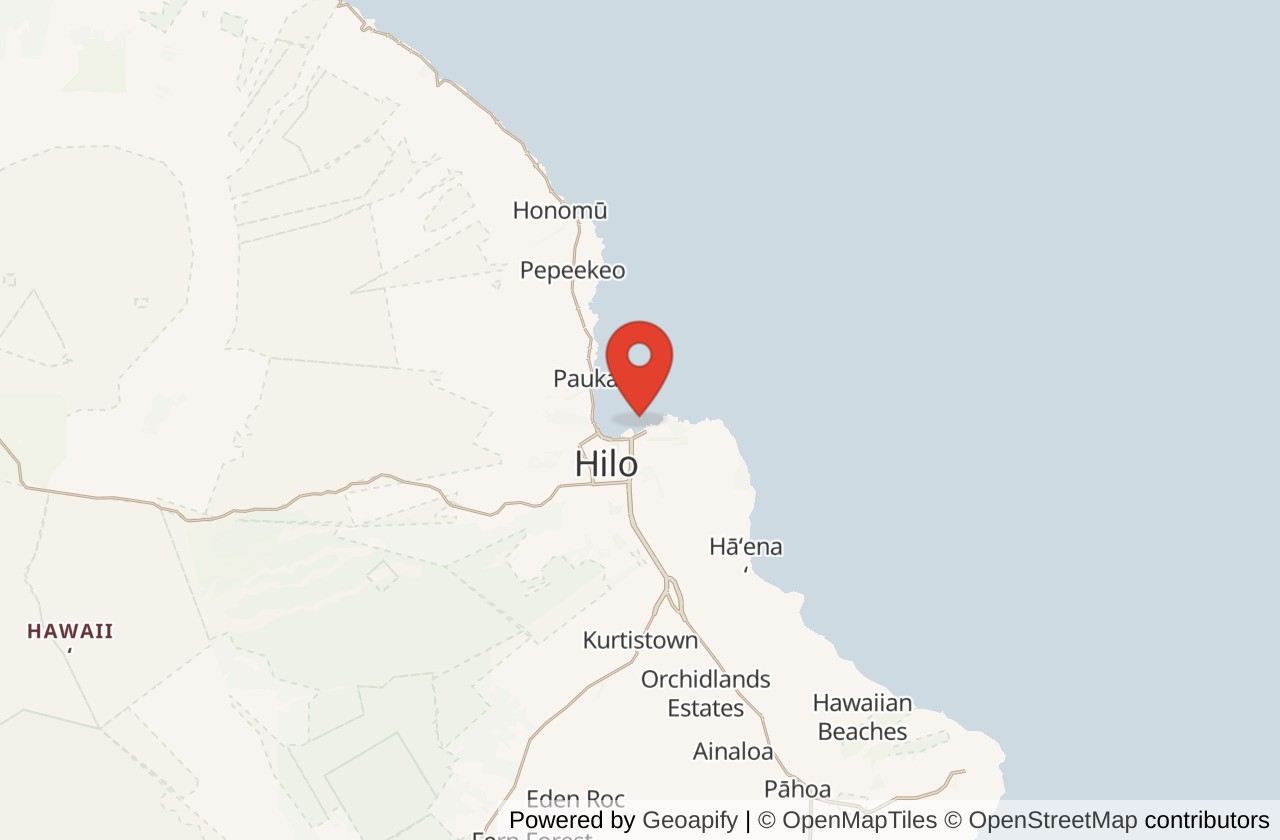
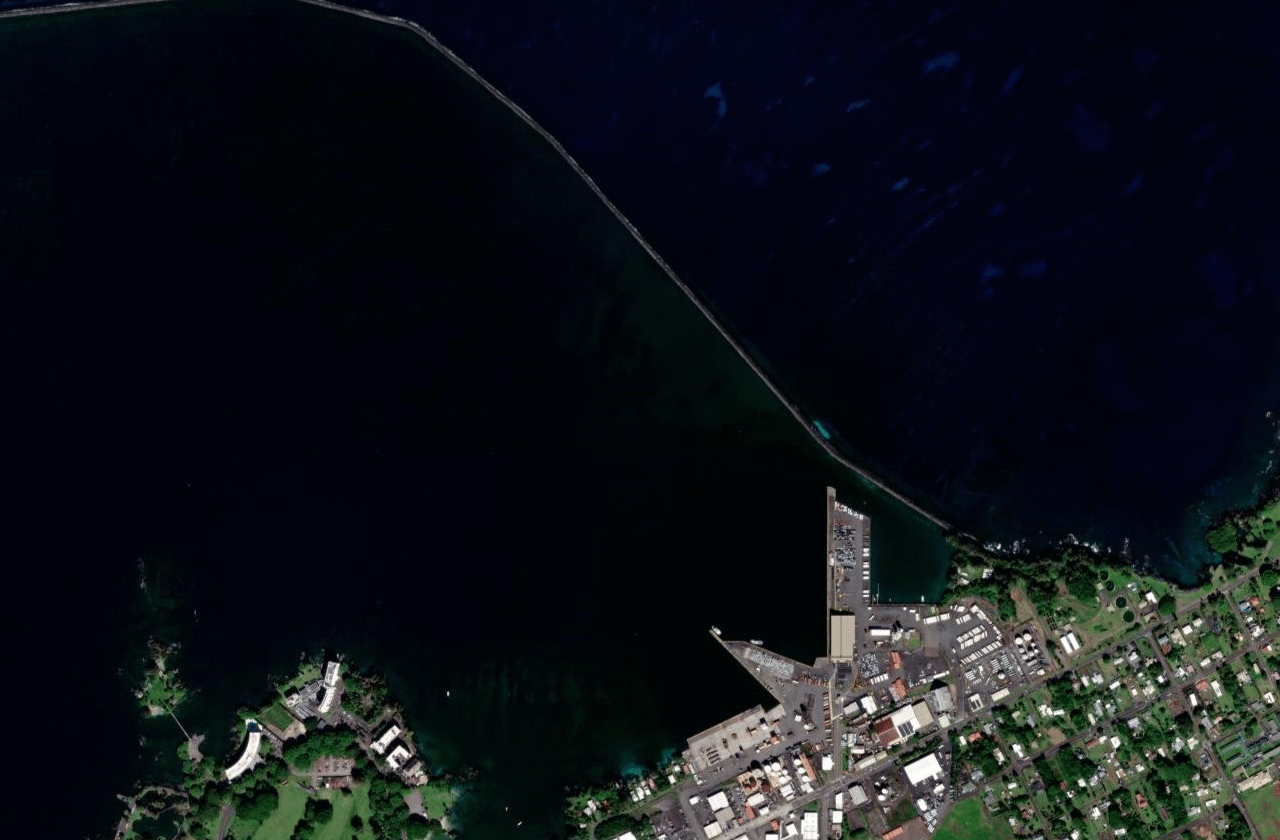
19.7557, -155.0895
What are the lineup and the town like at Honolii Beach Park?
Localism
moderate
Crowd
It's usually crowded — Honolii is the most surfed wave on the coast and draws the whole Hilo crew, plus students from UH-Hilo and a steady trickle of bodyboarders. There's almost always someone out, even at dawn on weekdays or on Hilo's frequent grey, rainy afternoons. Weekends and good swells are busiest; early weekday mornings thin it out the most.
Honolii is widely known as Hilo's tight-knit home break, and the lineup reflects it — it's a small community spot where the regulars surf it daily and the east side has few alternatives, so respect is the price of entry. The spot is known for rewarding visitors who keep their heads down: don't paddle straight to the peak on the point, don't drop in, wait your turn, hang back until you've read the rotation, and a friendly, low-key attitude in and out of the water goes a long way. Treat it as someone's living room, because it is.
In the lineup: The marquee wave is the left off the point on the north side of the rivermouth; shorter rights and beachbreak peaks run down the cove, and it works through the tides but is hollowest and best on a lower tide with a clean NE groundswell. Enter and exit over slick rock and cobble — booties help and timing your entry between sets off the rocks matters. Stay clear of the actual rivermouth, where the stream current can suddenly surge. Watch for rocks throughout and give the regulars on the point room.
Hilo is a real, unpolished Hawaiian town, not a resort strip: a historic downtown of low storefronts, mom-and-pop counters, fish markets and the best local food on the island, set against waterfalls, banyan trees and near-constant soft rain. It's the wettest, greenest, most local-feeling side of the Big Island — slow, friendly, working-class and proud of it. Off the water you'll eat extraordinarily well, chase waterfalls, and feel like you're somewhere people actually live rather than a vacation set.
How do you get to Honolii Beach Park?
Fly into Hilo International Airport (Hilo, Big Island) (ITO) — about 6 miles from the break, 12–18 min. Kona International (KOA) on the dry west side has more mainland nonstops and rental options but is roughly 1.5–2 hours away across the island — only sensible if the Honolulu connection into ITO is bad or much pricier. Most travelers connect through Honolulu (HNL) on a short interisland hop into ITO.
- rental car$45–90/day · 12–18 min self-drive to Hilo / Honolii
The only practical way to surf here daily. All the major agencies (and a couple of local ones) sit at ITO. Grab a small SUV or wagon if you want roof racks for boards; sedans are fine for a single shortboard with fins out. Honolii has no dedicated parking lot — it's roadside on Kahoa St, so a smaller car is easier.
- taxi$20–35 to downtown Hilo / Honolii · 15–20 min
Taxis queue at ITO arrivals. Fine for getting to your lodging, but you'll want your own wheels for the daily surf run — Honolii is not walkable from town. Confirm the driver will take a board bag before loading.
- rideshare$18–35 to downtown / Honolii · 15–20 min
Uber and Lyft operate in Hilo but coverage is thinner than Oahu — waits can be long, especially early morning for a dawn patrol. Not reliable as your only transport to a sunrise session.
- shuttle$15–30 per person (hotel/booked shuttles) · 20–30 min
Some Hilo hotels and B&Bs arrange airport pickups; the public Hele-On bus also serves the Hilo area cheaply but is slow, infrequent and not board-friendly. Treat shuttles as airport-to-lodging only, not surf transport.
Do you need a car at Honolii Beach Park?
Do you need a car?
essential
Walkability
Honolii itself is just a roadside county park — you park on Kahoa St and walk a paved path down concrete steps to the beach; there's nothing to walk to from the break except the bluff lookout. Downtown Hilo (2–3 mi south) is walkable on its own for food, coffee and shops, but you cannot walk between town and the wave.
Rent a car at ITO — full stop. Hilo is spread out, the surf is a short drive north of town, and the best food, groceries and waterfalls are all separate stops. Rentals run roughly $45–90/day depending on season and class; book ahead because Hilo's fleet is smaller than Kona's. Uber/Lyft exist but are sparse and slow for dawn patrol; there's no scooter or golf-cart rental culture here, and the Hele-On county bus is cheap but infrequent and not built for boards.
Boards: Roadside parking at Honolii means you're carrying boards down concrete steps and over cobble — a board bag and booties help. Get a rental with roof rails or bring soft racks if you've got more than one board or anything over 7'0"; most Hilo sedans won't fit a longboard inside. Lock the car and don't leave valuables visible at the trailhead — it's a busy public lot.
Where can you stay near Honolii Beach Park?
On Hilo Bay, ~3 mi / 10 min south of Honolii · The most full-service option in town: bayfront rooms, pool, restaurant and a 9-hole golf course, walkable to downtown. A reliable, predictable base with an easy morning drive north to the break. (Hilton.com, Booking.com)
- Hilo Hawaiian Hotel, Trademark Collection by Wyndham (Castle Hilo Hawaiian)hotel · $ mid-rangeCheck rates
71 Banyan Drive on Hilo Bay, ~3 mi / 10 min from Honolii · Classic mid-century bayfront hotel with the best Hilo Bay and Mauna Kea views in town and free parking — handy for loading boards. Laid-back and good value for a non-resort town. (Booking.com, Wyndham.com, direct)
Near downtown / Hilo Bay, ~3 mi from Honolii · Restored historic home on the bay with a handful of rooms and a real breakfast — quieter and more personal than the big hotels, close to downtown's food scene. (Direct, Booking.com)
Up the hill above Hilo, ~6 mi / 15–20 min from Honolii · Jungle inn beside a 120-foot private waterfall with waterfall rappelling and cooking classes — a memorable flat-day or no-surf base. Trade-off is the uphill drive and rainforest weather, so plan on driving down for surf and town. (Direct (kulaniapia.com), Booking.com)
Wainaku / Alae bluff above the break — walking-to-short-drive distance · A cluster of private homes sits on the bluff directly above Honolii, several listed on Airbnb/Vrbo with ocean views 'within earshot of the surf.' The closest you can sleep to the wave; book early, confirm exact location and parking, and verify the current listing before paying. (Airbnb, Vrbo)
Banyan Drive, ~3 mi / 10 min from Honolii · Renovated wellness-leaning bayfront hotel with a pool and restaurant, on the Banyan Drive hotel row. A comfortable mid-range pick with easy parking and an easy drive to the break. (Booking.com, direct)
Where do you eat at Honolii Beach Park?
- Suisan Fish Marketstreet food · $ budget
Ahi poke bowl off a working fish market counter — A real working fish market on Hilo Bay where the catch comes straight off the boats — grab a poke bowl and walk two minutes to Liliuokalani Gardens to eat with a bay view. The essential cheap Hilo lunch; cash-friendly and fast, perfect post-surf.
- Cafe 100restaurant · $ budget
Loco moco — Hilo is its birthplace, and Cafe 100 has served it since the 1940s — A Hilo institution and the home of the loco moco, with 30-plus varieties from classic beef patty to Spam and Portuguese sausage. Drive-up local plate-lunch counter, cheap and beloved — order at the window.
- Pineapplesrestaurant · $ mid-range
Locally sourced salads, fish and signature cocktails — Open-air downtown spot known for farm-to-table plates and a good bar — the easy sit-down dinner after a session, with live music some nights.
- Moon and Turtlerestaurant · $$ high-end
Seared scallops, fresh-catch small plates — Hilo's standout upscale kitchen overlooking the bay, with a chef-driven, frequently changing menu built on local seafood and produce. Small and popular — reserve ahead for the splurge dinner.
- The Poke Marketstreet food · $ budget
Creative poke bowls — A tiny blue storefront with a big reputation for some of the most inventive poke on the island. Another cheap, fast, surf-trip-friendly lunch stop in town.
- Hilo Farmers Market food vendorsstreet food · $ budget
Local fruit, malasadas, plate lunch and tropical produce — The downtown market (busiest Wed and Sat, daily 7am–3pm) has food stalls alongside produce — malasadas, smoothies, plate lunch and just-picked fruit. The cheapest, most local breakfast or snack run in Hilo.
- Two Ladies Kitchen / Hilo bakeries (mochi & sweet treats)bakery · $ budget
Strawberry mochi and local-style baked goods — Hilo is famous for its mochi and old-school local bakeries; Two Ladies Kitchen is the legendary mochi shop (often by pre-order). A worthwhile local-flavor stop, though hours are limited — check before driving over.
Cooking for yourself
- KTA Super Stores (Downtown, Keawe St / and Puainako)supermarket
Locally owned Big Island chain serving the island for 100-plus years, with the widest selection of local food — poke, poi, sashimi, mochi, Punaluu sweet bread, spam musubi — plus full grocery. The Keawe St store is just up from the Farmers Market; the Puainako store is larger. Best one-stop for self-catering and trip snacks.
- Sack N Save (Kanoelehua Ave)supermarket
Large discount supermarket at 2100 Kanoelehua Ave with a well-stocked deli, seafood counter and local favorites, open 6am–10pm daily. The cheapest full-stock for cooking in a rental kitchen.
- Hilo Farmers Marketfarmers market
Downtown open-air market (200+ vendors on big days, busiest Wed and Sat, daily 7am–3pm) for tropical fruit, produce, flowers and prepared food. Cash is king; come early for the best selection of local fruit to stock the cooler.
Where do you rent or fix a board?
- Orchidland Surfboards (Orchid Land Surf Shop)board rental · board sales · wax · leashes · fins · ding repair · wetsuits · apparel · ~$20–30/day (confirm current rates)
Hilo's core surf shop, open since 1972 at 262 Kamehameha Ave downtown — the most complete shop on the Big Island with the largest board and bodyboard selection, rentals, accessories and local knowledge. The place to grab wax, a leash or a rental on the way to Honolii, and to ask about current conditions.
- Hulakai Hawaiiboard rental · apparel · wax · fins · ~$20–35/day (confirm current rates)
Bayfront shop at 284 Kamehameha Ave in downtown Hilo offering surfboard and beach-gear rentals plus apparel. A handy second option a few doors from Orchidland if you need gear or a rental board.
What do you do when it's flat?
- Rainbow Falls (Waianuenue)nature · free
An 80-foot waterfall in lush rainforest minutes from downtown Hilo, with a rainbow often visible around mid-morning on sunny days. A quick, free flat-day or rained-out stop.
- Akaka Falls State Parknature · $5–10 parking/entry
A towering 400-plus-foot waterfall reached by a short paved loop through jungle, a few miles north of Hilo near Honomu. The classic east-side waterfall walk — easy and worth it on a flat day.
- Liliuokalani Gardens & Coconut Islandculture · free
A serene Japanese-style garden on Hilo Bay with ponds, pagodas and arched bridges, beside Coconut Island. The natural spot to eat your Suisan poke bowl and watch the bay; free and central.
- Hawaii Volcanoes National Park day tripday trip · $30 per vehicle (7-day pass)
Kilauea and the volcanic landscape are roughly 45 min southwest of Hilo — craters, steam vents, lava-tube and, when active, glow after dark. The signature Big Island flat-day mission; check current eruption and access status before you go.
- Hilo Farmers Marketculture · free entry
Downtown open-air market (biggest Wed and Sat) packed with local fruit, crafts, flowers and food stalls — a genuine slice of Hilo culture and a great early-morning wander before or after a session.
- Hawaii Tropical Bioreserve & Garden / Onomea Bay scenic drivenature · $25–30 garden entry; scenic drive free
The 4-mile scenic route along Onomea Bay just north of Hilo winds through jungle past the botanical garden's tropical collection and ocean overlooks. A beautiful low-effort outing on a no-surf day.
What should you know before you go?
Cash & ATMs
No ATM at Honolii — it's a roadside county park. Get cash in Hilo town a few minutes south, where every major bank (Bank of Hawaii, First Hawaiian, American Savings) and the grocery stores have ATMs. Many Hilo eateries and the Farmers Market are cash-friendly or cash-only, so carry some.
Medical
Hilo Medical Center, the island's east-side hospital with a 24-hour ER, is in Hilo town roughly 3–4 mi / 10–12 min from Honolii. Urgent-care clinics and pharmacies (Longs/CVS, KTA pharmacy) are also in town. For reef cuts from the rocky entry, clean and disinfect promptly — Hawaii's warm water and bacteria make infections easy.
Water safety
This is a river-mouth reef break with real hazards. Entry and exit are over slick boulders and cobble — booties and careful set-timing prevent most cuts and slips. The Honolii Stream rivermouth has sudden, dangerous currents and you should not swim near it; on a pulsing swell there's power and rip toward the rocks, so it's an intermediate-and-up wave despite the mellow days. A county lifeguard staffs the beach stand but coverage is not guaranteed at all hours, so don't count on it for a dawn patrol. The biggest east-side hazard is water quality: after heavy rain the stream floods and Hilo Bay/Hamakua coast routinely goes under brown-water advisories — that water can carry leptospirosis (enters through cuts, eyes, nose, mouth) and signals flash-flood risk, so stay out for 48–72 hours after big rain regardless of wave quality, and never surf with open wounds in brown water. Sharks are present along this coast as everywhere in Hawaii; murky post-rain water raises the (still low) risk, another reason to skip brown-water days.
United States basics: money, entry, phones, water
Currency
US Dollar (USD) — Home currency — 1 USD = 1 USD
Entry (US passport)
Unlimited — domestic travel — No passport needed for travel within the 50 states (including Hawaii) or to Puerto Rico. Since May 7, 2025 you need a REAL ID-compliant driver's license (star marking) or a passport to clear TSA for domestic flights — check your license before booking.
Language
English, Spanish (widely spoken, esp. California, Texas, Florida). Native — English works everywhere, including every surf town.
Plugs
A, B · 120V / 60Hz
Tipping
Expected and culturally significant: 18–22% at sit-down restaurants, $1–2 per drink at bars, 10–15% for taxis/rideshares. Counter-service tip screens are common but optional.
Phone / data
Your existing US plan, T-Mobile / AT&T prepaid, Travel eSIMs (Airalo, Holafly, Nomad). Strong LTE/5G in cities and most coastal towns. Expect dead zones on rural stretches of coast — parts of the Big Sur/Central California coast, the North Shore of Kauai, and remote East Coast barrier beaches. Download offline maps for surf-check drives.
Tap water
Safe to drink nationwide from municipal supplies, including Hawaii and Puerto Rico.
Emergency
911 for police, fire, and ambulance everywhere (including Hawaii and Puerto Rico). International visitors: US healthcare is extremely expensive — an ER visit can run thousands of dollars — so travel insurance with medical coverage is essential.
Other passports: entry rules differ — check the official source before booking.
Alert me when Honolii Beach Park is on
It's quiet right now. Drop your email and you'll get one message when our forecast shows a trip-worthy window here: the dates, the size, and a place to stay. Free, no account.
Frequently asked questions about Honolii Beach Park
Where is Honolii Beach Park and is it good for surfing?
Honolii (Honoli'i) is a river-mouth reef break about 2–3 miles north of downtown Hilo on the Big Island's east side, and it's the most consistent and most popular surf spot on that coast. The left off the point can get long and hollow on a clean NE groundswell at lower tide; most days it's a fun chest-to-head-high wave for intermediate-and-up surfers.
Can beginners surf at Honolii?
It's not an ideal beginner break — the entry is over slick rock, the bottom is reef, the rivermouth has dangerous currents, and it gets crowded with experienced locals. Summer's smaller days are more forgiving, but true beginners are better off taking a lesson elsewhere first; intermediates comfortable with rocky entries will be fine.
Is the water at Honolii safe after it rains?
No — after heavy rain the Honolii Stream floods, the bay goes brown, and Hilo Bay/Hamakua coast regularly gets official brown-water advisories. That water can carry leptospirosis and signals flash-flood risk, so the rule is to stay out for 48–72 hours after big rain, and never surf brown water with open cuts.
Does Honolii have lifeguards?
There's a county lifeguard stand at the beach and a guard is often on duty watching the surfers, but coverage isn't guaranteed at all hours — don't count on it for an early dawn patrol. Surf with a buddy and know the rivermouth current.
How far is Honolii from Hilo airport?
Hilo International Airport (ITO) is roughly 6 miles / 12–18 minutes from Honolii via downtown Hilo. Rent a car at the airport — it's the only practical way to surf the break daily, since Honolii isn't walkable from town.
Where do you park at Honolii Beach Park?
Parking is roadside along Kahoa Street up on the bluff; from there a paved path and concrete steps lead down to the beach. There's no dedicated lot, so a smaller car is easier, and don't leave valuables visible in the car.
When is the best time to surf Honolii?
Winter (about November–March) is best, when North Pacific and NE swells bring the biggest, longest, most powerful days for experienced surfers; summer is smaller and friendlier for intermediates and bodyboarders. It's surfable year-round — the main limiter is rain and brown water, not lack of swell.
Is there a surf shop near Honolii?
Yes — Orchidland Surfboards (open since 1972) and Hulakai are both on Kamehameha Avenue in downtown Hilo, a few minutes from the break, for board rentals, wax, leashes, fins and repairs. Grab what you need in town before heading to the wave.
Sources for this guide
- bigislandguide.comsecondary source · Honolii location, access via Nahala/Kahoa St, beach composition (rock/cobble/coral), facilities, lifeguard post, rivermouth current warning,
- surf-forecast.comsecondary source · Break type (river-mouth reef, rights and lefts, left off the point), lower-tide hollowness, NE swell, offshore SW wind, consistency, crowd/r
- hilo.hawaii.edueditorial · Local-community character of the spot, east-side influx of surfers, always-someone-out crowd, rivermouth current caution
- health.hawaii.govofficial · Leptospirosis transmission (freshwater streams, broken skin/eyes/nose/mouth) for waterSafety after-rain guidance
- bigislandnow.comsecondary source · Recurring Hilo Bay/Hamakua brown-water advisories and 48–72 hour stay-out guidance after rain
- orchidlandsurfshop.comofficial · Orchidland Surfboards existence since 1972, downtown Hilo location (262 Kamehameha Ave), rentals and full surf-shop services
- yelp.comsecondary source · Orchidland live listing, address and recent reviews verification
- hulakai.comofficial · Hulakai Hawaii surf shop, Bayfront Hilo location and board/gear rentals
- hawaiimagazine.comeditorial · Hilo as birthplace of loco moco and Cafe 100 (since 1949) verification
- welinahawaii.comeditorial · Suisan Fish Market (poke off the boats), The Poke Market, Pineapples, Moon and Turtle food listings
- gohawaii.comofficial · KTA Super Stores (local-owned 100+ years, local food selection) grocery verification
- sack-n-save-hilo.wheree.comsecondary source · Sack N Save Hilo address (2100 Kanoelehua Ave) and hours verification
- lovebigisland.comeditorial · Rainbow Falls, Akaka Falls, Liliuokalani Gardens, Onomea/botanical garden, Volcanoes day-trip activity verification
- parks.hawaiicounty.govofficial · Honolii Beach Park as an official Hawaii County park, facilities and lifeguard presence
- booking.comsecondary source · Hilo lodging verification (Grand Naniloa, Hilo Hawaiian/Castle, SCP Hilo, Hilo Bay Oceanfront B&B) live bookable listings
Guide researched and verified 2026-06-17. Details change; confirm bookings and entry requirements before travel.