When is the best time to surf La Saladita?
Peak Jun–Sep · often good Apr–May, Oct · can still fire Nov–Mar.
La Saladita runs on south/southwest Pacific groundswell, so it's most consistent roughly April–October (peaking with southern-hemisphere storms June–September), but because the wave is so long and slow it stays longboard-friendly rather than heavy even then. The smaller winter (November–March, more NW-influenced) is often the mellowest for true beginners. Water is warm all year (around 80–86°F — trunks, maybe a rash vest), and early mornings before the onshore wind are cleanest.
What does a surf trip to La Saladita look like?
A typical trip from our guide. A real alert comes with the forecast for each day and a fare from your airport.
A real alert we sent · Aug 31
We matched a surfer flying from Orlando (MCO) to this window: Sep 4–7, 4 good days with faces up to 8 ft, peaking 9/10. 5 nights, flights from $1,165 round trip.
This is a prior real trip from our match log, not a forecast. Windows and fares change; your alert carries the current ones.
How much does a surf trip to La Saladita cost?
A five-night trip, per person, before food and rentals.
Rows marked "based on … alerts" are the middle half of the real round-trip fares we quoted in alerts on that route, priced 3 to 10 days before departure, since June 2026. Checked Oct 17. Stays use our guide's nightly bands; transfers use the guide's quoted rates. Real alerts price the exact dates.
Where should you stay at La Saladita?
Closest to the wave
La Chuparosa de Saladita $
vacation rental · mid-range · At La Saladita — steps from the point
Eco-friendly beachfront surf houses right at the break, good for couples, groups and longer self-catering stays who want to be on the sand at Saladita rather than driving in from Troncones.
Stays nearbyCheaper
Chucho's (surf lodge / hostel) $
hostel · budget · At the La Saladita break — steps from the point
Budget beachfront beds right by the wave with board rentals on hand — the classic no-frills 'roll out of bed and surf' base at Saladita for surfers who want to live at the point.
Stays nearbyEvery place we researched, with its booking link, is under where to stay below.
What is the wave like at La Saladita?
Break type
Point
Wave direction
Left
Best swell
SW (S–WNW window)
Ideal size
1–5 ft
Best tide
Low to mid-high
Low: faster, rocks/urchins on entry · High: very slow, soft
Consistency
Consistent
Peak season
Jun–Sep
Nearest airport
ZIH · ~20 mi
Drive from airport
45–60 min to La Saladita
Getting there is part of the character. You drive Highway 200 north to Los Llanos, then bump down a rough dirt access road to the beach, where a string of palapa surf shacks rent longboards for a few dollars and beachfront 'enramada' restaurants serve fish tacos and cold beer right in front of the point. It's remote, rustic and a little off-grid — there's not much at the beach beyond the wave, the palapas and the sand — so most people base either in a rustic Saladita surf lodge steps from the break or in laid-back Troncones, the yoga-and-surf town about 15–20 minutes away with the hotels, restaurants and services.
The season is a southern-hemisphere story: the same April-to-October south/southwest swell that lights up mainland Mexico is what makes Saladita reel, though it's so long and slow that it stays longboard-fun rather than heavy, and the smaller winter is often the mellowest for true beginners. The water is warm year-round (low-to-high 80s°F, trunks and a rash vest), and the wave asks for patience with the crowd and respect for the point rotation more than any real power. Come to log, to learn, or to score the longest lefts of your life — just bring cash, fuel up, and watch the rocks and urchins at low tide.
Who it suits
Longboarders, log-curious surfers and beginners/improvers who want a long, soft, endlessly forgiving left point and don't mind a remote, rustic setting. A dream learn-to-noseride wave; not a trip for barrel-hunters or shortboard performance surfers.
Where exactly is La Saladita?
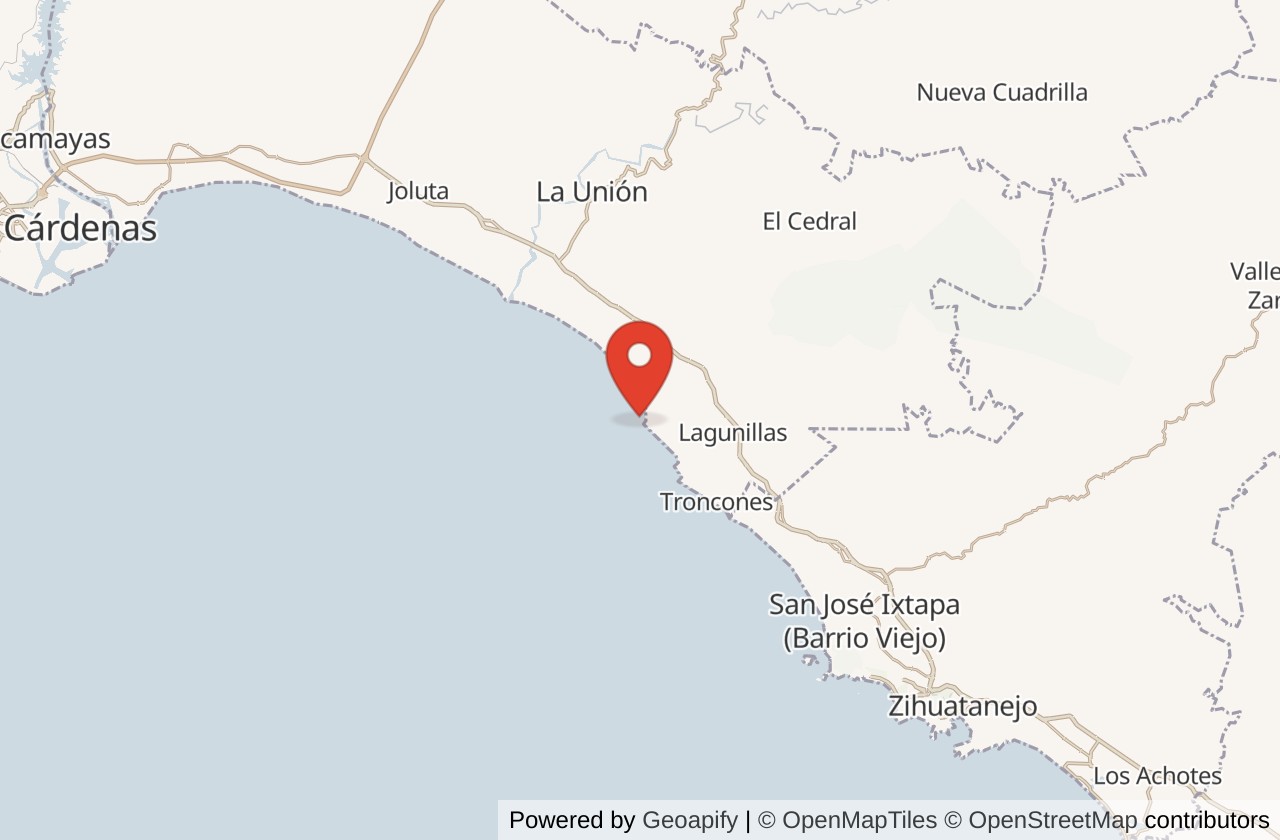
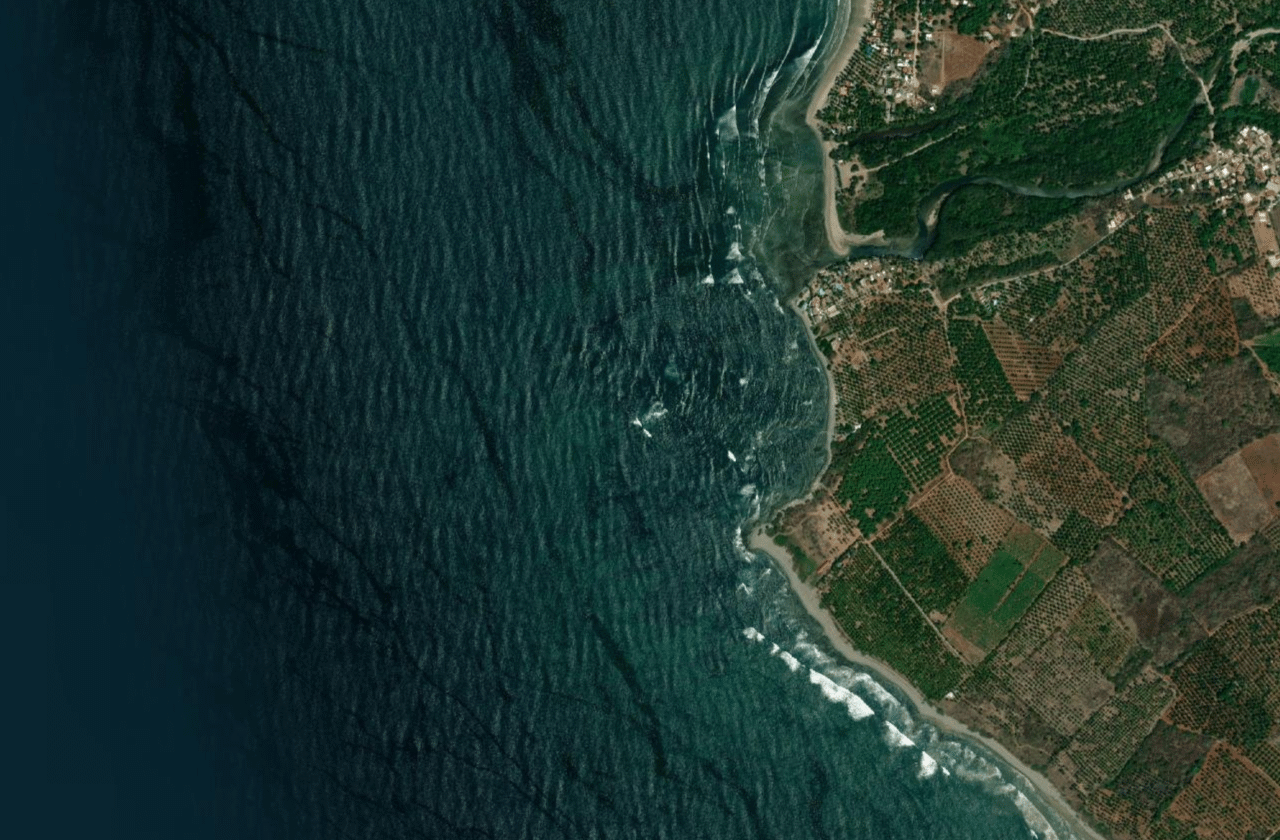
17.8333, -101.7737
What are the lineup and the town like at La Saladita?
Localism
mellow
Crowd
A crowd of traveling longboarders, noseriders and 'snowbird' log pilgrims, plus learners on the inside — roughly nine in ten on longboards. Once a secret, it now gets busy in season, especially on the best summer swells; weekday dawns are your best shot at space on the point.
Saladita is a mellow, longboard-friendly wave, but it's a very long point, so the etiquette that matters is the rotation: one surfer per wave, wait your turn, and don't drop in or snake the peak, where locals hold priority. Beginners should sit on the inside reforms and out of the way of riders coming down the line. Respect the palapa owners and pick up after yourself — it's a small, rustic community.
In the lineup: It's a long left point — sit up at the point for the full ride, or take the inside reforms if you're learning. Paddle out via the sandy northern channel rather than crossing the takeoff. Watch for exposed rocks/reef and sea urchins (worse at low tide) and the current running down the point, which helps your paddle back up but can push beginners toward the rocks. No lifeguards; it's a remote, self-sufficient spot.
La Saladita / Los Llanos is remote, rustic and nearly off-grid — a tiny village down a dirt road with palapa surf lodges, beach eateries and little else, where life revolves entirely around the wave and the sunset. Troncones, 15–20 minutes away, is the laid-back yoga-and-surf hub with the boutique hotels, restaurants and services. Together they're a deliberately slow, unpolished corner of the Guerrero coast: bring cash, embrace the dirt roads, and settle into the surf-eat-nap-surf rhythm.
How do you get to La Saladita?
Fly into Ixtapa-Zihuatanejo International Airport (Aeropuerto Internacional de Ixtapa-Zihuatanejo) (ZIH) — about 20 miles from the break, 45–60 min to La Saladita (~30–40 min to Troncones). None practical nearby — ZIH is the gateway for this coast. Long-haul travelers usually connect through Mexico City (MEX) to ZIH.
- private transferUS$30–70 per vehicle (approx) · 45–60 min to La Saladita
The easiest option with boards. Airport ground transport is controlled by the authorized transport union (ETASA), and service out to Troncones/Saladita is private only (private taxi, van or Suburban) — there's no shared airport shuttle on this stretch. Book through your lodge or arrange at the airport counter; ask for a van/wagon for board bags.
- rental carUS$30–60/day · 45–60 min self-drive
Recommended if you'll move between Saladita, Troncones and Zihuatanejo/Ixtapa or chase other breaks — the area is remote and spread out. Multiple agencies at ZIH; request a roof rack or pack soft racks, and fuel up before the drive out.
- bus~US$22–27 total (bus + taxi) · ~1–1.5 hours with a transfer
The shoestring route: taxi from the airport to Zihuatanejo, then a 2nd-class bus up Highway 200 toward Los Llanos, then a local taxi to the beach. Cheap but slow and awkward with a board bag — most surfers take a private transfer or rent.
Do you need a car at La Saladita?
Do you need a car?
essential
Walkability
La Saladita/Los Llanos is remote and strung along a dirt road with almost no services at the beach beyond the palapas — you can walk the sand to the point, but you need wheels to reach groceries in Los Llanos (~10 min) or Zihuatanejo (~45 min). Troncones is small and beach-oriented but spread along a long beach road.
A rental car or a hired driver is effectively required for a Saladita trip — the beach is off a dirt road with minimal services, and Troncones (the nearest hub) is 15–20 minutes away. Taxis and colectivos run Highway 200 between Los Llanos, Troncones and Zihuatanejo but are infrequent to the beaches themselves. In Troncones a bike, golf cart or taxi helps cover the long beach road. Fuel up and stock cash/groceries before heading out to the point.
Boards: You can rent longboards right on the sand at the break (a few dollars a day), so many visitors never haul a board. If you bring your own, a rental car with racks is by far the easiest way to move it around this remote stretch; board bags are a hassle on 2nd-class buses and in small taxis.
Where can you stay near La Saladita?
At the La Saladita break — steps from the point · Budget beachfront beds right by the wave with board rentals on hand — the classic no-frills 'roll out of bed and surf' base at Saladita for surfers who want to live at the point. (Direct / on arrival)
At La Saladita — steps from the point · Eco-friendly beachfront surf houses right at the break, good for couples, groups and longer self-catering stays who want to be on the sand at Saladita rather than driving in from Troncones. (Direct (lachuparosadesaladita.com))
Playa Troncones — ~15–20 min drive to Saladita · One of Troncones' original family-run beachfront hotels (suites, bungalows or whole-villa rental) right on the surf — a relaxed, well-loved base with the Saladita point a short drive north. (Direct (casadelfinsonriente.com))
Beachfront Troncones — ~15–20 min to Saladita · A long-running, top-rated small oceanfront inn with a yoga deck — the mellow boutique-and-yoga pick in Troncones, a short drive from the longboard point. (Direct (tresmujeresparadise.com), Booking.com)
Beachfront Troncones — ~15–20 min to Saladita · The upscale design-boutique hideaway on Troncones' three-mile beach, waves out front — for travelers who want polish and a calm beachfront base within easy reach of Saladita. (Direct (losereno.com))
Playa Troncones — ~15–20 min to Saladita · A beachfront yoga-and-wellness resort with a restaurant and spa — the choice for a surf-plus-wellness trip, pairing daily yoga with mellow Saladita longboard sessions up the coast. (Direct, Tripadvisor)
Where do you eat at La Saladita?
- Marea (beachfront palapa)restaurant · $ mid-range
Fresh seafood, brick-oven pizza (high season), full bar — Surfer-owned palapa restaurant-bar right in front of the La Saladita point — fresh food, cold drinks, Wi-Fi, and live music and pizza nights in the busy season. The social hub at the break.
- Saladita beach palapas (Ilianet's, Paco's, Benny's)street food · $ budget
Fish & shrimp tacos, grilled whole fish, huevos rancheros, cold cerveza — The line of family-run enramada palapas along the Saladita sand — cheap, fresh, barefoot post-surf eating a few steps from the wave. Cash only.
- Costa Bravarestaurant · $ mid-range
Fresh seafood with ocean views — A Troncones favorite for sit-down fresh seafood and Mexican plates with a beach view — the reliable proper dinner ~15 min from Saladita.
- Café Solcafe · $ budget
Breakfasts, salads, house-baked artisan bread — The Troncones breakfast-and-bakery institution — big breakfasts, coffee and fresh bread in high season, a good pre-surf fuel stop when you're basing in Troncones.
- Doña Nicarestaurant · $ budget
Casual local seafood — A popular, no-frills local seafood spot in Troncones — cheap, tasty and authentic, where the locals and long-stay surfers eat.
Cooking for yourself
- Los Llanos / Troncones tiendas & abarrotesminimart
Small convenience shops in Los Llanos and Troncones cover water, snacks, beer and basics only — stock up here before heading out to the beach, but don't expect a real selection.
- Bodega Aurrera (Zihuatanejo)supermarket
The Walmart-group supermarket in Zihuatanejo (~45 min) — the practical full grocery run for a longer stay: produce, staples, water and household goods at low prices.
- Mega Soriana (Zihuatanejo)supermarket
A larger hipermarket in Zihuatanejo's industrial zone with a wide selection including wine — worth one big stocking-up trip at the start of a self-catering stay.
Where do you rent or fix a board?
- La Saladita rental palapasboard rental · lessons · wax · leashes · ≈ US$10–20/day longboards
Walk toward the point and you'll pass several beach palapas renting longboards for a few dollars a day, plus informal lessons — the easy way to score a log for a Saladita session without bringing your own.
- Capitán Mantarraya Ocean Sports (Troncones)lessons · board rental · ≈ US$$ per lesson (2 hrs incl. beach practice)
A Troncones surf school (by the first bridge) running structured beginner lessons with an ocean-safety briefing and ~2 hours of water time, plus kayak and surf tours — good for a first proper lesson.
- Troncones Point Hostel / surf camplessons · board rental · $–$ camp packages
A Troncones surf camp/hostel with guides who chase whatever's firing on this coast (including Saladita) — dorms and family rooms, a sociable base for a guided surf trip.
What do you do when it's flat?
- Longboard session / surf lesson at La Saladitawater · board rental ≈ US$10–20/day; lessons $–$
The main event — one of the world's longest, most beginner-friendly left points. Log the point or take the gentle inside reforms as a learner; rentals and informal instruction are right on the sand.
- Troncones beaches, tide pools & Manzanillo cavesnature · free–$
A long, near-empty beach with blowholes and tide pools, plus sea caves at nearby Playa Manzanillo — the classic flat-day wander a short drive from Saladita.
- Zihuatanejo old town & Playa La Ropaculture · $
The historic fishing-town centro and the bay's prettiest swimming beach (La Ropa) ~45 min south — waterfront dining, a mellow malecón and sunset strolls.
- Ixtapa & Isla Ixtapaday trip · $
The resort strip with its Ciclopista cycle path and a short boat ride out to Isla Ixtapa for snorkeling and beach palapas — an easy family day trip.
- Barra de Potosí lagoonnature · $–$
A tranquil lagoon south of the airport for kayak/panga birdwatching, hammocks and seafood palapas, with the El Refugio de Potosí wildlife sanctuary nearby — a serene contrast to the surf.
- Sea-turtle releases & whale watching (seasonal)nature · $–$
Baby-turtle releases (roughly Jul–Mar) and humpback whale-watching (approx Dec–Mar) run out of Zihuatanejo — book ethical local operators through your lodge.
What should you know before you go?
Cash & ATMs
Cash country, and the beach is remote — bring pesos. There's an ATM in Troncones but it's often out of cash; the dependable bank ATMs are in downtown Zihuatanejo (and at the airport). Withdraw enough before you head out to Saladita, where the palapas and rentals are cash-only.
Medical
Troncones has a small clinic for minor injuries (~10 min from Saladita); for anything serious head to Zihuatanejo (~45 min), which has private hospitals (Clínica Maciel, Hospital de Especialidades). Pack a reef-cut/first-aid kit — urchin spines and rock cuts are the common issue here.
Water safety
Warm water year-round (≈80–86°F — trunks and maybe a rash vest). The wave is gentle, so the real hazards are the exposed rocks and reef and the sea urchins at the point (worse at low tide), the current running down the point, and the remote, unguarded, no-lifeguard setting. Surf with awareness, wear reef booties if you're prone to urchin trouble, and don't surf alone on the biggest days. Strong tropical sun — use and reapply reef-safe sunscreen.
Mexico basics: money, entry, phones, water
Currency
Mexican peso (MXN) — ~17 MXN per USD (mid-2026)
Entry (US passport)
Up to 180 days, at officer's discretion — Visa-exempt for tourism. 180 days is the legal maximum, not a guarantee — the INM officer writes the number of days granted in your passport stamp (or FMM), and shorter grants matching your stated trip have become common. Check the stamp before leaving the booth and ask for more days if you need them.
Language
Spanish. Solid in established surf towns — Sayulita, San Pancho, Puerto Escondido (Zicatela/La Punta), Todos Santos and the Cabo corridor all run heavily on English for hotels, surf shops and restaurants. Step out to smaller breaks (Salina Cruz camps, Pascuales, mainland Nayarit pueblos) and basic Spanish goes a long way, especially with taxi drivers, boat captains and at tiendas.
Plugs
A, B · 127V / 60Hz — US/Canadian gear plugs straight in; grounded (3-prong) outlets can be scarce in older guesthouses
Tipping
Expected: ~10–15% at restaurants (check it isn't already on the bill as 'servicio'), MXN 10–20 for grocery baggers and gas-station attendants, ~MXN 25–50/day for housekeeping, and a small tip for surf guides/boat captains is appreciated.
Phone / data
Telcel (prepaid 'Amigo Sin Límite'), Travel eSIMs (Airalo, Holafly, Jetpac and similar — most ride the Telcel network), AT&T Mexico (prepaid). Telcel has the widest rural coverage by far — get Telcel (or a Telcel-network eSIM) if you're heading anywhere remote. Even so, expect dead zones and 2G-speed signal at out-of-the-way breaks: the Salina Cruz point cluster, stretches of the Oaxaca coast highway, mainland Nayarit beyond the towns, and most of the Baja peninsula between settlements (the Pacific side of central Baja can be signal-free for hours of driving). Surf camps and hotels usually have Starlink or DSL Wi-Fi; download offline maps before leaving pavement.
Tap water
Don't drink the tap water anywhere, including nice hotels — locals don't either. Buy purified water or refill from the 20L 'garrafón' jugs every guesthouse has; ice in restaurants is almost always commercial purified ice and fine. Brushing teeth with tap water is a personal-tolerance call; bottled is safer for sensitive stomachs.
Emergency
911 nationwide (police, fire, ambulance). Tourist assistance hotline: 078 in many states. English-speaking operators are not guaranteed outside resort areas.
Other passports: entry rules differ — check the official source before booking.
La Saladita is on through Oct 24
Our forecast shows a trip-worthy window, up to 8 ft, best day 9/10. Drop your email and we'll send you this one and the next: the dates, the size, and where to stay. Free.
Frequently asked questions about La Saladita
Is La Saladita good for beginners?
Yes — it's one of the best learn-to-surf and learn-to-longboard waves anywhere. The left point is long, slow and forgiving, with gentle inside reforms where beginners catch whitewater and green waves, and cheap longboard rentals right on the sand. It's a mellow wave rather than a powerful one; just mind the rocks and urchins at the point at low tide and respect the point rotation.
How do you get to La Saladita?
Fly into Ixtapa-Zihuatanejo (ZIH), then it's about 45–60 minutes north: drive Highway 200 to the village of Los Llanos and turn down a rough dirt access road to the beach. A private transfer or rental car is the easy way with boards — there's no shared airport shuttle to this stretch, and the beach is remote.
Do you need a car for a La Saladita trip?
Effectively yes. La Saladita/Los Llanos is remote and off a dirt road with minimal services, and the nearest hub (Troncones) is 15–20 minutes away. A rental car or hired driver is the practical way to reach groceries, Troncones and Zihuatanejo; taxis and colectivos on Highway 200 are infrequent to the beaches.
Where should I stay to surf La Saladita?
Two options: rustic surf lodges and eco-rentals right at the Saladita break (like Chucho's or La Chuparosa) if you want to live on the sand, or laid-back Troncones ~15–20 minutes away, which has the hotels, boutique and yoga stays (Casa Delfín Sonriente, Tres Mujeres, Lo Sereno, Present Moment) plus the restaurants and services.
When is the best time to surf La Saladita?
April through October brings the most consistent south swell (biggest June–September), but because the wave is so long and slow it stays longboard-friendly even then; the smaller November–March winter is often the mellowest for true beginners. Water is warm year-round, and early mornings before the wind are best.
Is La Saladita a left or a right?
It's a long left-hand point break — you take off at the point and run the wall to the left over a rock-and-sand bottom, which is why it's such a famous longboard and noseriding wave. On a good day rides link well over 100 metres.
How much does a surf trip to La Saladita cost?
La Saladita can be a genuinely cheap trip: longboard rentals on the sand run about US$10–20/day, the family-run beach palapas serve cheap fish tacos, and budget beachfront beds at Chucho's sit right by the wave, with mid-range Troncones hotels and $$ boutiques like Lo Sereno at the top end. The main fixed costs are a rental car (US$30–60/day, effectively required) or a US$30–70 private airport transfer; in Mexico overall, budget travelers get by on about $30–50/day and mid-range on $60–110. It's a cash-only beach, so bring pesos.
How crowded is La Saladita?
Once a secret, La Saladita now gets busy in season — a crowd of traveling longboarders, noseriders and snowbird log pilgrims plus learners on the inside, with roughly nine in ten on longboards. The best summer swells draw the biggest packs, so weekday dawns are your best shot at space on the point; the rotation etiquette (one surfer per wave, wait your turn) is what keeps the long point working.
Sources for this guide
- surf-forecast.comofficial · La Saladita wave/forecast, location ~33 km from Zihuatanejo, season/swell
- surfline.comsecondary source · Surfline reference — long rock-and-sand left point, not especially challenging, fun in summer
- thesurfatlas.comeditorial · Wave character, swell/season, access via Los Llanos dirt road, airport transfer, hazards, crowd
- gatheringwaves.comeditorial · Rentals/prices, palapa restaurants, water temp, groceries/remoteness, hazards (rocks/urchins/current)
- exploresaladita.comsecondary source · Local guide: access via Los Llanos, beachfront palapas (Marea, Ilianet's/Paco's/Benny's), village vibe
- exploresaladita.comsecondary source · Lineup etiquette and point-rotation, longest-left-point framing
- zihuatanejo.netsecondary source · ZIH airport ground-transport union rules — private-only transfer to Troncones/Saladita
- rome2rio.comsecondary source · ZIH→Troncones/Saladita distance/time and bus+taxi routing/cost
- lachuparosadesaladita.comofficial · La Chuparosa de Saladita — at-break eco vacation rentals
- casadelfinsonriente.comofficial · Casa Delfín Sonriente — Troncones beachfront hotel/villa
- tresmujeresparadise.comofficial · Tres Mujeres boutique hotel & yoga retreat, Troncones
- losereno.comofficial · Lo Sereno Casa de Playa — Troncones boutique design hotel
- tripadvisor.comsecondary source · Present Moment Retreat — Troncones beachfront yoga/wellness resort
- costabravatroncones.comofficial · Costa Brava — Troncones seafood restaurant
- tronconestours.comofficial · Capitán Mantarraya Ocean Sports — Troncones surf school/lessons
- latamsurfing.comeditorial · Troncones Point surf camp guiding to Saladita and area breaks
- panaderiadeleite.comsecondary source · Mega Soriana Zihuatanejo supermarket
- zihuatanejo.netsecondary source · Zihuatanejo clinics/hospitals for medical section
- zihuatravels.comeditorial · Activities/day-trips: Zihuatanejo old town, La Ropa, Barra de Potosí
Guide researched and verified 2026-07-01. Details change; confirm bookings and entry requirements before travel.