When is the best time to surf Anse Bonneville?
Peak Dec–Mar · often good Apr–May, Nov · can still fire Jun–Oct.
Anse Bonneville is Martinique's most consistent spot and usually has waves, at its best on Atlantic E/NE (and N) swell from roughly November through May — smaller, cleaner days for learners, bigger winter pulses standing the outer peaks up for stronger surfers. Summer stays rideable more often than not, with trade-swell days that suit the beginner cove and the occasional tropical pulse that turns the outer reef on properly — worth an alert rather than a write-off. Water is warm all year (about 26–30°C), so a rash vest for sun and reef-rub is all you need. Mornings before the trade-wind chop, and midweek over crowded weekends, are best.
What does a surf trip to Anse Bonneville look like?
A typical trip from our guide. A real alert comes with the forecast for each day and a fare from your airport.
A real alert we sent · Aug 16
We matched a surfer flying from Orlando (MCO) to this window: Aug 24–25, 2 good days with faces up to 7 ft, peaking 8/10. 3 nights, flights from $1,713 round trip.
This is a prior real trip from our match log, not a forecast. Windows and fares change; your alert carries the current ones.
How much does a surf trip to Anse Bonneville cost?
A five-night trip, per person, before food and rentals.
Rows marked "based on … alerts" are the middle half of the real round-trip fares we quoted in alerts on that route, priced 3 to 10 days before departure, since June 2026. Rows marked "Google typical" are Google Flights' usual range for August, across all booking lead times, so a last-minute fare often lands above it. Checked Oct 17. Stays use our guide's nightly bands; transfers use the guide's quoted rates. Real alerts price the exact dates.
Where should you stay at Anse Bonneville?
Closest to the wave
Bliss Surf Camp $
surf camp · mid-range · At Anse Bonneville — a large Creole house ~2-min walk above the surf spot (28 rue du Surf)
The on-the-beach surf-camp option, run by the long-established Bliss école de surf overlooking the plage des surfeurs — all-inclusive-style packages with lessons, board use and meals. The natural base if you're here to surf and want it all sorted on arrival.
Stays nearbyNicer
Au Citron Vert $$
boutique · high-end · Tartane / Caravelle — short drive to Anse Bonneville
Upscale self-catering villas/gîtes with pool and views on the Caravelle — the higher-end pick for couples or a group wanting design and privacy over a village hotel, with the surf a short drive away.
Stays nearbyEvery place we researched, with its booking link, is under where to stay below.
What is the wave like at Anse Bonneville?
Break type
Beach/Reef
Wave direction
Both
Best swell
ENE (NNE–ESE window)
Ideal size
2–6 ft
Best tide
Mid to mid-high
Low: reef/urchins, booties
Consistency
Consistent
Peak season
Dec–Mar
Nearest airport
FDF · ~22 mi
Drive from airport
45–55 min
Because it's the island's surf-school hub, Anse Bonneville has an actual scene — board and wetsuit-vest rentals, several écoles de surf a two-minute walk from the sand, and a mix of learners, longboarders, local rippers and families sharing the water. It gets genuinely crowded on weekends and when the swell's up, so peak etiquette matters, but the vibe is welcoming and French-Caribbean-mellow rather than territorial. The bottom is the thing to respect: a reef fronts much of the beach, so mind the urchins, rocks and the odd rip, and booties earn their place at low tide.
The setting is half the appeal. Tartane is a laid-back fishing-and-surf village where the boats land the morning catch on wooden tables on the sand, and the whole Caravelle peninsula — a 378-hectare nature reserve of dry forest, mangrove and cliff-top lighthouse — is a world away from Martinique's resort south. Warm water year-round means you surf in boardshorts and a rash vest, FDF airport is under an hour west, and on a flat day you're minutes from a reserve hike, the Château Dubuc ruins and some of the island's best rum distilleries.
Who it suits
All levels — genuine beginners in the sheltered right-hand cove with the island's cluster of surf schools, and intermediates-to-advanced on the outer A-frame peaks and the reef wall when it's bigger. The natural base for a mixed-ability Martinique surf trip.
Where exactly is Anse Bonneville?
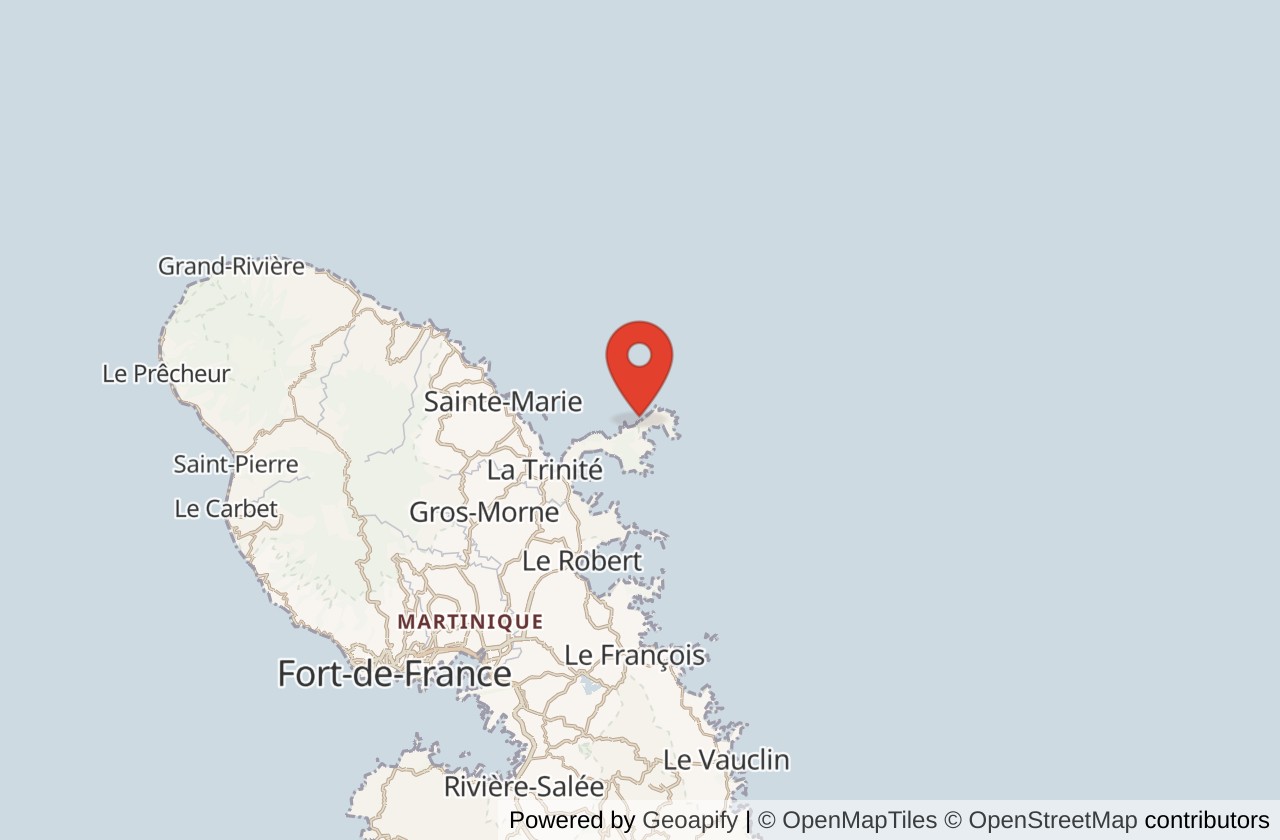
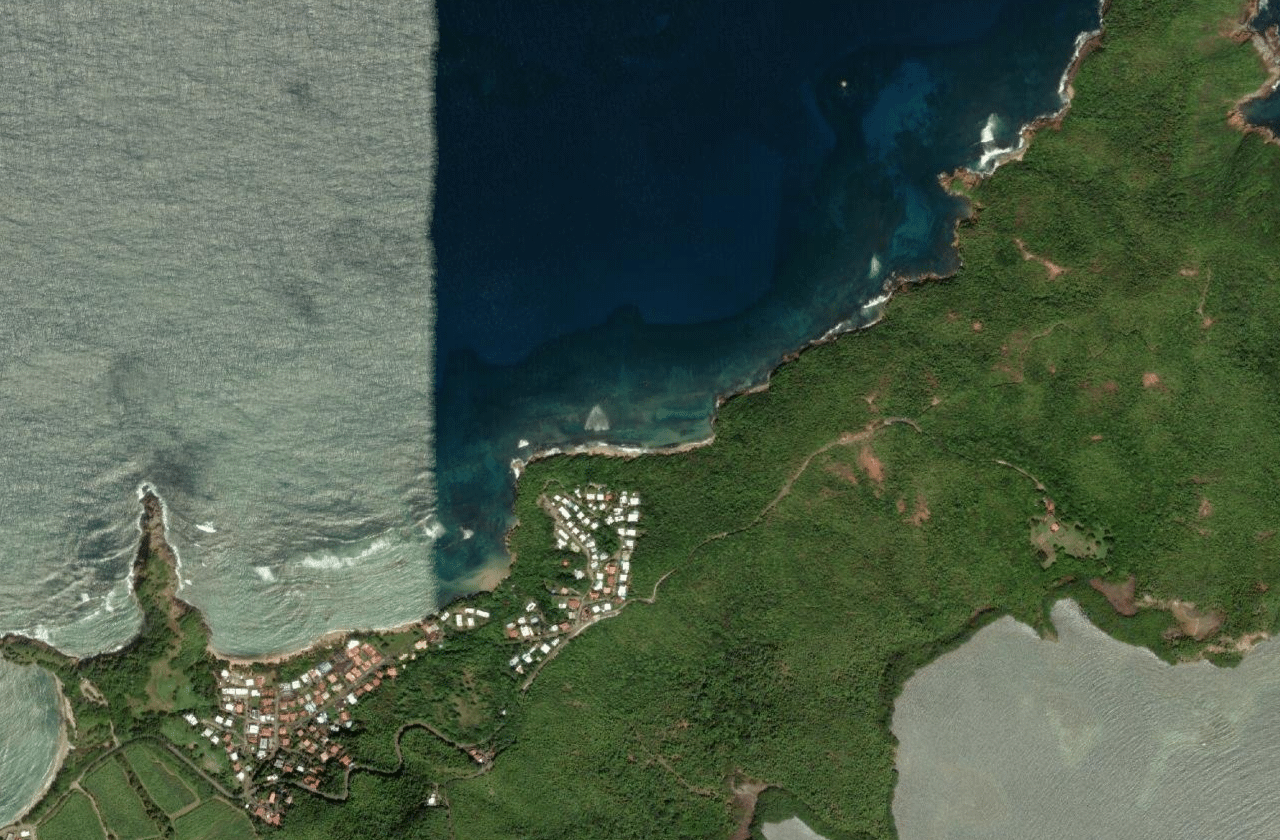
14.7706, -60.8989
What are the lineup and the town like at Anse Bonneville?
Localism
moderate
Crowd
A genuinely mixed crowd — learners and longboarders in the beginner cove and on the inside, local intermediate and advanced surfers on the outer peaks and the reef, plus families using the beach and the shallow natural pools. It's the island's busiest lineup, especially weekends and holidays; early mornings and midweek are calmer.
As Martinique's main surf-school beach, Anse Bonneville is busy but welcoming — a French-Creole surf crowd shares the multiple peaks, so the etiquette that matters is the peak rotation: one surfer per wave, wait your turn, and don't drop in or snake the outer A-frames where the local intermediates and rippers sit. Beginners should stay in the sheltered right-hand cove and out of the way of riders coming down the line. It gets crowded on weekends and on swell, so patience and courtesy go a long way.
In the lineup: It's a multi-peak break: beginners use the small sheltered right-hand cove, while stronger surfers take the outer A-frames and the right-hand reef, which gets faster and hollower over head-high. A reef fronts much of the beach — mind the urchins, rocks and shallow sections (booties help at low tide), and watch for rips and trade-wind chop on bigger days. Work out your entry and exit around the reef before paddling out.
Tartane is a laid-back fishing-and-surf village at the base of the wild, cliffy Caravelle peninsula — a small bourg where the boats land the morning catch on the sand, life is quiet after dark, and the whole feel is a world away from Martinique's resort-heavy south. It's the island's surf soul: écoles de surf, board racks, Creole snacks and a nature reserve out the back. French and Creole are spoken; a little French goes a long way.
How do you get to Anse Bonneville?
Fly into Martinique Aimé Césaire International Airport, Le Lamentin (Fort-de-France) (FDF) — about 22 miles from the break, 45–55 min (longer in Lamentin/Fort-de-France rush traffic). FDF is Martinique's only commercial airport, so there's no alternative — it handles flights from mainland France, North America connections and inter-island hops.
- rental car€40–55/day (less for week-plus hires) · 45–55 min
The practical way to reach Tartane. Pick up at FDF (Europcar, Sixt, Hertz, Avis, Jumbo Car and others on-site), take the N1/A1 corridor toward La Trinité, then the D2 out through Tartane onto the Caravelle. Drive on the RIGHT. Many island rentals are compact — book an estate/SUV or confirm a board bag fits, and bring soft racks.
- taxi€€ (pricey; agree the fare) · 45–55 min
Taxis to the Caravelle are expensive and not always available on demand, and there's no Uber on Martinique. Fine for a one-off airport run with boards, but you'll want a car to actually get around — agree the fare before you load up.
- private transfer€€ per vehicle · 45–55 min
Some hotels, gîtes and the Tartane surf camps can arrange a pre-booked airport pickup that takes boards — worth it after a long-haul flight from France. Confirm the vehicle fits your longest board.
Do you need a car at Anse Bonneville?
Do you need a car?
essential
Walkability
Tartane village is small and walkable, and Anse Bonneville / the plage des surfeurs is a short walk or two-minute drive from the bourg toward the reserve, with parking by the beach. But the Caravelle is a remote-ish tip of the east coast and public transport is thin, so you need a car to reach groceries in La Trinité, other beaches and day trips.
A rental car is essential here (€40–55/day from FDF; cheaper for longer hires), and you drive on the right. There's no Uber on Martinique and taxis up the Caravelle are pricey and scarce, so the car is your lifeline for the surf beach, the La Trinité supermarket run, the reserve trailhead and the distilleries. Within Tartane itself you can walk to the beach and the village restaurants; parking at Anse Bonneville fills on sunny weekends, so arrive early.
Boards: Rent a board from one of the Tartane surf schools right at the beach and you skip transport entirely. If you bring your own, most island hire cars are compact — reserve an estate/SUV or bring soft racks and tie-downs. It's a short carry from the parking to the sand.
Where can you stay near Anse Bonneville?
Surf camps and guided packages
At Anse Bonneville — a large Creole house ~2-min walk above the surf spot (28 rue du Surf) · The on-the-beach surf-camp option, run by the long-established Bliss école de surf overlooking the plage des surfeurs — all-inclusive-style packages with lessons, board use and meals. The natural base if you're here to surf and want it all sorted on arrival. (Direct (surf-martinique.com))
Hotels and other places to stay
In Tartane village — Anse Bonneville and the reserve ~2 min by car · Small hotel of Creole A/C bungalows with kitchenettes, sea views, a pool and bar in Tartane — the closest classic hotel to the surf beach, and a comfortable, walkable village base. (Direct (hotel-martinique-le-manguier.com), booking platforms)
In Tartane — ~1 km to the main surf spot, ~2-min walk to Anse l'Étang · A family-run 2-star of studios/apartments with kitchenettes, A/C and big terraces near the reserve trailhead — a good-value, walkable village base between the surf beach and the calm swimming beach at Anse l'Étang. (Direct, booking platforms)
Tartane / Caravelle — short drive to Anse Bonneville · Upscale self-catering villas/gîtes with pool and views on the Caravelle — the higher-end pick for couples or a group wanting design and privacy over a village hotel, with the surf a short drive away. (Direct (aucitronvert.com))
In/around Tartane — walkable to short drive from the beaches · Tartane has a deep stock of self-catering studios and apartments (kitchen-equipped, some with pools) on Booking.com and Airbnb — the budget-flexible move for a crew or a longer stay, with the fish market and restaurants a stroll away. (Booking.com, Airbnb)
Where do you eat at Anse Bonneville?
- L'Oasis Beachrestaurant · $ mid-range
Grilled fish, marlin tartare, boucané chicken, grilled lambi (conch) — A beachfront Creole-and-seafood spot in Tartane — good value and a handy feed before or after the Caravelle hike or a session. Fresh local plates in a relaxed seaside setting.
- Cocoa Beach Cafécafe · $ mid-range
Fish and seafood specialties — A relaxed beach café in Tartane doing fresh fish and seafood — an easy post-surf lunch by the water.
- Le Ratelotrestaurant · $ mid-range
Fresh, well-plated seafood with French twists — A beachside seafood restaurant in Tartane with a calm atmosphere and carefully-plated dishes — the step-up dinner when you want more than a snack.
- Restaurant Le Pharerestaurant · $ mid-range
Creole plates and seafood — A Tartane restaurant out toward the reserve access track near the Château Dubuc turn-off — a convenient pre- or post-hike meal on the Caravelle.
- Snack Chez Suzysoda · $ budget
Affordable, authentic Creole plates — A casual Creole snack/lolo in Tartane — cheap, friendly and local, the everyday-value option when you're not after a sit-down seafood dinner.
- Tartane fish market (fishermen's landing)street food · $ budget
Fresh-off-the-boat fish and shellfish — From around 6am the fishermen land and sell the catch on wooden tables on the sand — the spot to buy fresh fish and lambi to cook yourself, and a slice of Tartane village life. Cash.
Cooking for yourself
- Tartane supérette & boulangerieminimart
The village has a small grocery/supérette and a bakery for bread, pastries, water, snacks and daily basics — limited selection and hours, but enough for topping up a gîte kitchen without driving into town.
- Carrefour Market — La Trinitésupermarket
The main proper supermarket run: a full Carrefour Market at ZA du Bac in La Trinité, ~10–15 min drive — produce, meat, imported goods and everything a self-catering stay needs. Do one big shop here on arrival.
- La Trinité town supermarketssupermarket
La Trinité has additional supermarkets and supérettes for bigger shops and specifics — the nearest full grocery cluster to Tartane and the Caravelle.
Where do you rent or fix a board?
- Bliss – École de surf & camplessons · board rental · wax · leashes · Lessons/camp packages — ask direct (prices not published)
The long-running (since 1999), state-approved surf school right above Anse Bonneville at 28 rue du Surf — surf, bodyboard, SUP and bodysurf lessons (individual and group), board rental and a 7-day camp. Typically open ~9:00–12:00 & 14:00–17:00, closed Thursdays. The default learn-here operation on Martinique's home beach.
- Surf Up Martiniquelessons · board rental · Lessons/rental — ask direct
An established Tartane surf school on the Caravelle offering lessons and board hire — another solid option in the island's surf-school hub if Bliss is booked.
- Moana Surf Schoollessons · Lessons — ask direct
Run by Pascal Bilon, a state-qualified instructor and well-known Martinican surfer — beginner-to-advanced lessons and discovery sessions, part of the Tartane cluster of écoles de surf.
What do you do when it's flat?
- Surf lesson at Anse Bonnevillewater · € (ask the school)
The main event — a lesson on Martinique's home beach, with a sheltered beginner cove and the island's cluster of surf schools right on the sand. Book ahead in high season and on weekends.
- Presqu'île de la Caravelle nature reserve hikenature · free
A 378-hectare reserve of dry forest, mangrove and cliff, with two marked loops from the Château Dubuc car park — a ~1h30 short circuit or a ~3h30 coastal circuit to the 1862 lighthouse and Pointe Caracoli. The classic Caravelle outing, minutes from the surf.
- Château Dubuc ruinsculture · small entry fee
The ruined 18th-century sugar-and-slavery-era plantation at the reserve entrance, with an interpretive circuit and a panorama over the bay — a short, worthwhile history stop by the trailhead.
- Anse l'Étang & calm swimming beachesnature · free
Tartane's Anse l'Étang is good for swimming when calm and holds mellow surf peaks (an easy right at the 'VVF' end) — the family-and-flat-day beach a couple of minutes from Anse Bonneville, with Baie du Galion nearby.
- Rum distilleries — Saint James & Habitation Clémentfood drink · free–€5 tastings/tours
Saint James at Sainte-Marie (~20–30 min north) is the island's most-visited distillery (free self-guided, guided harvest-season tours ~€5); Habitation Clément (Le François, southeast) pairs rum with a Creole mansion, art centre and gardens. The classic flat-day culture-and-tasting run.
- Tartane fish market & village lifeculture · free
Wander the morning fishermen's landing and the laid-back bourg — a genuine working fishing village, a world away from the resort south, and the best window into everyday Caravelle life.
What should you know before you go?
Cash & ATMs
Martinique is France/EU, so it's the euro (€) and cards are widely accepted in hotels and restaurants. ATMs and banks are in La Trinité town (little to nothing in tiny Tartane), so draw cash before heading out to the peninsula — the fish market, snacks and some small vendors are cash-first.
Medical
The nearest hospital is the CHU de Martinique's Trinité site (Centre Hospitalier Louis Domergue, Rue Eugène Fatier, La Trinité), about 10–15 minutes away; major/tertiary care is at the CHU in Fort-de-France/Lamentin. It's the French health system (EHIC/EU health card applies for eligible travelers); pack a reef-cut/first-aid kit, as urchin spines and reef scrapes are the common issue.
Water safety
Warm water year-round (roughly 26–30°C) — a rash vest is worn for sun and reef-rub, not warmth. The main hazards are the reef fronting the beach (urchins, rocks and shallow sections — booties help at low tide), rips and current on bigger days, and trade-wind chop; the sheltered bay keeps the beginner cove calmer, but the reef is shallow. Lifeguard cover isn't guaranteed (seasonal at most on the main town beach), so surf and swim with care. Strong tropical sun — use reef-safe sunscreen. European (Type C/E) plugs, 230V.
Martinique basics: money, entry, phones, water
Currency
Euro (EUR) — ~0.92 EUR per USD (mid-2026) — i.e. roughly $1.08 buys €1
Entry (US passport)
Up to 90 days — Visa-exempt for tourism. IMPORTANT: Martinique is a French overseas department and is NOT in the Schengen area, so this 90-day allowance is separate from (and does not count against) Schengen days spent in mainland Europe. A short-stay Schengen visa does NOT cover Martinique. EES and ETIAS apply only to the Schengen zone, not to overseas departments.
Language
French, Martinican Creole (Kréyòl). Limited outside hotels and the main tourist/cruise areas. Martinique is far less Anglophone than the wider Caribbean — staff at resorts, dive/surf operators, and car-rental desks usually speak some English, but at local bakeries, markets, snack vans, and rural surf spots (Tartane, the Caravelle peninsula) French goes a long way and a few words of Creole earn smiles. Download an offline translator.
Plugs
C, D, E · 230V / 50Hz (European standard — North American 120V-only gear needs a converter, not just a plug adapter; most laptop and phone chargers are dual-voltage and only need a Type C/E adapter)
Tipping
Service is included by law ('service compris') — a service charge is built into restaurant and café prices, so tipping is not expected. Locals leave nothing or just round up the coins; for genuinely great service you might add a euro or two. Tip a surf instructor or boat skipper a few euros if they went above and beyond, but there's no obligation.
Phone / data
Orange Caraïbe, SFR Caraïbe, Digicel / La Poste Caraïbe Mobile, EU SIM (roaming) or travel eSIM (Airalo, Holafly, Orange Travel). Coverage is strong by Caribbean standards — roughly 90% of the island has 4G including most beaches and the rainforest interior, with 5G in the main towns. SFR and Orange are the safe picks for getting out to Atlantic-coast surf around the Caravelle peninsula and Tartane. Expect occasional weak spots in the deep interior and on remote headlands; most accommodations have Wi-Fi. EU SIM holders get all this at no extra charge via free EU roaming.
Tap water
Tap water is treated to French/EU standards and safe to drink across the island, though many locals prefer bottled out of habit and taste. After heavy tropical rain or in remote areas, bottled is cheap insurance if your stomach is sensitive.
Emergency
112 is the universal EU emergency number (works for any emergency, English often available). You can also dial 15 for medical/SAMU, 17 for police, and 18 for fire.
Other passports: entry rules differ — check the official source before booking.
Alert me when Anse Bonneville is on
Drop your email and you'll get one message when our forecast shows a trip-worthy window here: the dates, the size, and a place to stay. Free.
Frequently asked questions about Anse Bonneville
Is Anse Bonneville good for beginners?
Yes — it's where Martinique learns to surf. A sheltered cove on the right of the beach gives beginners real but manageable waves, and the island's cluster of surf schools (Bliss, Surf Up, Moana) teaches right here. Take a lesson, stay in the cove, and mind the reef, urchins and rocks; stronger surfers move out to the multiple outer peaks.
Where is Anse Bonneville / the plage des surfeurs?
At Tartane, on the Presqu'île de la Caravelle in the commune of La Trinité, on Martinique's Atlantic (east) coast — the last accessible beach before the Caravelle nature reserve and Château Dubuc. It's about 45–55 minutes by car from FDF airport via La Trinité and the D2 through Tartane.
When is the best time to surf Anse Bonneville?
It's Martinique's most consistent spot and usually has waves, but it's best on Atlantic E/NE (and N) swell in winter and spring, roughly November through May — smaller clean days for learners, bigger winter pulses for the outer peaks. It's surfable year-round; water is warm always, so just a rash vest. Mornings before the wind and midweek over crowded weekends are best.
Do you need a car to surf Anse Bonneville?
Effectively yes. The Caravelle is a remote-ish tip of the east coast with thin public transport, no Uber and pricey taxis, so a rental car (€40–55/day from FDF, drive on the right) is essential for the beach, groceries in La Trinité and day trips. Within Tartane you can walk to the surf and the village restaurants.
Where can I rent a surfboard or take a lesson at Tartane?
At the beach — Bliss (28 rue du Surf, above the spot) is the long-running école de surf with lessons, rentals and a surf camp, and Surf Up Martinique and Moana Surf School are also based in Tartane, the island's surf-school hub. Prices aren't published online, so ask the schools directly.
Sources for this guide
- guidemartinique.comsecondary source · Anse Bonneville three peaks, beginner cove, most-regular/reputed spot, E/NE swell; Anse l'Étang breaks
- fr.surf-forecast.comsecondary source · Break type (right reef, possible left), consistency, N swell + S/SSE offshore, winter/spring season, hazards (urchins, rips, rocks)
- surf-forecast.comsecondary source · Year-round water temperatures (~26–30°C) and rash-vest guidance
- surfline.comsecondary source · Surfline Plage des Surfeurs listing/coordinates; report/forecast page with no curated spot guide
- zananas-martinique.comeditorial · Location between Tartane and Château Dubuc, ~30 m reef, fish market, natural pools, family use
- surf-martinique.comofficial · Bliss école de surf & camp — 28 rue du Surf address, services, hours (closed Thu), since 1999, camp lodging
- martinique.orgofficial · Official Martinique Tourisme listing confirming Bliss surf school
- martinique-surf.comofficial · Surf Up Martinique — Tartane surf school lessons/rentals
- guidemartinique.comsecondary source · Surf schools cluster in Tartane; Moana Surf School / Pascal Bilon
- hotel-martinique-le-manguier.comofficial · Hôtel Le Manguier — Tartane Creole bungalows, proximity to Anse Bonneville
- guidemartinique.comsecondary source · Hôtel La Caravelle — Tartane studios, distance to spots and Anse l'Étang
- aucitronvert.comofficial · Au Citron Vert — upscale Tartane/Caravelle villas/gîtes
- booking.comsecondary source · Tartane gîtes/vacation-rental inventory
- petitfute.co.ukeditorial · L'Oasis Beach — Tartane Creole/seafood restaurant and dishes
- wanderlog.comeditorial · Tartane restaurants — Le Ratelot, Snack Chez Suzy, Cocoa Beach Café
- fr.mappy.comsecondary source · Carrefour Market La Trinité location for groceries
- guidemartinique.comsecondary source · Presqu'île de la Caravelle reserve hike loops, Château Dubuc car park, lighthouse; D2 access via Tartane
- rhum-saintjames.comofficial · Saint James distillery visit (free self-guided, ~€5 harvest tours) near Sainte-Marie
- sante.frofficial · CHU de Martinique Trinité site (Centre Hospitalier Louis Domergue) for the medical section
- rome2rio.comsecondary source · FDF ↔ La Trinité distance/time baseline for the ~45–55 min Tartane transfer
Guide researched and verified 2026-07-01. Details change; confirm bookings and entry requirements before travel.