When is the best time to surf El Sunzal?
Peak May–Sep · often good Mar–Apr, Oct–Nov · can still fire Dec–Feb.
El Sunzal works year-round. The engine is south and southwest groundswell from roughly April through October, peaking May–September, when steady pulses wall the point up under clean morning offshores and the wave shifts into fun intermediate mode. March, April, October and November are transition months that still catch plenty of south energy with thinner crowds. The December–February dry season runs smaller and mellower — the sweetest window for true beginners and loggers, with the occasional long-period south still sneaking through for a surprise point day. Water stays boardshorts-warm all year, and dawn before the onshore breeze is cleanest.
What does a surf trip to El Sunzal look like?
A typical trip from our guide. A real alert comes with the forecast for each day and a fare from your airport.
A real alert we sent · Aug 31
We matched a surfer flying from ATL to this window: Sep 4–8, 5 good days with faces up to 11 ft, peaking 8/10. 6 nights, flights from $770 round trip.
This is a prior real trip from our match log, not a forecast. Windows and fares change; your alert carries the current ones.
How much does a surf trip to El Sunzal cost?
A five-night trip, per person, before food and rentals.
Rows marked "based on … alerts" are the middle half of the real round-trip fares we quoted in alerts on that route, priced 3 to 10 days before departure, since June 2026. Checked Oct 17. Stays use our guide's nightly bands; transfers use the guide's quoted rates. Real alerts price the exact dates.
Where should you stay at El Sunzal?
Closest to the wave
Punta Roca Surf Resort $
hotel · mid-range · ~15 min east, beachfront by Punta Roca
The historic surf address run by the Rotherham family, on the La Libertad bay by Punta Roca — AC rooms/bungalows, pools, an on-site restaurant and guided surf. Base here if you want the point-break connection and don't mind driving to El Sunzal to learn.
Check ratesSurf camp or guided package
7-Day Surf Coaching or Guided Tour in La Libertad
Maya Surf Tours · for intermediate+ · from $1,092 · 7 days · rated 4.4
Guided surf package — daily trips to the best local breaks.
View packageCheaper
Tortuga Surf Lodge (El Tunco) $
guesthouse · budget · In El Tunco, right by the Sunzal/La Bocana breaks — a short walk/ride to El Sunzal point
Long-running (40+ years) good-value lodge with a handful of private AC rooms in front of the El Tunco breaks, a pool, a shared kitchen and a treetop rancho for watching the surf and sunset (no on-site restaurant; restaurants are steps away). A budget base in the middle of the surf-school scene.
Stays nearbyEvery place we researched, with its booking link and the surf packages, is under where to stay below.
What is the wave like at El Sunzal?
Break type
Point
Wave direction
Right
Best swell
SSW (S–WSW window)
Ideal size
2–8 ft
Best tide
Low to mid
Low: rocky entry, faster · High: fat, mushy, slow
Consistency
Very Consistent
Peak season
Apr–Oct
Nearest airport
SAL · ~27 mi
Drive from airport
35–45 minutes
Because it sits in the heart of El Salvador's backpacker-and-surf-camp scene, El Sunzal has the densest cluster of surf schools, rental shops and lesson operators on the coast — a beginner can walk off the sand and into a lesson within minutes. On a small-to-mid south swell the inside reforms and the outer wall both work at once, so first-timers can catch whitewater near shore while improvers link the point. It steepens and speeds up on bigger swells, edging into solid intermediate territory, but it never has Punta Roca's pecking order or its urchin-lined boulders in the take-off. The main things to respect are the rock/cobble bottom (booties help at low tide) and a crowded, longboard-heavy lineup.
Everything is easy here: SAL airport is about 35–45 minutes away, the water is warm year-round so you surf in boardshorts, and El Tunco's restaurants, bars and hostels are a five-minute stroll for your evenings. Come to learn, to log, or to warm up before paddling out at Punta Roca — El Sunzal is the friendly front door to Salvadoran surf.
Who it suits
Beginners and improving surfers learning on a soft, long point with lessons and rentals on the sand, and longboarders who want to cruise. A perfect mixed-ability base next to Punta Roca — learn and log at Sunzal, step up to the point when you're ready.
Where exactly is El Sunzal?
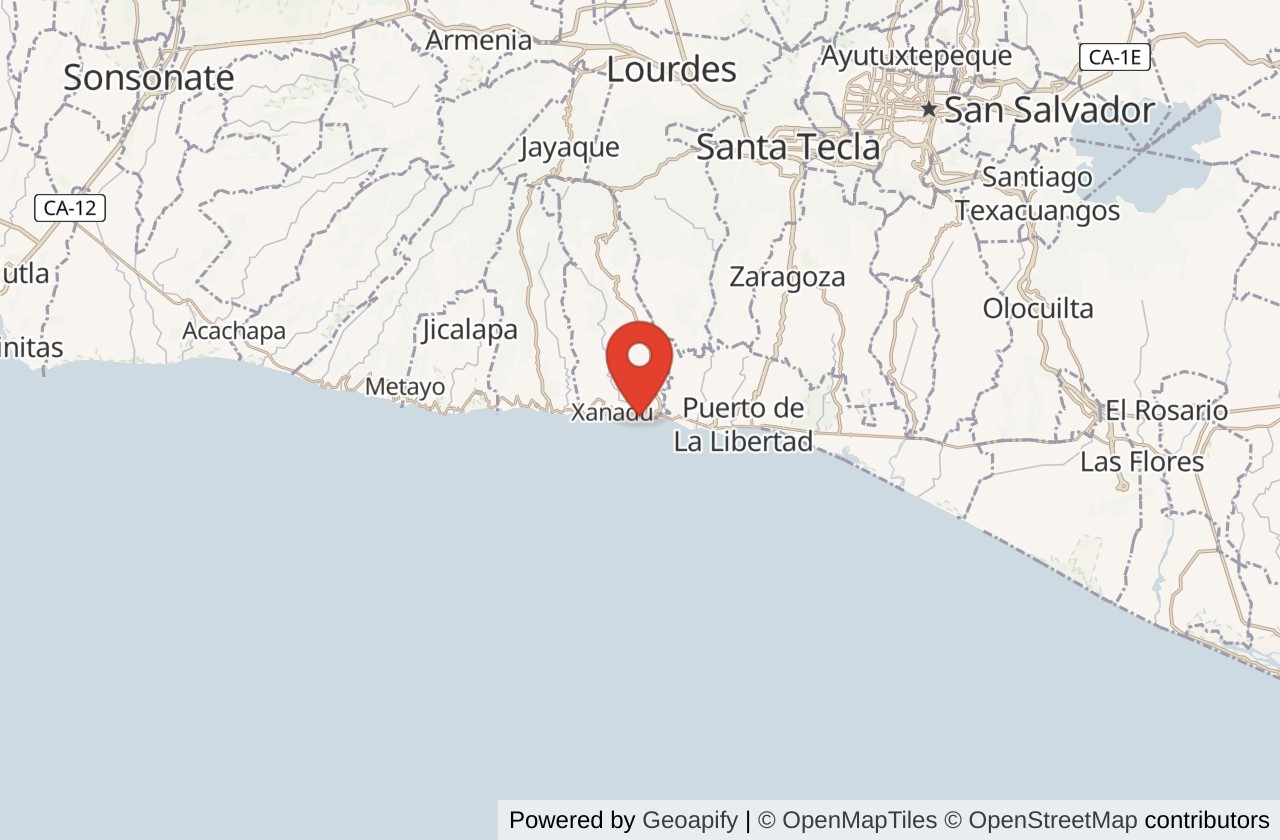
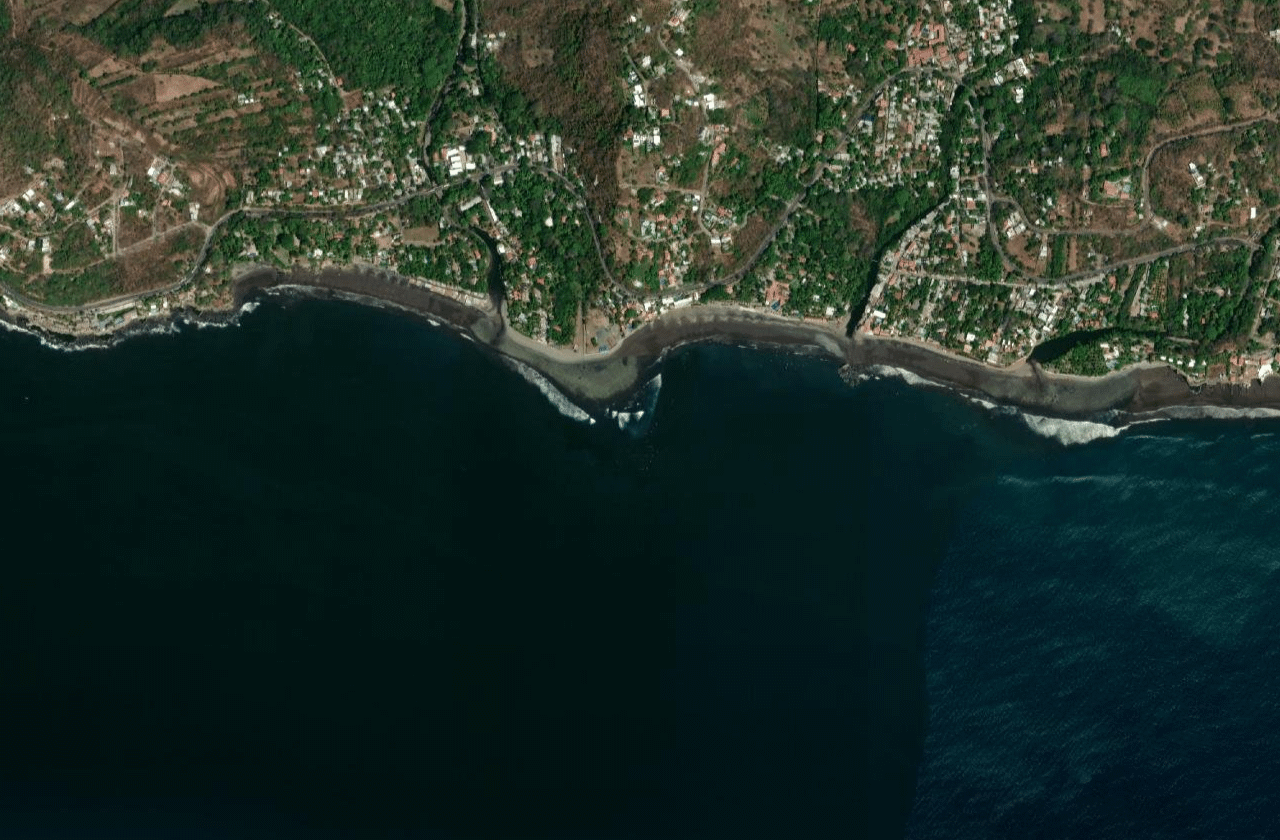
13.4913, -89.3900
What are the lineup and the town like at El Sunzal?
Localism
mellow
Crowd
Often crowded and longboard-heavy, especially mornings, weekends and on swell, with plenty of lessons in the water — but the crowd is mellow and forgiving, and the wave is long enough to share. Dawn on a weekday is the calmest; the inside reforms are always the least contested.
El Sunzal is the friendly, welcoming end of the Surf City coast — a genuine beginner and longboard wave, not a pecking-order point like Punta Roca. It gets busy and longboard-dominated, so the etiquette is crowd-management: wait your turn on the long right, don't drop in or snake the take-off, keep control of your board on the inside, and give lesson groups room. Basic courtesy is all you need.
In the lineup: The wave is a long right that peels off the point over a rock-and-cobble bottom; paddle out and use the channel rather than crossing the take-off. Beginners sit on the inside reforms and whitewater while longboarders and improvers link the outer wall. Low tide makes the rocks shallower and sharper — booties are smart — and there's some current along the point on bigger swells. Rockier than a sand beach but far more forgiving than Punta Roca's boulders.
El Sunzal shares El Tunco's laid-back backpacker-and-surf-camp identity — hostels, board racks, smoothie cafes, sunset bars and a young international crowd — a mellower, more traveler-facing scene than the working port of La Libertad 15 minutes east. Post-crackdown El Salvador feels notably safe and easy here; it's dollar-priced, warm and geared entirely around surfing. Keep normal beach-town sense with your gear and you'll find it relaxed and welcoming.
How do you get to El Sunzal?
Fly into Monseñor Óscar Arnulfo Romero International Airport (San Salvador / Comalapa), San Luis Talpa (SAL) — about 27 miles from the break, 35–45 minutes. SAL is effectively the only practical international gateway for El Salvador; it sits closer to the coast than to San Salvador city, which is what makes the run to the Surf City coast so short. There is no closer airport.
- private transfer$30–65 per vehicle (more for door-to-door surf shuttles) · 35–45 minutes
The easiest option with board bags. Most El Tunco/El Sunzal surf hotels and operators (Sunzal Surf Company, AST) arrange airport pickups; book ahead so a van or wagon comes for boards rather than a sedan, and confirm the rate before you get in.
- taxi$35–55 per vehicle · 35–45 minutes
Official airport taxis run the coast road to El Tunco/El Sunzal; agree the flat fare up front (no meter). For boards over 7'0" ask specifically for a wagon or pickup with a rack — many airport sedans won't take a big bag.
- rental car$30–55/day · 35–45 minutes self-drive
Pick up at SAL; the airport-to-coast highway and the Surf City tourist area are explicitly exempted from the US government's avoid-night-driving guidance, so it's a manageable first drive. Drive on the right. A car is handy for ranging to El Zonte or Punta Roca; request roof rails or bring soft racks for boards.
- bus$1–3 per person (plus a short connection) · 1.5–2 hours with a transfer
The shoestring route: a local bus/shuttle from the airport area connecting to route 102 along the coast toward El Tunco/El Sunzal. Cheap and doable solo, but awkward with a board bag and slow — most surfers take a shuttle. Carry small dollar bills.
Do you need a car at El Sunzal?
Do you need a car?
optional
Walkability
El Sunzal sits right beside El Tunco, so if you stay in the El Tunco/El Sunzal cluster you can live carless: the wave, surf schools, rental shops, restaurants, bars and minimarts are all a short walk or a dollar tuk-tuk away. You only need wheels to range east to La Libertad/Punta Roca or west to El Zonte.
The El Tunco/El Sunzal strip is compact and walkable, with tuk-tuks (mototaxis) for a dollar or two and local buses (route 102 and others) running the coast highway to La Libertad, El Zonte and beyond for under a dollar a hop — slow and crowded with a board, but cheap. There's no reliable Uber-style network here; your hotel will have a trusted driver. A rental car ($30–55/day from SAL) is optional but pays off for chasing swell up and down the Surf City coast.
Boards: Tuk-tuks and local buses aren't built for big board bags — fine for a shortboard, painful for a 7'6" log. Most El Tunco/El Sunzal hotels store boards and many rent on-site, and the surf shops are on the beach, so most visitors never haul a bag far. Use a hotel shuttle or wagon taxi to move boards between spots.
Where can you stay near El Sunzal?
Surf camps and guided packages
- 7-Day Surf Coaching or Guided Tour in La Libertadfor intermediate+ · from $1,092 · 7 days · rated 4.4 by 2View package
Maya Surf Tours — Guided surf package — daily trips to the best local breaks
~15 min east at Punta Roca — drives to El Sunzal for beginner sessions · A guiding-focused surf hotel at Punta Roca with bilingual guides, board rental in packages, a pool and bar — a strong choice for a surf-package trip that mixes El Sunzal learning days with Punta Roca point sessions. (Direct (astsurfresort.com), Tripadvisor, Booking.com)
Packages bundle the stay and the surfing; check each listing for what its transfers include.
Hotels and other places to stay
In El Tunco, right by the Sunzal/La Bocana breaks — a short walk/ride to El Sunzal point · Long-running (40+ years) good-value lodge with a handful of private AC rooms in front of the El Tunco breaks, a pool, a shared kitchen and a treetop rancho for watching the surf and sunset (no on-site restaurant; restaurants are steps away). A budget base in the middle of the surf-school scene. (Booking.com, Tripadvisor)
El Tunco, minutes from El Sunzal · Sociable surf-and-yoga hostel/villa near El Tunco with a pool, daily yoga and an evening social scene (board/bike/scooter rental on-site) — a community-vibe budget pick a few minutes from the Sunzal point and the El Tunco breaks. (Booking.com, Hostelworld)
- Boutique surf hotels in El Sunzal / El Zonte (e.g. Puro Surf, Palo Verde area)boutique · $$ high-endStays nearby
El Sunzal/El Zonte, on or a short drive from the point · For polish and a cliff-top pool, the upscale surf hotels strung along El Sunzal and El Zonte (the 'Bitcoin Beach' area) deliver design rooms, spa and high-performance coaching — some overlook the Sunzal point itself. (Direct sites, Booking.com, Expedia)
~15 min east, beachfront by Punta Roca · The historic surf address run by the Rotherham family, on the La Libertad bay by Punta Roca — AC rooms/bungalows, pools, an on-site restaurant and guided surf. Base here if you want the point-break connection and don't mind driving to El Sunzal to learn. (Direct (puntaroca.com.sv), Booking.com, Expedia)
Where do you eat at El Sunzal?
- El Tunco restaurants & barsrestaurant · $ mid-range
Seafood, pupusas, international menus and a sunset bar scene — El Sunzal's own dining hub is El Tunco, a five-minute walk/ride away: the coast's densest cluster of restaurants, cafes, smoothie spots and beach bars, from cheap pupusas to sit-down seafood and after-dark nightlife. The default evening move from the point.
- Local pupuserías & comedores (El Tunco / El Sunzal)soda · $ budget
Pupusas (revueltas, queso con loroco) and a plate of the day — The cheapest, most local way to eat: pupusa stands and comedores serve pupusas for well under a dollar and plate lunches for a few dollars. Cash, and carry singles — this is everyday Salvadoran eating at its best value.
- Mercado del Mar / Malecón seafood (Puerto de La Libertad)street food · $ budget
Ceviche and fried whole fish straight off the boats — ~15 min east in La Libertad: the fish market and food stalls on the malecón and pier are the soul of the coast's eating — pick seafood by the kilo or grab ceviche and fried fish, cash-only. Worth the trip on a day you're surfing Punta Roca.
- Pelícanos Restaurante (Atami)restaurant · $ mid-range
Ceviche, seafood cocktails and grilled catch with a 180° ocean view — Clifftop seafood restaurant at the Atami area (~km 49.5 of the Litoral, west toward El Palmarcito) with a sweeping oceanfront terrace — a scenic sit-down splurge a short drive west of El Sunzal.
Cooking for yourself
- Super Selectos Surf City (El Encuentro)supermarket
The full supermarket option — a modern Super Selectos branch in the El Encuentro center near the Surf City roundabout, ~10–15 min east toward La Libertad. Stock a kitchen, buy water, sunscreen, snacks and beer here.
- Minimarts & tiendas (El Tunco / El Sunzal)minimart
Small corner shops and minimarts in El Tunco and around El Sunzal cover water, snacks, beer and basics within a short walk of the beach — handy for daily top-ups.
- Mercado del Mar / fish market (Puerto de La Libertad)fish market
For self-catering seafood: buy snapper, shrimp and shellfish by the kilo straight from the fishermen ~15 min east in La Libertad, liveliest in the morning when the boats come in. Cash only.
Where do you rent or fix a board?
- Sunzal Surf Company / El Tunco rental shopsboard rental · lessons · wax · leashes · fins · apparel · ~$15–25/day boards; lessons ~$25–45
El Sunzal and El Tunco hold the coast's biggest cluster of surf shops and schools (Sunzal Surf Company and many others) with full rental fleets — soft-tops and longboards, leashes, wax and retail — plus daily beginner lessons right on the sand. The default rent-and-learn stop at the point.
- El Tunco / El Sunzal surf schoolslessons · board rental · Group lesson ~$25–45
The heart of El Salvador's learn-to-surf scene: numerous bilingual schools run daily beginner and improver lessons on El Sunzal's soft point, with soft-tops and longboards included — walk off the sand and into a lesson within minutes.
- Piri's Surf Shop (La Libertad ding repair)ding repair · board rental · lessons · wax · leashes · fins · ~$10–20/day (negotiable)
Luis 'Piri' Martínez has been the coast's go-to ding repairman for ~two decades, with a shop by Punta Roca ~15 min east — the fix-it stop after the rock/cobble bottom does its work.
What do you do when it's flat?
- Surf lesson / longboard session at El Sunzalwater · $25–45 per lesson/session
El Sunzal's soft, long point is where El Salvador's surf schools run beginner and improver lessons — the low-stakes way to get water time and a guide's read on the point. Log rentals are everywhere for cruising the wall.
- El Tunco beach & nightlifeculture · free (food/drinks extra)
The famous backpacker surf town next door: black-sand beach breaks (La Bocana), sunset bars and the coast's liveliest after-dark scene, a five-minute walk from El Sunzal.
- Tamanique Waterfalls hikeadventure · $25–45 guided tour
Half-day guided hike/scramble down to a chain of waterfalls and jump pools in the hills above the coast, ~30 minutes inland — the classic flat-day adventure booked from El Tunco. Wear grippy shoes; it's a real climb.
- El Zonte ('Bitcoin Beach')day trip · transport ~$2–15
The laid-back cove a short drive west that became famous as 'Bitcoin Beach' — a quieter point/beach setup, some businesses still take BTC, good for a low-key surf-and-coffee day.
- Puerto de La Libertad malecón, pier & fish marketculture · free (food extra)
~15 min east: walk the rebuilt malecón and fishing pier where the boats unload, watch the fish auction, and eat ceviche over the water — the cultural heart of the coast and an easy flat-day outing.
- Santa Ana Volcano (Ilamatepec) day tripnature · $1 park entry + transport/guide
A bigger flat-spell mission: hike to the turquoise crater lake of Santa Ana volcano, roughly 1.5–2 hours inland — best as an early-start day trip or guided tour, with a classic summit view over the crater.
What should you know before you go?
Cash & ATMs
El Salvador uses the US dollar, so no exchange needed. ATMs are in El Tunco and, more reliably, at the Super Selectos and banks toward La Libertad (Banco Agrícola, Cuscatlán, BAC). Carry small bills — pupuserías, tuk-tuks, board rentals and lessons are cash, and a $20 is often too big to break. Machines can run dry on busy weekends, so grab cash on arrival.
Medical
El Tunco/El Sunzal has pharmacies and basic clinics nearby; for anything serious, San Salvador's full private hospitals (Hospital de Diagnóstico and others) are roughly 45–60 minutes away by the highway you came in on. Pack a reef-cut/first-aid kit — rock and cobble scrapes are the most common issue. Emergency number is 911 (132 also works for medical).
Water safety
El Sunzal is a soft point over rock and cobble — booties are smart, especially at low tide when the bottom is shallower and sharper. Hazards are the rocks on entry/exit and some current along the point on bigger swells, plus the crowd of learners and loose boards. Water is warm year-round (boardshorts). Water quality here is generally better than the port at La Libertad, but as everywhere avoid surfing right after heavy rain. No lifeguards — but the mellow wave and on-sand surf schools make it one of the more manageable spots on the coast.
El Salvador basics: money, entry, phones, water
Currency
US dollar (official currency since 2001) (USD) — 1:1 — the US dollar IS the currency (mid-2026)
Entry (US passport)
90 days (shared CA-4 allowance) — No visa; buy the US$12 tourist card on arrival. The 90 days are shared across the CA-4 zone (El Salvador, Guatemala, Honduras, Nicaragua) — hopping borders within it does not reset the clock. Extensions up to 180 days via the Dirección General de Migración.
Language
Spanish, English (in surf-tourism businesses along the La Libertad coast). Lower than Costa Rica or Mexico's surf hubs. In El Tunco/El Sunzal you'll find English at hostels, surf schools, and tourist restaurants, but day-to-day El Salvador runs on Spanish — a few basics go a long way at comedores, bus stops, and with board-rack pickup drivers.
Plugs
A, B · 115–120V / 60Hz (same as US/Canada — no adapter needed for North American gear)
Tipping
Restaurants often add a 10% 'propina' to the bill — check before doubling up. Where it's not included, ~10% is appreciated at sit-down places; nothing expected at pupuserías or comedores. Tip surf instructors/guides ~$5–10 per session.
Phone / data
Tigo, Claro, eSIM (Airalo, Holafly, Saily, etc.). Tigo and Claro both cover the Surf City strip (El Tunco, El Sunzal, El Zonte, Punta Roca/La Libertad) well — good enough 4G for forecasts, hotspots, and video calls. Tigo has the edge on overall 4G footprint. Signal thins out at remoter east-coast spots (Punta Mango, Las Flores area roads); hostel Wi-Fi in El Tunco is ubiquitous but shared and slow at peak hours.
Tap water
Don't drink the tap water — stick to bottled, filtered, or purified ('agua envasada'), which virtually every hostel and surf camp provides cheaply or free. Use it for teeth-brushing too if your stomach is sensitive.
Emergency
911 nationwide for police/fire/ambulance; 132 also works for medical emergencies. English-speaking operators are not guaranteed — have a Spanish speaker or translation app handy.
Other passports: entry rules differ — check the official source before booking.
El Sunzal is on through Oct 25
Our forecast shows a trip-worthy window, up to 8 ft, best day 9/10. Drop your email and we'll send you this one and the next: the dates, the size, and where to stay. Free.
Frequently asked questions about El Sunzal
Is El Sunzal good for beginners?
Yes — El Sunzal is El Salvador's benchmark learn-to-surf and longboard wave. It's a long right point with a slow take-off and a soft, forgiving shoulder, and the country's densest cluster of surf schools teaches right on the sand. Beginners ride the inside reforms; the wave steepens toward intermediate on bigger swells, and the bottom is rock/cobble so booties help at low tide.
How is El Sunzal different from Punta Roca?
They're neighbors (about 15 minutes apart) but opposite ends of the spectrum: Punta Roca is a fast, shallow, world-class right point over urchin-lined boulders with a serious pecking order for intermediate-to-advanced surfers, while El Sunzal is the soft, welcoming longboard and learn-to-surf point. It's the perfect pairing — learn and log at Sunzal, step up to Punta Roca when you're ready.
Where can I take a surf lesson at El Sunzal?
El Sunzal and adjacent El Tunco are the heart of El Salvador's learn-to-surf scene, with numerous bilingual schools (Sunzal Surf Company and many others) running daily beginner and improver lessons on the sand, soft-tops and longboards included. Group lessons run around $25–45; you can walk off the beach into one.
When is the best time to surf El Sunzal?
It works year-round. April–October (peaking May–September) brings the most consistent south groundswell, which makes the point faster and more intermediate; the smaller, calmer November–March dry season is the mellowest for true beginners. Water is warm all year (boardshorts), and dawn before the onshore breeze is cleanest.
How do you get from San Salvador airport to El Sunzal?
It's about 27 miles / 35–45 minutes by road from SAL (Monseñor Óscar Arnulfo Romero International) to the El Tunco/El Sunzal area — the airport sits closer to the coast than to the city. A hotel shuttle or airport taxi ($30–65) is easiest with boards; a rental car ($30–55/day) is handy for chasing other spots.
Do you need a wetsuit or booties at El Sunzal?
No wetsuit — the water is warm year-round, so boardshorts or a swimsuit are fine. Booties are worth it though: the bottom is rock and cobble that gets shallower and sharper at low tide. It's far more forgiving than Punta Roca's boulders, but the point isn't sand.
Is the El Sunzal / Surf City area safe for tourists?
Yes — El Salvador's security has transformed since 2022 and the US advisory is now Level 1 ('exercise normal precautions'). The El Tunco/El Sunzal strip is the backpacker heart of the government's Surf City push and feels safe and easy; keep normal beach-town sense and don't leave gear unattended on the sand.
Sources for this guide
- surf-forecast.comofficial · El Sunzal (El Zunzal) wave character: right point, SSW swell, cross-offshore NNE winds, low-tide, rock hazard, warm water year-round
- surfline.comsecondary source · Sunzal as a longboard/beginner-when-small point next to Punta Roca; ability framing
- astsurfresort.comofficial · AST Surf Hotel — Punta Roca guiding/rental base reachable from El Sunzal
- tripadvisor.comsecondary source · Tortuga Surf Lodge — budget El Tunco lodging by the Sunzal/La Bocana breaks, no on-site restaurant
- rome2rio.comsecondary source · Airport transfer baseline (SAL to La Libertad ~22 mi / 30–40 min), extended for El Sunzal
- elsalvador.comsecondary source · Groceries — Super Selectos sala 116 at El Encuentro, Surf City
- elsalvadornow.orgeditorial · Surf shops — Luis 'Piri' Martínez ding-repair near Punta Roca; Surf City surf-school context
- viator.comsecondary source · Activities — Tamanique Waterfalls guided half-day hike
- travel.state.govofficial · Vibe/safety — Level 1 advisory, airport-road and Surf City night-driving exemption
Guide researched and verified 2026-07-01. Details change; confirm bookings and entry requirements before travel.